
Introduction: Why Your Home Needs the Right Insulation
Residential insulation types are the materials homeowners use to reduce heat transfer through walls, ceilings, floors, and foundations. Here are the most common options:
| Insulation Type | Forms Available | Best For |
|---|---|---|
| Fiberglass & Mineral Wool | Batts, rolls, loose-fill | Unfinished walls, attics, floors; DIY projects |
| Cellulose | Loose-fill, blown-in | Attics, wall cavities, irregular spaces |
| Spray Foam | Open-cell, closed-cell | Air sealing, maximum R-value, new or existing walls |
| Rigid Foam Board | Panels (EPS, XPS, Polyiso) | Foundations, exterior sheathing, basement walls |
| Radiant Barriers | Reflective foil systems | Attics in hot climates |
| SIPs & ICFs | Pre-fabricated panels, concrete forms | New construction, major renovations |
| Eco-Friendly Options | Denim, cork, sheep’s wool | Sustainable building projects |
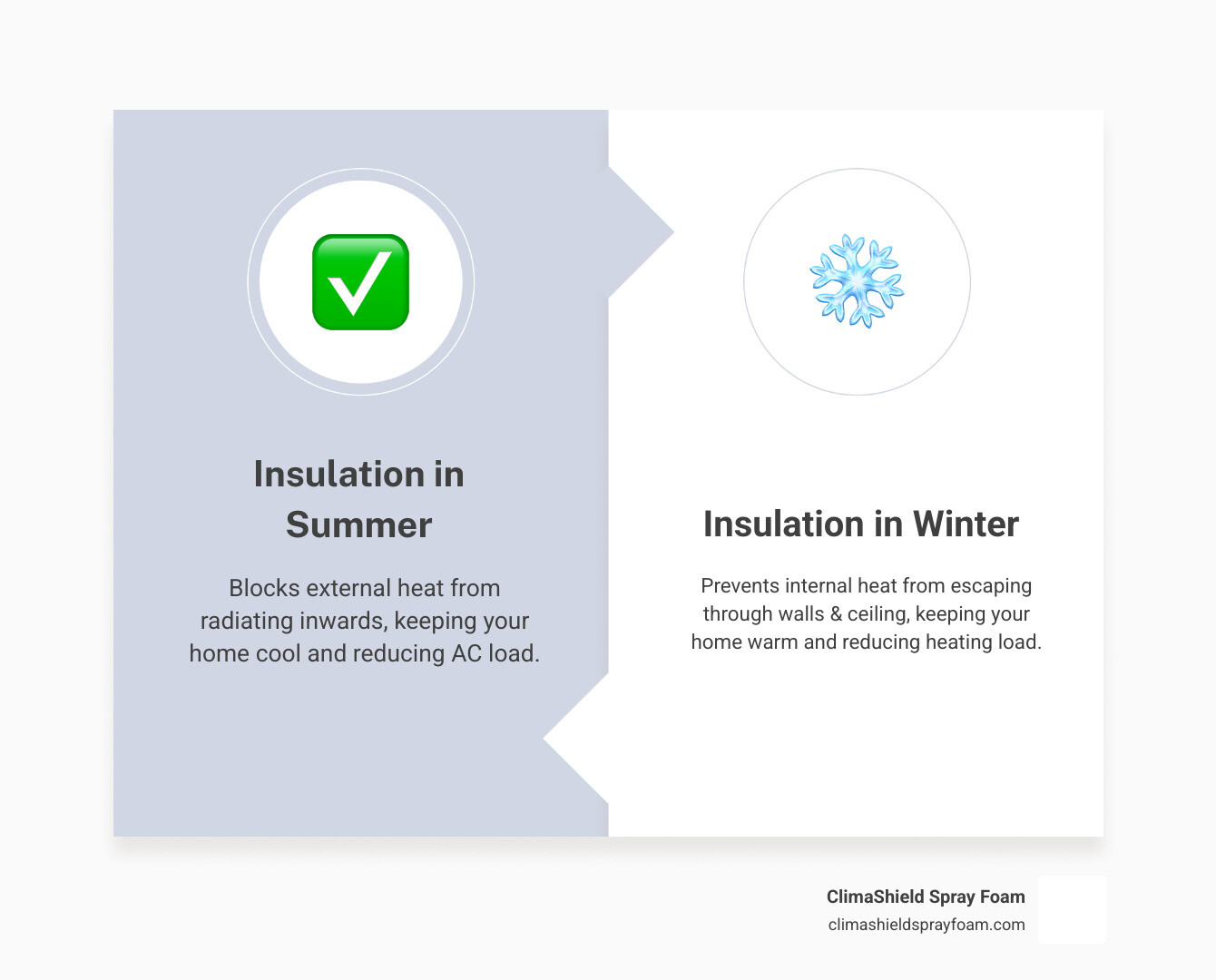
If you’re struggling with high energy bills, uncomfortable drafts, or uneven room temperatures, the problem likely lies in your insulation. Insulation works by resisting the flow of heat, keeping your home warm in winter and cool in summer. Since heating and cooling can account for 50% to 70% of energy use in an average home, adequate insulation is key to reducing energy waste. It creates a uniform temperature, reduces drafts, and protects against moisture issues that can lead to mold and structural damage.
With so many residential insulation types available—from traditional fiberglass batts to high-tech spray foam—how do you know which one is right for your home? The answer depends on your climate zone, budget, the area you’re insulating, and whether you’re tackling a DIY project or building new construction. Understanding the differences in performance, cost, and installation helps you make an informed choice for long-term energy savings.
I’m Dave Brocious, founder of ClimaShield Industries. With over 20 years in the coatings and insulation industry, I’ve seen how the right insulation transforms homes from inefficient and uncomfortable to energy-saving, comfortable spaces.
The Fundamentals: Understanding R-Value and Air Sealing
Before we dive into the exciting world of residential insulation types, let’s get a handle on two fundamental concepts: R-value and air sealing. These are the cornerstones of effective home insulation.
What is R-value?
An insulating material’s resistance to heat flow is rated by its thermal resistance, or R-value. The higher the R-value, the greater the insulating effectiveness. A material’s R-value depends on its type, thickness, and density. Factors like aging and moisture can reduce R-value; wet insulation, for example, is far less effective at resisting heat flow.
The overall R-value of a wall or ceiling is also affected by “thermal bridging,” where heat moves more readily through less-insulative materials like wood or metal studs. These thermal bridges can significantly reduce the overall effectiveness of the insulation around them.
Generally, increasing insulation thickness will proportionally increase the R-value. However, for loose-fill insulation, its R-value doesn’t always increase proportionately with thickness because it can compress under its own weight, which can reduce overall effectiveness if over-compressed.
The Critical Role of Air Sealing
Insulation’s R-value is only part of the equation. Air sealing is just as critical. While some insulation types, like spray foam, are excellent air sealers, no single insulation product is proven to provide a continuous, whole-home air barrier on its own.
Air leaks are major culprits in energy waste. They carry both moisture and energy directly in and out of your home. Imagine a cozy blanket (your insulation) with holes in it – that’s what happens when you have great insulation but poor air sealing. Unsealed gaps allow conditioned air to escape and outside air to enter, forcing your HVAC system to work harder.
Proper air sealing involves finding and sealing cracks and gaps throughout your home’s envelope, from the attic to the Air Sealing Basement. Only when air leaks are addressed can your insulation perform at its peak, providing the comfort and energy savings you expect.
For more comprehensive guidance on insulation and R-values, we often refer to resources like the Guide to Home Insulation from the U.S. Department of Energy.
A Guide to Common Residential Insulation Types
When it comes to insulating your home, there’s a wide array of residential insulation types to consider. The best choice depends on the area being insulated, your budget, and whether it’s a new build or a retrofit. Proper installation and air sealing are what truly determine performance.
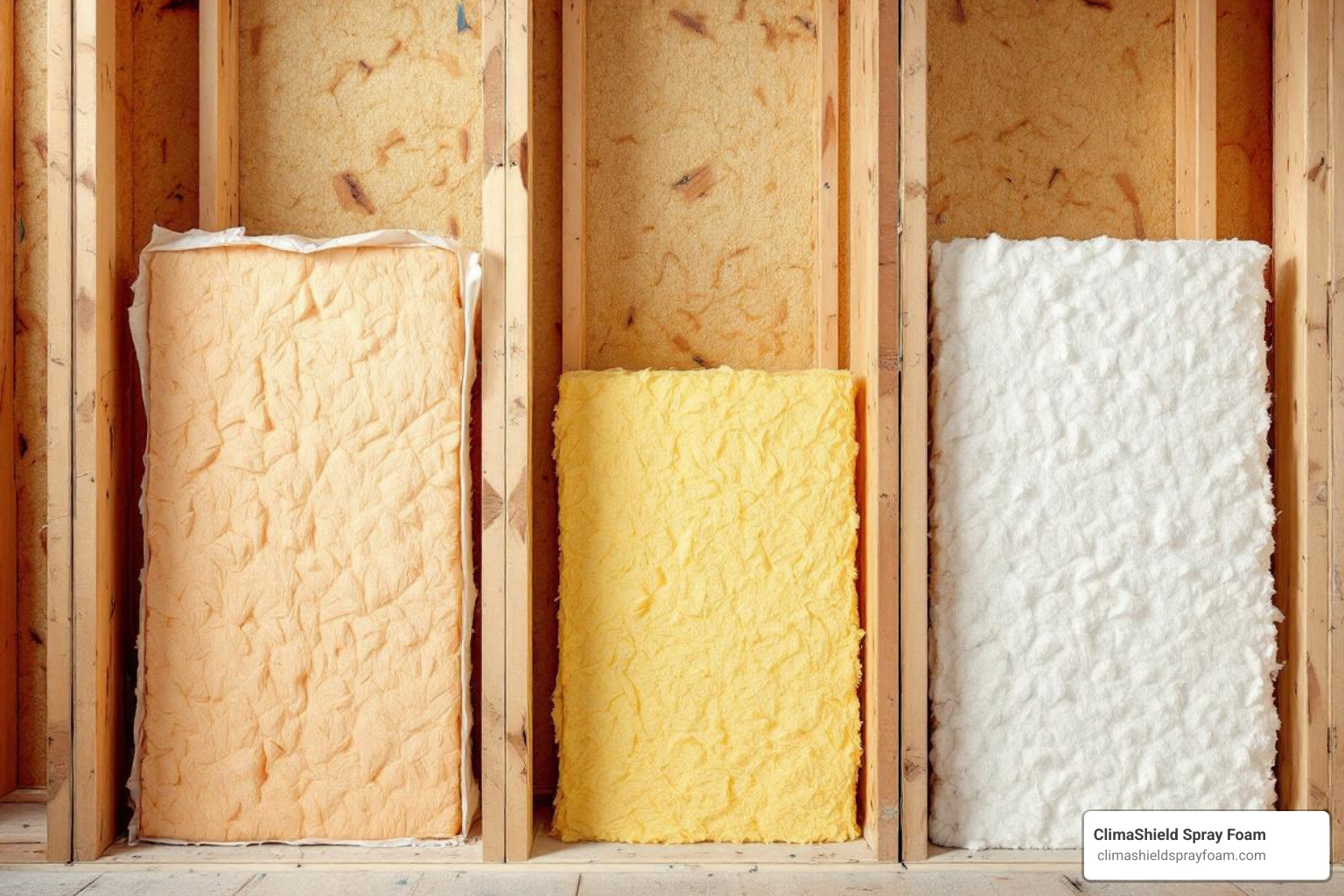
Let’s explore the most common residential insulation types available. For a deeper dive, the Comparing Insulation Types – Insulation Institute is a valuable resource.
Blanket and Batt Insulation (Fiberglass & Mineral Wool)
This is the most traditional form of insulation, commonly made from fiberglass or mineral wool.
- Forms: Available as pre-cut batts for standard framing or as rolls that can be cut to size.
- Pros:
- Cost-effective: Generally the most affordable option.
- DIY-friendly: Easy to install in open spaces like unfinished attics or walls.
- Fire-resistant: Naturally non-combustible.
- Recycled Content: Fiberglass contains 40-60% recycled content; mineral wool contains 10-90%.
- Cons:
- Air Gaps: Prone to gaps if not cut and fitted perfectly, reducing effectiveness.
- Irritant: Fibers can irritate skin, eyes, and lungs during installation (PPE required).
- Moisture: Loses insulating value when wet.
Loose-Fill & Blown-In Insulation (Cellulose & Fiberglass)
This type is ideal for filling irregular spaces and adding insulation to existing areas.
- Materials: Most commonly made from cellulose (recycled paper), but also available as fiberglass or mineral wool.
- Application: Blown into attics and wall cavities with special equipment.
- Pros:
- Fills Irregular Spaces: Conforms to odd shapes and fills gaps better than batts.
- High Recycled Content: Cellulose is often 80%+ recycled material.
- Good for Retrofits: Can be added to existing walls without major demolition.
- Cons:
- Requires Equipment: Professional installation or machine rental is necessary.
- Settling: Can settle over time, reducing its R-value if not installed at the proper density.
- Additives: Cellulose requires fire-retardant additives.
- Moisture: Loses R-value when wet and can be prone to mold.
Spray Foam Insulation (Open-Cell & Closed-Cell)
Spray foam is a high-performance option that provides both insulation and air sealing.
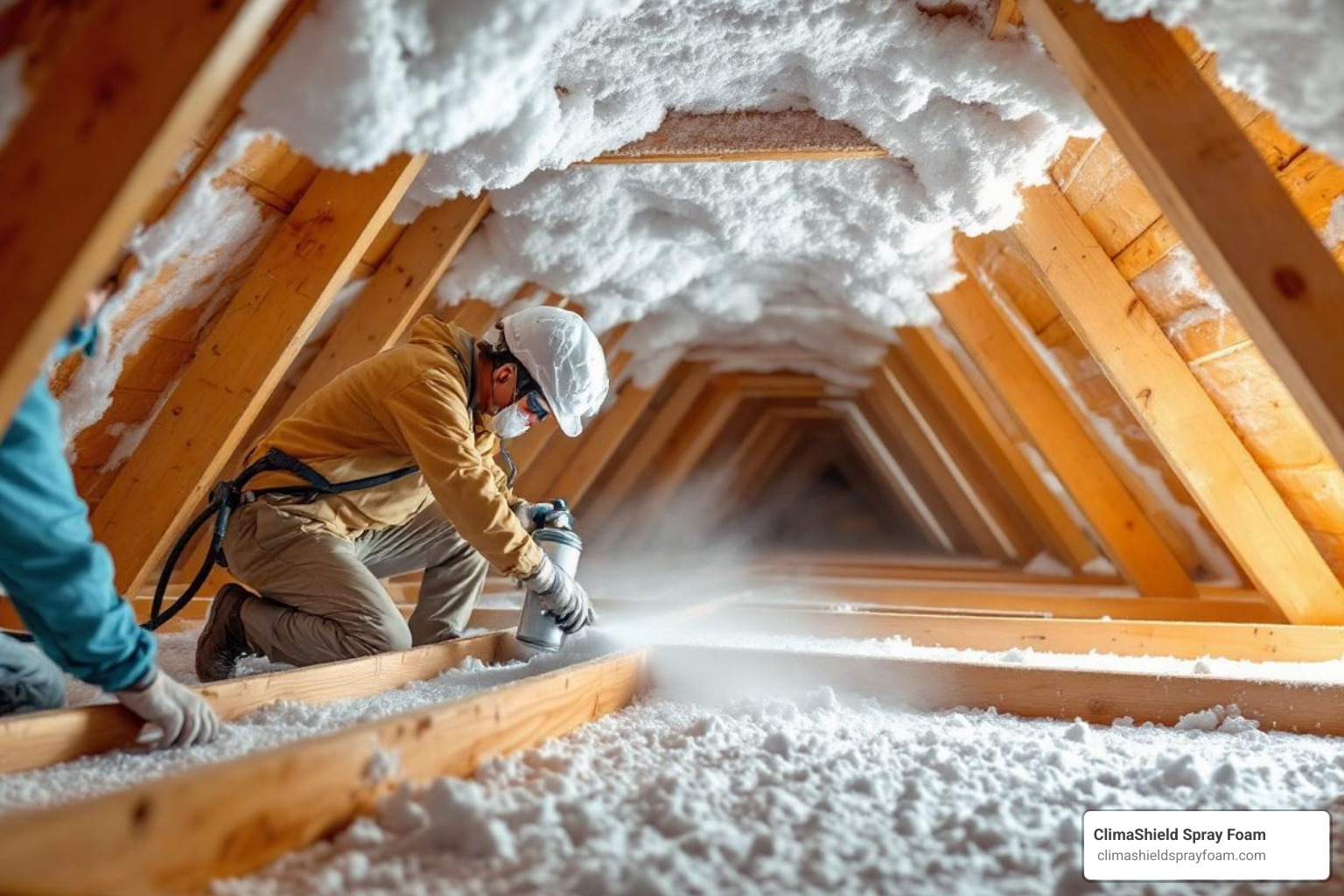
- Application: Applied as a liquid that expands to fill and seal cavities completely.
- Pros:
- Superior Air Seal: Creates an exceptional air barrier, drastically reducing leaks.
- High R-value: Closed-cell foam offers R-6 to R-7 per inch, great for tight spaces.
- Conforms to Any Shape: Perfectly seals irregular gaps and penetrations.
- Adds Strength: Closed-cell foam adds structural rigidity.
- Pest Resistant Spray Foam: Its dense structure deters pests.
- Moisture Control: Closed-cell foam acts as a vapor barrier.
- Cons:
- Professional Installation Only: Requires certified technicians and special equipment.
- Higher Cost: More expensive upfront than traditional insulation.
- Curing Vapors: Releases chemicals during application, requiring occupants to vacate the premises.
- Fire Safety: Must be covered by a thermal barrier like drywall.
- Open-Cell vs. Closed-Cell:
- Open-cell foam is spongy, flexible, and allows water vapor to pass through. Its R-value is around R-3.5 to R-4.0 per inch.
- Closed-cell foam is dense, rigid, and acts as a vapor barrier. It has a higher R-value (R-6 to R-7 per inch) but can lose some R-value over time (“thermal drift”).
For more on this material, see our page on the Uses of Spray Foam.
Rigid Foam Board Insulation
Rigid foam board is a versatile option for specific applications.
- Materials: Polystyrene (EPS or XPS) or polyisocyanurate (Polyiso).
- Application: Ideal for foundations, basement walls, and exterior wall sheathing.
- Pros:
- High R-value per inch: Excellent for applications with limited space.
- Moisture Resistant: XPS and Polyiso are great for below-grade use.
- Blocks Thermal Bridging: When installed continuously over framing, it stops heat transfer through studs.
- Cons:
- Seams Must Be Sealed: All joints must be taped to create an air barrier.
- Fire Barrier Required: Must be covered by drywall or another approved material on the interior.
Specialty and Structural Insulation Solutions
Beyond the common options, several specialized and structural residential insulation types are ideal for new construction or major renovations, integrating insulation directly into the building’s structure.
Radiant Barriers and Reflective Systems
These materials work differently from traditional insulation.
- Function: Instead of resisting heat flow, these foil-faced materials reflect radiant heat. They are most effective at reducing summer heat gain.
- Application: Primarily installed in attics in warmer climates to reduce cooling costs. To work, they must face an air space.
- Pros & Cons: They can lower cooling bills but have minimal impact on heating costs in cold climates and do not have an inherent R-value. The U.S. Department of Energy offers more info on Radiant Barriers.
Structural Insulated Panels (SIPs) & Insulating Concrete Forms (ICFs)
These are advanced building systems for new construction.
- Definition:
- Structural Insulated Panels (SIPs): High-performance panels made of a foam core sandwiched between structural boards (like OSB) for walls, roofs, and floors.
- Insulating Concrete Forms (ICFs): Hollow foam blocks that are stacked and filled with concrete to create highly insulated, reinforced concrete walls.
- Pros & Cons: Both methods create extremely airtight, strong, and highly insulated structures. Construction can be faster, but initial costs are typically higher than traditional building methods, and they require specialized contractors.
Eco-Friendly and Recycled Residential Insulation Types
For homeowners focused on sustainability, there are several green options.
- Materials: Options like recycled denim, cork, and sheep’s wool offer sustainable alternatives. As noted earlier, cellulose is also a heavily recycled product.
- Pros & Cons: These materials are sustainable and often have low VOCs for better air quality, but they can be more expensive and less available than conventional options.
- Note: Many common insulators also have significant recycled content. Fiberglass can contain 40-60% recycled glass, and rock wool can have 70-90% recycled content, making them a good balance of performance, cost, and sustainability.
Key Factors for Choosing Your Home’s Insulation
Choosing the right residential insulation types for your Pennsylvania home involves balancing a few key factors to find the best fit for your needs, budget, and project.
Here’s a simplified comparison to help you visualize the choices:
| Insulation Type | Typical R-value per inch | General Cost (per sq ft installed) | Best Application Area |
|---|---|---|---|
| Fiberglass Batts | R-3.2 to R-4.0 | Low | Unfinished walls, attics, floors |
| Mineral Wool Batts | R-3.7 to R-4.2 | Medium | Unfinished walls, attics, floors (fire/sound) |
| Cellulose Loose-Fill | R-3.7 to R-3.8 | Low to Medium | Attics, existing wall cavities, irregular spaces |
| Open-Cell Spray Foam | R-3.5 to R-4.0 | Medium to High | Wall cavities, attics (air sealing, sound) |
| Closed-Cell Spray Foam | R-6.0 to R-7.0 | High | Tight spaces, foundations, air/vapor barrier |
| XPS Rigid Foam Board | R-5.0 | Medium to High | Exterior sheathing, foundations, basements |
| Polyiso Rigid Foam Board | R-6.0 to R-6.5 | High | Exterior sheathing, roofs |
Note: Costs are estimates and can vary widely based on location, installer, and project complexity.
Installation, Safety, and Health
- DIY vs. Professional: While fiberglass batts can be a DIY project in open areas, most other types require professional installation. Loose-fill needs blowing equipment, and spray foam demands certified installers due to chemical handling and safety protocols.
- Safety Precautions: Always use Personal Protective Equipment (PPE)—gloves, eye protection, and a respirator—when handling any insulation to protect against fibers or chemical exposure, as recommended by OSHA’s guidelines.
- Health Impacts: Modern fiberglass is largely formaldehyde-free. For spray foam, occupants must vacate the home during and after installation (typically 24-72 hours) to avoid exposure to curing chemicals. In older homes, never install insulation over knob and tube wiring without an electrician’s approval due to fire risk.
Climate, Budget, and Application Area
- Climate: Pennsylvania is in a cold climate zone (5 or 6), requiring higher R-values to meet building codes like the 2021 International Energy Conservation Code.
- Budget: Higher-cost insulation like spray foam may offer a better return on investment through greater energy savings on Your Energy Bill. Consider both upfront cost and long-term performance.
- Location in Home:
- Attic: Loose-fill or batts are common. Spray foam is excellent for sealing the roof deck.
- Walls: Blown-in insulation for existing walls; batts or spray foam for new construction.
- Basement/Crawlspace: Moisture-resistant rigid foam or closed-cell spray foam are ideal.
The Role of Moisture and Mold Control
- Moisture is the Enemy: Wet insulation loses its R-value and can lead to mold and rot. Before insulating, fix all water leaks.
- Vapor Control: In cold climates, a vapor retarder on the warm side of the wall prevents condensation. Some insulations, like closed-cell spray foam, act as their own vapor barrier.
- Mold Resistance: No insulation is “mold-proof.” While inorganic materials like spray foam don’t feed mold, mold can still grow on nearby organic materials (like wood) if they get wet. The key is to control moisture. Learn more on our page: Is Spray Foam Insulation Mold Resistant?.
Frequently Asked Questions about Residential Insulation Types
We often get questions from homeowners in Indiana, PA, about the best way to insulate their homes. Let’s tackle some of the most common inquiries regarding residential insulation types.
What is the most common type of home insulation?
Fiberglass batts have historically been the most common type due to their low cost and DIY-friendly nature for unfinished spaces. However, as awareness of air sealing and energy efficiency grows, other residential insulation types are becoming more popular. Loose-fill is widely used for attics and retrofitting walls, while spray foam is a top choice for new construction and projects demanding superior air sealing and high R-value.
What insulation has the highest R-value?
Closed-cell spray foam (R-6.0 to R-7.0 per inch) and polyisocyanurate (Polyiso) rigid foam boards (R-6.0 to R-6.5 per inch) offer the highest R-value per inch. These residential insulation types are ideal for applications where space is limited but a high thermal barrier is needed, like cathedral ceilings or foundation walls. Their superior performance can lead to greater long-term energy savings.
How does insulation improve my home’s energy efficiency?
Insulation improves energy efficiency by resisting heat flow. In winter, it keeps heat in; in summer, it keeps heat out. This reduces the workload on your heating and cooling systems, which means they use less energy. The direct results are lower utility costs, a smaller carbon footprint, and significant savings on Your Energy Bill. Proper insulation creates a more stable and comfortable indoor environment, boosting your home’s overall Energy Efficiency.
Conclusion: Making the Right Choice for a Comfortable, Efficient Home
Navigating the many residential insulation types can seem daunting, but understanding the basics empowers you to make smart decisions for your home. We’ve explored everything from traditional fiberglass and mineral wool to advanced spray foam, rigid boards, and eco-friendly options. Each type has its unique strengths, ideal applications, and considerations for installation, safety, and health.
The key takeaways are clear:
- No single “best” insulator exists; the right choice depends on your specific needs, budget, climate, and the area you’re insulating.
- Proper installation is paramount. Even the highest R-value material will underperform if installed incorrectly.
- Air sealing is critical. Insulation alone isn’t enough; you must seal air leaks to achieve true energy efficiency and comfort.
By investing in the right insulation and ensuring it’s installed correctly, you’re not just buying a product; you’re investing in a more comfortable home, lower energy bills, and a healthier living environment for years to come.
For expert advice and professional installation of high-performance insulation solutions custom to your home in Indiana, PA, look no further. We understand the specific needs of homes in our region and are dedicated to providing durable, waterproof, and airtight insulation that can save you up to 60% on energy bills while resisting mold and pests. Learn more about our Residential Insulation services to create a more comfortable and energy-efficient home.
