
Why Your Home’s Hidden Weak Spot Is Costing You Money
Rim joist spray foam is a closed-cell or open-cell insulation applied directly to the rim joist area—the band of wood where your foundation meets your home’s floor framing—to create an airtight, moisture-resistant seal that stops energy loss, prevents drafts, and blocks pests.
Quick Answer: What You Need to Know About Rim Joist Spray Foam
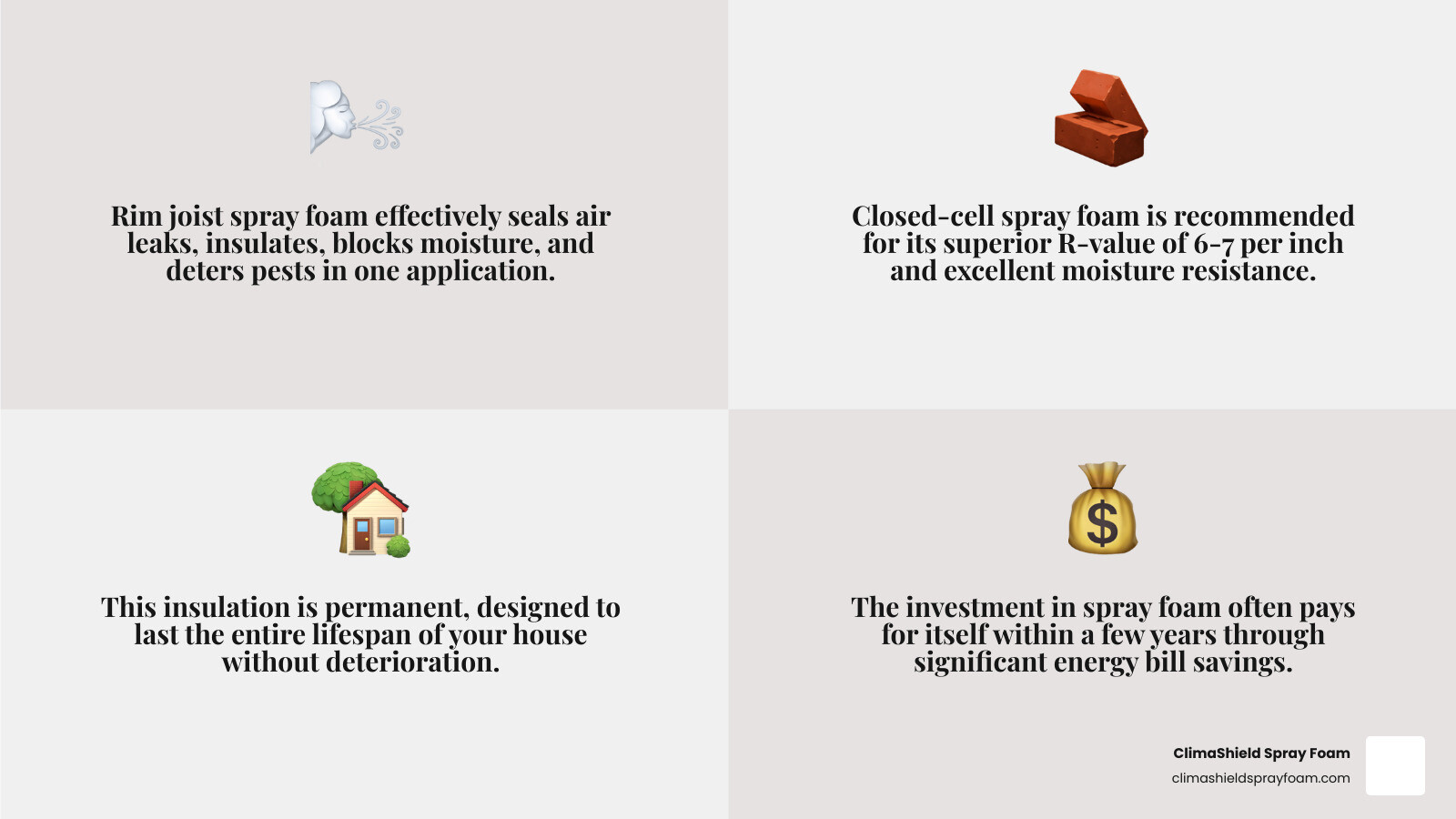
- What it does: Seals air leaks, insulates, blocks moisture, and deters pests in one application
- Best type: Closed-cell foam for superior R-value (6-7 per inch) and moisture resistance
- Cost: A few hundred to a couple thousand dollars, depending on home size
- Lifespan: Permanent—lasts the life of your house
- ROI: Energy savings often recoup costs within a few years
- DIY?: No—professional installation required for safety and effectiveness
If you’ve noticed cold floors in winter, high energy bills, or a drafty basement, your rim joist is likely the culprit. This often-overlooked area where your foundation meets your floor framing can account for a startling amount of energy loss. In older homes, rim joists are frequently left uninsulated—with only sheathing and siding separating them from outdoor air.
Think of your home as a winter coat. The rim joist is where someone forgot to zip the zipper all the way up. Cold air sneaks in during winter, warm humid air enters during summer, and your HVAC system works overtime trying to compensate. The result? Higher bills, uncomfortable rooms, and potential moisture problems like mold or rot.
Why spray foam? Unlike fiberglass batts that can sag and leave gaps, or rigid foam boards that require careful cutting and sealing at every joint, spray foam expands to fill every crack and crevice. It creates an airtight seal in one pass, acts as both insulation and air barrier, and blocks moisture—all while adding structural rigidity to your floor framing.
I’m Dave Brocious, and over my 20 years in the coatings and insulation industry, I’ve seen how rim joist spray foam transforms homes from drafty and inefficient to comfortable and cost-effective. As founder of ClimaShield Industries, I’ve helped countless homeowners solve their energy and comfort problems by properly sealing this critical area.
The Unseen Culprit: Why Your Rim Joist Matters
Imagine the perimeter of your home’s foundation, right where the house structure meets the concrete. That’s where you’ll find the rim joist, sometimes called a band joist. It’s the board placed on end on top of the sill plate, capping the ends of your floor joists. Essentially, it’s the outer lip of your flooring system, forming the border between your basement or crawl space and the outside world.
This seemingly unassuming area is, in fact, a major weak spot in most homes, especially older ones in places like Indiana, PA. Historically, builders often left rim joists uninsulated, or they used materials like fiberglass batts that simply don’t stand up to the unique challenges of this location. The only thing separating your conditioned living space from the outdoors was often just sheathing and siding.
This lack of proper insulation turns the rim joist into a notorious entry point for all sorts of unwelcome guests and issues:
- Air Leakage: The rim joist is a natural junction of different materials (wood, concrete, subfloor), creating numerous tiny cracks and gaps. These are perfect pathways for air to leak in and out. In winter, cold outdoor air infiltrates, causing chilly drafts along your floorboards and making your basement feel like an icebox. In summer, warm, humid air seeps in, increasing your home’s cooling load and making your HVAC system work harder. This constant air exchange accounts for a startling amount of energy loss, driving up your utility bills.
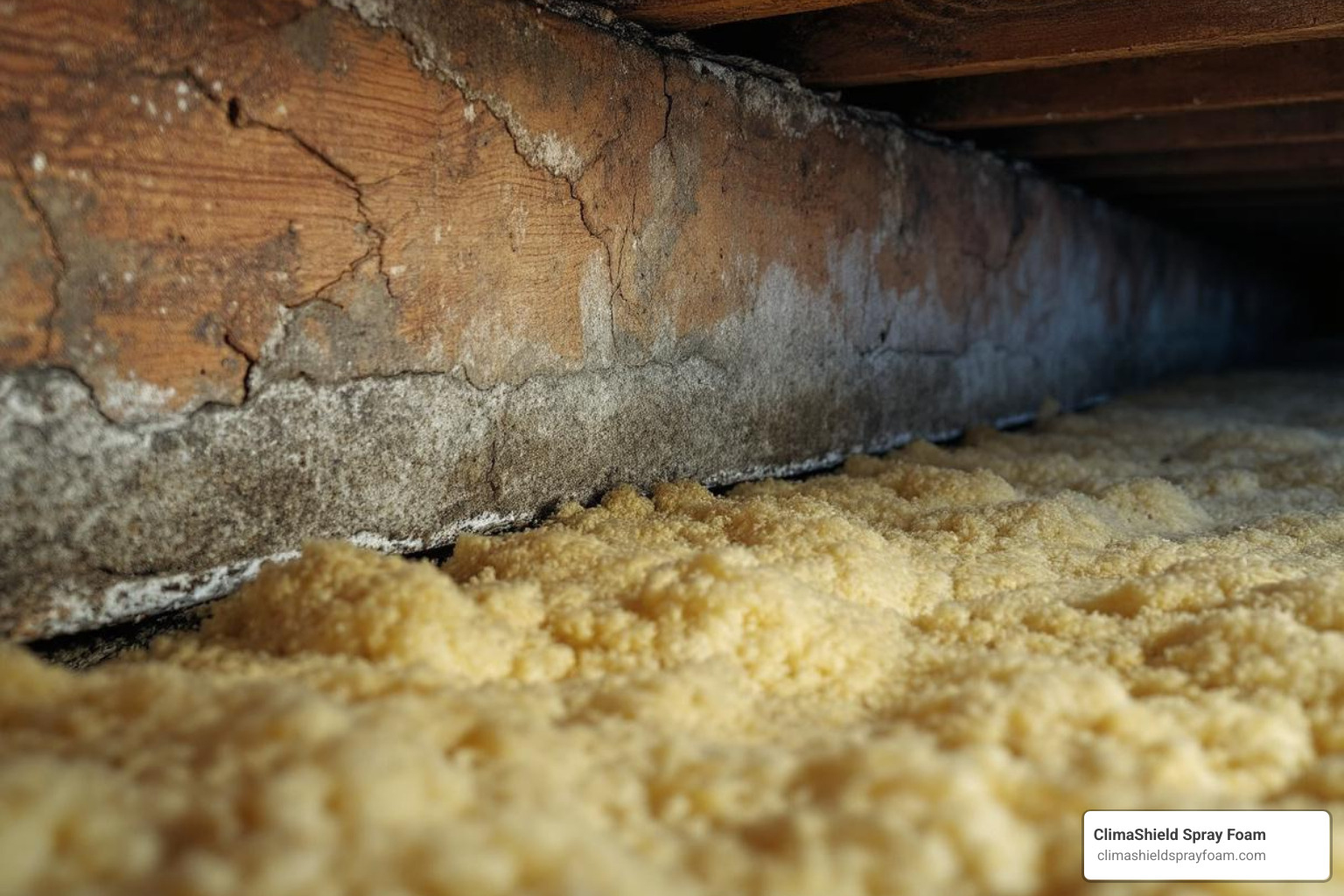
- Condensation and Moisture Problems: When warm, moist indoor air meets the cold surfaces of an uninsulated rim joist in winter, or when humid outdoor air contacts cool surfaces in summer, condensation can form. This moisture can saturate traditional insulation like fiberglass, which then holds the dampness against the wood structure. This creates a perfect breeding ground for mold and mildew growth, leading to musty odors and potential structural decay over time.
- Pest Entry Point: Those same cracks and gaps that let air in also serve as convenient entry points for pests like mice, insects, and other critters seeking shelter. Once inside the rim joist cavity, they can make their way into your living spaces.
- Energy Waste: All these issues combine to create significant energy waste. Your heating and cooling systems constantly battle against the uncontrolled air flow, leading to reduced comfort and higher energy consumption. This is why addressing rim joist insulation is crucial for truly improving your home’s overall energy efficiency.
We understand that a drafty, uncomfortable home is no fun. That’s why we focus on sealing these critical areas. For more detailed insights into how we tackle air leakage throughout your home, take a look at our page on More info about Air Sealing Basement.
Why Rim Joist Spray Foam is the Superior Solution
When it comes to insulating your rim joist, you have a few options: fiberglass batts, rigid foam boards, or spray foam. While fiberglass might be inexpensive, it does a poor job of sealing airflow and is prone to mold issues as it holds condensation against the wood. Rigid foam boards are better but require meticulous cutting and taping of every joint to prevent air leaks, which can be challenging in an irregularly shaped space.
This is where rim joist spray foam truly shines as the superior choice. Its unique properties allow it to address the specific challenges of rim joist insulation in a way that other materials simply cannot match. For us, it’s about providing home comfort, significant energy savings, and long-term value that homeowners truly appreciate.
What Makes Spray Foam Stand Out?
Rim joist spray foam isn’t just insulation; it’s a comprehensive solution that offers multiple benefits in a single application:
- Creates an Air Seal: This is perhaps its most critical advantage. Spray foam expands upon application, filling every nook, cranny, and irregular gap in the rim joist area. This creates a continuous, airtight barrier that prevents air leakage, effectively stopping drafts and uncontrolled air infiltration. When properly applied to a thickness of one inch or more, spray foam insulation is an effective air barrier, preventing air leakage that creates draughty conditions and reduces energy efficiency.
- Fills Irregular Gaps and Adheres Directly to Wood: Unlike pre-cut materials, spray foam conforms to any shape, ensuring a perfect, custom fit every time. It adheres permanently to the wood surfaces, eliminating the gaps and sagging common with fiberglass batts. This direct bond also helps it resist shifting or crumbling over time.
- Blocks Moisture and Deters Pests: Closed-cell spray foam acts as a moisture barrier, preventing wet air from reaching the timber framing. This protects against condensation, mold, mildew, and decay. Furthermore, because spray foam is an inert material and not a food source, it deters pests like insects and rodents from making your rim joist their home.
- High R-value and Superior Air Sealing: Rim joist spray foam offers a high R-value per inch, meaning it provides excellent thermal resistance in a compact space. Spray foam insulation’s R-values typically vary from 3.5 to 7.0 per 25.4 mm (one inch) of thickness. This, combined with its best air-sealing capabilities, significantly reduces heat transfer and contributes to substantial energy savings.
- Adds Structural Rigidity: Once cured, closed-cell spray foam becomes a dense, rigid material that can add a degree of structural rigidity to your floor framing.
- Longevity: We’ve seen it time and again: with proper installation, rim joist spray foam should last the duration of your house. It doesn’t deteriorate or droop over time, offering a permanent solution. This means no more replacing old, sagging insulation every few years.
By choosing rim joist spray foam, you’re not just insulating; you’re investing in a more comfortable, energy-efficient, and healthier home. To understand more about how these benefits translate into real savings, explore how this boosts Energy Efficiency.
Open-Cell vs. Closed-Cell: Which Foam is Right?
When considering rim joist spray foam, it’s important to understand the two main types: open-cell and closed-cell. Both are effective, but they have distinct properties that make one more suitable for rim joists, especially in our climate zone (Indiana, PA is in IECC Climate Zone 5).
- Open-Cell Spray Foam: This foam is less dense, with a sponge-like appearance and a lower R-value (typically R-3.5 to R-3.8 per inch). While it’s a good air barrier and can be more budget-friendly, its open cellular structure means it can absorb and retain moisture. In colder climates like ours, this makes it less ideal for rim joists, as it might require additional vapor and condensation control measures. The International Residential Code (IRC) approved low-density (open-cell, 0.5 PCF) foams in 2009.
- Closed-Cell Spray Foam: This is our preferred choice for rim joists. It’s much denser, with a rigid, impermeable structure and a higher R-value (typically R-6 to R-7 per inch).
- Superior R-value: Its higher R-value means you get more thermal resistance in a thinner application, which is often beneficial in the confined space of a rim joist.
- Vapor Barrier and Moisture Impermeability: Closed-cell foam acts as an effective thermal, air, moisture, and vapor barrier. This is crucial for rim joists, as it prevents moisture from passing through and condensing on the wood, protecting against mold and rot. In IECC Climate Zones 5 and higher, high-density closed-cell spray foam provides additional condensation control and will qualify as a Class II vapor retarder at 1.5 inches. This meets the code requirements for both condensation control for air-impermeable insulation and acts as a code-prescribed Class II vapor retarder as specified in the International Residential Code (IRC) section R702.7 for IECC Climate Zones 5-8.
- Structural Rigidity: Its density also adds a measure of structural rigidity to the framing.
- Climate Zone Suitability: Given that Indiana, PA falls into IECC Climate Zone 5, closed-cell spray foam is highly recommended due to its superior moisture resistance and higher R-value, offering optimal performance in our cold winters. The IRC approved high-density (closed-cell, 2 PCF) spray foams back in 2003.
While open-cell foam might be cheaper upfront, the long-term benefits and performance of closed-cell foam for rim joists, especially in our region, make it the best investment for preventing moisture issues and maximizing energy efficiency.
The Pros and Cons of Using Spray Foam
We believe in providing you with all the facts so you can make an informed decision for your home. While rim joist spray foam offers unparalleled benefits, it’s also important to consider all aspects.
The Unbeatable Advantages (Pros)
When we install rim joist spray foam, we’re not just adding insulation; we’re fundamentally upgrading your home’s performance. Here’s why it’s such a game-changer:
- Superior Air Seal: This is the cornerstone of spray foam’s effectiveness. It expands to fill every tiny crack and crevice, creating an impenetrable air barrier that stops drafts cold. Say goodbye to cold floors in winter and humid basements in summer!
- High R-value: With an R-value typically ranging from 6 to 7 per inch for closed-cell foam, it provides excellent thermal resistance in a relatively thin layer, maximizing insulation in tight spaces.
- Effective Moisture Barrier: Closed-cell spray foam acts as an effective moisture and vapor barrier, protecting your wood framing from condensation, mold, mildew, and rot. This is crucial for the longevity of your home’s structure.
- Pest Deterrent: Unlike fibrous insulation, spray foam is an inert material that isn’t a food source for pests. Its dense, sealed nature also blocks entry points, helping to keep unwanted critters out of your home.
- Adds Structural Rigidity: The rigid nature of cured closed-cell spray foam can add a degree of structural integrity and rigidity to your floor system.
- Longevity: This is a one-time investment that truly lasts. Our experience shows that, when properly installed, rim joist spray foam will last the life of your house. It adheres permanently and won’t sag, shift, or crumble like other insulation types.
- Reduced Drafts and Increased Comfort: By eliminating air leaks at the rim joist, spray foam ensures a more uniform temperature throughout your home. This means warmer floors, a more comfortable basement, and less strain on your heating and cooling systems.
- Significant Energy Savings: Our customers often report saving up to 60% on energy bills. The airtight seal and high R-value prevent heat loss in winter and heat gain in summer, translating into real money back in your pocket. In fact, if all 113 million single-family homes in the United States used SPF for insulation, Americans could save up to $33 billion in energy costs each year.
To dig deeper into how these benefits dramatically improve your home’s efficiency, visit our Energy Efficiency page.
What to Consider (Cons)
While the benefits are extensive, we also want to be transparent about the considerations associated with rim joist spray foam:
- Higher Upfront Cost: Spray foam insulation tends to be more expensive than traditional forms of insulation like fiberglass or even foam board. For most homes, you’re looking at a few hundred to maybe a couple thousand dollars for rim joist spray foam insulation, depending on the size of your home and accessibility. However, this cost is often quickly recouped through energy savings within a few years.
- Professional Installation Required: While DIY kits exist, for comprehensive and effective insulation, professional installation is highly recommended. The proper mixing, application technique, and safety precautions are critical for optimal performance and to avoid issues like off-gassing. We ensure our certified installers handle the job correctly and safely.
- Curing and Ventilation Time: During and immediately after application, there can be a distinct odor from the chemicals. Proper ventilation is essential during this period, and the area needs time to cure. Once cured, professionally installed spray foam is an inert, solid material with no off-gassing or odors, making it safe for your home.
- Permanent Application: Once applied, spray foam is permanent. It adheres strongly to surfaces and is difficult to remove without causing damage. This isn’t necessarily a con, but it highlights the importance of professional installation to ensure it’s done right the first time.
Preparing for Your Rim Joist Spray Foam Project
Proper preparation is just as crucial as the application itself when it comes to rim joist spray foam. We take every step to ensure a safe, effective, and lasting installation for your home in Pennsylvania.
Step 1: Surface Preparation
Before we even think about spraying, our team carefully prepares the rim joist area:
- Removing Old Insulation: If there’s existing insulation, such as fiberglass batts, we carefully remove it. It’s vital that the spray foam bonds directly to the wood for maximum effectiveness and to prevent trapping any existing moisture. Old, damp insulation can harbor mold, and removing it provides a clean slate.
- Cleaning Debris and Dust: The surfaces must be clean and free of dust, dirt, grease, or any loose debris. This ensures optimal adhesion of the spray foam. We clean surfaces and remove debris before air sealing to ensure the best possible bond.
- Checking for Active Moisture: We inspect for any signs of active moisture or water leaks. If finded, these issues must be addressed and resolved before any insulation is applied. Spray foam is an excellent moisture barrier, but it won’t fix an underlying water intrusion problem.
- Masking Off Surrounding Areas: We cover all surfaces not intended for foam application, such as pipes, wiring, or adjacent walls, to protect them from overspray. This ensures a clean and professional finish.
- Temperature Check: For optimal results, the target spray surfaces should be between 65°F and 85°F. We monitor ambient and surface temperatures to ensure conditions are ideal for application.
Key safety considerations for rim joist spray foam
Safety is paramount during any spray foam application. This is another reason why professional installation is not just a recommendation but a necessity:
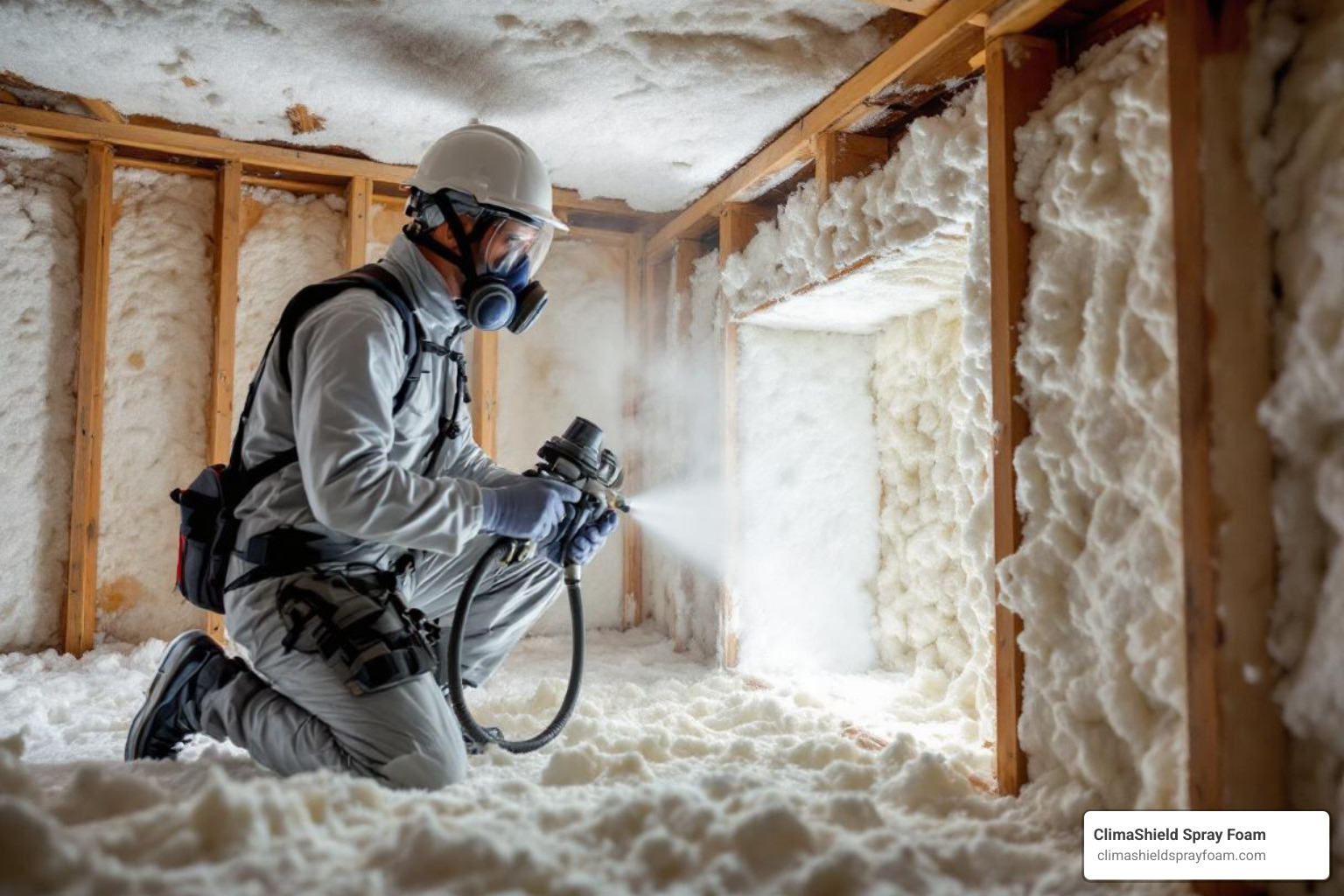
- Professional Installation: Our trained and certified installers understand the nuances of spray foam chemistry and application. They ensure proper mixing, appropriate thickness, and complete coverage, minimizing any risks associated with incorrect application.
- Personal Protective Equipment (PPE): Our team always uses comprehensive PPE, including eye protection, coveralls, gloves, and specialized respirators. This protects them from exposure to the chemicals during the liquid application phase. We ensure no skin or hair is exposed.
- Proper Ventilation During and After Application: Adequate ventilation is critical. During application, the work area is well-ventilated to disperse any airborne particles. We also advise continued ventilation for at least another hour after the application is complete, and we ensure the area is clear before allowing re-entry without safety gear.
- Curing Process: Spray foam undergoes a chemical reaction to cure and harden. During this phase, avoid disturbing the foam. Once fully cured, which typically takes a short period (foam cures in 30-60 seconds for some products), the material becomes inert and stable.
- Off-Gassing Risks with Poor Installation: While contemporary spray foams are safe and environmentally friendly once cured, poor installation can lead to improper curing and potential off-gassing. Our professional process mitigates this risk, ensuring the foam cures correctly and becomes an inert, solid material with no off-gassing or odors.
By adhering to these stringent preparation and safety protocols, we guarantee a high-quality, safe, and effective rim joist spray foam installation that will benefit your home for decades to come.
Frequently Asked Questions about Rim Joist Insulation
We often hear similar questions from homeowners in Indiana, PA, when they consider insulating their rim joists with spray foam. Here are some of the most common ones:
How long does spray foam insulation last in a rim joist?
This is one of the most compelling advantages of rim joist spray foam: its incredible longevity. In our experience, once properly installed, spray foam insulation should last the duration of your house. It’s a permanent solution, not a temporary fix.
- Lifespan of the house: Unlike traditional insulation materials that can degrade, sag, or become compromised over time, spray foam retains its properties indefinitely.
- Permanent adhesion: Closed-cell spray foam adheres permanently to the wood surfaces of your rim joist. This strong bond prevents it from shifting, sagging, or crumbling, ensuring a continuous seal for decades.
- No deterioration over time: It doesn’t absorb moisture, isn’t susceptible to mold growth, and isn’t a food source for pests, all of which contribute to the breakdown of other insulation types. This means no deterioration, no need for replacement, and no loss of effectiveness over time.
- One-time investment: When you choose rim joist spray foam, you’re making a one-time investment that will deliver comfort and energy savings for as long as you own your home.
Can rim joist spray foam help with radon entry?
Yes, rim joist spray foam can play a role in reducing radon entry into your basement, but it’s important to understand its limitations.
- Air sealing properties: Radon is a naturally occurring radioactive gas that can seep into homes through cracks and openings in the foundation. Because spray foam creates an excellent airtight seal, it effectively blocks many of these cracks and gaps in the rim joist area and foundation.
- Reduces radon pathways: By sealing these pathways, rim joist spray foam can limit the routes radon gas can take to enter your home from the soil beneath.
- Not a substitute for a dedicated radon mitigation system: While it can significantly reduce radon entry through the rim joist, it does not replace a dedicated radon mitigation system. If your home has liftd radon levels, a professional mitigation system designed to actively vent the gas from beneath your foundation is the most effective solution. However, combining effective radon mitigation with spray foam insulation can create a more comprehensive defense against radon.
Is spray foam a worthwhile investment for just the rim joists?
Absolutely, and we consistently see a strong return on investment for our customers in Pennsylvania. While the upfront cost may be higher than some alternatives, the long-term benefits of rim joist spray foam make it a truly worthwhile investment.
- Return on Investment (ROI): The energy savings alone often recoup the installation costs within a few years. By preventing air leakage and providing superior insulation, your heating and cooling systems don’t have to work as hard, directly translating to lower utility bills. ClimaShield Spray Foam helps our customers save up to 60% on their energy bills.
- Increased Home Comfort: The immediate improvement in comfort is invaluable. No more cold, drafty floors or a clammy basement. Your home will feel more consistently comfortable throughout all seasons.
- Prevention of Costly Moisture Damage: By acting as a moisture barrier, spray foam protects your home’s structural wood from condensation, mold, and rot. Preventing these issues can save you thousands of dollars in potential repair costs down the line.
- Improved Indoor Air Quality: By sealing off air leaks, rim joist spray foam prevents irritants like dust, allergens, and outdoor pollutants from being drawn into your home. This leads to cleaner, healthier indoor air, which is especially beneficial for those with allergies or respiratory sensitivities.
Considering these combined benefits—energy savings, improved comfort, structural protection, and improved air quality—investing in rim joist spray foam is one of the smartest upgrades you can make to your home. To see how this impacts your monthly expenses, learn more on our page about How it affects Your Energy Bill.
Conclusion
The rim joist, often overlooked and poorly insulated, is a critical area that significantly impacts your home’s energy efficiency, comfort, and structural integrity. From cold floors and high energy bills to moisture problems and pest intrusion, an uninsulated rim joist is a hidden culprit costing you money and peace of mind.
Rim joist spray foam offers a comprehensive, superior solution. It delivers:
- Exceptional Air Sealing: Eliminating drafts and uncontrolled air movement.
- Superior Insulation: Providing a high R-value in a compact, durable layer.
- Effective Moisture and Pest Control: Protecting your home from water damage, mold, and unwanted critters.
- Long-Term Solution: A permanent investment that lasts the life of your home, offering continuous savings and comfort.
While it represents a higher upfront cost than some alternatives, the return on investment through energy savings, increased comfort, and prevention of costly repairs makes it an incredibly worthwhile upgrade. For optimal results, professional installation is key, ensuring the job is done safely and effectively.
At ClimaShield Spray Foam, we bring our expertise and commitment to quality to every rim joist spray foam project in Indiana, PA. We’ve seen how changing this single area can dramatically improve a home’s overall performance.
Ready to put an end to drafty floors and high energy bills? Explore our Residential Insulation solutions to transform your home’s efficiency and find how we can make your home more comfortable, healthier, and energy-efficient.
