
Why New Construction Insulation Matters for Homeowners in Indiana, PA
New construction insulation Indiana, PA, is about building energy efficiency and long-term comfort into your home from day one. With energy costs rising and Pennsylvania’s building codes requiring higher insulation standards, making smart insulation choices during construction is more important than ever.
Quick Answer: What You Need to Know
For new homes in the Indiana, PA area (Climate Zone 5), here’s what matters:
- Code Requirements: Pennsylvania requires R-20 walls (or R-13+5), R-49 ceilings, and R-15 basement walls.
- Best Time to Insulate: During construction—retrofitting later costs significantly more.
- Top Priority: Air sealing is just as important as R-value. PA code requires homes to be much tighter than in the past.
- Smart Investment: Proper insulation reduces energy bills, improves comfort, and qualifies for federal tax credits (30% up to $1,200).
Pennsylvania’s adoption of the 2018 International Energy Conservation Code (IECC) raised the bar for new construction performance. Meeting these standards isn’t just about passing inspection—it’s about creating a home that stays comfortable year-round while keeping utility bills manageable.
Energy losses from air leakage can exceed heat loss through insulation in a poorly sealed home. That’s why modern building science emphasizes a “whole-house systems design approach” that integrates insulation with proper air sealing and moisture control.
During construction, walls are open and accessible, making it the most cost-effective time to install high-performance insulation and create an airtight building envelope. Waiting until after construction means demolition, higher labor costs, and a less efficient home.
I’m Dave Brocious, and I’ve spent 20 years in the coatings and insulation industry, including founding ClimaShield Industries. We specialize in spray foam insulation for new construction projects across Indiana, PA, and surrounding regions in Pennsylvania. My experience has shown me how proper new construction insulation Indiana, PA, builders install dramatically impacts a home’s long-term performance and the homeowner’s comfort and energy costs.
Understanding Pennsylvania’s Energy Codes for New Construction
When planning a new home in Pennsylvania, understanding the local building codes is paramount. These codes dictate the minimum requirements for insulation and air sealing. At ClimaShield Spray Foam, based in Indiana, PA, we build to the highest standards, often exceeding code to deliver superior energy efficiency.
Pennsylvania has adopted the 2018 International Energy Conservation Code (IECC) with state-specific amendments. Our service area, including Indiana, PA, falls primarily within Climate Zone 5, which has specific R-value requirements for a new home’s building envelope. R-value measures resistance to heat flow—a higher R-value means better insulation.
Complying with these codes is a legal necessity, but they represent the minimum standard. To truly optimize energy efficiency and long-term comfort, we recommend exceeding these baselines. For more insights, you can explore our resources on energy efficiency. The U.S. Department of Energy also provides details on state-specific building energy codes.
Pennsylvania’s Prescriptive R-Value Requirements (Climate Zone 5)
The 2018 IECC with Pennsylvania’s amendments sets the following prescriptive requirements for new homes in Climate Zone 5:
- Ceilings: The minimum R-value for ceilings is R-49. This is critical, as heat rises, making attic insulation a top priority for preventing energy loss.
- Wood Frame Walls: The requirement is R-20 (installed in a 2×6 wall) or an alternative of R-13 + R-5 (cavity insulation plus a layer of continuous insulation on the exterior).
- Basement Walls: The minimum R-value is R-15 for cavity insulation or R-19 for continuous insulation. This prevents significant heat loss through below-grade walls.
- Crawl Space Walls: Similar to basements, crawl space walls require a minimum of R-15 (cavity) or R-19 (continuous).
- Fenestration (Windows, Doors): The maximum U-factor is U-0.32. A lower U-factor means better-insulating windows.
- Duct Insulation: Ducts in unconditioned spaces must be insulated to at least R-8.
Beyond R-values, the code mandates strict air leakage requirements. The building envelope must not exceed 3 ACH50 (air changes per hour at 50 Pascals), verified by a mandatory blower door test. This is significantly tighter than previous codes and requires meticulous air sealing.
Why Spray Foam is the Smart Choice for New Builds in Indiana, PA
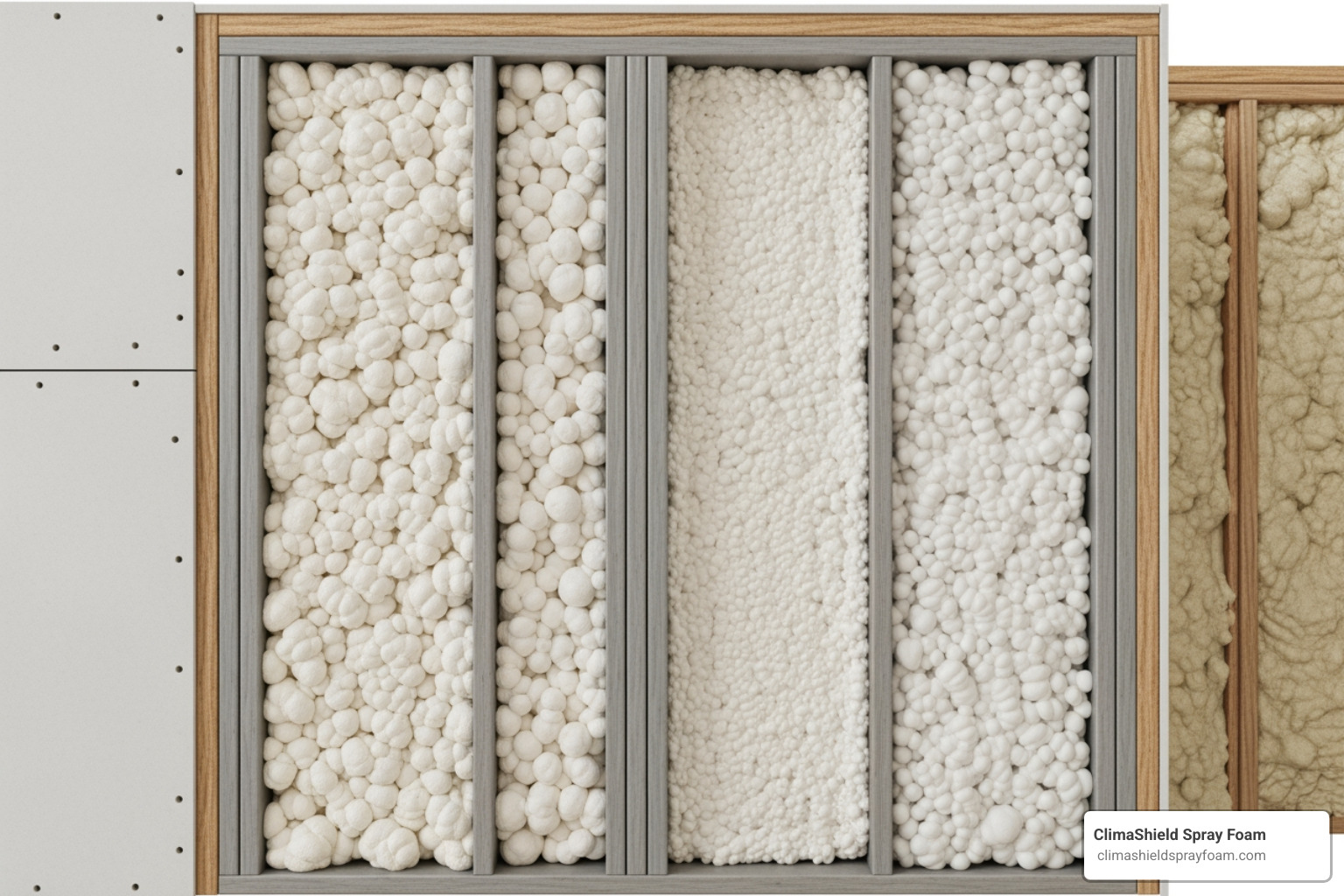
For new construction insulation Indiana, PA, the choice of material is pivotal. While traditional options like fiberglass exist, spray foam insulation offers unparalleled performance for meeting today’s rigorous energy efficiency standards. It provides a continuous insulation and air sealing barrier in one step, maximizing energy savings, improving indoor air quality, controlling moisture, and enhancing building durability.
Open-Cell Spray Foam
Open-cell spray foam is a lightweight, flexible material that expands to fill every gap and crevice.
- Superior Air Sealing: It creates an exceptional air barrier, stopping the drafts and air leaks that are a major source of energy loss.
- Excellent Sound Dampening: Its soft, porous texture makes it a fantastic sound absorber, reducing noise from outside and between rooms for a quieter home.
- Cost-Effective: Generally less expensive than closed-cell, it’s a great choice for interior walls, attics, and ceilings where a vapor barrier isn’t required.
Closed-Cell Spray Foam
Closed-cell spray foam is a dense, rigid insulation with distinct advantages.
- Highest R-Value: At R-6 to R-7 per inch, it provides the most insulating power in the slimmest profile, perfect for maximizing R-value in standard walls.
- Moisture & Vapor Barrier: It is impermeable to water and acts as a vapor barrier, making it essential for basements, crawl spaces, and any area prone to moisture.
- Adds Structural Strength: Its rigidity bonds to and reinforces the structure of your walls and roof, making your home more resilient.
The benefits are clear: spray foam provides durable, waterproof, airtight insulation that resists mold and pests, potentially saving customers up to 60% on energy bills. We offer both types to tailor the perfect solution for your new build. To dive deeper, you can learn about the various uses of spray foam.
Here’s a quick comparison:
| Metric | Open-Cell Spray Foam | Closed-Cell Spray Foam |
|---|---|---|
| R-Value/Inch | R-3.5 to R-3.9 | R-6 to R-7 |
| Air Barrier | Excellent | Excellent |
| Moisture Barrier | Permeable (not a vapor barrier) | Excellent (is a vapor barrier) |
| Installation Cost | Lower | Higher |
| Soundproofing | Excellent | Good |
| Structural Strength | None | Adds significant rigidity |
| Primary Use | Interior walls, attics, sound dampening | Basements, crawl spaces, exterior walls |
The “Whole-House” Approach to New Construction Insulation
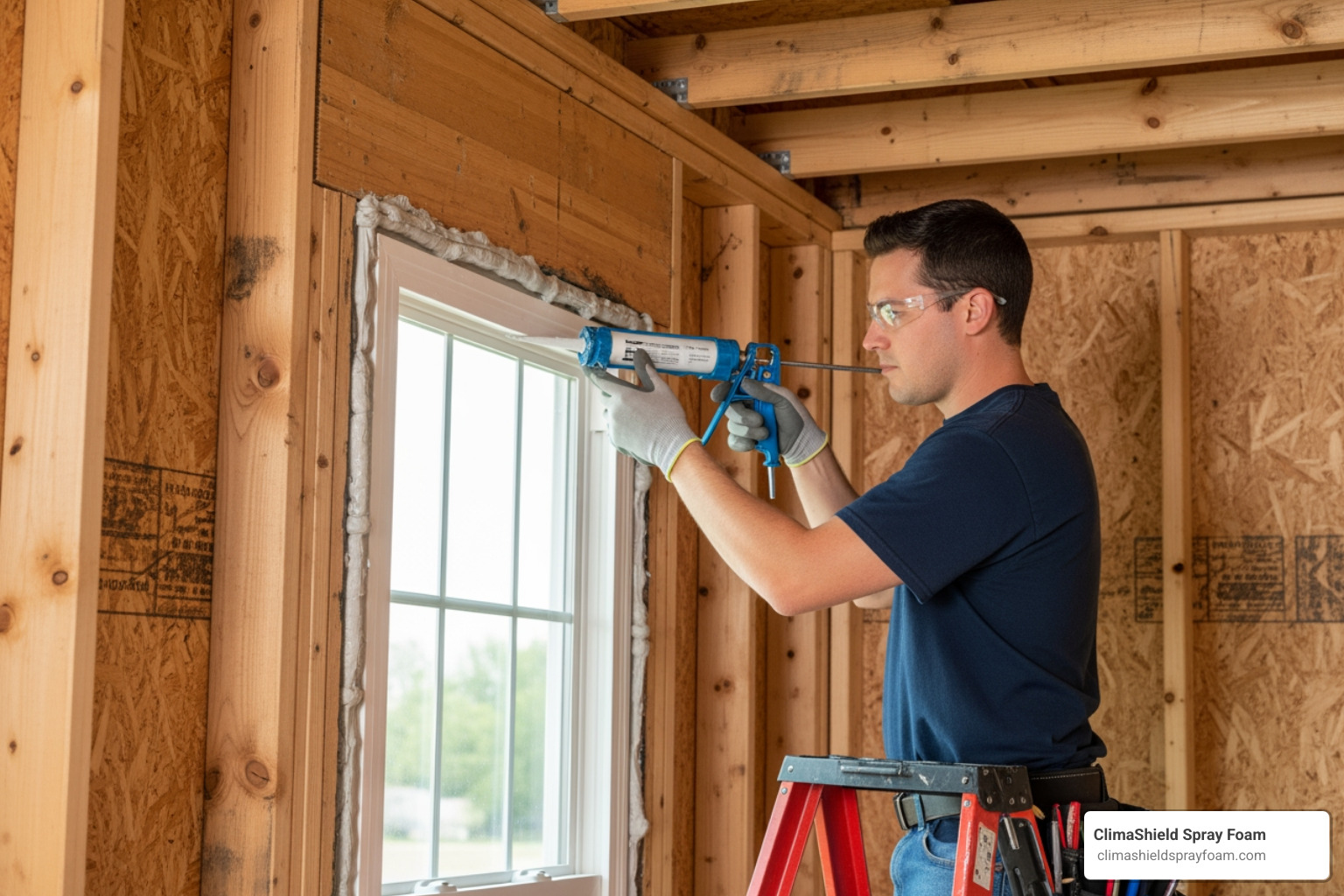
Building an energy-efficient new home in the Indiana, PA, area requires a “whole-house systems design approach.” This means the insulation, air sealing, and moisture control systems must work together. The quality of installation is just as important as the material itself; gaps or compression can ruin the performance of even high-R-value insulation. For more on this, the Department of Energy offers valuable insights at energy.gov.
Critical Areas to Insulate in Your New Pennsylvania Home
To optimize efficiency, every part of your home’s thermal envelope needs attention:
- Attics: A well-insulated attic (R-49 in PA Climate Zone 5) is crucial for preventing heat loss in winter and heat gain in summer.
- Exterior Walls: Proper wall insulation (R-20 or R-13+5 in PA Climate Zone 5) is vital for energy bills and comfort.
- Basements: Insulating basement walls (R-15/19 in PA) is key for preventing energy loss and moisture issues. Closed-cell spray foam is ideal here. To learn more, consider air sealing your basement.
- Crawl Spaces: Insulating crawl space walls (R-15/19 in PA) helps control humidity, prevent pests, and save energy.
- Rim Joists & Floors: The rim joist (the perimeter of the floor system) and any floors over unconditioned spaces (like garages) must be insulated and air sealed to prevent major heat loss.
The Importance of Air Sealing and Moisture Control
Insulation alone isn’t enough. Air sealing is equally critical.
- Air Leakage: Drafts can account for a huge portion of a home’s energy loss. Pennsylvania’s code requires a mandatory blower door test to ensure airtightness does not exceed 3 ACH50.
- Moisture & Mold: Air leaks can carry moisture into wall cavities, leading to condensation, rot, and mold. Proper air sealing, combined with a moisture control strategy, is the best way to prevent these issues. Simple steps like taping sheathing joints and sealing all penetrations are essential for creating a durable, healthy home.
The Long-Term Value: Benefits Beyond the R-Value
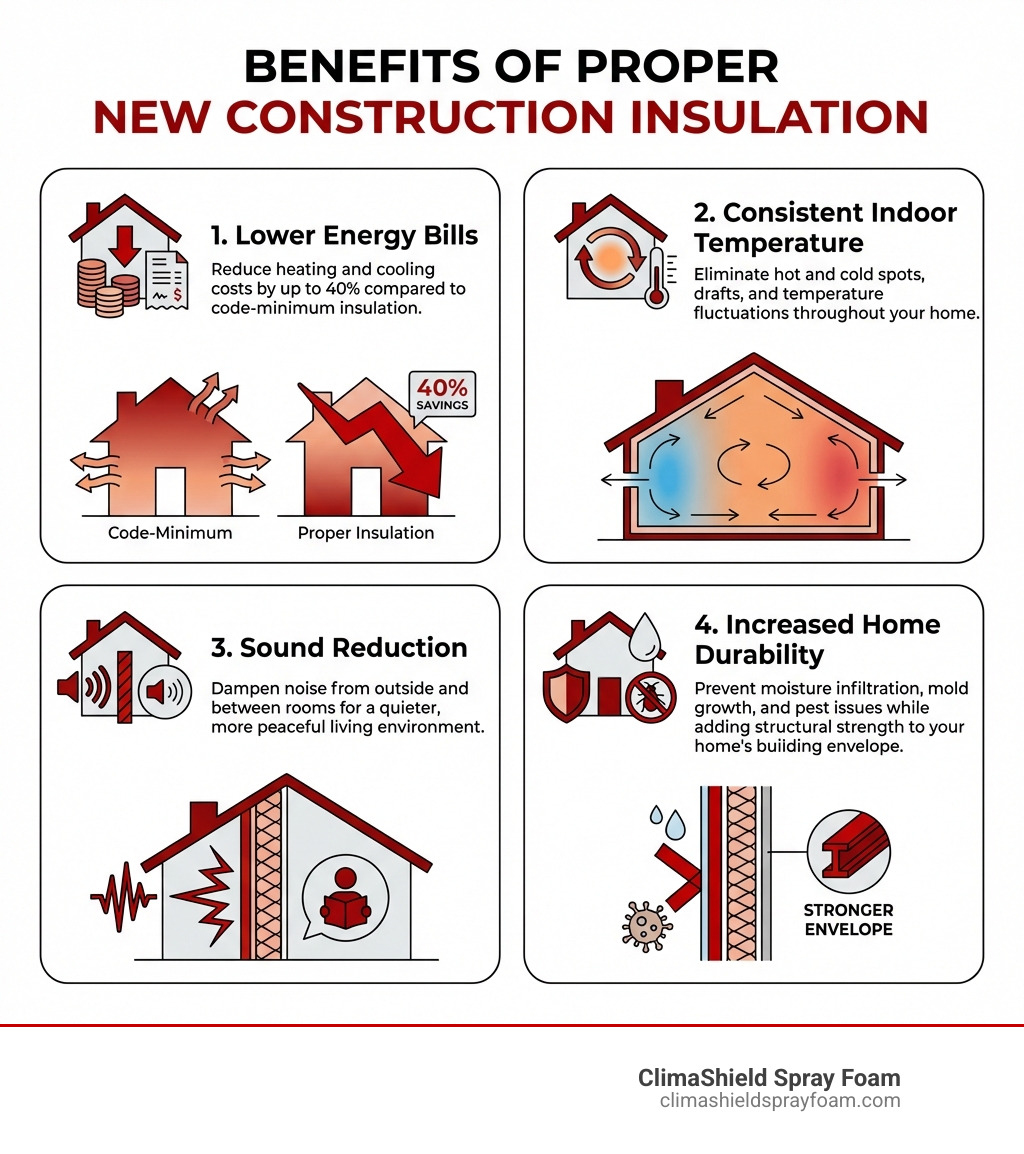
Investing in quality new construction insulation Indiana, PA, is about building a home that provides long-term value, comfort, and peace of mind. Proper insulation protects your investment in multiple ways.
- Energy Savings: High-performance spray foam creates an airtight seal, dramatically reducing the workload on your HVAC system. This leads to significant savings on heating and cooling bills, with our customers often saving up to 60%. Learn more about lowering your energy bill.
- Year-Round Comfort: Proper insulation eliminates drafts and cold spots, creating a consistent and comfortable temperature throughout your home in every season.
- Soundproofing: Spray foam, especially open-cell, is an excellent sound dampener. It reduces noise from outside and between rooms, creating a more peaceful living environment.
- Improved Air Quality & Durability: By creating an airtight seal, spray foam blocks outside pollutants, allergens, and moisture. This prevents mold growth and makes the home healthier. Closed-cell foam also adds structural strength, making your home more resilient.
Cost of Insulating Now vs. Retrofitting Later
It is always more cost-effective to install high-performance insulation during the new build phase. Retrofitting later requires costly demolition and reconstruction. When walls are open, installation is fast and efficient, maximizing your return on investment from day one. Building it right the first time is the smartest financial decision.
Financial Incentives for New Construction Insulation
Investing in energy efficiency comes with financial perks:
- Federal Tax Credits: Homeowners can claim 30% of insulation costs, up to a $1,200 maximum, through tax credits related to the Inflation Reduction Act.
- Utility Company Rebates: Many local Pennsylvania utility companies offer rebates for energy-efficient upgrades. Check with your provider to see what programs are available.
- Long-Term Savings: The most significant financial benefit is the continuous return on investment from lower monthly energy bills for the life of your home.
Frequently Asked Questions about New Build Insulation in Indiana, PA
Here are answers to common questions about new construction insulation in our service area.
What R-value do I need for my new home’s walls in the Indiana, PA area?
Our region is in Pennsylvania’s Climate Zone 5. The code requires a minimum of R-20 for wood frame walls, or an alternative of R-13 cavity insulation plus R-5 of continuous exterior insulation. These are minimums; we often recommend exceeding them for better performance and long-term savings. Closed-cell spray foam is a great way to achieve a high R-value in a standard wall.
Is spray foam insulation worth the higher initial cost for a new build?
Absolutely. While the upfront cost is higher than for fiberglass, spray foam is an investment that pays for itself. It provides insulation, an air barrier, and a moisture barrier (closed-cell) in one product. Installing it during new construction is the most cost-effective time. The superior performance leads to significant energy savings (up to 60%), which, combined with tax credits, provides a strong return on investment.
Do I need a separate vapor barrier with my insulation in Pennsylvania?
It depends on the insulation type:
- Closed-Cell Spray Foam: No. It acts as its own vapor barrier, blocking moisture and simplifying construction.
- Open-Cell Spray Foam: It depends. Open-cell foam is vapor permeable. In our cold climate, a vapor retarder on the interior (warm) side of the wall may be needed to prevent condensation. The design of the entire wall assembly determines the best strategy.
- Fiberglass/Cellulose: Yes. These materials require a separate vapor retarder (like plastic sheeting) on the interior side to manage moisture and prevent problems.
Conclusion: Building a Smarter Future for Your Home
Choosing the right insulation for your new construction insulation Indiana, PA, project is one of the most impactful decisions you can make. Adhering to Pennsylvania’s updated energy codes is just the starting point. For exceptional performance and long-term savings, a proactive, “whole-house” approach is needed.
This strategy integrates high-performance insulation with meticulous air sealing and moisture control. The right insulation is a strategic investment, not an expense. Spray foam offers superior R-values, an airtight seal, and moisture control, which translate into lower energy bills, improved comfort, and a healthier, more durable home. With federal tax credits available, this smart investment is more accessible than ever.
At ClimaShield Spray Foam, we are dedicated to helping builders and homeowners in Indiana, PA, and the surrounding Pennsylvania regions achieve superior energy efficiency. Our expertise in spray foam insulation ensures your new home is built to perform, providing lasting comfort and value.
Don’t settle for the minimum code; build for maximum performance. Invest in smart insulation from the ground up and reap the rewards for decades to come.
Explore the benefits of spray foam for your new construction project or contact us today to discuss how we can make your new home more energy-efficient, comfortable, and resilient.
