
Why Your Home Needs Mold Protection
Mold resistant insulation is designed to prevent mold growth through moisture resistance and inorganic composition. While several materials offer some level of mold resistance, closed-cell spray foam stands out as a superior solution due to its ability to create a seamless moisture and air barrier. Other materials like rigid foam board and stone wool also have mold-resistant properties, as they don’t provide organic food sources for mold spores.
Key characteristics of mold resistant insulation:
- Moisture resistance – Repels or manages water instead of absorbing it
- Inorganic composition – Contains no organic materials (wood, paper) that mold feeds on
- Air sealing – Prevents humid air from reaching cold surfaces where condensation forms
- Vapor control – Acts as a barrier or allows controlled drying to prevent trapped moisture
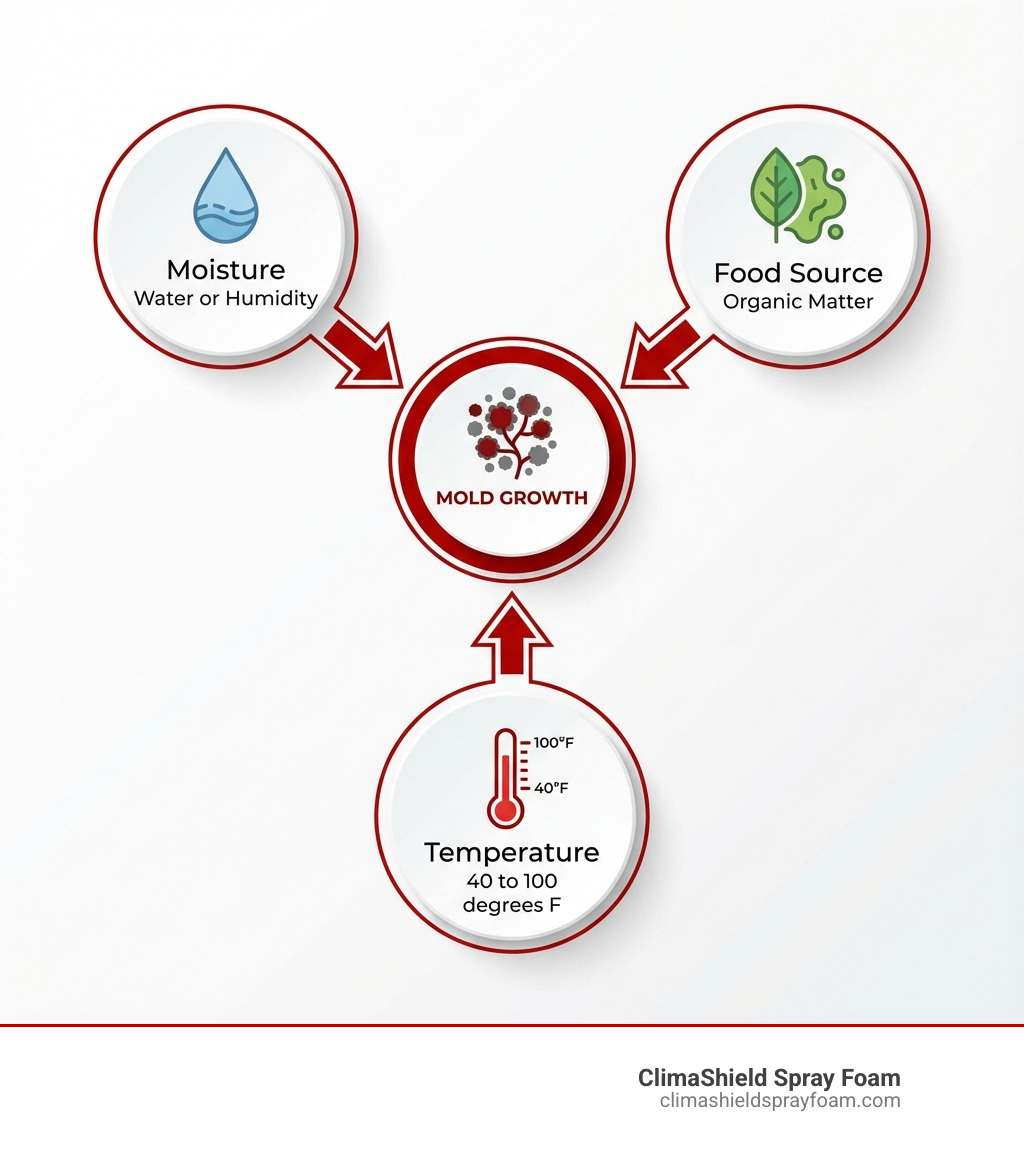
Mold is a fungus that requires moisture, a food source (like dust or organic materials), and temperatures between 40-100°F to grow. When insulation gets wet or traps humidity, it creates the perfect environment for mold spores to spread. The consequences go beyond unpleasant odors; indoor mold exposure has been linked to allergic reactions, respiratory illness, and other serious health conditions.
While leaky pipes are a common cause of mold, high humidity in basements, crawl spaces, and attics creates ideal conditions too. Traditional fiberglass insulation with paper backing can become a food source for mold when wet. Cellulose insulation, made from recycled paper, faces similar risks unless treated with fungicides—and even those treatments can leach away over time.
I’m Dave Brocious, and I’ve spent 20 years in the coatings and insulation industry, including founding ClimaShield Industries, where we specialize in spray foam insulation and protective coatings for commercial and residential projects. Through years of work on everything from residential basements to commercial buildings, I’ve seen how the right mold resistant insulation choices protect both property value and occupant health.
A Guide to Mold Resistant Insulation Materials
When we talk about mold resistant insulation, we’re primarily looking at materials that deny mold the conditions it needs to thrive: moisture and a food source. How well an insulation material handles moisture and air movement is crucial.
Spray Foam Insulation
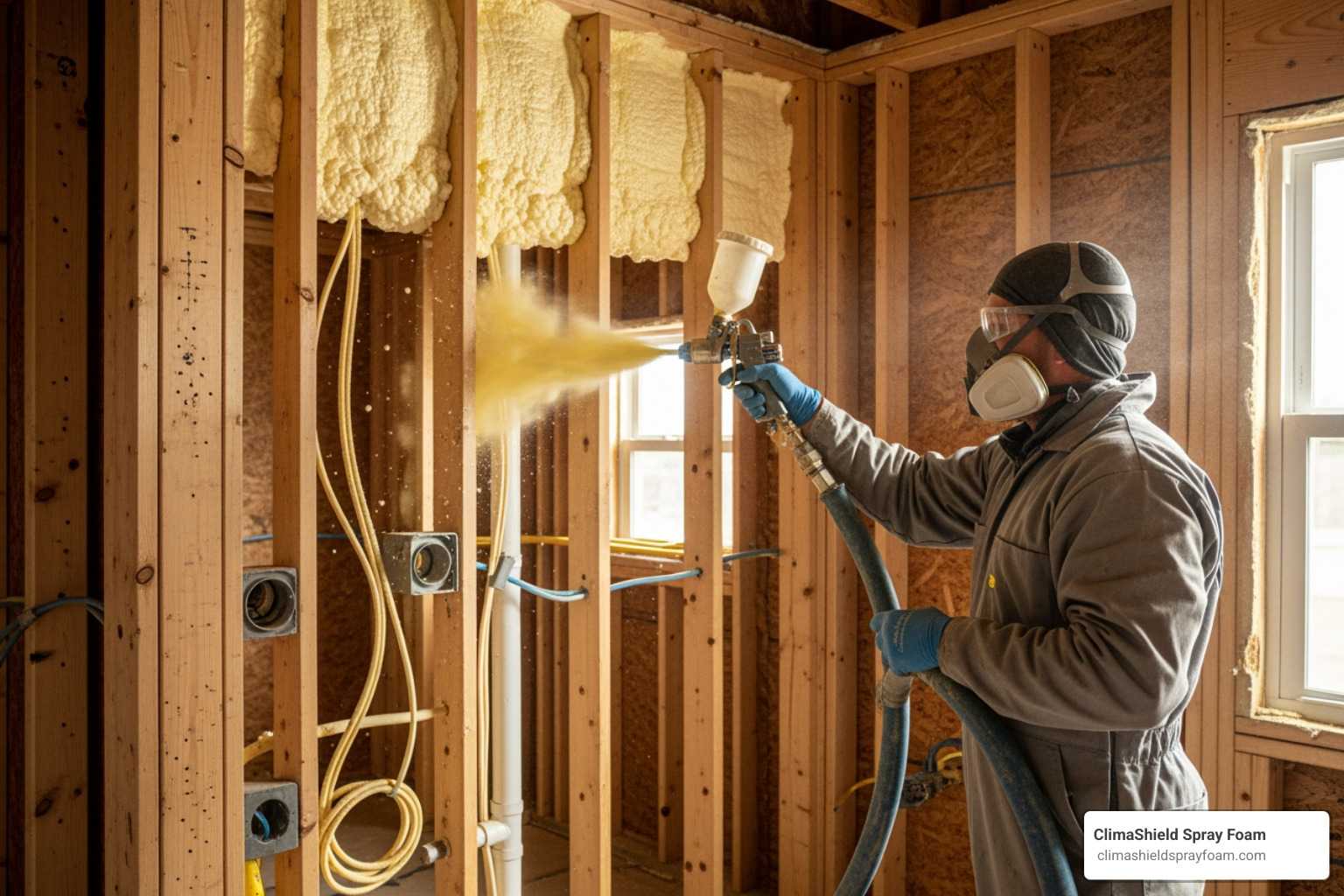
Spray foam insulation stands out as a top contender for mold resistant insulation. It’s a versatile material that expands upon application, filling cavities and creating a seamless, airtight barrier. This airtight seal is a game-changer for mold prevention. By preventing air leakage, spray foam significantly reduces the movement of humid air into wall cavities, where it could otherwise condense and create a breeding ground for mold.
We primarily work with two types of spray foam:
- Closed-cell spray foam: This type has a dense, rigid structure with sealed cells. It acts as an excellent air barrier and, critically, a vapor barrier. Because it does not hold water, it effectively minimizes moisture buildup. Its inorganic composition means there’s no substance for mold spores to feed on. This makes it particularly effective in damp areas like basements and crawl spaces common in Pennsylvania homes.
- Open-cell spray foam: While less dense, open-cell foam still provides a superior air seal. It’s water vapor permeable, meaning it allows moisture to pass through, which can be beneficial in certain wall designs that need to dry to the interior. However, it is not a vapor barrier and can absorb some moisture, though it still doesn’t provide a food source for mold.
Both types of spray foam minimize mold growth by forming an airtight seal. This seal prevents humidity from entering the building envelope, which is a crucial step in preventing mold. The material itself does not hold water, nor does it contain organic components that mold can feed on. This contributes to a healthier indoor environment and can save you up to 60% on energy bills. To learn more about how this incredible material can benefit your property, explore the various Uses of Spray Foam.
Other Insulation Options
While spray foam offers a comprehensive solution, it’s helpful to understand other materials on the market.
- Foam Board / Rigid Board: These plastic panels are water-resistant and don’t serve as a food source for mold. However, unlike spray foam which creates a monolithic seal, foam boards have seams between each panel. These seams must be carefully taped to create an air barrier, and any failure in the tape can lead to air and moisture leaks, compromising the system’s effectiveness.
- Mineral Wool (Stone or Slag Wool): Made from spun rock, this inorganic insulation resists mold growth and is highly fire-resistant. While it repels liquid water, it does not provide the air-sealing capability of spray foam. Without a separate, perfectly installed air barrier, humid air can still pass through and around mineral wool batts, potentially leading to condensation issues.
Why Traditional Insulation Fails the Mold Test
To truly understand the value of mold resistant insulation, it’s helpful to see where traditional options fall short.
- Fiberglass Susceptibility: While the glass fibers are inorganic, the paper backing on many batts provides an organic food source for mold. If this paper gets wet, mold can easily grow. Furthermore, wet fiberglass compresses and loses its R-value, creating a damp environment where dust and organic particles can become a food source for mold.
- Cellulose Susceptibility: Cellulose is made from recycled paper, making it an ideal organic food source for mold if it becomes wet. It’s usually treated with boric acid, which acts as a mold inhibitor. However, if the insulation is exposed to excessive moisture, the treatment can leach away, leaving it vulnerable to mold growth.
Under federal law, claims of mold resistance can only be made by products that contain a fungicide registered with the EPA for use in that product. While some cellulose products contain such fungicides, most other insulation types do not. Our approach at ClimaShield Spray Foam is to use materials like spray foam that are inherently resistant, reducing reliance on chemical additives.
Top Benefits and High-Risk Areas for Installation
Investing in mold resistant insulation isn’t just about avoiding a nasty problem; it’s about securing a healthier, more comfortable, and more valuable home. The benefits extend far beyond simply preventing mold, offering significant long-term advantages.
Where to Use Mold Resistant Insulation
Mold may grow in your attic, basement, crawl spaces, and other invisible regions. These are precisely the areas where we recommend prioritizing mold resistant insulation.
- Basements: Basements are notoriously damp, especially in older homes in Indiana, PA. Moisture can wick through concrete, and humidity levels are often higher. Mold resistant insulation like closed-cell spray foam is crucial here to prevent moisture from condensing on cool surfaces and feeding mold.
- Crawl spaces: Similar to basements, crawl spaces are often damp, dark, and poorly ventilated—a mold paradise! Encapsulating and insulating a crawl space with mold resistant insulation can drastically improve indoor air quality throughout the entire home.
- Attics: Attics can experience condensation if not properly ventilated and insulated. Leaky roofs or inadequate air sealing can also introduce moisture. Mold resistant insulation helps manage these risks.
- Bathrooms and Kitchens: These areas generate significant indoor humidity. While ventilation is key, ensuring the wall cavities are protected with mold resistant insulation provides an extra layer of defense against condensation and mold.
- Exterior Walls: A well-insulated and air-sealed exterior wall system is fundamental to preventing moisture intrusion and condensation within the wall cavity, which can lead to hidden mold issues.
For homeowners in Pennsylvania, focusing on these high-risk areas with specialized insulation is a smart move. To see how we apply these principles in homes like yours, visit our Residential Insulation page.
Long-Term Financial and Health Payoffs
The decision to install mold resistant insulation is a proactive investment that yields substantial long-term payoffs.
- Avoiding Costly Remediation: Mold remediation can cost thousands of dollars. Preventing mold in the first place saves you from this significant and unexpected expense.
- Preventing Structural Damage: Mold can compromise your home’s structural integrity by feeding on wood framing and drywall. Repairing this damage is far more expensive than preventing it.
- Improved Home Value: A home free of mold issues is a more attractive property. A history of mold can decrease a home’s market value, while a well-insulated, mold-free home is a strong selling point.
- Healthier Living Environment: This is the most critical benefit. Mold can severely impact occupant health, causing symptoms from allergic reactions to severe respiratory issues. Preventing mold contributes to a cleaner, safer indoor air environment for your family.
- Energy Bill Reduction: Effective mold resistant insulation like spray foam offers superior thermal performance and air sealing. This translates directly into lower energy consumption, with our clients often reporting savings of up to 60% on their energy costs.
- Sound Dampening: Many mold resistant insulation materials, particularly spray foam, also offer excellent sound dampening, creating a quieter indoor environment.
Your Checklist for Choosing the Right Insulation
Selecting the right mold resistant insulation can feel complex, but a clear checklist simplifies the process. Our goal is to find the optimal solution that balances performance, budget, and the specifics of your property in Indiana, PA.
Key Properties of the best mold resistant insulation
When evaluating insulation, we look for several key properties that contribute to superior mold resistance:
- Moisture Resistance (Hydrophobic): The material’s ability to repel water is paramount. Closed-cell spray foam is hydrophobic, meaning it doesn’t readily absorb moisture. If it gets wet, it dries quickly without retaining water, unlike traditional fiberglass or cellulose.
- Vapor Permeability: This refers to how easily water vapor can pass through the material. Closed-cell spray foam acts as a vapor barrier, preventing moisture migration, which is ideal in cold climates. Other materials are vapor permeable, which can be useful in some wall designs but requires careful planning to prevent trapped moisture.
- Inorganic Composition: Mold needs organic material to feed on. Insulation made from inorganic materials, such as foam plastics, naturally denies mold a food source. This is a significant advantage over organic cellulose.
- Fungi Resistance Testing: Reputable manufacturers may have products tested to industry standards like ASTM C1338 – A Standard Test for Determining Fungi Resistance to confirm their ability to resist fungal growth.
- Dimensional Stability: The insulation should maintain its shape and R-value over time. Materials that slump or settle can create voids where air can move and condense, leading to moisture issues.
- Air Barrier Capability: An effective air barrier is crucial for stopping humid air movement. Spray foam excels at this by creating a continuous, seamless seal. Other methods that rely on taping boards or fitting batts are prone to gaps and leaks, which can compromise their effectiveness over time.
These properties ensure that the insulation not only performs thermally but also creates a hostile environment for mold.
Assessing Your Project’s Specific Needs
Every building is unique. We tailor our recommendations based on a thorough assessment of your project:
- New Construction vs. Retrofit: In new construction, open wall cavities allow for a seamless application of spray foam. For retrofits, accessibility is a key factor, and different techniques may be required.
- Location in the Building: Basements, crawl spaces, and attics have different moisture dynamics and require specific considerations. For commercial buildings, the requirements can be even more specialized, which you can learn about on our Commercial Insulation page.
- Local Building Codes: We always ensure our insulation solutions meet or exceed all local building codes in Indiana, PA, and across Pennsylvania, including R-value and fire safety standards.
- Ventilation Strategy: Insulation works hand-in-hand with ventilation. A robust ventilation system helps manage indoor humidity, reducing the moisture load on the building envelope.
By considering these factors, along with your budget and project goals, we can guide you to the best mold resistant insulation solution for your needs.
Frequently Asked Questions about Mold and Insulation
We often encounter common questions from homeowners regarding mold and insulation. Let’s address some of these to provide clarity.
Can mold grow on spray foam insulation?
This is a frequently asked question. The core materials of spray foam are inorganic, meaning they do not provide a food source for mold. Its airtight seal also cuts off the primary moisture source for mold by preventing humid air from condensing inside walls.
However, while mold cannot feed on the spray foam itself, it can grow on organic dust or dirt that settles on the surface if there’s enough moisture. This is why a clean installation and managing overall home humidity are still vital for comprehensive mold prevention.
If insulation gets wet, does it need to be replaced?
The answer depends entirely on the insulation material:
- Closed-cell spray foam: This material is highly resilient to water exposure. It is hydrophobic and does not absorb water, allowing it to dry without losing its insulating properties. If the moisture source is addressed, it can continue to perform effectively.
- Fiberglass and cellulose: These materials are far more susceptible. When wet, they compress, lose R-value, and become a breeding ground for mold. They almost always need to be removed and replaced to prevent significant mold issues.
In summary, for most traditional insulation types, getting wet means replacement is necessary. With advanced mold resistant insulation like closed-cell spray foam, there’s a much better chance of recovery if the moisture issue is addressed promptly.
What are the first signs of mold in insulation?
Mold often grows in hidden spaces, but there are several tell-tale signs:
- Musty Odors: This is often the first and most reliable indicator. A persistent earthy or musty smell, especially in basements or attics, is a strong sign that mold is growing nearby.
- Visible Discoloration: If you can see the insulation, look for unusual discoloration. Mold can appear in various colors – black, green, brown, or white. You can learn more about Guide to mold colors and what they mean.
- Water Stains on Walls or Ceilings: Water stains indicate a moisture problem. If moisture is getting into your walls or ceilings, the insulation behind those surfaces is likely wet and potentially growing mold.
- Increased Allergy Symptoms: A sudden increase in persistent coughing, sneezing, or other allergy-like symptoms at home could be a reaction to airborne mold spores from contaminated insulation.
If you observe any of these signs, it’s crucial to investigate the source of the moisture and address the problem promptly.

Conclusion: Secure a Healthier, More Efficient Home
As we’ve explored, the choice of insulation goes far beyond just thermal performance. In regions like Pennsylvania, where humidity can create ideal conditions for fungal growth, selecting mold resistant insulation is a critical decision. We’ve seen how mold can compromise air quality, lead to health issues, and cause costly structural damage.
By opting for a high-performance material like closed-cell spray foam, you’re not just insulating against heat loss; you’re building a formidable defense against moisture intrusion, condensation, and the insidious threat of mold. While other inorganic insulations exist, spray foam’s ability to create a seamless air and moisture barrier provides an unparalleled defense. This proactive approach is always more cost-effective and less stressful than dealing with mold remediation down the line.
The long-term benefits are clear: reduced energy bills, a healthier living environment, improved home value, and improved comfort. It’s an investment in the durability and resilience of your property, safeguarding both your financial assets and your family’s well-being.
At ClimaShield Spray Foam, we pride ourselves on our expertise in providing cutting-edge insulation solutions that meet the specific needs of properties across Indiana, PA, and the wider Pennsylvania region. Our commitment is to deliver durable, waterproof, and airtight insulation that not only saves our customers up to 60% on energy bills but also actively resists mold and pests.
Don’t wait until mold becomes a problem. Protect your home and your health with the right mold resistant insulation today. We invite you to learn more about how our solutions can transform your home into a safer, more efficient, and more comfortable space. Explore the uses of spray foam insulation and find the ClimaShield difference.
