
Why Insulation for Hospitals Is More Critical Than You Think
Insulation for hospitals is one of the most important — and most overlooked — factors in building a safe, efficient, and healing healthcare environment. Here’s a quick snapshot of why it matters and what it covers:
| Area of Impact | Why It Matters |
|---|---|
| Patient Recovery | Thermal and acoustic comfort directly affect healing speed and pain management |
| Energy Costs | Hospitals are among the most energy-intensive buildings in operation |
| Acoustic Privacy | Noise disrupts sleep, increases stress, and affects staff performance |
| Fire Safety | Non-combustible insulation is required for code compliance |
| Air Quality | Proper insulation controls moisture, condensation, and microbial growth |
| Sustainability | High recycled content and energy savings support green building goals |
Hospitals aren’t like other buildings. They run 24 hours a day, seven days a week. Every room has different temperature, humidity, and noise requirements. Patients in recovery are especially sensitive — even the sound of rain on a metal roof or an ambulance siren outside can interrupt sleep, increase pain sensitivity, and slow healing.
The stakes are high for staff too. Constant background noise from HVAC systems, alarms, and activity in corridors contributes to fatigue, stress, and burnout. Meanwhile, facility managers face relentless pressure to cut energy costs in buildings that consume far more power per square foot than a typical office or retail space.
Getting insulation right in a healthcare facility isn’t just a construction detail — it’s a clinical decision.
I’m Dave Brocious, founder of ClimaShield Industries and a specialist in commercial spray foam and protective coatings with hands-on experience delivering insulation for hospitals and other demanding commercial environments. In this guide, I’ll walk you through everything you need to know to make smart, code-compliant insulation decisions for healthcare facilities.
The Critical Role of Insulation for Hospitals in Patient Recovery
When we think about medicine, we usually think about pills, scans, and surgeries. But the building itself is a tool for healing. Research has shown that the quality of the indoor environment—specifically thermal comfort, acoustic privacy, and air quality—directly impacts patient outcomes.
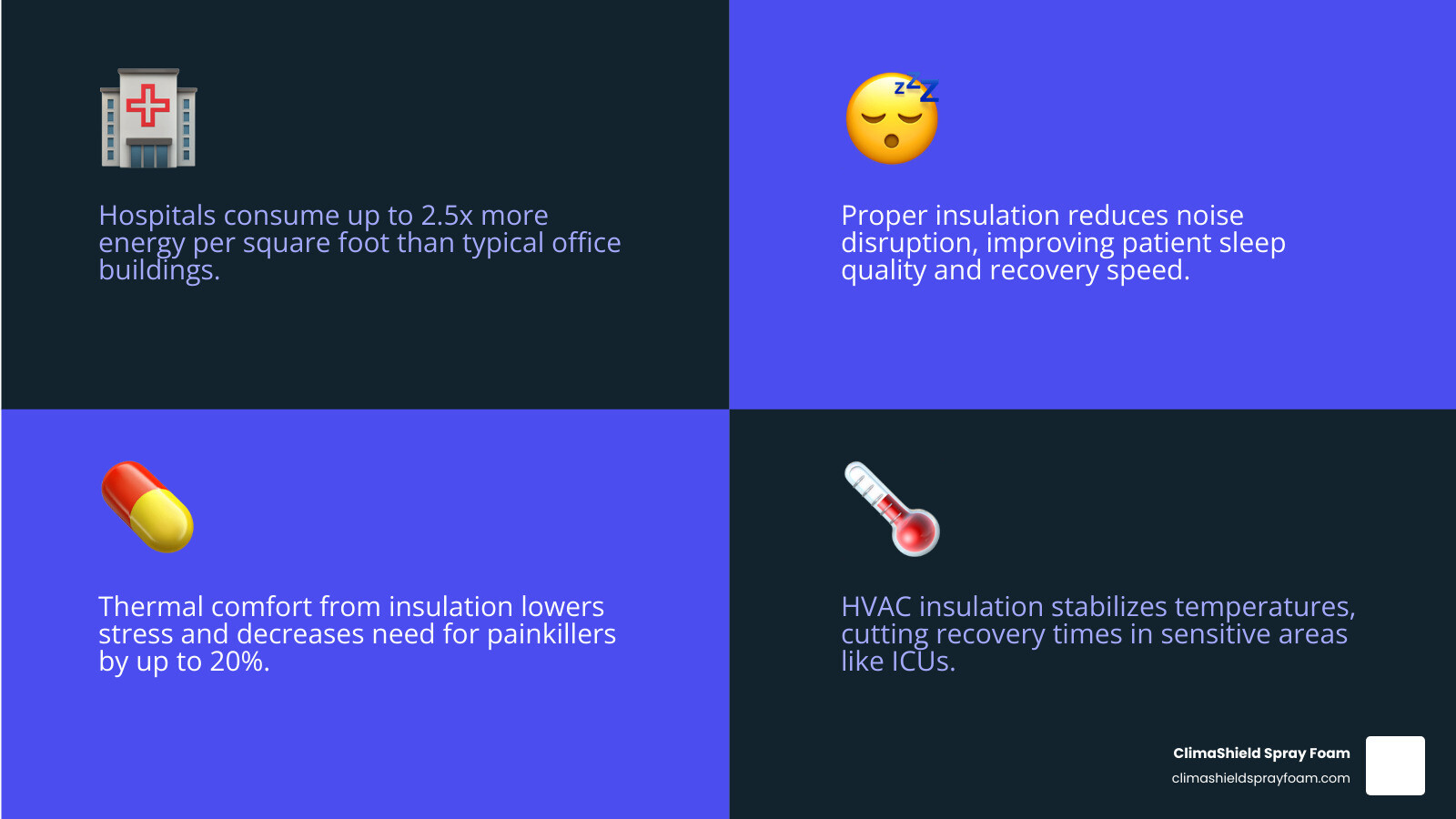
A well-insulated hospital isn’t just a “warm” building; it’s a quiet, stable environment where the body can focus on getting better. According to The Role of HVAC Insulations in Health Care, the right insulation choices can lead to a measurable reduction in recovery times. When patients aren’t shivering or being startled awake by a humming HVAC unit, their stress levels drop, and their need for analgesics (painkillers) often decreases.
Improving Thermal Comfort and Recovery
Thermal comfort is about more than just setting the thermostat. In a hospital, different zones require vastly different climates. For example:
- Nursery Suites: Typically kept between 75°F and 80°F to protect newborns.
- Burn-Patient Rooms: Often require extreme conditions, with relative humidity levels between 90% and 96%.
- Pediatric Surgery: Can be kept as high as 86°F.
- Operating Rooms: Usually range from 68°F to 75°F with 30-60% relative humidity.
Achieving these precise temperatures without wasting a fortune in energy requires a high-performance building envelope. We focus on eliminating “thermal bridging”—those pesky gaps in the building’s structure where heat escapes—by using energy saving insulation that provides a continuous thermal barrier. For those looking for a deep dive into how these systems work, check out The Ultimate Guide to Best Energy Saving Insulation.
Acoustic Insulation for Hospitals: Wards, ORs, and ICUs
If you’ve ever tried to sleep in a hospital, you know it’s rarely “quiet.” Between the beeping monitors, the rolling carts in the hallway, and the rumble of the ventilation system, the noise can be overwhelming. This isn’t just annoying; it’s a health hazard. High noise levels are linked to increased heart rates, higher blood pressure, and interrupted sleep cycles.
Acoustic insulation for hospitals is vital for:
- Patient Privacy (HIPAA): Patients need to know their conversations with doctors aren’t being overheard in the next room.
- Staff Efficiency: Constant noise leads to “alarm fatigue” and increased errors among nurses and surgeons.
- Healing: Deep sleep is when the most significant physical recovery happens.
We use specific metrics to measure success here, such as Noise Reduction Coefficient (NRC) and Sound Transmission Class (STC). High-density insulation in internal partitions can achieve NRC values of 1.0 or higher, meaning they absorb almost all the sound that hits them.
Maximizing Energy Efficiency and ROI in Healthcare Facilities
Hospitals are some of the most energy-intensive buildings in Pennsylvania. They never close, and their HVAC systems have to move massive amounts of air—often 6 to 25 air changes per hour compared to just 5 in a standard office. This high demand means that even small improvements in insulation can lead to massive cost savings.
To help hospitals understand their potential savings, we often look at 3E Plus® software. This tool allows us to calculate exactly how much heat is being lost through uninsulated pipes and valves. By measuring the “touch temperature” of equipment and comparing it to the desired ambient temperature, we can determine the exact thickness of insulation needed for maximum ROI.
Calculating ROI for Hospital Insulation Upgrades
Many hospital administrators are surprised to learn that insulation upgrades often pay for themselves in less than a year. When we install commercial insulation, we aren’t just looking at the walls; we’re looking at the mechanical rooms, steam pipes, and sterilization centers.
| Component | Heat Loss (Uninsulated) | Heat Loss (Insulated) | Potential Savings |
|---|---|---|---|
| 8″ Steam Pipe | High MMBTU Loss | 90% Reduction | Thousands per year |
| Gate Valves | Significant Radiant Heat | Minimal | Reduced HVAC Load |
| Ductwork | Condensation/Energy Waste | Stabilized | Extended Equipment Life |
By reducing the workload on the HVAC system, you aren’t just saving on the monthly utility bill—you’re also reducing maintenance costs and delaying the need for expensive equipment replacements.
Safety First: Fire Resistance and Moisture Control Standards
In a hospital environment, safety is non-negotiable. Because many patients may be non-ambulatory (meaning they can’t just get up and run in an emergency), fire protection is the top priority.
We prioritize non-combustible materials that meet strict safety standards. This includes products that have a “0” index for ignitability and flame spread. Using fire retardant insulation ensures that in the event of a fire, the building’s structure provides the maximum possible time for evacuation and containment.
Controlling Condensation and Indoor Air Quality
Air quality is another major concern. If insulation isn’t installed correctly, “dew point” issues can lead to condensation inside the walls or on HVAC ducts. Moisture is the enemy of healthcare; it leads to mold, mildew, and the growth of pathogens.
At ClimaShield Spray Foam, we specialize in mold resistant insulation and pest resistant spray foam. Our closed-cell spray foam acts as both an air barrier and a vapor retarder, preventing the humid Pennsylvania air from reaching cold surfaces where it can turn into liquid water. This is essential for meeting ASHRAE 62.1 standards for indoor air quality and preventing hospital-acquired infections (HAIs) that can stem from microbial growth in the building’s lungs (the HVAC system).
Strategic Applications: From Building Envelopes to HVAC Systems
To get the most out of insulation for hospitals, you have to take a holistic approach. It’s not just about the roof; it’s about every point where energy can leak.
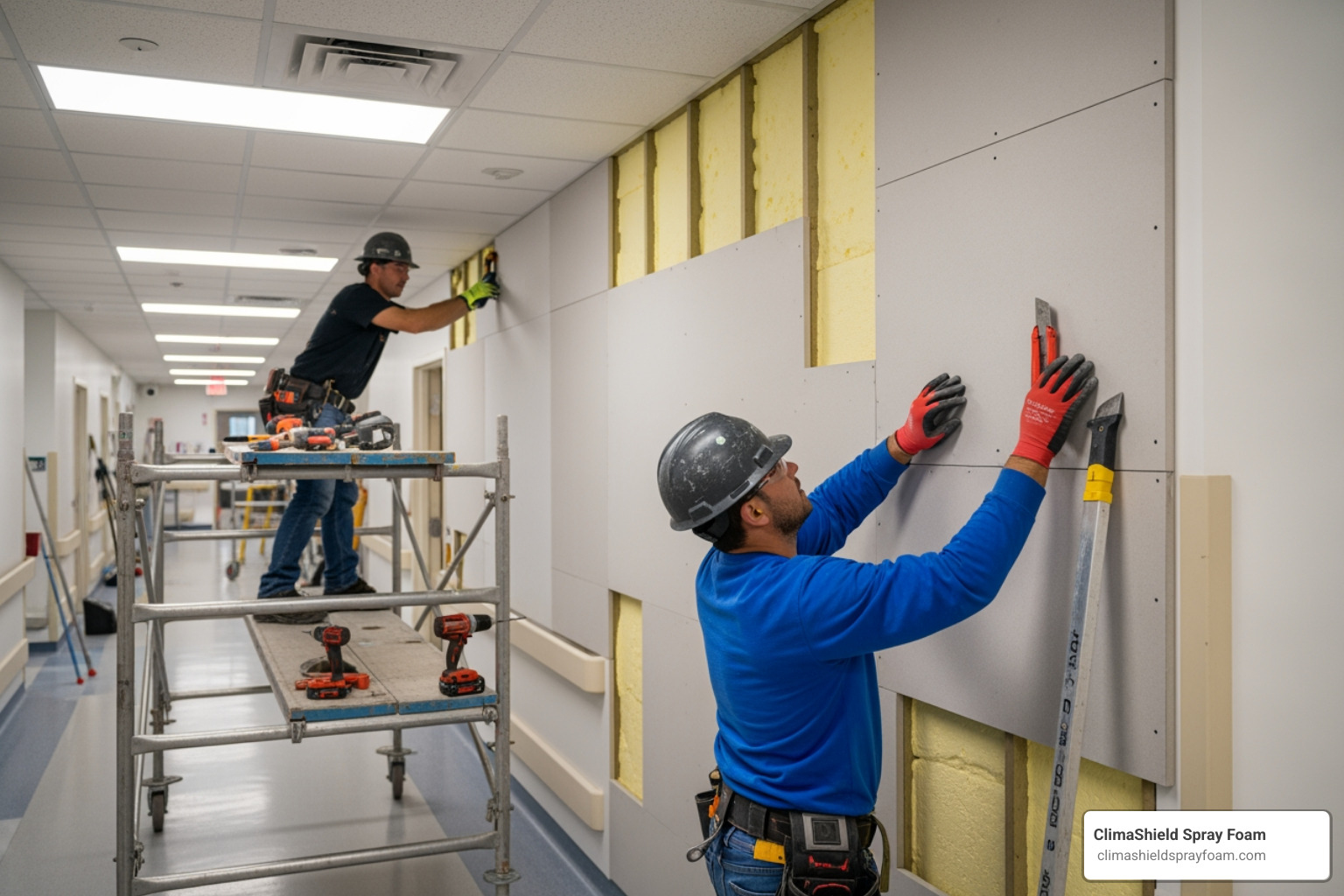
- Building Envelope: We use commercial spray foam insulation to seal the exterior walls and roof decks. This creates an airtight seal that traditional fiberglass batts simply can’t match.
- Roofing: For hospitals with metal roofs, insulation is critical for dampening the sound of rain and helicopter landings, which can be incredibly disruptive to patients on the top floors.
- Concrete Slabs: Insulating the slab prevents “cold feet” in ground-floor clinics and helps maintain a stable temperature throughout the facility.
Specialized Insulation for Hospital Equipment and HVAC
The “guts” of a hospital—the pipes, ducts, and tanks—need specialized care.
- Duct Wraps and Liners: These prevent energy loss as air travels from the chiller to the operating room.
- Removable Insulation Jackets: These are a game-changer for mechanical rooms. Hospitals have many valves and components that need regular inspection. Traditional “hard” insulation is often ripped off and never replaced. Removable jackets allow for easy maintenance while keeping energy efficiency high.
- Hot Water Storage: Systems like EnbiTherm for hot water tanks can reduce radiant heat loss by up to 95%. This is vital for facilities that require constant hot water for sterilization and patient care.
Frequently Asked Questions about Hospital Insulation
Why is acoustic privacy so important in healthcare settings?
Beyond just comfort, acoustic privacy is a legal requirement under HIPAA. If a patient’s medical history can be heard through the wall of a consultation room, the hospital is at risk for privacy violations. Furthermore, a quiet environment reduces “cortisol” (stress hormone) levels in patients, which is scientifically proven to speed up wound healing and improve the immune response.
How does hospital insulation contribute to sustainability goals?
Modern insulation often uses a high percentage of recycled materials. For example, some glasswool products use up to 80% recycled glass. By drastically reducing the energy required to heat and cool the building, hospitals can significantly lower their carbon footprint. This helps facilities achieve certifications like Green Star or WELL, which are becoming the gold standard for healthy buildings.
What are the specific fire safety standards for hospital insulation?
Hospitals must adhere to strict building codes (like the IBC in the US). Insulation must typically be non-combustible or have high fire-resistance ratings. We ensure all our products meet or exceed these standards, providing passive fire protection that helps contain smoke and flames to the area of origin.
Conclusion
At the end of the day, insulation for hospitals is about more than just R-values and utility bills. It’s about creating a sanctuary for healing. By choosing the right materials—like recycled-content glasswool or airtight spray foam—we can build facilities that are quieter, safer, and much more cost-effective to run.
Whether you are managing a major hospital upgrade in Indiana, PA, or designing a new outpatient clinic, ClimaShield Spray Foam is here to help. We provide durable, waterproof, and airtight solutions that resist mold and pests, saving our customers up to 60% on energy bills.
Ready to prescribe a better building for your patients and staff? Explore our commercial insulation services today and let’s build a healthier environment together.
