
Why Homeowners Are Asking: Is Spray Foam Insulation Pest Resistant?
Is spray foam insulation pest resistant? Yes, spray foam insulation is highly pest-resistant because it creates a seamless, rigid barrier that seals gaps and cracks where pests typically enter. Here’s what you need to know:
- Spray foam seals entry points – It fills even tiny gaps (as small as 1/32 inch) that pests use to access your home
- Not a food source – Pests aren’t attracted to spray foam because it provides no nutritional value
- Poor nesting material – Unlike fluffy insulation, spray foam’s dense structure makes it unsuitable for rodent nests
- Closed-cell is strongest – Closed-cell spray foam creates a rigid barrier that’s extremely difficult for pests to penetrate
- Not 100% pest-proof – While highly effective, spray foam is a deterrent, not a guarantee. Determined pests can sometimes chew through it, though they typically give up due to the lack of reward
The constant scratching in your walls, attic, or crawl space is a frustrating sign of a pest invasion, often leaving you wondering how they got in.
Pests can enter through gaps as small as 1/32 of an inch, following air leaks into your home. Traditional insulation like fiberglass and cellulose not only fails to block these entries but can also become cozy nesting material for rodents.
Spray foam insulation changes the game. It creates a physical barrier that dramatically reduces pest access, though it’s important to understand its capabilities and limitations.
In this guide, we’ll break down exactly how spray foam works as a pest deterrent, which type performs best, how it compares to other insulation, and what it can’t do. We’ll also address the biggest concern many homeowners have: termites.
I’m Dave Brocious, founder of ClimaShield Industries. With 20 years of experience, I’ve seen how the spray foam insulation pest resistant properties work in real-world applications—and where homeowners need to set realistic expectations.
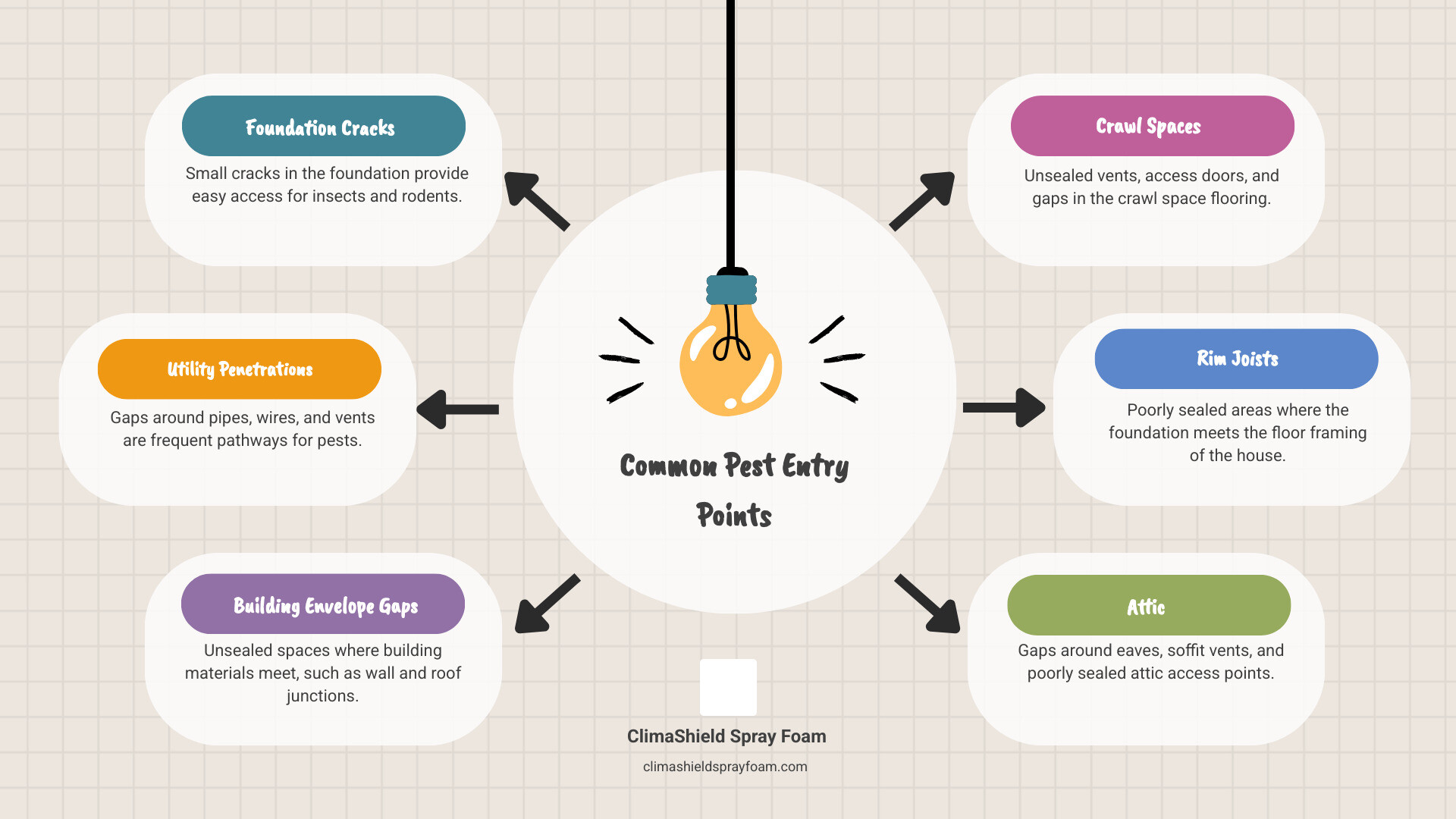
How Spray Foam Creates a Pest-Resistant Barrier
Spray foam insulation’s most remarkable quality against pests is its ability to create a seamless, airtight barrier. Unlike traditional insulation that comes in batts or loose fill, spray foam expands to fill every crack and gap—even those as small as 1/32 of an inch—that pests use to follow air leaks into your home.
When applied, spray foam expands to form a continuous, rigid layer. This monolithic barrier, especially with closed-cell foam, is a formidable physical obstacle for pests. It effectively seals cracks, gaps, and penetrations in the building envelope, deterring a wide variety of insects, rodents, and other unwanted critters. To learn more about the diverse applications of this incredible material, explore the many Uses of Spray Foam.
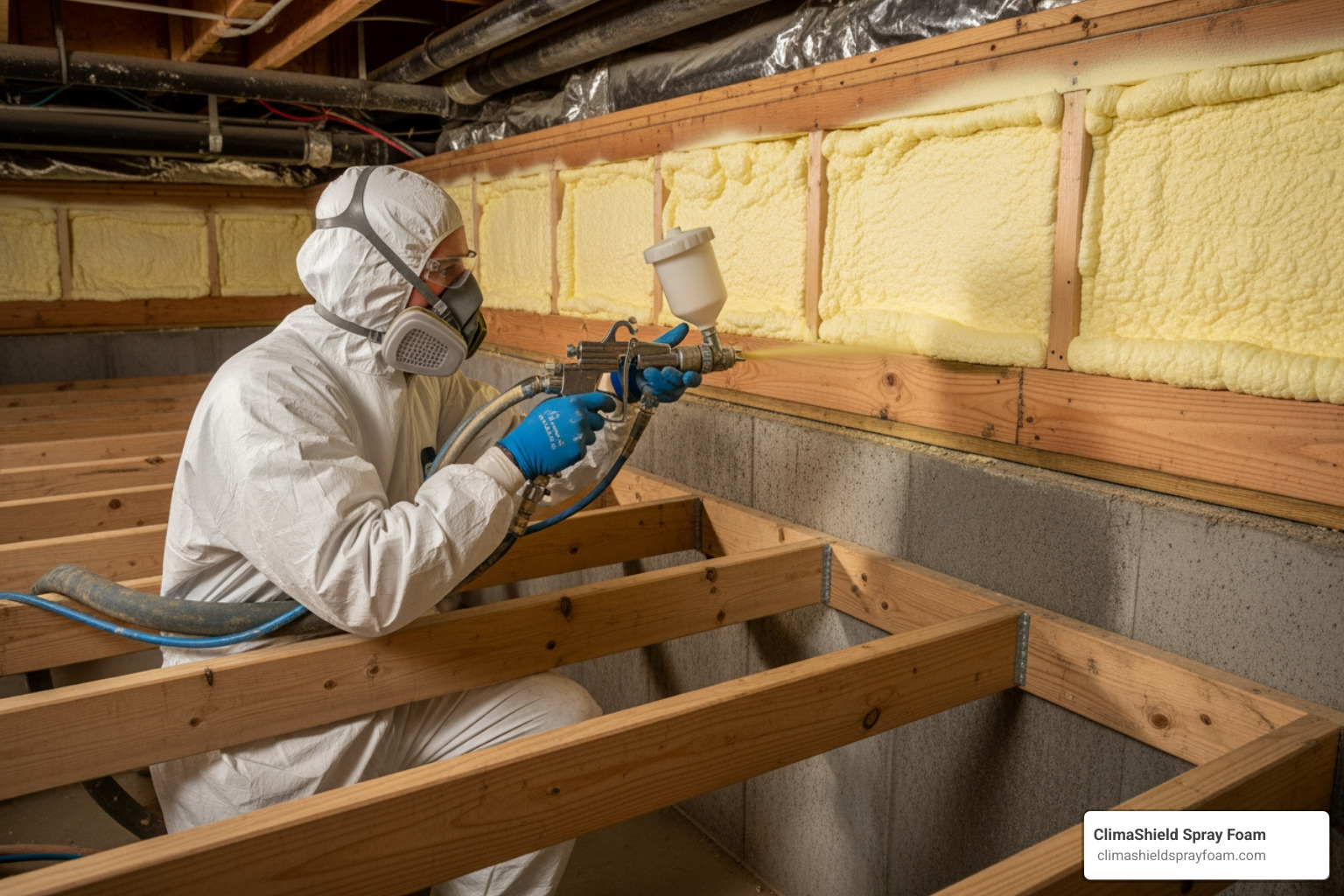
Why Pests Avoid Spray Foam
Beyond physically blocking entry, spray foam is inherently unappealing to pests. It’s not just that they can’t get in; it’s that they don’t want to.
First, spray foam is an inedible polymer, offering no nutritional value. Pests are driven to find food, and since they gain nothing from chewing on foam, they quickly abandon the effort.
Second, spray foam is a poor nesting material. Unlike soft, fluffy fiberglass that rodents love, spray foam (especially closed-cell) is firm and rigid. It doesn’t provide the cozy shelter pests seek for building nests. This unwelcoming texture acts as a significant deterrent.
Closed-Cell vs. Open-Cell: Which is Better for Pest Defense?
When considering is spray foam insulation pest resistant, it’s important to understand the two main types. While both offer significant pest deterrence, closed-cell foam has a distinct edge.
Here’s a quick comparison:
| Feature | Closed-Cell Spray Foam | Open-Cell Spray Foam |
|---|---|---|
| Density & Rigidity | High-density (2 lb/ft³), very rigid and strong | Low-density (0.5 lb/ft³), softer and more flexible |
| Pest Penetration | Extremely difficult for pests to chew or burrow through | More difficult than traditional, but less rigid than closed-cell |
| Air Sealing | Excellent, creates a seamless, airtight barrier | Excellent, creates a seamless, airtight barrier |
| Moisture Resistance | Hydrophobic, acts as a vapor barrier | Vapor permeable, can absorb water |
| Structural Impact | Adds structural strength, acts as an adhesive | No significant structural contribution |
| Nesting Suitability | Very poor, too dense and hard | Poor, but softer than closed-cell |
Closed-cell spray foam’s high density and rigidity create a solid barrier that is exceptionally difficult for pests to chew or burrow through. The effort required, with no food reward, deters most pests.
Open-cell foam is also an effective air sealer and pest deterrent compared to traditional insulation, but its softer, less dense structure makes it slightly easier to penetrate than closed-cell foam.
Additionally, closed-cell foam is a vapor barrier that resists moisture. Since many pests are drawn to damp environments, this property makes your home even less attractive to them. For this reason, it’s the top choice for areas like crawl spaces.
How Spray Foam Insulation Compares for Pest Resistance
When we talk about is spray foam insulation pest resistant, the difference between it and other materials is night and day.
Compared to spray foam, traditional insulation like fiberglass batts and cellulose is far less pest-resistant. These soft, fluffy materials are ideal for rodents to burrow into, creating nests within your walls and attic. Even if treated with deterrents, their physical structure remains inviting to pests.
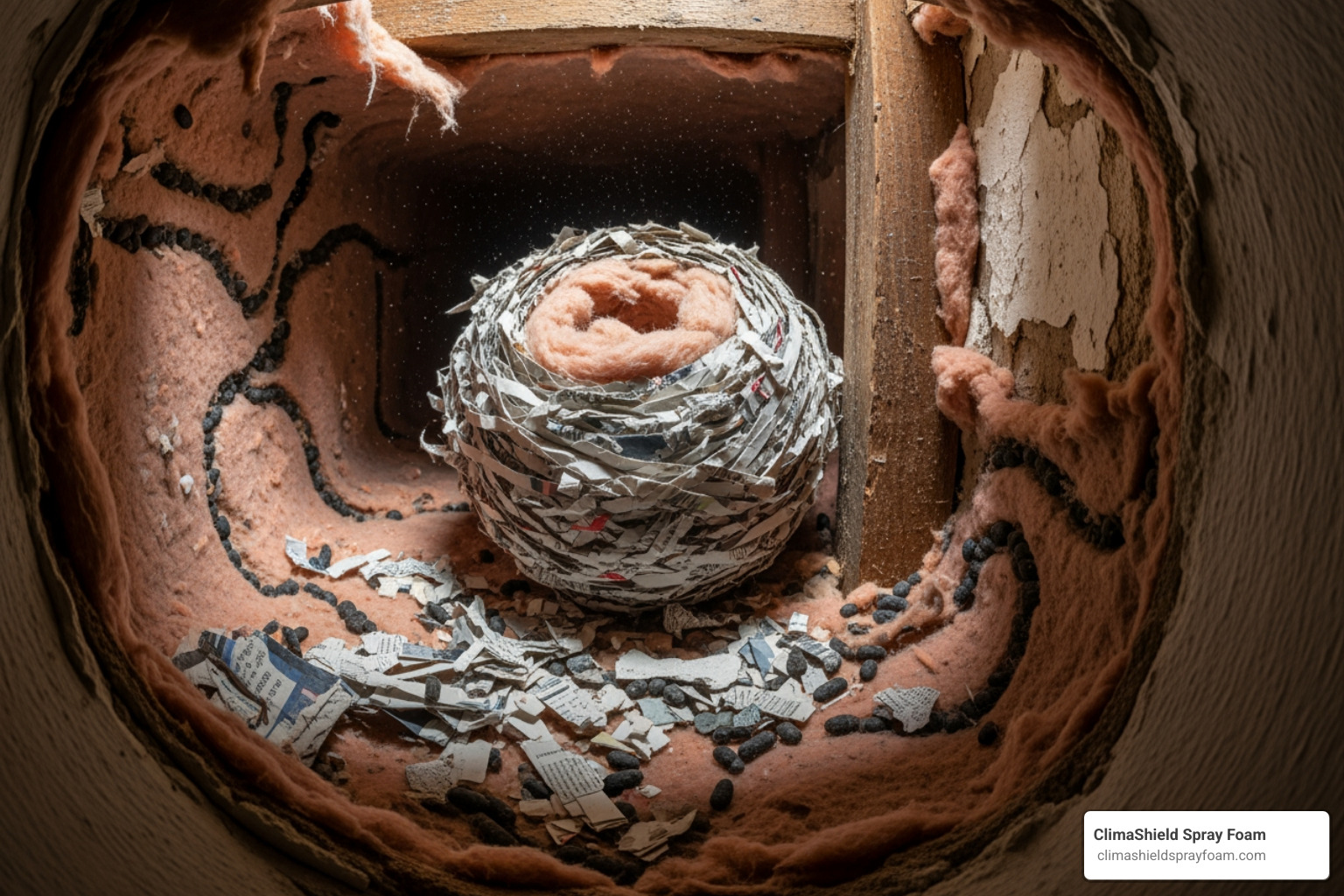
Traditional insulations also fail to create a proper air seal. Gaps left by batts or settling from blown-in material create the very pathways pests use to get inside.
Spray foam, in contrast, creates a durable, seamless air seal in a single application. It doesn’t sag or settle, permanently eliminating the entry points and nesting spots that traditional insulation provides.
What Pests Does Spray Foam Help Keep Out?
Spray foam insulation acts as an effective deterrent against a wide array of common household pests by creating a sealed, impenetrable barrier.
Here’s a list of pests that spray foam insulation pest resistant properties help to keep out:
- Rodents: Mice and rats are blocked by the airtight seal, which closes the tiny gaps they use for entry and eliminates the soft nesting material they seek.
- Insects: Small insects like ants, spiders, and cockroaches are stopped when spray foam expands to fill the minuscule cracks and crevices they use for access.
- Larger Pests: For larger creatures like bats and snakes, spray foam seals off common entry points in attics and basements, making these spaces inaccessible.
By creating a seamless, airtight seal, spray foam directly addresses the primary way these pests infiltrate your home.
Can Pests Chew Through Spray Foam Insulation?
This is a common and valid question. While a determined pest can theoretically chew through spray foam, it’s an unlikely and quickly abandoned effort.
First, spray foam has no food value. Rodents are driven by sustenance, and they won’t waste energy chewing through a material with no reward. This lack of incentive causes them to seek easier pathways elsewhere.
Second, closed-cell foam is rigid and dense, making it physically difficult to penetrate—much tougher than wood or fiberglass. While not a primary feature, the isocyanate compounds in the foam are also harmful if ingested, adding another layer of deterrence.
In summary, spray foam is a powerful deterrent, not an indestructible shield. It makes entry difficult and unrewarding, causing most pests to move on to an easier target.
The Truth About Termites and Spray Foam Insulation
When discussing is spray foam insulation pest resistant, termites are a major concern. The relationship between spray foam and termites is complex, and it’s crucial to understand it clearly.
Crucially, spray foam insulation is not a food source for termites. It is a synthetic polymer, and termites only eat cellulose-based materials like wood. They will not eat foam for sustenance.
However, subterranean termites can tunnel through spray foam to reach the wood structure behind it. This is a major concern, as the foam can hide their mud tunnels from visual inspection, allowing an infestation to cause significant damage before being detected.
This concealment issue has led to building code restrictions in some high-risk areas. In Pennsylvania, we always adhere to all local building codes and best practices for installation. To address this, the industry uses solutions like leaving termite inspection strips or employing advanced detection methods like thermal imaging and moisture meters where visual inspection is obscured.
While spray foam doesn’t attract termites, this underscores the importance of comprehensive pest management. If you’re in a termite-prone area, professional pest control is essential, regardless of your insulation choice. For a deeper dive, we recommend the Spray Foam Insulation & Termites Report.
Pest-Blocking Sealants and Spray Foam Insulation
In addition to standard spray foam, specialized pest-blocking sealants are available for targeted applications, offering another layer of defense.
These products, often called “Pestblock foam,” are polyurethane sealants formulated with bitter-tasting additives or mild chemical deterrents. This creates both a physical and a chemical barrier that repels rodents and insects upon contact. They are excellent for filling small, specific gaps and cracks where an extra deterrent is desired.
These sealants work well with a full spray foam system. While we insulate large areas like walls and attics, a pest-blocking sealant can be used for smaller penetrations, creating a comprehensive barrier.
The industry continues to innovate, with research into products like termite-resistant foam insulation that incorporates insecticides, showing a commitment to enhancing pest-resistant capabilities for specific applications.
Best Practices for Using Spray Foam in Pest Control
Using spray foam effectively for pest control means integrating it into a broader strategy. It plays a crucial, proactive role in integrated pest management.
First, spray foam is a preventative measure, not a cure for an existing infestation. Always hire a professional exterminator to clear your home of pests before installation. Sealing pests inside can lead to decay, odors, and other problems.
Second, professional installation is essential. An expert application ensures a truly seamless air seal, maximizing both energy efficiency and pest deterrence. Improper installation can leave gaps that defeat the purpose. Our certified installers in Indiana PA and throughout Pennsylvania have the expertise to apply spray foam correctly.
Finally, spray foam should be part of a holistic strategy that includes good sanitation and sealing all potential entry points around your home.
Where to Install Spray Foam for Maximum Pest Prevention
To maximize the pest-resistant benefits of spray foam, strategic application is crucial. By targeting common vulnerabilities in your home’s building envelope, we can create a powerful defense.
Here are the key areas where installing spray foam provides the most effective pest prevention:
- Attics: Sealing the attic floor or roof deck blocks common entry points for rodents, bats, and insects and eliminates nesting sites.
- Basements and Crawl Spaces: Insulating these areas creates an impenetrable barrier. Closed-cell foam is ideal here due to its moisture resistance.
- Rim Joists and Foundation Sills: This is a critical entry point for pests. Spray foam excels at sealing the gaps between the foundation and the home’s frame.
- Exterior Walls: Spray foam in wall cavities provides a solid fill that blocks hidden pathways around windows, doors, and siding.
- Utility Penetrations: Sealing around pipes, wires, and vents prevents pests from using them as highways into your home.
By focusing on these vulnerable areas, we can dramatically reduce pest entry. Our team specializes in Residential Insulation applications, ensuring these critical zones are protected.
Understanding the Limitations: What Spray Foam Can’t Do
While is spray foam insulation pest resistant is a resounding “yes,” it’s important to have realistic expectations. It’s a powerful tool, not a magic bullet.
Here’s what spray foam insulation can’t do:
- It won’t solve an existing pest problem: Always have a professional exterminator remove pests before insulation is installed. Sealing them in creates new problems like odors and decay.
- It’s not a chemical repellent: Spray foam is a physical barrier. Its effectiveness comes from blocking entry, not from actively repelling pests with chemicals (unless it’s a specialized pest-blocking sealant).
- It’s not foolproof: A desperate or trapped pest could potentially chew through the foam. However, the difficulty and lack of food reward make this highly unlikely.
- It won’t stop pests from open doors or windows: Spray foam protects your home’s structure, but it doesn’t replace basic household common sense.
Spray foam is a phenomenal preventative measure that makes your home a much less appealing target. For more insights, visit our Hub.
Frequently Asked Questions about Spray Foam and Pests
We often get questions from homeowners in Indiana PA and beyond about how spray foam interacts with pests. Here are some of the most common ones:
Can spray foam insulation solve an existing pest problem?
No, absolutely not. Spray foam is a preventative measure, not an extermination method. You must hire a professional exterminator to remove any existing pests before installation. Sealing pests inside your walls can lead to terrible odors and attract other pests as they decompose.
Is spray foam insulation pest resistant enough to be my only line of defense?
While powerful, it should not be your only defense. It works best as part of an integrated pest management strategy that includes good sanitation, sealing all gaps (like around doors and windows), and regular home inspections. Spray foam is your home’s strongest layer of armor, but a complete strategy ensures the best protection.
What is the difference between pest-resistant foam and regular spray foam insulation?
There is a clear distinction between the two products:
- Regular Spray Foam Insulation (like ours): This deters pests by creating a physical barrier. It’s dense, airtight, inedible, and unsuitable for nesting. Its pest resistance is a natural benefit of its superior insulating and air-sealing properties.
- Pest-Resistant Foam (Specialized Sealants): These are typically smaller, canned products for sealing minor gaps. They are specifically formulated with bitter-tasting additives or chemical deterrents to actively repel pests upon contact. They are a good complement to a full insulation system.
In short, our standard spray foam is inherently pest-resistant due to its physical structure, while specialized foams add a chemical deterrent for pinpoint applications.
Secure Your Home and Save on Energy
After exploring is spray foam insulation pest resistant, the powerful benefits are clear. Here are the key takeaways:
- Highly Resistant, Not Proof: Spray foam is an effective pest deterrent that creates a seamless, rigid barrier, but no material is 100% “pest-proof.”
- Closed-Cell is Superior: For maximum pest defense, closed-cell foam is the best choice due to its density, rigidity, and moisture resistance.
- A Preventative Tool, Not a Cure: Spray foam prevents pests from entering but does not solve an existing infestation. Always have a professional exterminator address active pest problems first.
- Dual Benefits: Beyond pest control, spray foam provides major energy savings. Our customers at ClimaShield Spray Foam can save up to 60% on energy bills while enjoying a more comfortable and healthier home.
- Professional Installation is Key: Proper installation by experts like our team in Indiana PA and across Pennsylvania is crucial to ensure a complete, effective seal against pests and air leaks.
Choosing spray foam is an investment in comfort, energy efficiency, and peace of mind. We’re confident it’s one of the best choices you can make for your home in Pennsylvania.
Ready to make your home more comfortable, energy-efficient, and pest-resistant? Learn more about the many uses of spray foam and find how ClimaShield Spray Foam can transform your living space.
