Understanding Concrete Pad Lifting: What It Is and How It Works
Concrete pad lifting is a repair method that raises sunken or settled concrete slabs back to their original level by injecting material underneath them. This process, also called slabjacking or mudjacking, addresses common issues like trip hazards, water pooling, and uneven surfaces without the need for complete concrete replacement.
Quick Overview of Concrete Pad Lifting:
- What it fixes: Sunken driveways, sidewalks, patios, garage floors, and other concrete slabs
- How it works: Material is injected through small drilled holes to fill voids and lift the slab
- Main methods: Polyurethane foam injection (modern) or cement slurry (traditional)
- Cost: Typically 50% less than full concrete replacement
- Time: Most jobs complete in 4-8 hours
- Longevity: 20-50 years with polyurethane foam, 5-10 years with traditional slurry
Settled concrete creates trip hazards on sidewalks, uneven front steps, and irregular driveway panels. Concrete pad lifting offers a fast, cost-effective solution that restores these surfaces without the need for full replacement.
The cause of sinking concrete is usually soil-related: poor compaction, erosion, shrinkage, or even tree roots. Concrete pad lifting levels the slab, addressing the symptom (the sunken concrete) rather than always fixing the root cause (the soil condition).
I’m Dave Brocious, founder of ClimaShield Industries. With 20 years of experience in concrete repair, I’ve helped many property owners implement effective concrete pad lifting solutions, saving them money compared to full replacement.
Why Concrete Sinks and Signs You Need Lifting
Most concrete settlement issues in Indiana, PA, and across Pennsylvania stem from what’s happening beneath the surface. Soil can be temperamental, leading to sinking slabs.
Here’s why concrete sinks:
- Soil Settlement: If the ground wasn’t properly compacted before pouring, the loose soil settles over time, creating voids that cause the slab to sink.
- Soil Erosion: Poor drainage or misdirected downspouts can allow rainwater to wash away the soil supporting your concrete, leading to collapse.
- Water Intrusion: Saturated soil can weaken and lose its ability to support the heavy concrete slab above it.
- Freeze-Thaw Cycles: Common in Pennsylvania, water freezing and thawing in the soil causes it to expand and contract, creating voids and leading to settlement.
- Tree Roots: Growing tree roots can lift slabs, while decaying roots from removed trees can leave voids that cause settlement.
Keep an eye out for these signs that your concrete needs lifting:
- Uneven Slabs and Trip Hazards: The most obvious sign is a non-level surface. A noticeable height difference between slabs or any lip that creates a step is a significant trip hazard.
- Visible Cracks: Extensive or widening cracks, especially those that run across a slab rather than along control joints, can signal underlying settlement.
- Water Pooling: Water collecting in low spots after rain indicates where the slab has settled, which can worsen erosion and damage.
Common Applications for Concrete Lifting
Concrete pad lifting is a versatile solution for many residential and commercial surfaces. Here are some common applications where our team provides expert services:
- Driveways: We level irregular driveway panels to fix drainage issues and prevent vehicle damage.
- Sidewalks: We restore uneven sidewalks, which are notorious trip hazards, to a safe, level surface.
- Patios: We lift sunken patio sections to create a smooth, functional outdoor living space.
- Pool Decks: We repair sunken pool decks to improve safety and prevent water damage.
- Garage Floors: We restore sagging garage floors to a level plane, improving drainage.
- Interior Floor Slabs: We lift settled interior concrete floors to prevent damage to flooring and walls.
- AC Pads: We level settled AC pads to ensure your unit functions correctly.
- Steps: We lift and level uneven concrete stairs to eliminate major safety hazards.
Whether it’s a residential pathway or a commercial walkway, concrete pad lifting offers a cost-effective and efficient way to restore these surfaces without extensive demolition and replacement.
Comparing Concrete Lifting Methods
When it comes to raising sunken concrete, you have a couple of primary options. Both methods involve injecting material underneath the slab to fill voids and create upward pressure. The goal is to fill empty spaces and compact loose soil to provide a stable base for the concrete.
We carefully consider environmental factors, and our preferred method, polyurethane foam injection, is an environmentally conscious solution as it’s inert once cured.
Here’s a quick comparison of the two main types of concrete pad lifting:
| Feature | Polyurethane Foam Injection | Traditional Slurry Lifting (Mudjacking) |
|---|---|---|
| Material | High-density, two-part polyurethane foam | Cement-based mixture (sand, soil, water, Portland cement) |
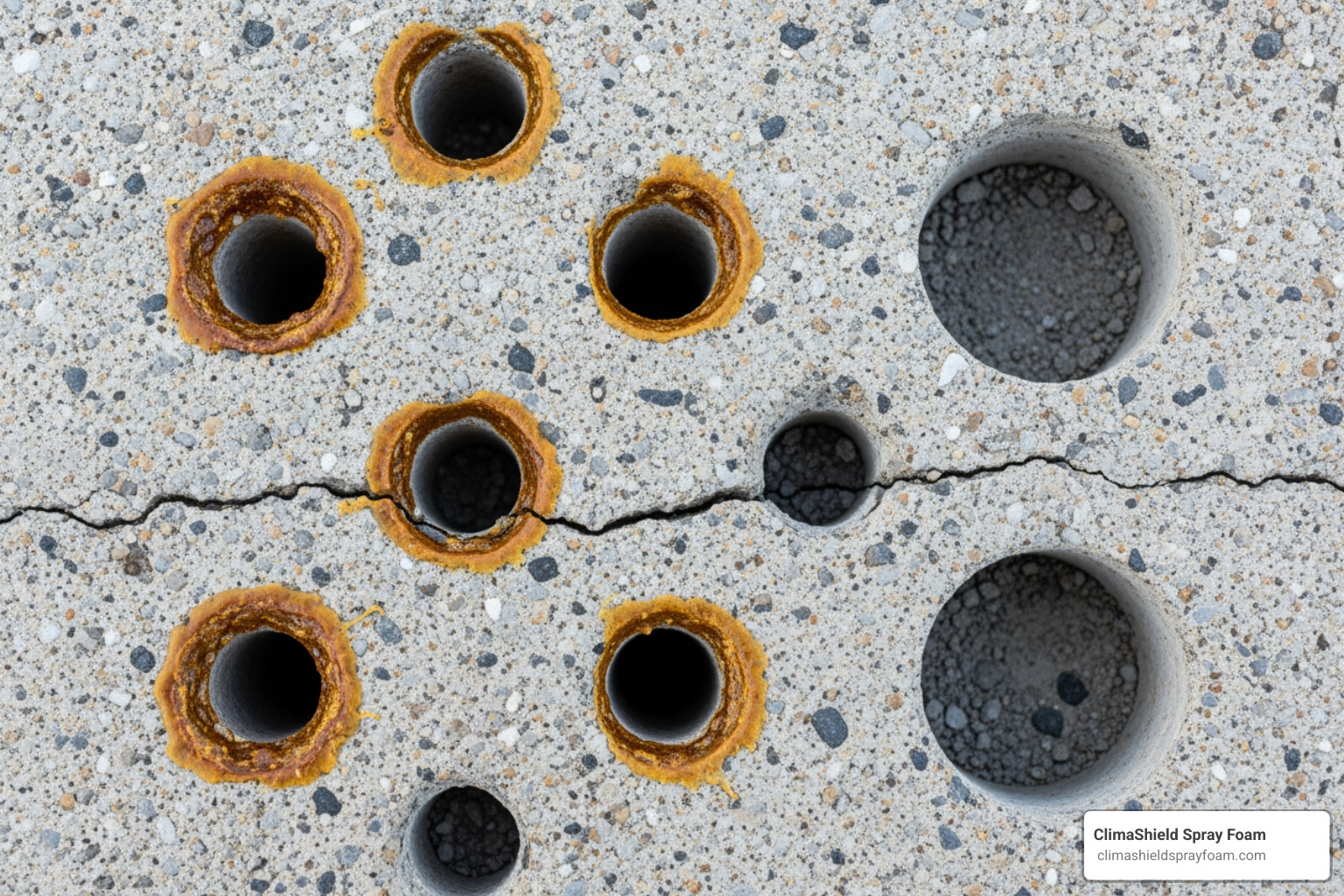
| Drill Hole Size | Tiny, around ⅝” in diameter | Larger, 1” (stone slurry) to 2” (mudjacking) in diameter |
| Material Weight | Lightweight (expands to fill voids without adding significant load) | Heavy (adds considerable weight to already compromised soil) |
| Cure Time | Rapid (usable in 1 hour) | Slower (foot traffic immediately, vehicles after 24 hours) |
| Lifespan | Long-lasting (20-50 years, often life of the slab) | Shorter (typically 5-10 years) |
| Water Resistance | Waterproof; acts as a moisture barrier | Not inherently waterproof; can break down with water intrusion |
| Soil Compaction | Expands to compact loose soil and fill voids | Primarily fills voids; less direct soil compaction |
| Disruption | Minimal (small holes, quick process, no heavy equipment) | More noticeable (larger holes, heavier equipment, longer cure time) |
| Cost | Generally half the cost of replacement | Generally less expensive than foam, but with shorter lifespan |
Polyurethane Foam Injection
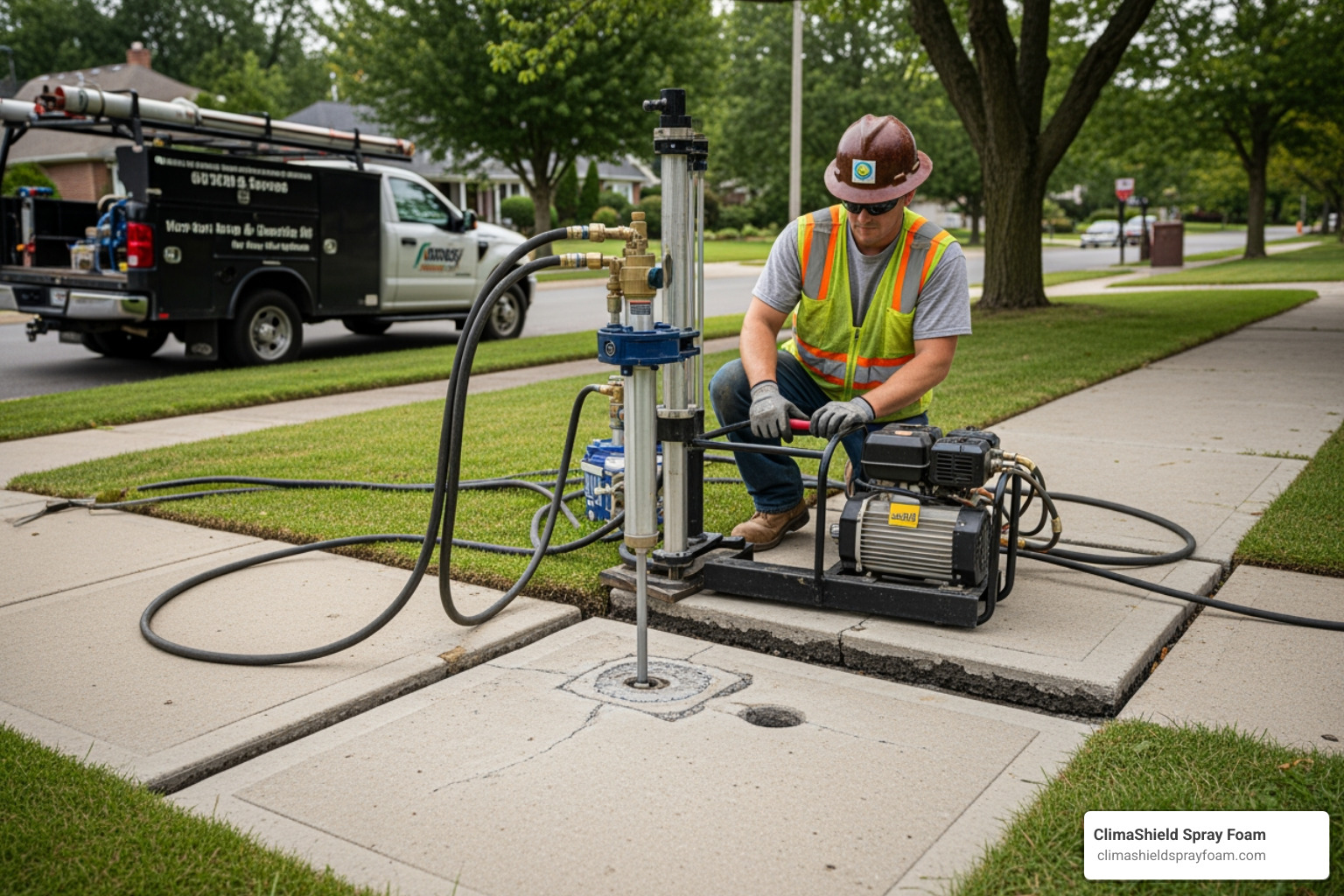
Polyurethane foam injection is our go-to method for concrete pad lifting at ClimaShield Spray Foam. This advanced technique uses a high-density, two-part polyurethane foam that expands upon injection. We drill tiny, ⅝” holes, inject the liquid polyurethane, and as it expands, it fills voids, compacts soil, and gently lifts the concrete.
The advantages are numerous:
- Small Drill Holes: The tiny injection points have minimal aesthetic impact, leaving no large, unsightly patches.
- Lightweight Material: The foam is incredibly lightweight, preventing extra strain on the underlying soil and reducing the risk of future settlement.
- Fast Curing Time: The foam cures rapidly. Surfaces are ready for foot traffic in 15 minutes and vehicle traffic in an hour, minimizing disruption.
- Waterproof: Cured foam is waterproof and inert, preventing future water erosion and protecting the sub-base.
- Long Lifespan: This durable solution lasts 20-50 years, often the entire life of the slab, making it a popular choice.
- Versatile and Strong: Our foams have enough lifting power for any settled concrete and are reliable enough to be required for many Department of Transportation (DOT) projects.
To learn more about how this innovative material works, visit our page on Slab Jacking Foam.
Traditional Slurry Lifting
Before polyurethane foam, traditional slurry lifting (mudjacking) was the primary method. This technique involves injecting a cement-based slurry beneath the slab.
- Cement-Based Slurry: A mixture of sand, soil, water, and cement is pumped under the slab.
- Larger Drill Holes: This method requires larger holes (1-2 inches in diameter), which are more noticeable after patching.
- Heavier Material: The slurry is heavy, adding substantial weight to already compromised soil, which can lead to further settlement.
- Slower Cure Time: The slurry cures slowly. Vehicle traffic must wait at least 24 hours.
- Shorter Lifespan: The repair typically lasts 5-10 years due to the material’s susceptibility to water erosion and the added weight.
- Potential for Resettlement: The slurry isn’t waterproof, so water intrusion can cause the material to break down and the concrete to resettle.
While traditional methods can be budget-friendly, the long-term benefits and durability of polyurethane foam make it a superior choice for most concrete pad lifting projects in Pennsylvania. For a technical dive into slabjacking, you can consult the Slabjacking Field Guide.
A Deep Dive into Polyurethane Concrete Pad Lifting
At ClimaShield Spray Foam, we specialize in polyurethane concrete pad lifting because it’s the most effective and least disruptive method, providing a long-lasting, stable solution.
Here’s what makes our approach stand out:
- Minimal Disruption: The process is unobtrusive, with no heavy equipment or lengthy downtime. Most jobs are completed in 4-8 hours.
- DOT-Approved Method: Our powerful lifting foams are so reliable they are required for many Department of Transportation (DOT) projects, proving their performance and durability.
- High Lifting Power: This incredibly strong material supports massive loads, from vehicles to heavy industrial equipment.
- Soil Compaction: As the foam expands, it compacts loose soil beneath the slab, stabilizing the foundation and reducing the likelihood of future settlement.
- Erosion Control: The waterproof foam creates a barrier that prevents water from further eroding the soil underneath the slab, ensuring the repair’s longevity.
We’re proud to offer geotech slab lifting services that leverage these benefits. You can explore more about our specialized services on our Geotech Slab Lifting page.
The Step-by-Step Process of Concrete Pad Lifting with Foam
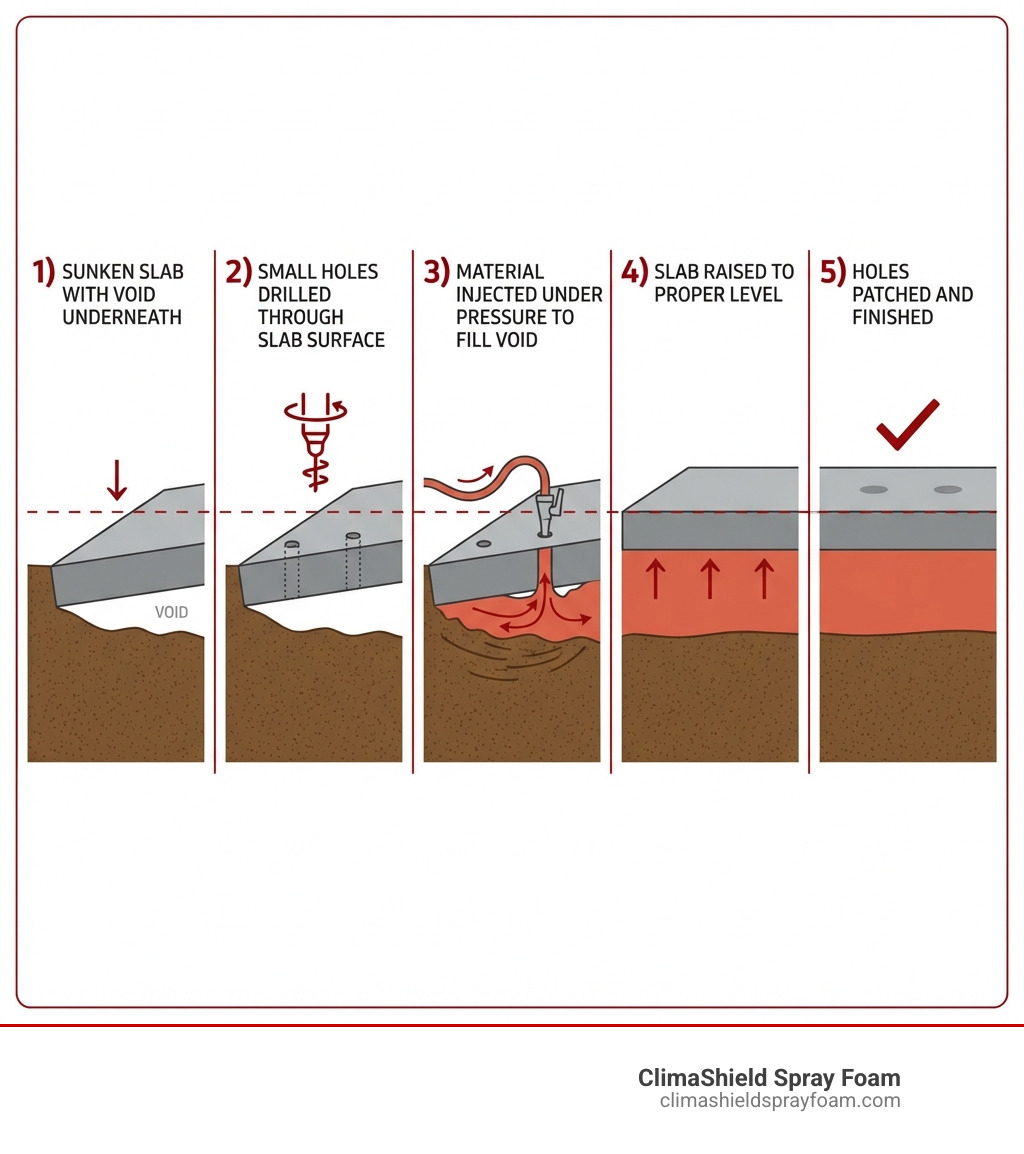
Our process is precise and efficient, minimizing inconvenience while maximizing results:
- Site Assessment: Our team inspects the slab to identify settlement causes and plan the optimal lifting strategy.
- Drilling Strategic Holes: We drill small, ⅝” holes at strategic locations for even foam distribution.
- Port Installation: We insert injection ports into the holes to create a sealed entry point for the foam.
- Foam Injection: We inject two-part polyurethane foam through the ports. The foam expands to fill voids and create upward pressure.
- Slab Monitoring: Our technicians use precise equipment to monitor the slab’s movement, lifting in small, controlled intervals to prevent damage and ensure an even lift.
- Lifting and Leveling: We continue injecting until the pad is restored to its original, level position.
- Port Removal: Once the slab is level, we remove the injection ports.
- Hole Patching: We patch the drilled holes with cement, blending them with the surrounding concrete.
- Final Cleanup: We clean the work area thoroughly.
Strength, Curing, and Safety
- Foam Compressive Strength: Our high-density foam is robust enough for any load, from people to heavy vehicles, and is proven in demanding applications like highways.
- Supporting Heavy Loads: The foam’s strength makes it suitable for residential, commercial, and industrial applications without adding excess weight to the soil.
- Rapid Curing: Surfaces are typically ready for use within an hour, minimizing disruption to your home or business in Indiana, PA.
- Safety Protocols: Our team follows strict safety protocols, including using PPE, securing the work area, and monitoring injection pressures to ensure a controlled, safe lift.
While our services focus on repairing existing slabs, new pads for heavy equipment like car lifts have specific requirements for thickness and strength. For technical information on such structural slabs, a good resource is Technical information on slab requirements.
Understanding the Cost and Longevity of Concrete Repair
When faced with sunken concrete, many property owners in Pennsylvania think of replacement. However, concrete pad lifting is a significantly more cost-effective solution.
- Cost vs. Replacement: Polyurethane foam injection is typically about half the cost of full replacement, offering substantial savings, especially for larger areas.
- Project Size: The cost increases with the size of the area, but the cost per square foot often decreases on larger projects due to our efficiency.
- Amount of Material Needed: The severity of settlement and the size of the voids determine the amount of foam needed, affecting the total cost.
- Complexity of the Issue: Challenging access, significant damage, or specific site conditions can increase job complexity and cost.
- Geographic Location: Local factors in Indiana, PA, and surrounding areas, like material delivery costs, can influence pricing.
Longevity Factors: The lifespan of your concrete pad lifting solution is influenced by several key factors:
- Material Used: Polyurethane foam offers a significantly longer lifespan (20-50 years) compared to traditional mudjacking (5-10 years).
- Soil Conditions: Addressing underlying soil issues like poor compaction is key. While our foam helps, severe ongoing erosion can still challenge any repair.
- Water Management: Proper drainage is essential. Directing water away from slabs protects the repair and the underlying soil.
- Quality of Installation: Our skilled team ensures proper installation, which is crucial to maximizing the lifespan of the solution.
Frequently Asked Questions about Concrete Lifting
We often hear similar questions from our clients in Pennsylvania, so we’ve compiled some of the most common ones to help you better understand concrete pad lifting.
Is concrete lifting a permanent solution?
While no repair is literally “permanent,” polyurethane concrete pad lifting is a very long-lasting solution. The foam can last 20-50 years—often the remaining life of the slab itself. Its longevity comes from addressing underlying soil issues: the foam fills voids, compacts loose soil, and its waterproof nature prevents future erosion. Maintaining proper drainage around your concrete is crucial for maximizing the lifespan. With expert installation, our solutions provide decades of stable, level concrete.
Can concrete lifting be used for structural foundations?
Our concrete pad lifting service is for “slabs-on-grade” like driveways, patios, and garage floors, which are non-structural. Deeper structural foundation issues affecting a building’s load-bearing walls require different methods, such as piering systems that drive steel or concrete piers deep into the ground for support. The scale and engineering for structural work are different. If you have concerns about your building’s foundation, we recommend consulting a structural engineer. For more on advanced slab lifting, you can refer to resources like Information on advanced slab lifting methods.
How long until I can use the surface after lifting?
This is one of the biggest advantages of choosing polyurethane foam for your concrete pad lifting project!
- Polyurethane Foam Curing Time: Your newly leveled concrete surface is typically ready for foot traffic in as little as 15 minutes, and for vehicle traffic (including cars and light trucks) within just one hour after the injection process is complete. This rapid curing means minimal disruption to your home or business in Indiana, PA.
- Traditional Slurry Curing Time: If traditional mudjacking methods were used, the curing time is significantly longer. While you can often walk on the surface immediately, vehicles must be kept off for at least 24 hours to allow the heavier, cement-based slurry to fully set and gain strength.
We understand that your time is valuable, which is why we prioritize efficient, fast-curing solutions that get your property back to normal as quickly as possible.
Restore Your Concrete with Confidence
Don’t let sunken concrete detract from your property’s beauty, compromise safety, or lead to costly future repairs. At ClimaShield Spray Foam, we’re dedicated to providing effective, long-lasting concrete pad lifting solutions that bring your surfaces back to life.
By choosing our polyurethane foam injection services, you’re investing in:
- Safety Improvement: Eliminating dangerous trip hazards and creating a smooth, even surface for your family, customers, or employees.
- Property Value Increase: A well-maintained property, free of unsightly and hazardous concrete, instantly boosts curb appeal and value.
- Cost-Effectiveness: Saving you money compared to the expense and hassle of full concrete replacement.
- Durability and Longevity: Our polyurethane foam offers a waterproof, lightweight, and incredibly strong solution that lasts for decades.
With ClimaShield Spray Foam, you’re partnering with experts who understand the unique soil and weather conditions in Indiana, PA, and throughout Pennsylvania. We’re committed to delivering precise, high-quality results with minimal disruption.
Ready to say goodbye to uneven concrete? Request your free concrete lifting consultation today and let us help you restore your concrete with confidence!
