Why Choosing the Right Closed Cell Foam Insulation Manufacturer Matters
The closed cell foam insulation manufacturers you choose directly affects how well your home holds heat, resists moisture, and stands up to the elements. Here are the top names to know:
| Manufacturer | Key Product | R-Value per Inch | Notable Feature |
|---|---|---|---|
| BASF | WALLTITE | ~6.9 | Structural reinforcement, disaster resilience |
| Carlisle | Closed Cell SPF | 6.9 | Zero ODP, wide application range |
| Henry | HFO Closed Cell | 7.2 | GWP < 1, ultra-low environmental impact |
| Accufoam | Closed Cell SPF | Not published | High yields, year-round sprayability |
| Tiger Foam | Closed Cell Kit | 6.89 | DIY-friendly, fire rated, no CFC/VOC |
| Igloo Foam | HFO Closed Cell | 2 lb density | Marine, roofing, pour-in-place options |
| Armacell | ArmaFlex | N/A | Elastomeric, fiber-free, HVAC/plumbing focus |
If your home has drafts, high energy bills, or moisture problems, the insulation material and who makes it both matter. Not all closed cell foam products perform the same way. R-values, density, blowing agents, and environmental ratings can vary significantly from one brand to the next.
Closed cell spray foam is widely regarded as the highest-performing insulation available today — offering R-values of 6.9 to 7.2 per inch, a built-in vapor barrier, and structural benefits that no batt or blown-in product can match. But knowing which manufacturers consistently deliver on those promises takes some digging.
That’s exactly what this guide breaks down.
I’m Dave Brocious, founder of ClimaShield Industries and a specialty coatings contractor with 20 years of experience in coatings, spray foam insulation, and commercial roofing — giving me a front-row seat to how closed cell foam insulation manufacturers differ in real-world performance. In the sections below, I’ll walk you through the brands worth knowing and what sets each one apart.
Understanding Closed Cell Spray Foam Technology
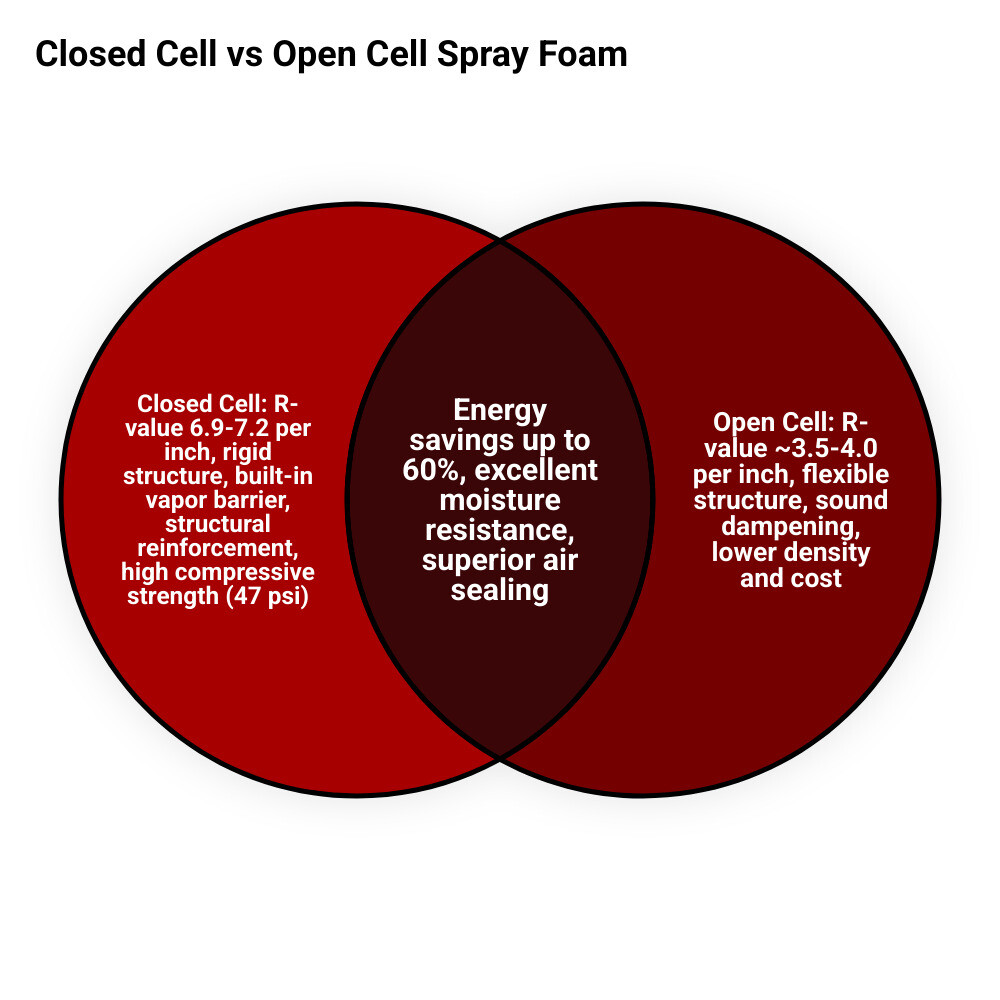
When we talk about closed cell spray foam, we are referring to a medium-density material (typically 2.0 lb/cubic foot) where the cells are completely closed and packed tight. Unlike open cell foam, which is soft and sponge-like, closed cell foam is rigid and hard to the touch once cured.
The primary metric most homeowners care about is the R-value. Most closed cell foam insulation manufacturers produce products that range from 6.9 to 7.2 per inch. To put that in perspective, at just 3 inches of thickness, you can achieve an R-value of 21.0 or higher. This is nearly double the insulating power of traditional fiberglass batts.
Beyond just stopping heat transfer, the physical properties of this foam are impressive:
- Compressive Strength: With ratings around 47 psi, it adds physical rigidity to the building envelope.
- Air Sealing: It acts as a seamless air barrier, preventing the “chimney effect” where air leaks out of your attic and sucks cold air in through your basement.
- Moisture Resistance: Because the cells are closed, water cannot easily travel through the material. It acts as its own vapor retarder.
If you are still weighing your options between the two main types of spray foam, check out our guide on which foam is for you exploring insulation types perks and prices to see a side-by-side comparison.
Leading Closed Cell Foam Insulation Manufacturers in 2026
As we move through 2026, the landscape of closed cell foam insulation manufacturers is defined by a push for higher R-values and lower environmental impact. We see several key players dominating the market in the Indiana, PA region.

BASF
BASF is a global leader, and their WALLTITE series is a staple in the industry. They focus heavily on “building resilience.” Their closed cell foam isn’t just about keeping you warm; it’s designed to create a seamless moisture barrier that reinforces the structure of the home. This makes it a favorite for areas prone to high winds or extreme weather.
Carlisle Spray Foam Insulation
Carlisle offers a medium-density, two-component system that is highly regarded for its consistency. Their products boast an R-value of 6.9 per inch and contain zero ozone-depleting blowing agents. We often look to Carlisle when a project requires extensive technical documentation and a wide range of application versatility, from foundations to HVAC ducts.
Accufoam
Accufoam has carved out a niche by focusing on the applicator’s experience, which ultimately benefits the homeowner. They provide a product with “year-round sprayability,” meaning it performs consistently whether it’s a humid July morning or a brisk November afternoon in Pennsylvania. Their foam is known for high yields and low odor, which is a big win for occupant comfort immediately after installation.
Henry HFO
If you are looking for the “greenest” high-performance option, Henry HFO is a top contender. They have pushed the R-value envelope to 7.2 per inch while maintaining a Global Warming Potential (GWP) of less than 1. This is the gold standard for environmentally conscious construction.
Tiger Foam
For smaller projects or specific retrofits, Tiger Foam provides self-contained kits. While we always recommend professional installation for whole-home envelopes, Tiger Foam’s products are notable for being fire-rated and providing an R-value of 6.89 per inch, proving that even portable systems can deliver high performance.
For a deeper dive into the corporate histories and reputations of these companies, read our article on whos who among top foam insulation manufacturers.
Performance Standards of Closed Cell Foam Insulation Manufacturers
It isn’t enough for a manufacturer to claim their foam is the best; they have to prove it through rigorous testing. When evaluating closed cell foam insulation manufacturers, we look for specific certifications:
- ASTM C-518: This is the standard test method for thermal transmission. It’s how we verify those R-6.9+ claims.
- ICC ESR: An Evaluation Service Report (ESR) from the International Code Council ensures the product meets building code requirements.
- NFPA 285: This fire test is critical for commercial applications, ensuring the foam doesn’t contribute to flame spread in wall assemblies.
- GREENGUARD Gold: This certification ensures the product has low chemical emissions, protecting your indoor air quality.
By sticking with manufacturers that meet these standards, we ensure that the insulation in your walls is safe, legal, and effective.
Innovation and Sustainability from Closed Cell Foam Insulation Manufacturers
The biggest shift in the industry over the last few years has been the move toward HFO (Hydrofluoroolefin) technology. In the past, the blowing agents used to expand the foam had high Global Warming Potentials. Today, leading closed cell foam insulation manufacturers have reformulated their products to have a GWP of less than 1 and zero Ozone Depletion Potential (ODP).
These low-GWP formulations mean you can insulate your home to save energy without worrying about a massive carbon footprint from the installation process itself. Many manufacturers now provide Environmental Product Declarations (EPDs), which offer a transparent look at the product’s lifecycle impact. This sustainability is a core reason why closed cell foam is often featured in the definitive guide to waterproof insulation.
Structural and Moisture Benefits of High-Density Foam
One of the “secret” benefits of closed cell foam is what it does for your home’s bones. Because the foam is so dense and adheres so strongly to the studs and sheathing, it actually increases the racking strength of your walls.
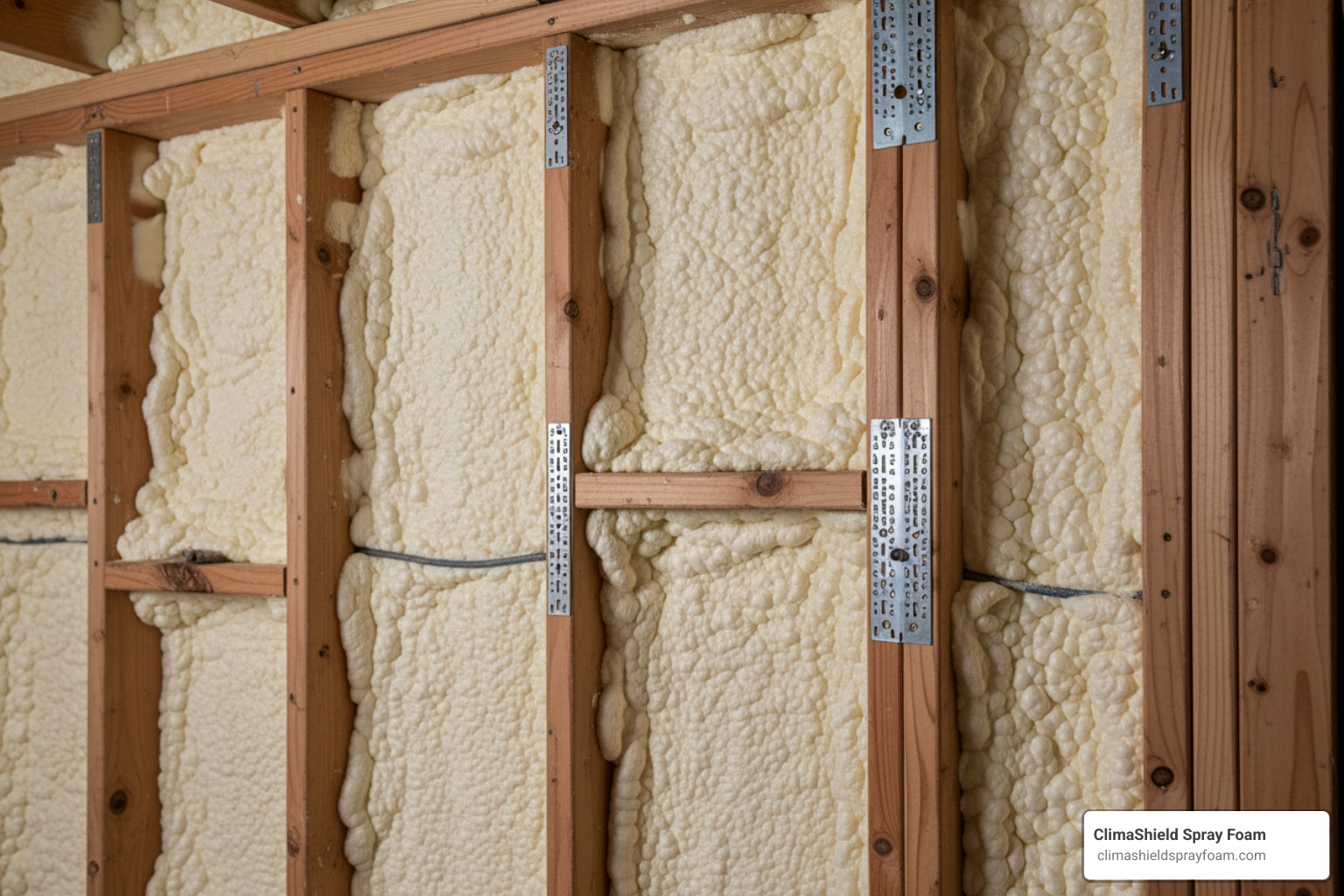
Research has shown that closed cell spray foam can improve wall racking strength by up to 150%. This effectively turns your insulation into a structural component, helping your home resist the “twisting” forces of high winds.
Furthermore, closed cell foam is the only insulation material approved by FEMA as “flood-resistant.” Because it does not soak up water like fiberglass or open cell foam, it can survive a wetting event without needing to be ripped out and replaced. This moisture resistance is vital for preventing mold and rot in the humid Pennsylvania climate.
Typical Applications for Residential and Commercial Projects
Because it is so versatile and durable, we use products from these closed cell foam insulation manufacturers in a variety of challenging spots:
- Unvented Attics: By spraying the underside of the roof deck, we bring the attic into the “conditioned space” of the home, which is great for protecting HVAC equipment stored there.
- Crawl Spaces and Foundations: Its moisture-blocking properties make it the perfect choice for damp below-grade areas.
- HVAC Ducts and Fluid Tanks: The high R-value per inch allows for effective insulation in tight spaces where thick batts won’t fit.
- Commercial Roofing: High-density closed cell foam is often used as a roofing base because it can be walked on and provides a seamless waterproof layer. You can learn more about this in the ultimate roundup of spray foam roofing systems.
Whether you are looking for the ultimate guide to best energy saving insulation or a specific solution for a commercial warehouse, closed cell foam is usually the answer.
Frequently Asked Questions about Closed Cell Foam
What is the typical R-value for closed cell foam?
Most professional-grade closed cell foams provide an R-value between 6.9 and 7.2 per inch. This is significantly higher than open cell foam (approx. R-3.7) or fiberglass (approx. R-3.2).
Is closed cell spray foam waterproof?
While no material is 100% “waterproof” in every possible scenario, closed cell foam is considered water-resistant and a vapor barrier. It does not absorb water, and it prevents moisture from migrating through the wall cavity, which is why it’s the preferred choice for flood-prone areas.
How does closed cell foam improve building structural integrity?
It acts like a glue. When it expands and hardens between the studs and the exterior sheathing, it creates a rigid bond that makes the entire wall assembly stiffer. This can increase the racking strength of the wall by up to 150%.
Conclusion
Choosing the right closed cell foam insulation manufacturers is the first step toward a more comfortable, durable, and energy-efficient building. At ClimaShield Spray Foam, we pride ourselves on using only top-tier products from industry leaders like BASF, Carlisle, and Henry HFO.
Our mission is to help our neighbors in Indiana, PA, and the surrounding areas save up to 60% on their energy bills by creating an airtight, moisture-resistant seal that lasts for the life of the structure. From resisting mold and pests to providing a quieter, more stable indoor environment, the benefits of high-quality closed cell foam are unmatched.
Ready to transform your home or office? Contact ClimaShield Spray Foam for a consultation today, and let’s build something that lasts.
