
Why Your Basement Needs a Vapor Barrier (And What Happens If It Doesn’t)
Basement vapor barrier wall systems are essential protective layers installed on foundation walls to prevent water vapor from passing through porous concrete, which helps control humidity, prevent mold growth, and protect your home’s structural integrity.
Quick Answer: What You Need to Know
- What it is: A physical barrier (plastic sheeting, rigid foam, or spray foam) installed on basement walls to block water vapor
- Why you need it: Concrete is naturally porous—without a barrier, moisture seeps through, causing mold, wood rot, musty odors, and higher energy bills
- Where it goes: Typically on the warm side of insulation, directly against or over basement walls
- How long it lasts: 20+ years with professional installation and proper maintenance
- Key benefit: Keeps your basement dry, improves air quality, and reduces heating costs by up to one-third
When you hear “basement,” do you picture a damp, musty space? You’re not alone. Many homeowners accept basement moisture as inevitable, but it doesn’t have to be that way.
Concrete might look solid, but it’s actually porous. Water vapor passes right through your basement walls and floor, especially during wet seasons. Without proper protection, this invisible moisture lifts humidity levels, creates perfect conditions for mold and mildew, damages wood framing, and forces your HVAC system to work overtime.
The solution is straightforward: a properly installed basement vapor barrier wall system blocks moisture at its source, keeping your space dry and healthy.
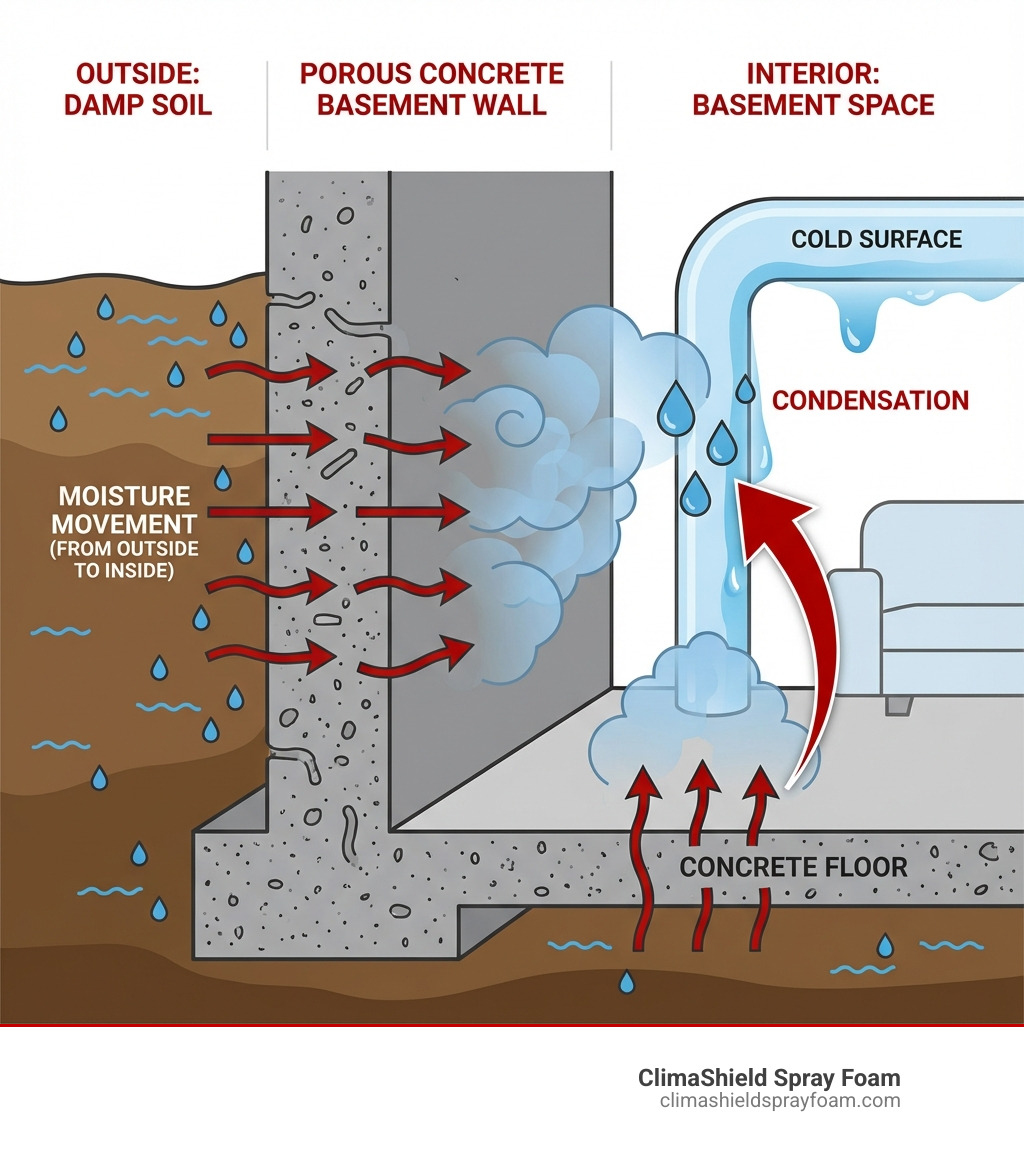
The three main ways moisture enters your basement:
- Liquid water intrusion through cracks in walls or floors
- Water vapor diffusion through porous concrete from damp soil outside
- Condensation when warm, humid indoor air contacts cold basement surfaces
Each of these problems can lead to structural damage, decreased energy efficiency, and serious health concerns from mold exposure. Heat loss through uninsulated basement walls can account for up to one-third of the heat loss from an average home.
I’m Dave Brocious, and I’ve spent 20 years in the coatings industry specializing in protective barriers and insulation systems. Through my work with ClimaShield Industries, I’ve helped hundreds of property owners solve basement moisture problems by properly installing basement vapor barrier wall systems that deliver long-term protection and energy savings.
The Science Behind a Dry Basement: Purpose and Importance
Our basements, especially here in Pennsylvania, are constantly battling moisture. The ground surrounding our homes is often damp, and since concrete is naturally porous, water vapor can easily pass through your basement walls and floor. This isn’t just about puddles; it’s about invisible water vapor slowly but surely infiltrating your home.
A basement vapor barrier wall is a critical component in managing this moisture. Its primary purpose is to block water vapor from moving through your basement walls and into your living space, much like insulation stops heat from moving. This helps control humidity, which is vital for several reasons:
- Structural Integrity: Constant dampness can lead to wood rot in framing and other structural components. A vapor barrier helps preserve the longevity and stability of your home’s foundation.
- Pest Deterrence: Damp, dark basements are an open invitation for pests like insects and rodents. By keeping your basement dry, we make it a less attractive habitat for unwanted guests.
- Health and Comfort: High humidity creates a breeding ground for mold and mildew, which can trigger allergies, respiratory issues, and produce unpleasant, musty odors. A dry basement means a healthier home environment for us all.
The goal is to create a dry and conditioned basement, treating it as part of our home’s conditioned space. This involves understanding how moisture moves and how to stop it. For more on this, consider these building science principles for renovating basements. The right barrier also plays a significant role in reducing our energy bills. Find more information about your energy bill.
Vapor Barrier vs. Vapor Retarder vs. Moisture Barrier
These terms are often used interchangeably, but there’s a technical difference that’s good to understand:
- Vapor Barrier (Class I Retarder): This is the strictest category, designed to be nearly impermeable to water vapor. It allows 0.1 perm or less through. Examples include polyethylene sheeting (6-mil or thicker) and sheet metal.
- Vapor Retarder (Class II & III): This term is broader.
- Class II Retarders are semi-impermeable, allowing between 0.1 and 1.0 perm. Some kraft-faced fiberglass insulation or certain paints fall into this category.
- Class III Retarders are semi-permeable, allowing between 1.0 and 10 perms. Latex paint or asphalt-coated building paper are examples.
The “perm rating” measures how much water vapor can pass through a material. The lower this rating, the less vapor will be allowed through. For basement walls, we’re generally looking for materials that significantly restrict vapor movement to keep the space dry.
A “moisture barrier” is a more general term that often refers to anything that resists liquid water, which might include exterior waterproofing coatings. While a vapor barrier primarily stops vapor, effective basement vapor barrier wall systems often work in conjunction with strategies that address liquid water intrusion as well.
How Vapor Barriers Improve Energy Efficiency and Air Quality
A properly installed basement vapor barrier wall isn’t just about preventing visible dampness; it’s a cornerstone of energy efficiency and healthy indoor air quality.
- Reduced Heat Loss and Lower Heating Costs: Humid air takes more energy to heat. By blocking moisture, our vapor barrier helps maintain consistent humidity levels, making our heating system more efficient. Heat loss through uninsulated basement walls can account for up to one-third of the heat loss from an average home. A vapor barrier, combined with insulation, significantly reduces this. This means lower utility bills for us, especially in the cold Pennsylvania winters!
- Preventing Mold Spores and Improving Indoor Air Quality: Basements are prone to the “stack effect.” This phenomenon causes air to rise in our homes, drawing air from lower levels upwards. If our basement is damp and moldy, those mold spores, dust mites, and musty odors are pulled up and circulated throughout our entire house. A vapor barrier helps stop this cycle at its source, preventing mold growth and ensuring cleaner, healthier air for our family. This is a crucial aspect of residential insulation.
Is Your Barrier Failing? How to Inspect Your Basement Walls
Even the best basement vapor barrier wall systems can degrade over time or be compromised by unforeseen issues. Knowing the signs of a failing barrier can help us address problems before they escalate.
Keep an eye out for these common indicators:
- Musty Smells: This is often the first and most obvious sign of hidden moisture or mold. If your basement has a persistent earthy or stale odor, it’s a red flag.
- High Humidity: If the air in your basement feels heavy, sticky, or consistently damp, your vapor barrier might not be doing its job. Fluctuating indoor temperatures can also be a sign of uncontrolled humidity.
- Condensation on Windows: Foggy basement windows, especially on cooler days, indicate high humidity levels inside.
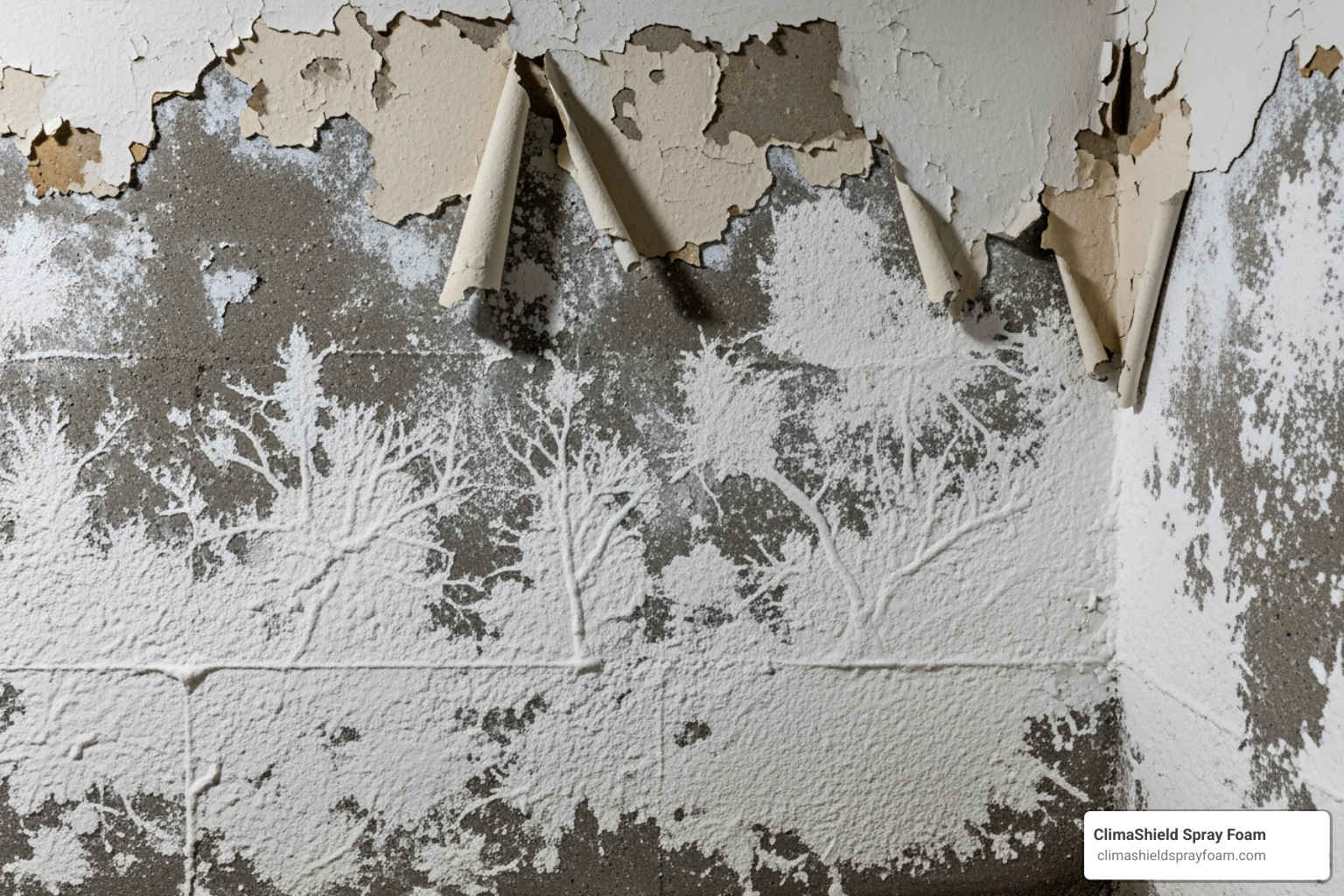
- Peeling Paint or Wallpaper: Moisture behind finished surfaces can cause paint to bubble and peel, or wallpaper to detach.
- Damp Spots or Stains: Look for discoloration, water rings, or actual wetness on your walls, floors, or stored items.
- Sagging or Wet Insulation: If you have a finished basement, check for any areas where insulation might be visible and appears damp, compressed, or sagging.
- Increased Energy Bills: If your heating or cooling costs are unexpectedly rising, your HVAC system might be working harder to combat excess moisture.
- Efflorescence: This is a white, powdery substance on concrete or masonry walls, indicating that water has passed through the material, dissolved salts, and left them behind as the water evaporated.
- Insect or Rodent Activity: Pests are drawn to damp environments. An increase in bugs or rodents could signal a moisture problem.
A Homeowner’s Guide to Checking Your Basement Vapor Barrier
We can perform a few simple checks ourselves to assess the situation:
- Visual Inspection: Walk around your basement, carefully examining all walls and floors. Look for any of the signs listed above – stains, peeling, visible mold, or efflorescence. Pay close attention to corners, along the base of walls, and around pipes or windows.
- The Plastic Sheet Test (for floors): Tape a 2×2 foot piece of clear plastic sheeting tightly to a section of your concrete floor. Leave it for 24-48 hours. If condensation forms under the plastic, moisture is coming up from the slab. If it forms on top, the issue is high ambient humidity. While this is for floors, it helps confirm general moisture issues.
- Checking Insulation: If you have access to the cavity behind your finished walls (e.g., through an unfinished section or by removing a small piece of drywall), gently press on any visible insulation. Does it feel damp or look compressed?
- Feeling for Dampness: On an exposed concrete wall, press your hand firmly against the surface. Does it feel cool and dry, or cool and clammy? A clammy feel indicates moisture.
- Monitoring Your Dehumidifier: If you have a dehumidifier, track how often it runs and how much water it collects. An unusually high output could signal an underlying moisture issue.
If we notice any of these signs, it’s wise to take action. Small gaps in a vapor barrier can lead to significant moisture issues over time. While these DIY checks are helpful, a professional inspection can identify hidden problems and provide a comprehensive solution.
Choosing Your Basement Vapor Barrier Wall System
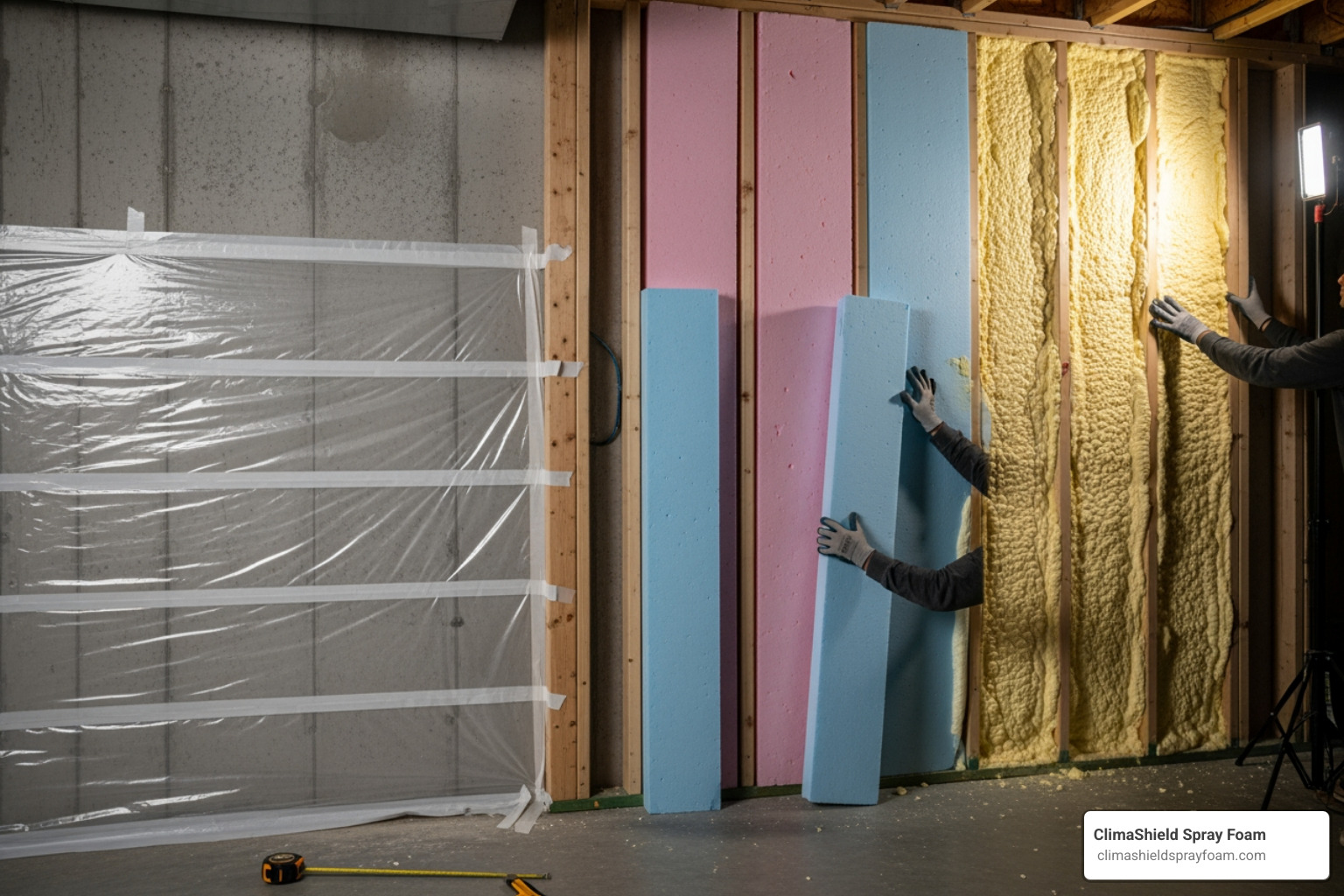
When it comes to selecting a basement vapor barrier wall system, we have several options, each with its own advantages. The best choice for us will depend on factors like our basement’s specific needs, our budget, and whether we’re considering a DIY approach or professional installation. Climate considerations, like those in Pennsylvania, also play a role, as does the type of foundation we have.
Traditional Materials: Plastic Sheeting and Rigid Foam
These materials have been used for decades to combat basement moisture:
- Polyethylene Sheets: This is the classic “plastic sheeting” vapor barrier, typically 6-mil thick or more for durability. It’s affordable and widely available. When installed, it’s usually stapled to the inside wall frame before drywall or plaster. The key to its effectiveness lies in meticulous installation: ensuring continuous coverage, overlapping new sheets by at least 4 inches, and sealing all seams and penetrations (around pipes, electrical outlets, windows) with specialized tape. However, if installed behind a framed wall and not directly adhered to the concrete, it can potentially trap moisture between the poly and the cold concrete wall, leading to mold if not managed carefully.
- Extruded Polystyrene (XPS): This rigid foam board insulation offers dual benefits: it’s an excellent insulator (providing an R-value of 5 per inch) and acts as a vapor retarder. XPS is moisture-tolerant and doesn’t absorb liquid water, yet it allows water vapor to pass through slowly, which can be beneficial for inward drying. When used as a basement vapor barrier wall system, XPS sheets are typically installed directly against the concrete walls. Joints should be sealed with tape or fiberglass mesh and mastic to maintain its effectiveness. A crucial point with XPS is that it’s flammable and must be covered by a 15-minute thermal barrier, such as 0.5-inch gypsum board, especially in finished basements.
Modern Solutions: Spray Foam Insulation
For those seeking a state-of-the-art solution that offers superior performance and long-term protection, closed-cell spray foam insulation stands out. As ClimaShield Spray Foam, this is our expertise, and we’ve seen the transformative impact it has on basements.
Uses of spray foam go beyond just insulation; it’s a comprehensive solution for moisture and air control.
- Creates a Monolithic Seal: Unlike sheets or boards, spray foam expands and adheres directly to irregular surfaces, filling every crack, crevice, and void. This creates a continuous, seamless, and monolithic seal that is virtually impermeable to air and highly resistant to vapor transmission. This is especially effective in older homes with uneven concrete or stone foundations common in Pennsylvania.
- Air Barrier Properties: Closed-cell spray foam acts as an excellent air barrier, preventing drafts and uncontrolled air leakage, which are major contributors to energy loss and moisture problems.
- Prevents Condensation: By adhering directly to the cold concrete wall, spray foam insulates and warms the surface, preventing warm, humid indoor air from contacting a cold surface where condensation would typically form. This means no more foggy windows or damp walls due to condensation.
- Adheres to Irregular Surfaces: Its ability to conform to any shape makes it ideal for basements with pipes, wiring, and other obstacles, ensuring complete coverage and effectiveness.
- All-in-One Solution: Closed-cell spray foam combines insulation, an air barrier, and a vapor retarder (Class I or II, depending on thickness) into a single application. This simplifies the process and provides superior performance compared to multi-layer traditional systems. It also prevents the trapping of moisture that can occur with improperly placed traditional vapor barriers behind framed walls, as it is the insulation and vapor control layer directly on the concrete.
This advanced solution is not just for residential properties; we also offer commercial insulation services utilizing spray foam for optimal performance.
Installation Best Practices: Getting it Right the First Time
A basement vapor barrier wall system is only as good as its installation. Even the highest quality materials will fail if not applied correctly. Getting it right the first time saves us headaches, money, and potential health issues down the road.
Here are the best practices we follow for a robust installation:
- Surface Preparation is Key: The concrete walls must be clean, dry, and free of debris, loose paint, or contaminants. Any cracks or holes should be repaired before installation.
- Continuous Application: The vapor barrier must be continuous, without gaps or breaks, across the entire wall surface it’s meant to protect.
- Sealing All Gaps and Penetrations: This is crucial. Every pipe, electrical outlet, window, or other penetration must be carefully sealed around the vapor barrier material to prevent vapor leakage.
- Overlapping Seams: If using sheet materials, all seams should be overlapped by several inches (typically 4 inches minimum) and sealed with appropriate tape or mastic.
- Integrating with Drainage Systems: For basements with existing or planned interior drainage systems (like French drains or sump pumps), the vapor barrier should be integrated to direct any moisture that gets past the barrier into the drainage system. For example, sheet barriers might be tucked into dimple boards that tie into a French drain.
DIY Installation vs. Hiring a Professional
While a keen DIYer might attempt to install a basic internal vapor barrier, it’s often a big, disruptive, and complex job. The consequences of mistakes can be severe and hard to rectify, especially if stud walls are built over the barrier.
Here’s a breakdown to help us decide:
DIY Installation Steps (for basic polyethylene sheeting):
- Clean basement walls thoroughly, filling any cracks.
- Measure the room to determine material needed.
- Roll out polyethylene sheets, anchoring them (e.g., one anchor per 2 feet).
- Ensure the membrane extends down sufficiently, ideally into a drainage system.
- Overlap new sheets by at least 4 inches.
- Carefully cut holes for electrical sockets, pipes, windows, etc., and carefully seal the edges with specialized tape.
- Use seam tape to cover all joints from top to bottom.
- Install wall studs or insulation over the barrier.
- Hang drywall.
When to Consider Professional Installation:
- Complexity of the Job: Basements with many pipes, irregular surfaces, or existing moisture issues require specialized knowledge and techniques.
- Ensuring a Perfect Seal: Achieving a truly airtight and vapor-tight seal is difficult for a novice. Small imperfections can lead to significant moisture problems.
- The Cost of Mistakes: A poorly installed vapor barrier can trap moisture, leading to mold, wood rot, and costly repairs down the line. It’s often more expensive to fix a mistake than to do it right the first time.
- Professional Guarantees: Reputable companies like ours offer guarantees on our work, providing peace of mind.
- Advanced Solutions: For superior performance and longevity, modern solutions like closed-cell spray foam require specialized equipment and training to apply correctly.
For more information on the basics, you can check out how to install a basement vapor barrier. However, for a comprehensive, durable, and guaranteed solution custom to your Pennsylvania home, we recommend reaching out to us. You can contact us directly to discuss your specific needs.
Frequently Asked Questions about Basement Vapor Barriers
We often hear similar questions from homeowners concerned about their basements. Here are answers to some of the most common ones:
How long does a basement vapor barrier last?
With professional installation and routine maintenance, a high-quality basement vapor barrier wall system can last 20+ years. The lifespan depends significantly on the material quality, the precision of the installation, and how well it’s integrated with other waterproofing systems (like exterior drainage or interior sump pumps). For example, closed-cell spray foam, due to its durable and monolithic nature, is designed to last for the lifetime of your home.
Do I need a vapor barrier if my basement is already finished?
Yes, absolutely! Finished basements still need protection from moisture. In fact, a finished basement without a proper vapor barrier is often more susceptible to hidden problems. Moisture can seep through the concrete, get trapped behind drywall and insulation, and lead to hidden mold growth and wood rot without any visible signs until the damage is extensive. A vapor barrier behind drywall helps prevent these hidden issues, protecting your framing, drywall, and overall investment for the long term.
What is the difference between a vapor barrier and waterproofing paint?
This is a crucial distinction.
- Waterproofing paint is typically a surface-level coating applied to the interior of concrete walls. While it can offer some resistance to liquid water, it’s generally far less effective at blocking water vapor over the long term. It’s often a short-term fix that can fail under constant hydrostatic pressure or significant vapor drive.
- A basement vapor barrier wall (especially a physical sheet or spray foam system) is a far more robust solution. It’s a physical layer designed specifically to block or significantly retard the movement of water vapor. It addresses moisture at its source, providing a much more effective and long-lasting defense against humidity and its associated problems. Think of waterproofing paint as a raincoat that might eventually soak through, while a vapor barrier is a solid, impermeable wall.
Conclusion: The Foundation of a Healthy Home
Investing in a high-quality basement vapor barrier wall system is investing in the health, comfort, and longevity of your entire home. From reducing musty odors and preventing structural damage to improving indoor air quality and significantly lowering your energy bills, the benefits are clear and substantial.
We’ve seen how porous concrete can be, and how easily unseen moisture can undermine our living spaces. By understanding the science behind vapor barriers and choosing the right materials and installation methods, we can transform a damp, underused basement into a dry, healthy, and energy-efficient part of our home.
At ClimaShield Spray Foam, we are dedicated to providing comprehensive, durable, and effective solutions for homeowners across Indiana, PA, and the wider Pennsylvania region. Our expertise in spray foam insulation offers an unparalleled level of protection, creating an airtight, waterproof, and insulated barrier that resists mold and pests, and can save you up to 60% on energy bills.
Don’t let moisture compromise your home. For a complete, durable, and waterproof solution, explore the uses of spray foam and find how we can help you achieve a dry, healthy, and energy-efficient basement.
