Why Your Attic is Costing You Money (And How to Fix It)
Attic spray foam is a high-performance insulation that creates an airtight seal in your attic, dramatically reducing energy loss and improving home comfort. Here’s what you need to know:
Key Benefits of Attic Spray Foam:
- Energy Savings: Reduces heating and cooling costs by up to 50%.
- Air Sealing: Stops drafts and air leaks that fiber insulation can’t.
- Moisture Control: Prevents mold growth and protects against water damage.
- Long-Term Solution: Doesn’t sag, settle, or lose effectiveness.
- Two Types Available: Open-cell (R-4 per inch) and closed-cell (R-7.7 per inch).
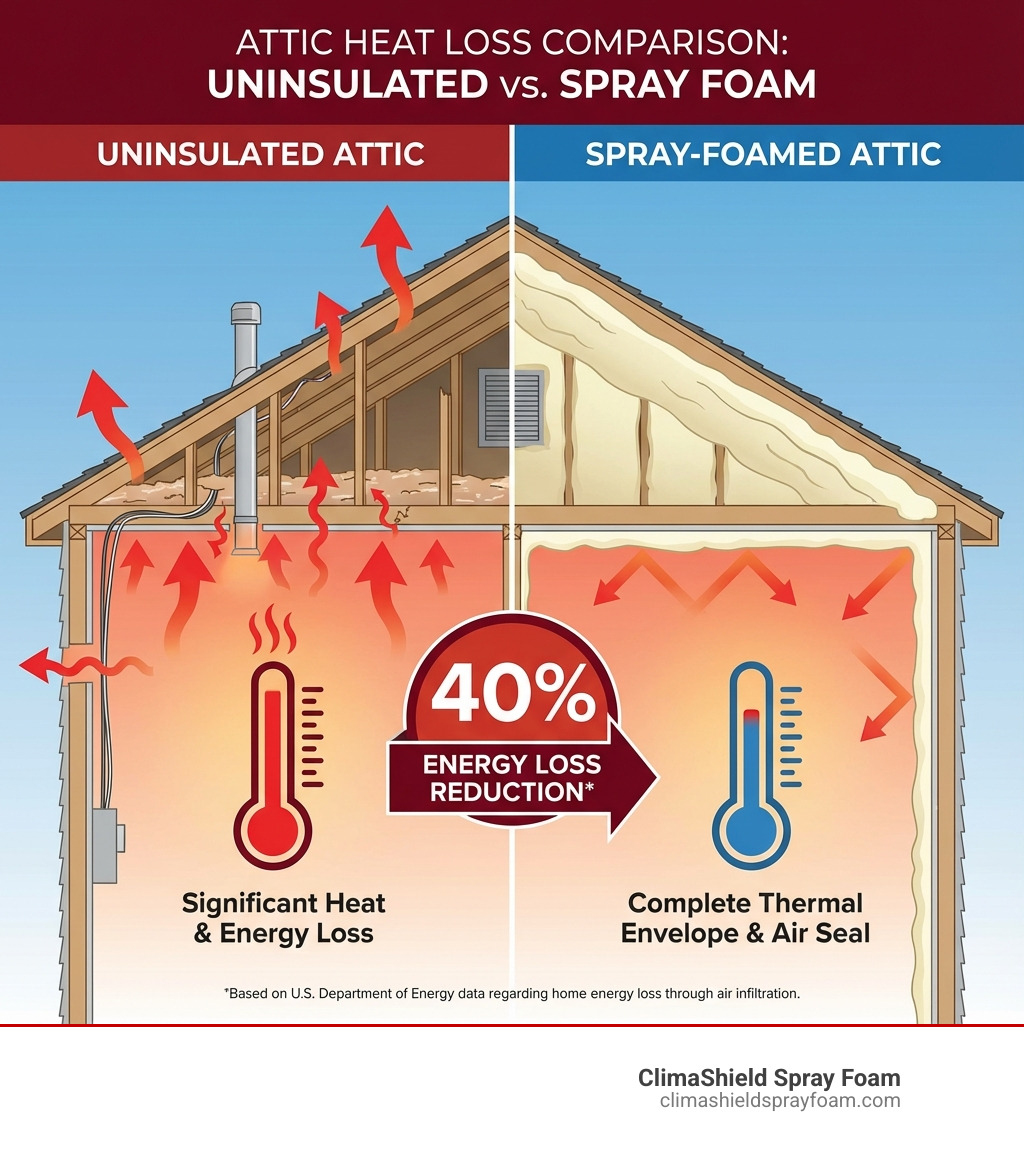
If your energy bills are climbing and your home feels uncomfortable, your attic is likely the culprit. Studies by the U.S. Department of Energy show that 40% of a home’s energy is lost through air infiltration—and much of that happens right above your head.
Traditional insulation like fiberglass and cellulose doesn’t stop air movement. This allows warm air to escape in winter and superheated attic air (often 140°F+) to radiate down in summer, overworking your AC.
Spray foam insulation changes this equation completely. It expands to fill every crack and crevice, creating both a thermal barrier and an airtight seal. Buildings treated with spray foam typically insulate up to 50% better than those with conventional insulation.
However, spray foam is not a DIY project. It requires specialized equipment and expertise to handle the chemical process and make critical design decisions, like whether to insulate the attic floor or the roof deck.
I’m Dave Brocious, and I’ve spent 20 years in the coatings industry, including founding ClimaShield Industries, where we specialize in attic spray foam installations. In this guide, I’ll walk you through everything you need to know to make an informed decision about spray foam for your attic.
The Best Benefits of Insulating Your Attic with Spray Foam
When we talk about the benefits of attic spray foam, we’re talking about a complete change of your home’s energy performance and livability. Our goal at ClimaShield Spray Foam is to ensure homeowners across Indiana, PA and the surrounding Pennsylvania communities reap every possible advantage from this material.

Superior Energy Efficiency and Lower Bills
The most compelling reason homeowners choose attic spray foam is its ability to boost energy efficiency. The U.S. Department of Energy notes that up to 40% of a home’s energy is lost to air infiltration. By creating an impenetrable barrier, spray foam drastically reduces this heat transfer. The result? Our customers often see savings of up to 60% on their energy costs, significantly lowering Your Energy Bill.
Complete Air Sealing Power
Traditional insulation like fiberglass is like a wool sweaterit slows heat loss but doesn’t stop the wind. Spray foam is a windproof jacket for your attic. It expands to fill every tiny crack and crevice around wiring, plumbing, and framing, creating an airtight seal no other material can match. This stops conditioned air from escaping and unconditioned air from entering, reducing the strain on your HVAC system.
High R-Value for Total Comfort
R-value measures thermal resistance. Attic spray foam boasts one of the highest R-values per inch, meaning we can achieve superior insulation performance with less material. This high insulating power translates directly to a more consistent and comfortable indoor environment, eliminating cold spots and sweltering upstairs rooms.
Moisture, Mold, and Pest Control
Moisture is a home’s worst enemy, leading to mold and rot. Unlike traditional insulation that can absorb and hold moisture, spray foam acts as a moisture barrier. Closed-cell foam is waterproof, while open-cell foam allows vapor to dissipate without retaining water. This drastically reduces the risk of mold. Furthermore, its dense structure provides no food or nesting material for pests and is difficult for them to burrow through.
Long-Term Durability
Unlike fiberglass or cellulose that can sag, settle, or degrade, attic spray foam is a permanent solution. Once installed, it adheres firmly to surfaces, maintaining its shape and insulating properties for the lifetime of your home. This durability means your investment continues to pay dividends for decades.
Open-Cell vs. Closed-Cell: Which Foam is Right for Your Attic?
Choosing between open-cell and closed-cell attic spray foam is a crucial decision that impacts performance, cost, and suitability for your attic. At ClimaShield, we help you understand the nuances to make the best choice for your Pennsylvania home.
Understanding Open-Cell Spray Foam
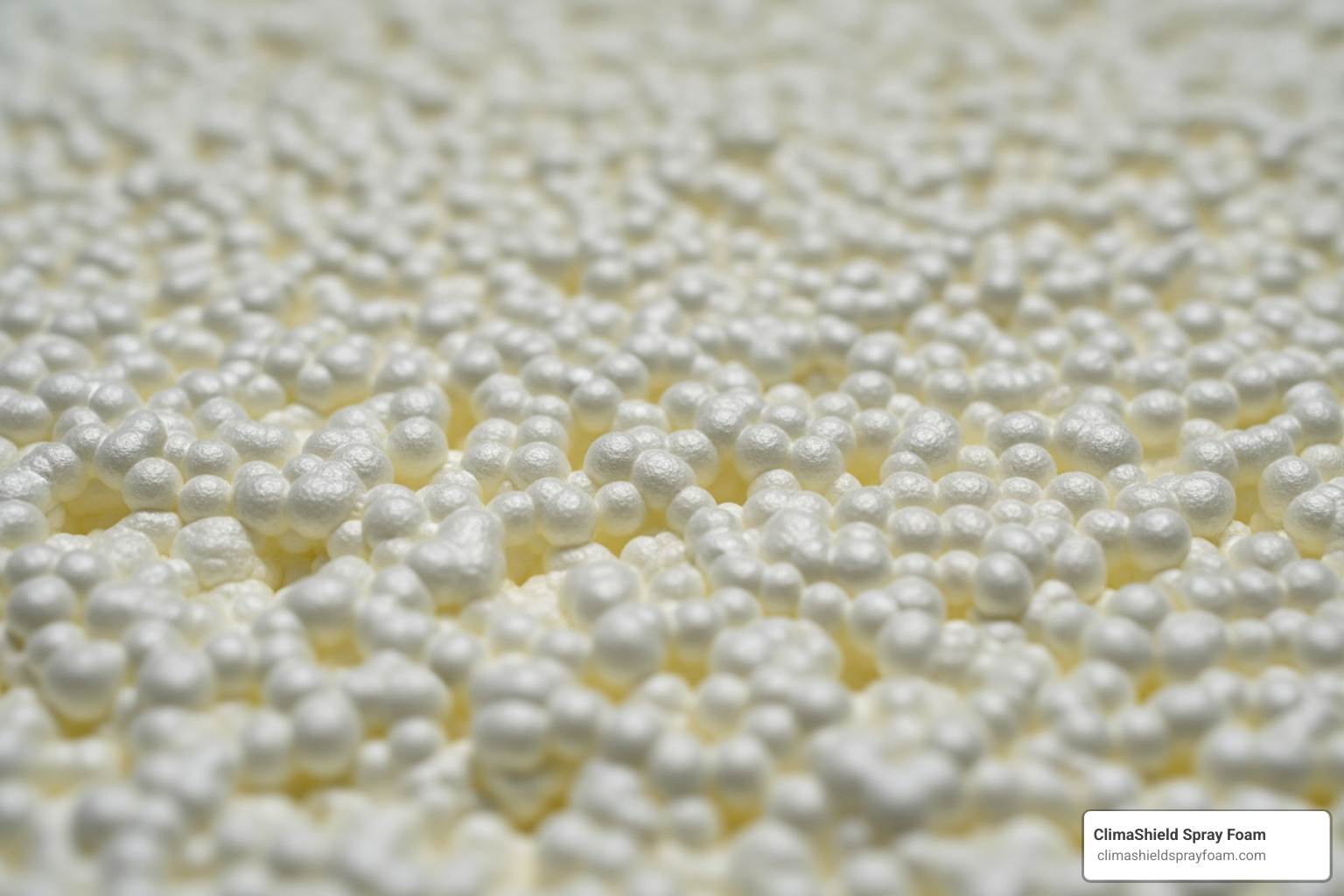
Open-cell spray foam has a spongy, flexible texture. Its cells are not completely encapsulated, making it light and porous.
- High Expansion Rate: It expands significantly, allowing it to fill large and irregular cavities effectively.
- Sound Dampening: Its soft nature makes it an excellent sound absorber, creating a quieter home.
- Water Vapor Permeable: It allows water vapor to pass through, which helps building materials dry if they get wet. It is not a vapor barrier on its own.
- Lower R-Value per Inch: Open-cell foam has an R-value of about R-4 per inch. We typically apply it at a greater depth (7-12 inches) to meet insulation targets.
- Cost-Effective: It is generally less expensive than closed-cell foam, making it a great option for many attic projects.
Understanding Closed-Cell Spray Foam
Closed-cell spray foam is a dense, rigid material. Its cells are tightly packed and completely encapsulated, creating an impermeable structure.
- High R-Value per Inch: Closed-cell foam boasts an impressive R-value of about R-7.7 per inch. This provides high thermal performance with a thinner layer (3-6 inches), ideal for attics with limited space.
- Air and Vapor Barrier: Its dense structure acts as an air and vapor barrier in one application, which is a major advantage for controlling moisture and preventing condensation.
- Adds Structural Strength: Its rigidity can add structural integrity to the roof deck or walls where it is applied.
- Higher Cost: Closed-cell foam is more expensive, but its higher R-value and all-in-one barrier properties can justify the investment.
Comparing Open-Cell and Closed-Cell for Attic Use
Here’s a quick comparison to help you visualize the differences:
| Feature | Open-Cell Spray Foam | Closed-Cell Spray Foam |
|---|---|---|
| R-Value per Inch | R-4 | R-7.7 |
| Air Barrier | Excellent | Excellent |
| Vapor Barrier | No (vapor permeable) | Yes |
| Structural Strength | Minimal | Adds structural integrity |
| Sound Dampening | Excellent | Good |
| Cost | Lower | Higher |
The choice between open-cell and closed-cell for your attic spray foam project depends on your specific needs, budget, and home design. We’ll discuss these options in detail during our consultation to ensure you get the perfect solution.
The Professional Attic Spray Foam Installation Process
Installing attic spray foam is a complex process that demands precision and expertise. At ClimaShield Spray Foam, we emphasize professional installation to create a high-performance building envelope.
Step 1: Essential Attic Preparation
Proper preparation is the cornerstone of a successful installation. Our meticulous approach ensures optimal, long-term results.
- Professional Assessment: We begin with a thorough assessment to identify any existing issues like water damage or mold and tailor the plan to your home.
- Removing Old Insulation: Existing insulation must be removed so the foam can adhere directly to the attic surfaces for a perfect seal.
- Cleaning and Debris Removal: The attic must be clean and free of dust and debris to ensure a strong bond.
- Sealing Major Air Leaks: We pre-seal larger gaps around plumbing, wiring, and chimneys. Plugging the big holes first provides the largest energy savings. For more details, see this Guidance on Attic Air Sealing.
- Ensuring Safe Access: We ensure safe access for our technicians and equipment, clearing pathways and setting up proper lighting.
Step 2: The Application and Curing Timeline
Once the attic is prepped, our trained technicians get to work.
- Professional Equipment: We use state-of-the-art rigs that precisely mix, heat, and deliver the foam components for optimal performance.
- Protective Gear (PPE): Safety is paramount. Our technicians wear full personal protective equipment (PPE), including respirators and full-body suits, as the fumes released during application are hazardous.
- Spraying Technique: Our technicians are trained in advanced spraying techniques to ensure consistent depth and even coverage, preventing gaps or weak spots.
- Curing Process: The foam expands and cures quickly. We manage ventilation during and after application to handle any odors as they dissipate.
- Typical Project Duration: An average attic installation takes 1-3 days, depending on the size and amount of prep work required. We always provide a clear timeline upfront.
Why DIY Attic Spray Foam is a Major Risk
We strongly advise against DIY attic spray foam due to the significant risks involved.
- Complex Chemical Reaction: Spray foam is created by a precise chemical reaction. DIY kits are prone to user error in mixing ratios and temperature, which can result in failed foam that doesn’t insulate and is costly to remove.
- Hazardous Fumes: The off-gassing during the curing process is toxic. Professionals use specialized ventilation and PPE that homeowners do not have, posing a serious health risk.
- Inadequate Coverage: Achieving a consistent, airtight seal in a cramped and complex attic requires professional equipment and skill. Gaps in coverage will compromise the performance of the insulation.
- High Cost for Large Spaces: DIY kits are expensive for large areas. A single kit covers very little space, and insulating an entire attic would require numerous kits, often making it more expensive than a professional installation without any of the guarantees.
Vented vs. Unvented Attics: A Critical Decision for Attic Spray Foam
One of the most important decisions when using attic spray foam is whether to create a traditional vented attic or a modern unvented (sealed) attic. This choice profoundly impacts your home’s energy performance and comfort.
The Traditional Vented Attic Approach
The traditional vented attic uses insulation on the attic floor and vents to allow outside air to circulate, intended to remove heat and moisture. However, this design often leads to extreme attic temperatures (up to 130°F in summer) and significant energy loss, as conditioned air leaks out and unconditioned air gets in. In fact, in nine of ten homes, attics need more insulation, highlighting the inadequacy of many traditional systems.
The Modern Unvented (Sealed) Attic Approach
The modern approach, which pairs perfectly with attic spray foam, is the unvented or sealed attic. In this system, we apply spray foam directly to the underside of the roof deck. This method transforms the attic into a semi-conditioned space that is part of your home’s thermal envelope.
- Creates a Conditioned Space: The attic’s temperature becomes much closer to your living areas, eliminating extreme heat and cold.
- Protects HVAC Equipment: If your HVAC system is in the attic, it is now protected from temperature extremes, allowing it to work more efficiently and last longer.
- Improved Energy Performance: By sealing the attic from the outside, we eliminate air infiltration through the roof, drastically reducing energy consumption.
- Modern Building Science: This approach aligns with modern building science, which shows that controlling air and moisture movement is more effective than passive ventilation. This historical context of attic ventilation shows how the science has evolved.
Which is Better with Attic Spray Foam?
For most homeowners in Pennsylvania, an unvented attic insulated with attic spray foam is the superior choice for maximum energy efficiency and comfort. This approach provides a complete thermal and air barrier, leading to stable indoor temperatures, significant energy savings, and improved indoor air quality. It also makes the attic a more usable space. The International Residential Code (IRC) allows for unvented attics when air-impermeable insulation like spray foam is used, and we ensure all our installations meet or exceed local building codes.
Cost, Challenges, and Long-Term Value
Investing in attic spray foam is a significant decision. Understanding the costs, potential challenges, and long-term value is crucial. At ClimaShield Spray Foam, we believe in full transparency to help you make an informed choice.
Breaking Down the Cost of Attic Spray Foam
The cost of insulating an attic with spray foam is an investment in your home’s future performance and value.
- Cost per Square Foot: Generally, closed-cell spray foam could cost up to $10 per square foot, while open-cell could cost up to $9 per square foot, depending on the job’s complexity and required depth.
- Factors Affecting Price: The final price depends on the attic size, type of foam used, and the amount of prep work required, such as removing old insulation.
- Typical Investment Range: For a smaller attic, the cost may be around $4,000. For larger spaces requiring significant prep, costs could reach $17,000. We provide detailed, customized estimates after a thorough assessment.
- Long-Term ROI: While the initial investment is higher than for traditional insulation, the return is substantial. With energy savings up to 60%, the insulation can pay for itself over time. The U.S. Department of Energy notes that such upgrades can pay for themselves in just a few years.
Potential Challenges and Considerations
While the benefits are clear, it’s important to be aware of these factors.
- Higher Initial Investment: Spray foam has a higher upfront cost than fiberglass, but its superior performance and longevity provide greater long-term value.
- Hiring a Qualified Contractor: This is not a DIY job. Proper installation requires a skilled, experienced, and insured professional to ensure safety and performance.
- Curing Odors: The foam can release odors as it cures. We use proper ventilation to manage this, and the smell typically dissipates quickly. We advise homeowners to stay out of the property for a recommended period after installation.
- Roof Leak Detection: With foam on the roof deck, a leak might be harder to spot. However, the foam itself is water-resistant, and this concern is mitigated by a properly installed and maintained roof.
- Shingle Warranty Concerns: Some worry about shingle warranties over unvented attics. However, building science shows the temperature difference is minimal, and most major roofing manufacturers now provide warranties for shingles over properly installed unvented roof assemblies.
Lifespan and Durability of Spray Foam
One of the best aspects of attic spray foam is its durability. It is a permanent insulation solution that adheres to surfaces and will not sag, settle, or lose its R-value over time. Choosing spray foam is a lifetime investment in your Residential Insulation, improving your home’s efficiency, comfort, and value for decades to come.
Conclusion: Is Attic Spray Foam the Right Investment for Your Home?
After exploring the facets of attic spray foam, the answer for most Pennsylvania homeowners is a resounding yes. This advanced insulation offers a change in home comfort and energy efficiency that traditional materials cannot match.
Let’s recap the key advantages:
- Massive Energy Savings: Lower heating and cooling bills by up to 60%.
- Total Home Comfort: Eliminate drafts and create consistent temperatures.
- Healthier Indoor Air: Seal out dust, allergens, and pollutants.
- Lifetime Durability: A permanent solution that never sags or loses effectiveness.
- Moisture and Pest Protection: Prevent mold growth and deter pests.
While the decision to insulate your attic with spray foam is a smart one, professional installation is critical. The complex chemical reaction, specialized equipment, and safety protocols demand an expert.
At ClimaShield Spray Foam, we pride ourselves on our expertise and commitment to quality. We bring years of experience to every project, ensuring your attic spray foam installation is performed safely, efficiently, and to the highest standards. We’re dedicated to helping homeowners in Indiana, PA, and throughout Pennsylvania achieve maximum energy efficiency and comfort.
If you’re ready to stop wasting money and start enjoying a more comfortable, energy-efficient home, take the next step. Contact us today for a consultation or visit our website to request a quote. Let us assess your attic and provide a customized solution. You can also explore the many Uses of Spray Foam to see how this versatile material can benefit other areas of your property. We’re here to help you make your home a ClimaShield home!
