
Why Waterproof Foam Gap Fillers Are the Smarter Fix for Drafts, Leaks, and Energy Loss
Using expanding foam filler waterproof products is one of the most effective ways to stop moisture, air, and pests from sneaking into your home or building.
Here’s what you need to know at a glance:
- What it is: A polyurethane-based foam that expands to fill gaps, cracks, and voids — forming an airtight, water-resistant seal
- How waterproof is it? Most quality foam fillers are water-resistant; closed-cell formulas offer the strongest moisture barrier
- Best uses: Basement gaps, foundation cracks, window and door frames, plumbing penetrations, crawlspaces
- Key limitation: Standard foam is not designed for permanent submersion or below-waterline pressure
- Cure time: Tack-free in as little as 7–15 minutes; fully cured within 24 hours
That leaky gap around your basement pipe or the draft sneaking under your door frame isn’t just annoying. It’s costing you money every month in wasted energy. It can also let in moisture, which leads to mold, rot, and pest problems over time.
The good news? A waterproof expanding foam filler can seal those problem spots fast — often in a single afternoon.
But not all foam fillers are equal. The right product and technique make a big difference between a seal that lasts years and one that fails in the first wet season.
I’m Dave Brocious, a coatings industry specialist with 20 years of experience in spray foam insulation, waterproofing, and protective coatings through my company ClimaShield Industries — where expanding foam filler waterproof applications are part of our daily work. In this guide, I’ll walk you through everything you need to know to choose and apply the right foam for lasting results.
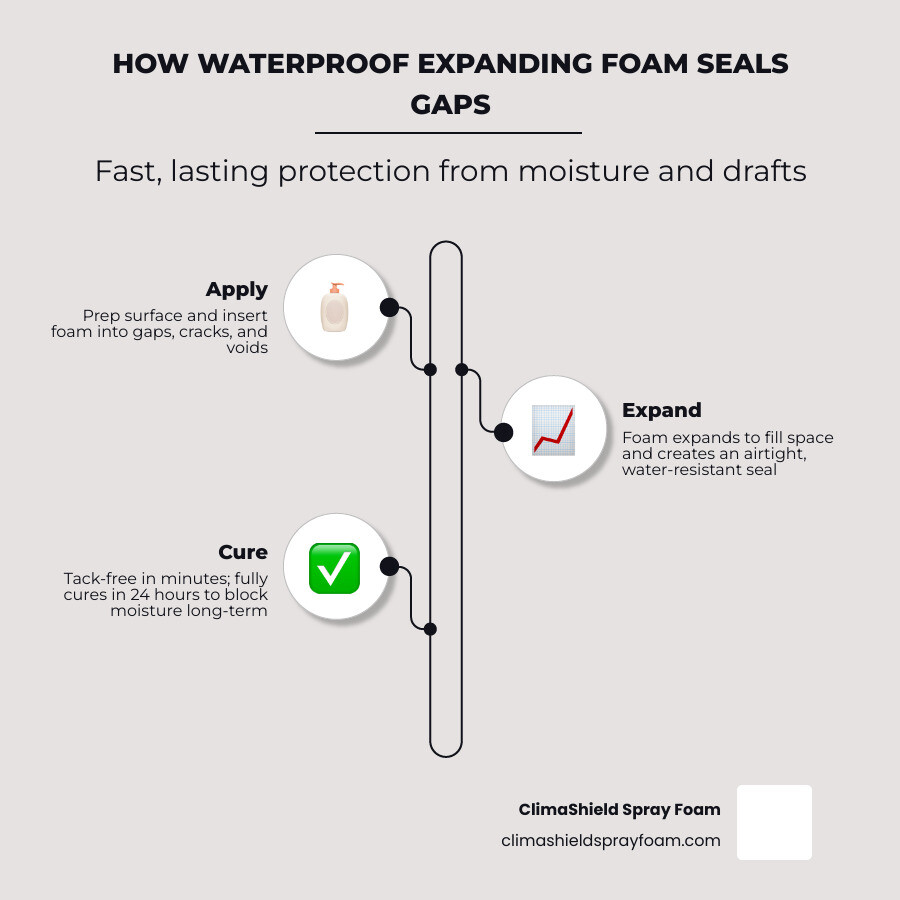
Common expanding foam filler waterproof vocab:
The Science Behind Expanding Foam Filler Waterproof Technology
To understand why we use this stuff in Pennsylvania homes from Indiana to Pittsburgh, we need to look at the chemistry. Most expanding foam filler waterproof products are one-component polyurethane foams. When you spray the foam out of the can or gun, it reacts with the humidity in the air to “cure.”
During this process, the foam undergoes a massive expansion—sometimes up to 3 times its original liquid volume. As it grows, it creates millions of tiny bubbles. In high-quality waterproof fillers, these bubbles are “closed-cell,” meaning each little pocket of air is completely encased in plastic. This is what makes waterproof expanding foam: how to keep your projects high and dry such a powerful concept; the water simply has no path to travel through the material.
What Makes an Expanding Foam Filler Waterproof?
The secret lies in the cellular density. While open-cell foam is like a sponge (great for sound, bad for water), closed-cell foam is like a wall of tiny beach balls glued together.
- Hydrophobic Properties: The polyurethane itself naturally repels water.
- Surface Skin: As the foam cures, it forms a tough outer “skin” that acts as the first line of defense against driving rain or damp soil.
- Vapor Retarder: Because it is so dense, it doesn’t just stop liquid water; it also slows down water vapor, helping to prevent the “sweaty wall” syndrome common in many PA basements.
| Feature | Open-Cell Foam | Closed-Cell (Waterproof) Foam |
|---|---|---|
| Water Resistance | Low (absorbs moisture) | High (repels moisture) |
| Density | ~0.5 lb/cu. ft. | ~1.1 to 2.0+ lb/cu. ft. |
| Expansion | Very High (reaches far) | Controlled (denser fill) |
| R-Value | ~3.5 per inch | ~4.7 to 6.8 per inch |
Exterior and Below-Grade Waterproofing Applications
In our Indiana, PA service area, we deal with a lot of hydrostatic pressure—that’s the weight of water in the soil pushing against your foundation. Using an expanding foam filler waterproof solution for below-grade penetrations (like where your sewer line or electrical conduit enters the house) is a game changer.
However, keep in mind that while these foams are water-resistant, they aren’t meant to be submerged 24/7 like a submarine. For exterior use, you also have to consider UV rays. Most polyurethane foams will turn orange, get brittle, and eventually crumble if left in direct sunlight. If you’re sealing a gap on the outside of your home, you must paint or coat the cured foam within 24 hours to protect it.
Key Applications for Waterproof Foam Sealants
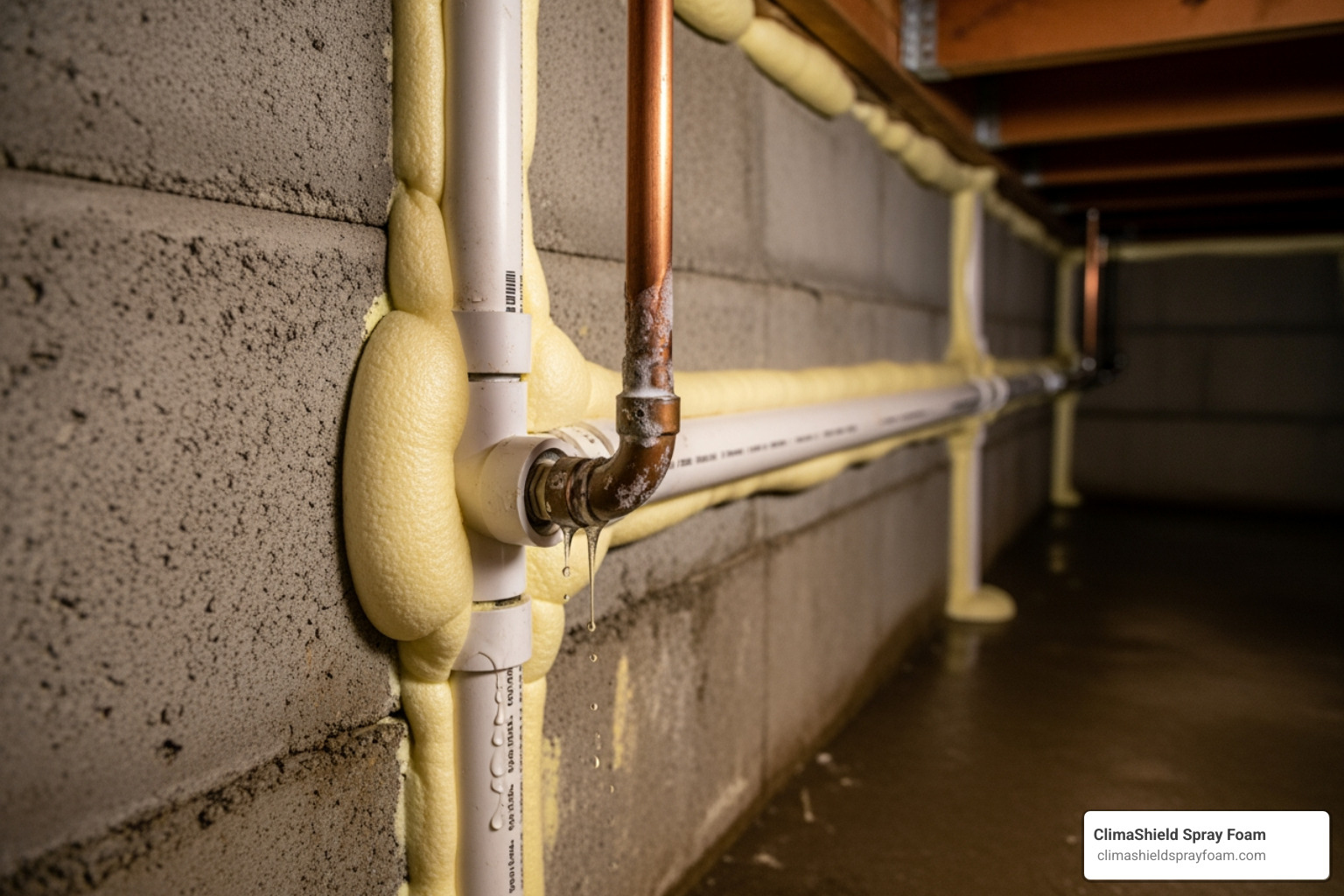
Where should you be using this? If you’re looking at a hole and wondering if foam is the answer, here are the most common uses of spray foam we see in the field:
- Foundation Penetrations: Sealing the gaps around gas lines, water pipes, and electrical cables.
- Crawlspaces: Filling the “rim joist” area where the wood frame of your house meets the masonry foundation. This is a huge source of moisture and cold air.
- Window and Door Installation: Using a low-pressure version of expanding foam filler waterproof to seal the rough opening without bowing the window frame.
- Landscape and Hardscape: Specialized “black foam” is often used to direct water flow over waterfalls or bond stone blocks in ponds.
- HVAC Sealing: Preventing conditioned air from escaping around ductwork that passes through unheated attics.
Residential and Commercial Versatility
Whether it’s a small home in Pennsylvania or a large industrial warehouse, the goal is the same: create a continuous thermal and moisture envelope. In commercial settings, we often use these fillers to stop the leaks with waterproof spray foam in metal building seams or large roof-to-wall junctions. The ability of the foam to bond to wood, metal, masonry, glass, and most plastics makes it incredibly versatile.
How to Apply Waterproof Expanding Foam Like a Pro
Applying foam looks easy, but there is a “pro” way to do it that ensures the seal actually holds. If you just “spray and pray,” you’ll end up with a sticky mess and a leaky gap.
Step 1: Surface Preparation The surface must be clean. Dust, grease, and loose mortar are the enemies of adhesion. Use a vacuum or a stiff brush to clear the area.
Step 2: The Secret Weapon — Moisture Priming Since polyurethane foam is moisture-cured, it actually bonds better to a slightly damp surface. We recommend lightly misting the gap with a spray bottle of water before applying the foam. This speeds up the cure and results in a denser cell structure.
Step 3: The Bottom-Up Technique
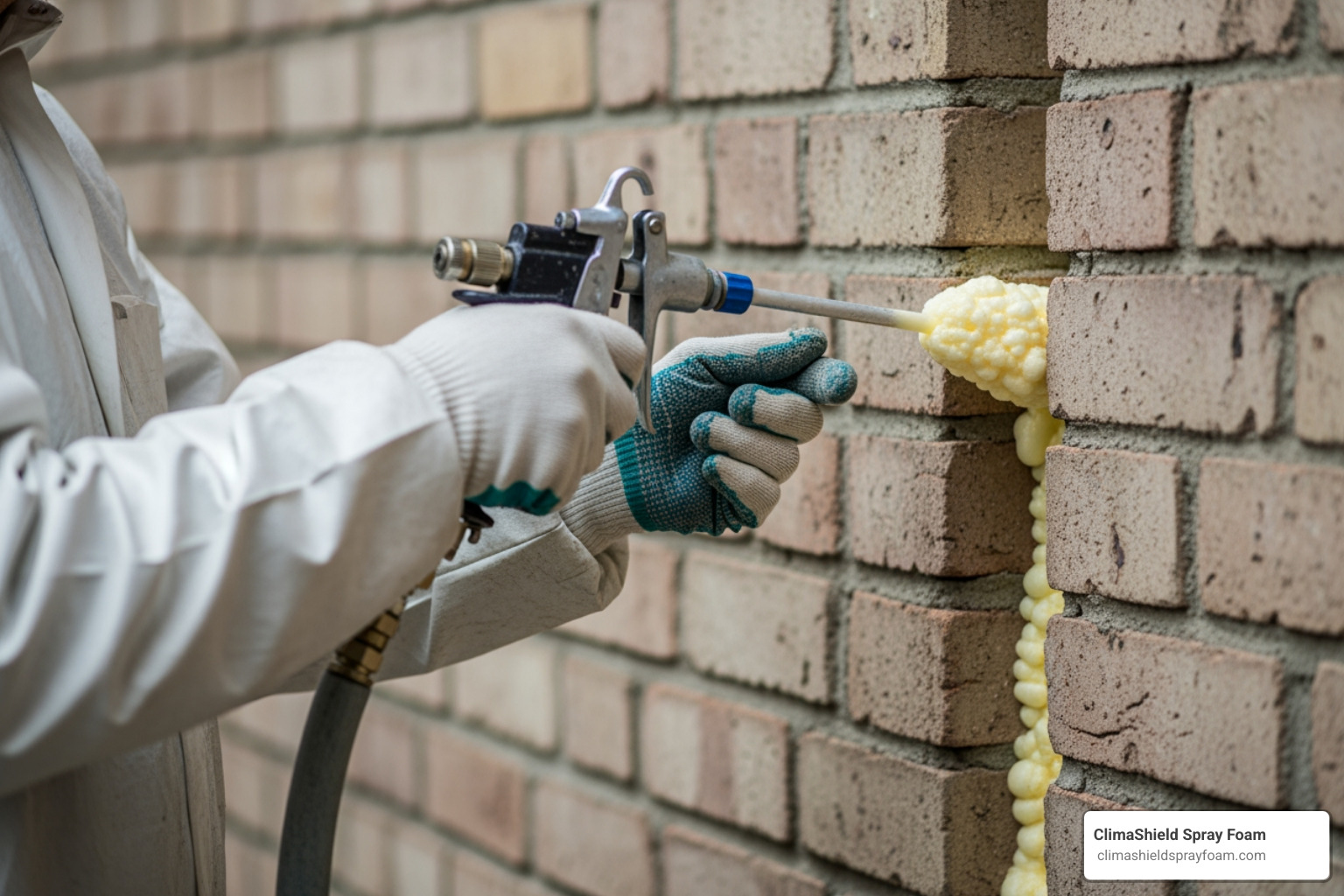
Always start at the bottom of a vertical crack and work your way up. This allows the wet foam to rest on the already-expanding foam below it, preventing it from sagging or falling out of the gap.
Step 4: Allowance for Expansion This stuff grows! For most “Max Fill” products, you only want to fill the gap about 30% to 50% full. Let the foam do the work of filling the rest of the space.
Curing Times and Environmental Factors
Temperature matters. Most retail cans of expanding foam filler waterproof prefer temperatures between 60°F and 85°F. However, professional-grade products like those we use at ClimaShield can often be applied in “X-TREME” conditions ranging from 0°F to 100°F.
- Tack-free time: Usually 7 to 15 minutes. This is when you can touch it lightly without it sticking to your finger.
- Cutting time: You can usually trim excess foam with a serrated knife after about 1 hour.
- Full cure: Wait 24 hours before painting or subjecting the seal to heavy water exposure.
Comparing Professional Foam Fillers to Traditional Sealants
Why use foam instead of a tube of silicone or caulk? It comes down to the size of the gap and the “R-value.”
Standard caulks are “non-insulating.” They are solid, heavy, and designed for gaps smaller than 1/4 inch. If you try to fill a 1-inch gap with caulk, it will likely sag, crack, and fail to provide any real thermal protection.
Expanding foam filler waterproof products, on the other hand, provide an R-value of up to 6.8 per inch. This means you aren’t just stopping water; you’re also stopping heat transfer. For the definitive guide to waterproof insulation, foam is almost always the winner for any gap larger than a pencil.
| Sealant Type | Best Gap Size | Waterproof? | Insulating? |
|---|---|---|---|
| Silicone Caulk | < 1/4 inch | Yes | No |
| Expanding Foam | 1/4 inch to 3+ inches | Yes (Closed-cell) | Yes (High R-Value) |
| Acrylic Latex | < 1/8 inch | Limited | No |
Safety, Cleanup, and Avoiding Common Mistakes
Working with foam can be messy. Once it gets on your skin or clothes, it is notoriously difficult to remove.
- PPE is Mandatory: Always wear safety glasses and gloves. If you are working in a confined space like a crawlspace, ensure you have adequate ventilation.
- Cleanup: If the foam is still wet, you can remove it with acetone or a specialized foam cleaner. Once it is dry, solvents won’t touch it. You’ll have to mechanically remove it (sand it, scrape it, or wait for your skin to naturally shed it over a week).
- Don’t Overfill: Overfilling can actually warp window frames or door jambs. Use “minimal expansion” foam for those sensitive areas.
- UV Protection: We can’t stress this enough—if it’s outside, it must be painted. UV light will degrade the foam’s chemistry in a matter of weeks.
Frequently Asked Questions about Waterproof Foam
Can expanding foam be used for below-grade applications?
Yes, but only if it is a high-density, closed-cell polyurethane. It is excellent for sealing pipe penetrations in foundation walls. However, it should not be used as a primary “waterproofing membrane” for an entire basement wall; it is a gap filler, not a wall coating.
Is waterproof expanding foam fire retardant?
Most quality foams are “Class A” fire-rated, meaning they have a low flame spread and smoke development index. However, they are still combustible. They are designed to seal gaps, not to act as a “fire stop” in commercial fire-rated assemblies unless specifically labeled as such.
How do you remove dried foam from surfaces?
The best way is to use a sharp utility knife or a pull-saw to trim the bulk of it away, then use a scraper or sandpaper to get the surface flush. On delicate surfaces, be very careful, as the bond is extremely strong.
Conclusion
When you choose the right expanding foam filler waterproof product, you’re doing more than just plugging a hole. You’re creating a permanent, airtight, and moisture-resistant barrier that protects your home’s structural integrity.
At ClimaShield Spray Foam, we’ve seen how professional-grade sealing can save homeowners in Indiana, PA and the surrounding areas up to 60% on their energy bills. By stopping the relentless infiltration of humid PA air and groundwater, you create a healthier, more comfortable living space that resists mold and pests.
Ready to stop the leaks with waterproof spray foam? Whether you’re tackling a DIY weekend project or looking for a professional whole-home insulation upgrade, the “seal” is only as good as the material and the method. Do it right, and you’ll stay high and dry for decades to come.
