What Is Expandable Spray Foam Waterproof Sealant — and Does It Actually Work?
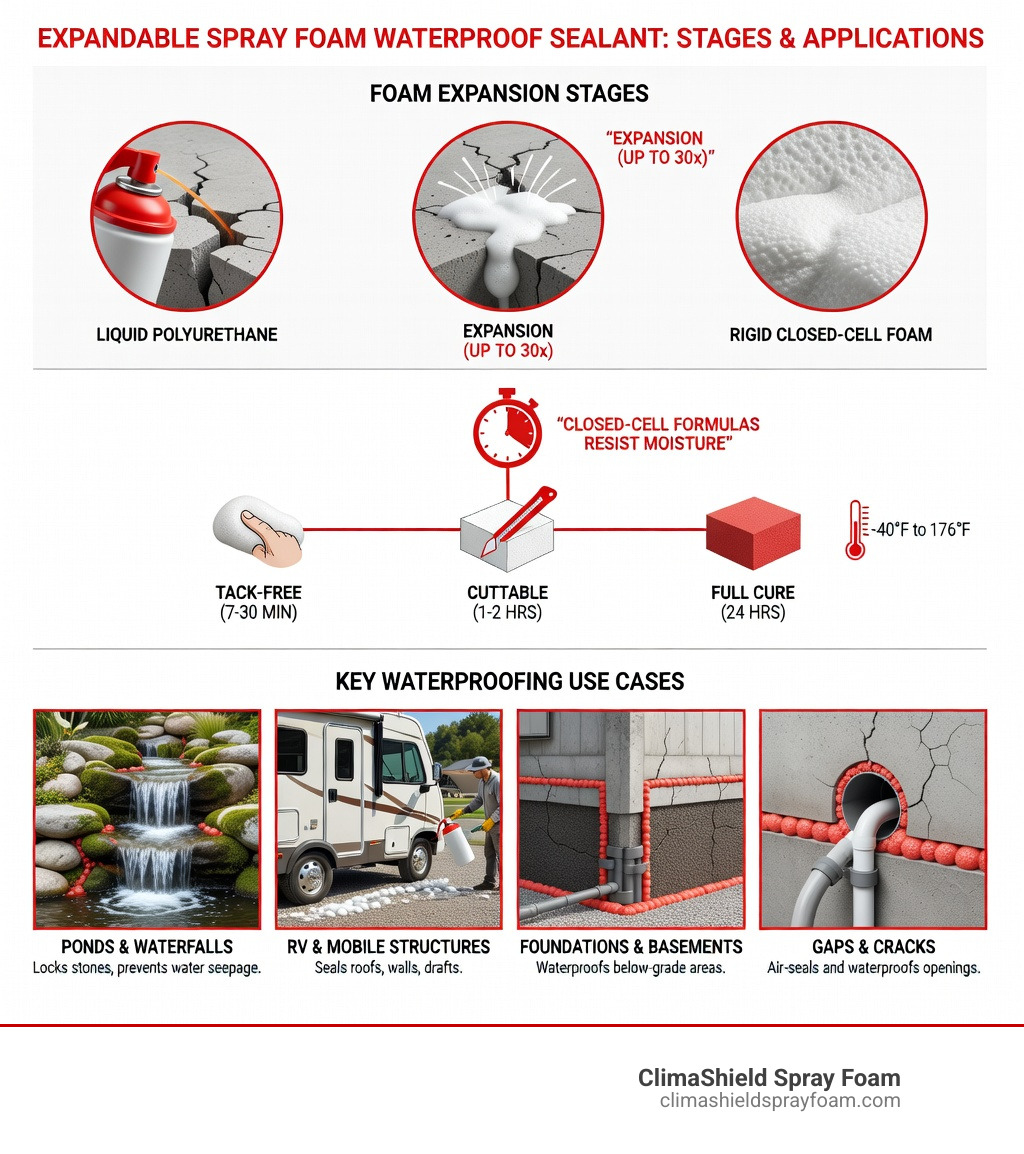
Expandable spray foam waterproof sealant is one of the most versatile tools for keeping moisture, air, and drafts out of your home, RV, pond, or outdoor structure. It works by dispensing a liquid polyurethane that rapidly expands to fill gaps, then cures into a rigid, closed-cell foam barrier that resists water intrusion.
Here’s a quick summary of what it does and where it works best:
| Feature | What You Need to Know |
|---|---|
| How it works | Liquid foam expands to fill gaps, then cures into a solid, airtight seal |
| Waterproofing | Closed-cell formulas resist moisture and act as a vapor barrier |
| Best uses | Ponds, waterfalls, RVs, outdoor structures, foundations, gaps and cracks |
| Curing time | Tack-free in as little as 7 minutes; fully cured within 24 hours |
| Temperature range | Performs from -40°F to 176°F |
| UV resistance | Black-colored foams offer better UV resistance; painting extends outdoor life |
Whether you’re sealing a leaky gap around a pipe, waterproofing an RV roof, or locking stones in place around a backyard waterfall, expandable spray foam can get the job done quickly and durably — if you use the right product and apply it correctly.
I’m Dave Brocious, founder of ClimaShield Industries and a coatings industry professional with over 20 years of experience working with expandable spray foam waterproof systems across residential, commercial, and industrial applications. In this guide, I’ll walk you through everything you need to know to choose the right foam, apply it properly, and make your results last.
Basic expandable spray foam waterproof terms:
Understanding Expandable Spray Foam Waterproof Properties
When we talk about expandable spray foam waterproof solutions, we are usually referring to polyurethane-based sealants. These products start as a liquid that, upon contact with the air and moisture, undergoes a chemical reaction. This reaction causes the liquid to grow significantly in volume—sometimes up to 30 times its original size—allowing it to snake into the tiniest crevices that traditional caulk simply can’t reach.
The “magic” behind the waterproofing lies in the cell structure. Most high-quality waterproof foams are “closed-cell.” Imagine a bundle of tiny, individual balloons all glued together. Because each “balloon” or cell is completely sealed off from its neighbor, water cannot travel through the foam. This makes it an exceptional moisture barrier. Beyond just stopping liquid water, these foams are mold-resistant-insulation choices because they don’t provide a food source for fungi and they eliminate the damp pockets where mold loves to grow.
Furthermore, the adhesive properties of these foams are legendary. Once it sticks to a substrate—whether that’s concrete, wood, metal, or stone—it stays there. This creates an airtight seal that prevents “wind washing” and moisture intrusion, which is vital for the structural integrity of your projects here in the varying humidity of Pennsylvania.
Benefits of Closed-Cell Technology
In our industry, we distinguish between open-cell and closed-cell foam. If you want a waterproof result, closed-cell is the only way to go. Here is why:
- Density: Closed-cell foam is much denser (typically 1.8 to 2.3 pounds per cubic foot) than open-cell foam. This density allows it to act as a structural reinforcement.
- Water Absorption: Because the cells are closed, the foam resists water absorption. Even if it is submerged for short periods, it won’t act like a sponge.
- Insulation R-value: Closed-cell foam boasts a higher R-value per inch (often between R5.8 and R6.9) compared to open-cell options. This means you get more “bang for your buck” in tight spaces like rim joists or RV walls.
- Vapor Retarder: At a thickness of just 1.5 inches, high-density closed-cell foam typically has a moisture permeance of less than 1.0 perms, qualifying it as a Class II vapor retarder. This is a fancy way of saying it stops humidity from moving through your walls and condensing on cold surfaces.
Temperature and Environmental Resistance
One of the reasons we love using expandable spray foam waterproof sealants in Indiana, PA, is their ability to handle our wild temperature swings. A quality cured foam can withstand temperatures as low as -40°F and as high as 176°F.
However, you have to be careful during the application phase. Most cans of spray foam prefer a “sweet spot” temperature. For example, the ideal can temperature is often around 68°F, though some specialized products can be applied in ambient temperatures as low as 21°F. If the can is too cold, the foam won’t expand properly; if it’s too hot, it might cure too quickly or become brittle. Once cured, though, it’s a seasonal tank, standing up to the freezing winters and humid summers we know all too well.
Best Use Cases for Waterproof Expanding Foam
While many people think of spray foam as just something you squirt around a drafty window, the waterproof versions have revolutionized outdoor and specialty DIY projects. Because it is so lightweight and adhesive, it is used in everything from high-end landscaping to marine flotation.
Expandable spray foam waterproof solutions for ponds and waterfalls
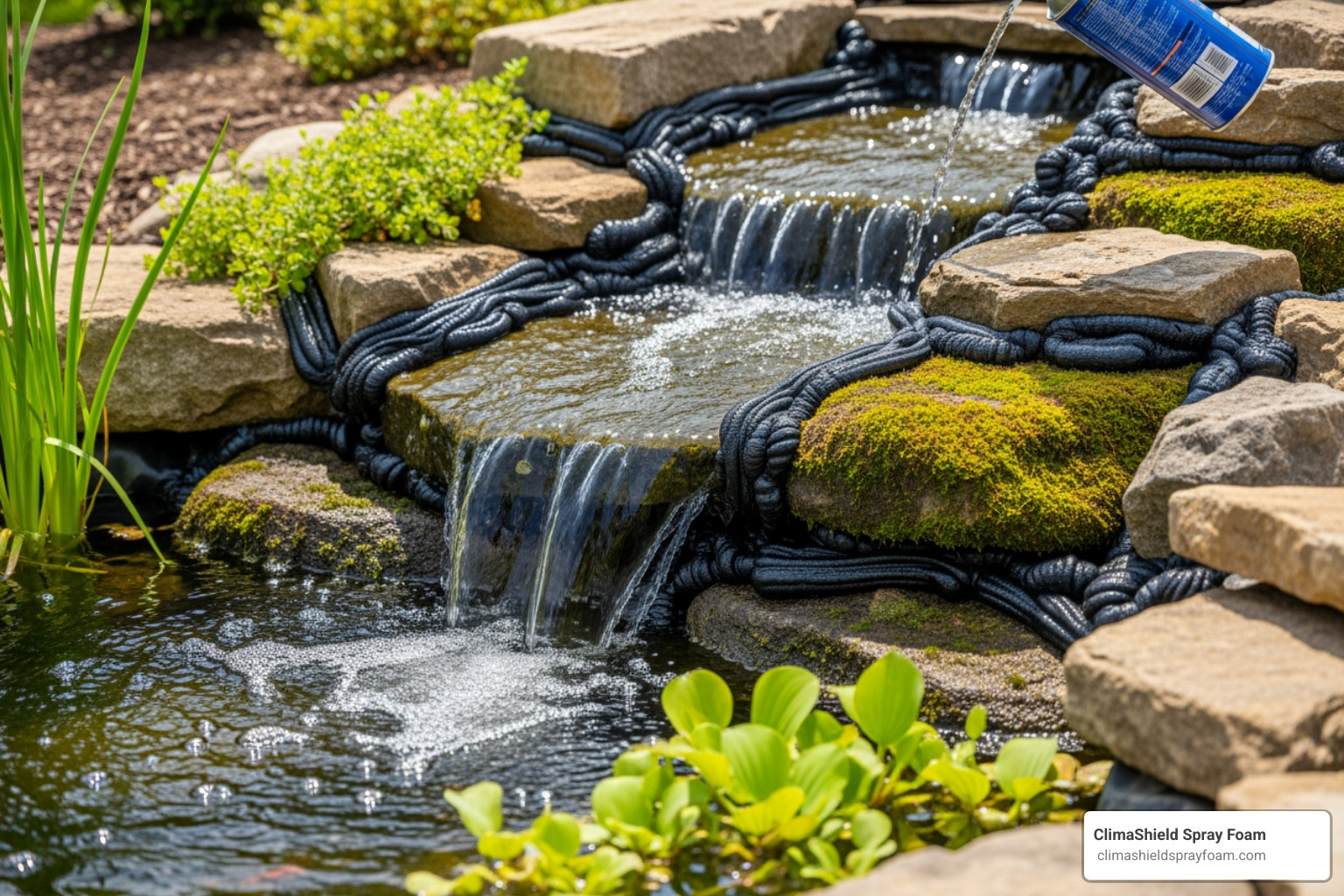
If you’ve ever tried to build a backyard waterfall, you know the frustration of water disappearing behind the rocks instead of flowing over them. This is where “Black Foam” sealants shine. These are specifically formulated to be fish-safe and aquatic-friendly once fully cured.
The black color serves two purposes:
- Aesthetics: It blends in perfectly with the shadows between rocks and wet stones.
- UV Resistance: Standard cream-colored foam breaks down quickly in sunlight. Black foam contains carbon black or other UV stabilizers that help it last much longer in exposed landscaping.
By using expandable spray foam waterproof sealant in your rock features, you can bond landscape blocks together and divert water exactly where you want it. It fills the “voids” between boulders, ensuring your waterfall looks lush and full rather than a leaky mess.
Sealing RVs and Outdoor Structures
For the campers and travelers in our community, water is the number one enemy. A small leak in an RV roof can cause thousands of dollars in rot before you even notice it. We often see folks using expanding foam to seal around roof vents, plumbing stacks, and undercarriage penetrations.
Because RVs move and vibrate, you want a foam that has a bit of “give.” Some hybrid foams are designed to be more flexible, accommodating structural movement without cracking. It’s also fantastic for undercarriage sealing to keep out road spray and—perhaps more importantly—pests. If you’re worried about critters, check out our spray-foam-insulation-pest-resistant-guide to see how foam keeps the mice out of your camper.
How to Apply Expandable Spray Foam Waterproof Sealants
Applying spray foam looks easy, but it can get messy fast—I’ve seen many DIYers end up with foam in their hair and on their clothes, and trust me, it doesn’t come out easily!
Preparing surfaces for expandable spray foam waterproof adhesion
The secret to a long-lasting, waterproof bond is all in the prep work.
- Clean the Area: Dust, grease, and loose debris are the enemies of adhesion. Wipe down the surface with a damp cloth or a solvent if necessary.
- The Moisture Trick: Most polyurethane foams are moisture-cured. This means they actually need a little bit of humidity to cure correctly. We recommend lightly misting the surface with water before applying the foam. This helps the foam stick better and expand more fully.
- Check the Temperature: Ensure your can is at room temperature. If it’s been sitting in a cold garage in Indiana, PA, bring it inside for 24 hours before your project.
Curing Times and Post-Application Care
Once you pull the trigger, the clock starts.
- Tack-Free: Most foams become “tack-free” (meaning you can touch them lightly without a mess) in about 7 to 15 minutes.
- Trimmable: You can usually cut or sand the foam within 30 to 60 minutes.
- Full Cure: It takes a full 24 hours for the foam to reach its maximum strength and waterproof properties.
Crucial Step: If the foam is going to be exposed to direct sunlight, you must protect it. Even the best “UV-resistant” black foams will eventually degrade under the sun’s harsh rays. Once the foam is cured and trimmed, give it a coat of high-quality outdoor paint or a specialized coating like Liquid Rubber to ensure it stays high and dry for years.
Advantages of Expandable Spray Foam for Waterproofing
Why use foam instead of traditional rubber liners or caulk?
- Speed: You can seal a 20-foot gap in seconds.
- Depth of Seal: Caulk only seals the surface. Foam expands deep into the cavity, providing a multi-layered defense against water.
- Cost-Effectiveness: One 12 oz can of foam can provide as much coverage as 22 tubes of standard caulk. That is a massive saving for large projects.
- Insulation: You aren’t just stopping water; you’re stopping heat transfer. This is why it’s a top choice for pest-resistant-spray-foam and energy-efficient home sealing.
Limitations and UV Protection
We have to be honest: spray foam isn’t perfect for every situation. Its biggest weakness is UV light. If left unprotected, the sun will turn the foam yellow (or grey), make it brittle, and eventually cause it to crumble into dust.
Additionally, standard “Gaps and Cracks” foam is often only water-resistant, not truly waterproof. If you have a situation with “standing” water or high pressure (like a basement foundation leak), you might need a more robust solution. For those heavy-duty basement issues, we often recommend a combination of foam and a flexible membrane like Liquid Rubber to ensure a permanent fix.
Frequently Asked Questions about Waterproof Foam
Is expandable spray foam safe for aquatic life and fish ponds?
Yes, but only once it is fully cured. While the liquid foam contains chemicals that could be harmful, cured polyurethane is inert and safe for fish and plants. Most professionals use “Pond and Stone” specific foams that are verified for aquatic use.
How do you remove cured waterproof foam from surfaces?
This is the tough part. Once the foam cures, solvents like acetone won’t touch it. You have to remove it mechanically—meaning you’ll need to scrape, sand, or cut it away. If you get it on your skin, you’ll likely have to wait for it to wear off naturally over a few days (pumice stones can help speed this up).
Can waterproof foam be applied in freezing temperatures?
Some “all-weather” or “low-temperature” formulas can be applied down to 21°F. However, for the best expansion and waterproof seal, we always recommend waiting for a day when it’s at least 40°F, or ensuring the can itself is kept warm right up until the moment of application.
Conclusion
At ClimaShield Spray Foam, we’ve seen how the right expandable spray foam waterproof application can transform a home or a DIY project. From saving you up to 60% on your energy bills to ensuring your backyard waterfall doesn’t leak into the neighbor’s yard, this technology is a game-changer for durability and efficiency.
If you’re in Indiana, PA, or the surrounding areas and you’re ready to take your home’s protection to the next level, we’re here to help. Whether it’s is-spray-foam-insulation-mold-resistant questions or a full basement sealing project, our team has the expertise to keep your project high and dry.
Ready to seal the deal? Visit our services page to see how we can help you achieve a more comfortable, waterproof, and energy-efficient home today!
