Why Residential Energy Solutions Start With Your Home’s Envelope
Residential energy solutions cover a wide range of options to help you cut costs, stay comfortable, and reduce your carbon footprint. Here’s a quick breakdown:
| Solution Type | What It Does | Best For |
|---|---|---|
| Insulation & Air Sealing | Stops heat loss/gain at the source | All homes, highest ROI |
| Smart Thermostats | Automates temperature control | Quick wins, renters & owners |
| Heat Pumps | Efficient heating & cooling | Replacing old HVAC systems |
| Solar PV Systems | Generates your own electricity | Homeowners with upfront budget |
| Energy Plans (fixed/variable) | Controls your supply cost | Renters & owners |
| Rebates & Tax Credits | Offsets upgrade costs | Anyone doing upgrades |
Heating and cooling alone account for nearly half of the average home’s energy bill. If your home has drafts, uneven temperatures, or stubbornly high utility costs, the problem is usually the building envelope — the walls, attic, and crawl spaces that let conditioned air escape year-round.
The good news: fixing that problem first makes every other energy solution work better and cost less.
I’m Dave Brocious, founder of ClimaShield Industries with over 20 years in coatings and specialty insulation, including Director-level experience in the natural gas industry — and residential energy solutions built around spray foam insulation are at the core of what we do. In the sections ahead, I’ll walk you through exactly how to approach your home’s energy efficiency from the ground up.
Residential energy solutions terminology:
Understanding the Core Types of Residential Energy Solutions
When we talk about Residential energy solutions, we are looking at a broad spectrum of tools designed to manage how your home consumes power. In Pennsylvania, where our winters can be brutal and our summers humid, understanding these categories is the first step toward a lower Your Energy Bill.

Electricity and Natural Gas Plans
For many residents in Indiana, PA, and the surrounding areas, the most immediate “solution” is the energy plan itself. Providers like Constellation serve approximately 2 million homes across the U.S., offering fixed-rate or variable-rate plans. A fixed-rate plan locks in your price per kilowatt-hour (kWh) or therm, providing budget stability. In Pennsylvania, you often have the “Power to Choose,” meaning you can shop for a supplier that offers competitive rates while your local utility (like FirstEnergy) still handles the delivery.
Efficiency Upgrades
These are physical changes to your home. This includes everything from installing ENERGY STAR certified windows—which can lower household energy bills by an average of 12%—to upgrading to a high-efficiency heat pump water heater. For a household of four, a heat pump water heater can save about $550 every year.
Renewable Energy
As the Department of Energy points out, installing renewable systems like solar PV or geothermal heat pumps can significantly lower utility bills. Geothermal systems are particularly impressive, achieving efficiencies 2–3 times greater than standard air-source heat pumps by tapping into the constant 45°F–75°F temperature of the earth.
Maximizing Efficiency: The “Efficiency-First” Approach
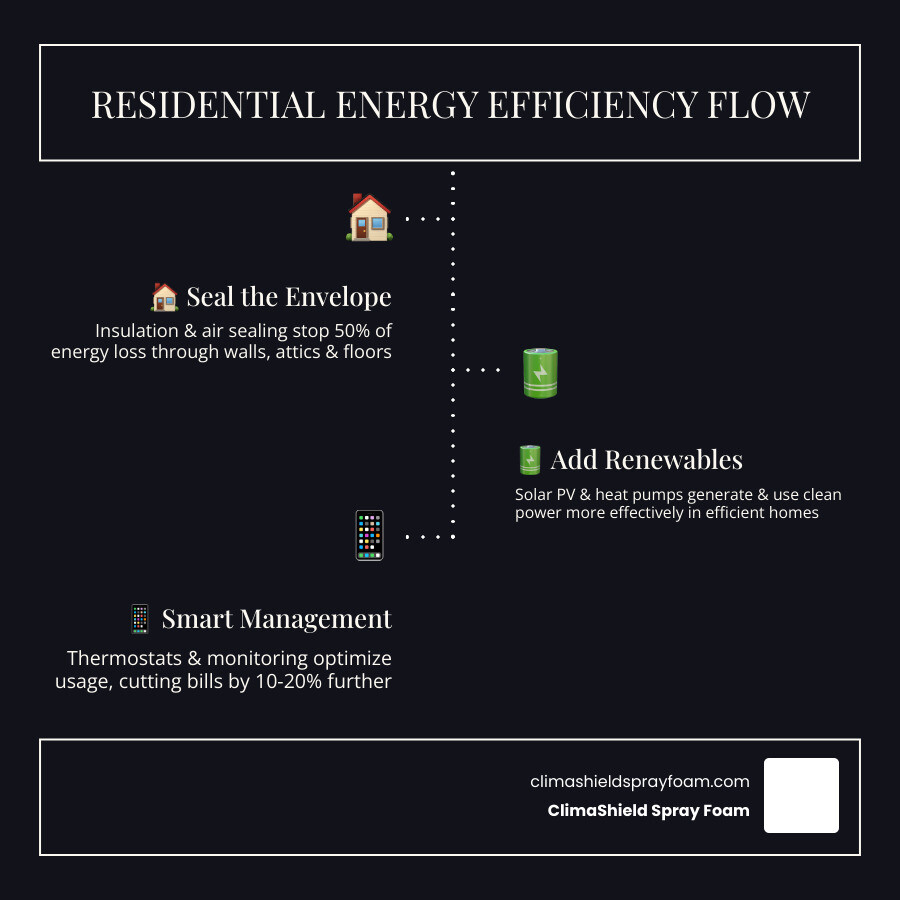
We always tell our neighbors in Indiana, PA: don’t put the solar panels on the roof until you’ve fixed the holes in the attic. This is the “efficiency-first” approach. If your home isn’t sealed, you’re essentially paying to heat the Great Outdoors.
Air Sealing and the Building Envelope
Air sealing is the process of plugging the thousands of tiny gaps where air leaks in and out of your home. These leaks often occur around plumbing stacks, wiring holes, and top plates. When combined with Attic Spray Foam, air sealing creates a continuous thermal barrier. This “sealed envelope” ensures that your HVAC system doesn’t have to work overtime. In fact, attic sealing and insulation alone can save up to 10% on your annual energy bills.
The Role of High-Efficiency Equipment
Once the envelope is tight, you can look at the ENERGY STAR Home Upgrade list. This program highlights six high-impact improvements, including “electric ready” panels and smart thermostats. Smart thermostats learn your household patterns and automatically adjust temperatures, often earning you rewards or bill credits through utility demand-response programs.
Why Insulation is the Best Residential Energy Solution
If we had to pick one “heavy lifter” for home comfort, it’s insulation. But not all insulation is created equal.
- R-Value and Heat Transfer: R-value measures a material’s resistance to heat flow. The higher the R-value, the better the insulation. However, traditional materials like fiberglass can still allow air to pass through.
- The Spray Foam Advantage: This is where we hang our hats. Spray foam provides both high R-value and a built-in air seal. It’s the Best Insulation for Home because it expands to fill every nook and cranny.
- Moisture and Pest Control: Beyond Energy Saving Insulation, spray foam acts as a moisture barrier. This is crucial for preventing mold and keeping pests out of your crawl spaces.
- Material Comparison: When Exploring Residential Insulation Types, you’ll find that while fiberglass is cheaper upfront, it doesn’t offer the airtightness or durability of foam. At ClimaShield, our solutions can save customers up to 60% on energy bills because they tackle both conduction and convection.
How to Assess and Compare Your Home Energy Needs
You can’t fix what you haven’t measured. We recommend every homeowner start with a professional home energy assessment or audit.
The Home Energy Audit
A professional auditor uses tools like thermal imaging cameras and blower door tests to find exactly where your heat is escaping. In Pennsylvania, many utilities like FirstEnergy offer programs to help you get started with these assessments. They look at your usage patterns and pinpoint which residential energy solutions will provide the fastest return on investment.
Comparing Solutions for Different Living Situations
Your options change depending on whether you own a farmhouse in Indiana County or rent an apartment in downtown Pittsburgh.
| Feature | Homeowners | Renters / Multi-Family |
|---|---|---|
| Major Upgrades | Full attic spray foam, solar, geothermal | Limited to “portable” solutions |
| Quick Fixes | Air sealing, smart thermostats | Weatherstripping, LED bulbs |
| Financing | Federal tax credits, On-bill repayment | Utility rebates for small devices |
| Energy Plans | Long-term fixed-rate plans | Short-term or “apartment” specific plans |
Considering Clean Power Systems
Once your home is tight and efficient, it’s time to look at clean power. Renewable energy isn’t just for “going green”—it’s a financial strategy.
Solar Photovoltaic (PV) Systems
A typical 7 kW solar system costs roughly $21,000 and can provide 20–35 kWh per day. In Pennsylvania, programs like net metering allow you to sell excess power back to the grid, essentially turning your meter backward during sunny days.
Geothermal and Solar Water Heating
Solar hot water systems can meet about 50% of the hot water needs for a family of four. Geothermal heat pumps, while having a higher upfront cost, often recoup that investment in 10–15 years because they are so much more efficient than traditional air-source units.
The Role of Efficiency in Renewable Integration
This is a critical point: if you insulate your home with high-quality spray foam first, you can actually install a smaller, cheaper solar array or HVAC system. A highly efficient home envelope reduces the total “load” the renewable system needs to carry. This improves your cost-benefit ratio and pushes you closer to true energy independence.
Navigating Rebates, Financing, and Smart Management
The upfront cost of residential energy solutions can be intimidating, but there is a wealth of help available for Pennsylvania residents.
Federal and State Incentives
The Inflation Reduction Act has expanded federal tax credits for energy efficiency. You can often claim 30% of the cost for projects like insulation, heat pumps, and solar. Locally, the Pennsylvania Department of Environmental Protection provides resources on state-specific incentives and rebates.
Financing Programs
- On-Bill Repayment (OBRP): Some programs allow you to finance up to $25,000 for energy upgrades at 0% APR, with the monthly payment added directly to your utility bill. The idea is that the energy savings often cover the loan payment.
- Rebates: Utility-backed programs can offer up to $7,500 in rebates for “Whole Home” energy projects that include insulation and air sealing.
Smart Energy Management
Modern systems like the Torus Station use AI to manage your power. These systems can reduce monthly bills by up to 90% by automatically charging batteries when electricity is cheap and switching to battery power during “peak” expensive hours. They even have “Storm Modes” that ensure your batteries are topped off before a Pennsylvania snowstorm hits.
How to Electrify Your Home and Future-Proof Your Power
Electrification is the process of switching from fossil fuels (like oil or propane) to high-efficiency electric systems. This is a major trend in residential energy solutions because it prepares your home for a carbon-free future.
- Start with Residential Insulation: You cannot efficiently electrify a drafty house. Foam insulation ensures your new electric heat pump doesn’t struggle.
- Upgrade Your Panel: You may need an “electric ready” panel to handle the load of a heat pump, an induction stove, and an EV charger.
- Heat Pumps: Switch your furnace for a heat pump. Modern cold-climate heat pumps work beautifully even in Western PA winters.
- Outage Protection: As you electrify, consider a home generator or a battery backup system. This ensures that even if the grid goes down, your critical systems stay online.
Frequently Asked Questions about Residential Energy
How can insulation support home electrification and reduce reliance on fossil fuels?
Insulation is the foundation of electrification. By creating an airtight seal, you drastically reduce the amount of energy needed to heat or cool your home. This allows you to replace a massive gas furnace with a smaller, more efficient electric heat pump. Without proper insulation, an electric system might struggle to keep up during a deep freeze, leading to higher bills.
What are the best energy-saving options for renters in apartments?
Renters can still make a big impact! Focus on “plug-and-play” residential energy solutions. Smart thermostats (if allowed) and LED lighting are great starts. You can also use heavy curtains to block heat transfer through windows and request a “renter-specific” electricity plan from your provider that offers rewards for lower usage during peak hours.
How do smart energy monitoring and a well-insulated home enhance energy resilience?
Resilience is about staying comfortable during an outage. A well-insulated home (especially one with spray foam) acts like a giant thermos; it holds its temperature for hours or even days after the power goes out. When you combine this with smart monitoring and battery storage, you can manage your remaining power precisely, ensuring your food stays cold and your lights stay on until the grid is repaired.
Conclusion
Finding the right residential energy solutions doesn’t have to be overwhelming. Whether you are looking at fixed-rate electricity plans, solar panels, or high-efficiency appliances, the smartest first step is always to secure your home’s envelope.
At ClimaShield Spray Foam, we specialize in providing that foundation. Our airtight, waterproof, and mold-resistant insulation doesn’t just save you money—it transforms the way your home feels. By saving our customers up to 60% on their energy bills, we help make all other green technologies more affordable and effective.
Ready to start your journey toward a more efficient home in Indiana, PA? Visit us at https://climashieldsprayfoam.com/ to learn how we can help you seal in the savings for decades to come.
