
Why Understanding Insulation Costs Matters for Your Home
Average insulation cost typically ranges from $1,500 to $8,000 for most homes, with the national average falling around $1,916. Here’s what you need to know right away:
- Cost per square foot: $1.00 to $4.50 installed, depending on material type
- Material costs alone: $0.50 to $2.80 per square foot
- Labor costs: $0.50 to $1.70 per square foot
- Average home (1,500 sq ft): $2,250 to $4,500
- Typical payback period: 3 to 5 years through energy savings
If you’re tired of watching your energy bills climb while your home stays drafty and uncomfortable, you’re not alone. Proper insulation can reduce your heating and cooling costs by up to 15%, making it one of the smartest investments you can make in your property.
The challenge? Insulation costs vary wildly based on your home’s size, the type of material you choose, and which areas you’re insulating. A garage might cost $600 to $3,400, while an attic can range from $1,000 to $2,700. Understanding these numbers helps you budget effectively and avoid costly surprises.
Beyond the dollar signs, insulation solves real problems. It stops drafts. It prevents mold growth by controlling moisture. It keeps pests out of your walls. And most importantly, it creates the consistent, comfortable temperatures you deserve in your own home.
I’m Dave Brocious, and I’ve spent over 20 years in the coatings industry, including founding ClimaShield Industries, where we’ve helped countless homeowners steer average insulation cost decisions and find the right solutions for their properties. My experience in both commercial and residential projects has shown me that understanding costs upfront leads to better long-term outcomes.
Understanding the Average Insulation Cost Breakdown
When we talk about the average insulation cost, we’re looking at a comprehensive project involving materials, labor, preparation, and other services. The national average cost to install insulation is around $1,916, though the total project can range from $1,200 to over $8,000, depending on the scope and complexity.
Breaking down the costs, material prices typically range from $0.50 to $2.80 per square foot. Labor can add another $0.50 to $1.70 per square foot, bringing the total installed cost to between $1.00 and $4.50 per square foot. It’s also worth noting that some companies have a minimum project fee, often $1,500 to $2,000, to cover overhead on smaller jobs.

Key Factors That Influence Insulation Prices
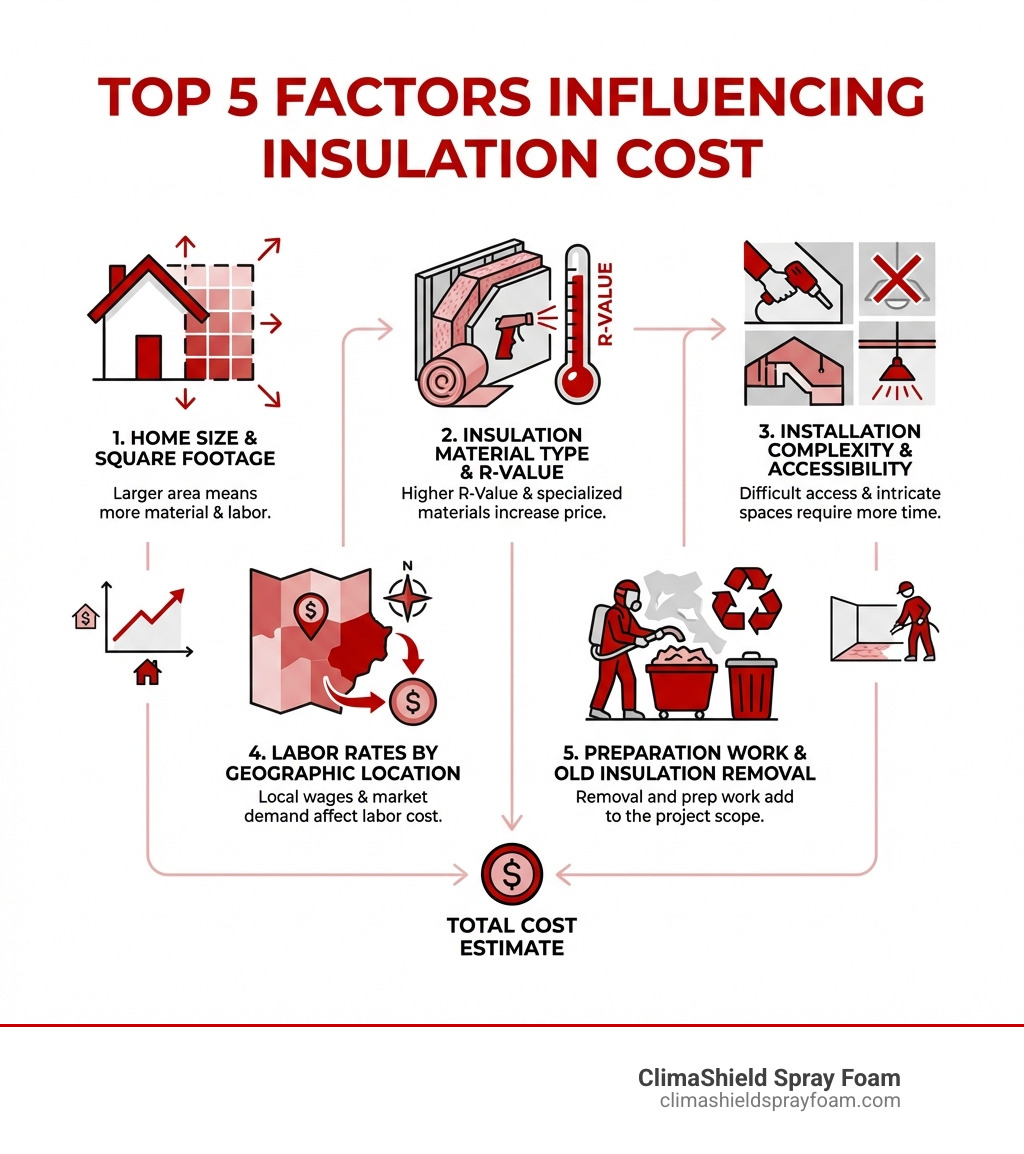
Several variables play a significant role in your project’s total cost. Understanding these can help you estimate what your project might entail:
- Home Size and Square Footage: A larger home naturally requires more material and labor, increasing the overall cost.
- Insulation Type: Different insulation materials come with vastly different price tags. Spray foam, for example, is more expensive per square foot than fiberglass but offers superior performance.
- R-value: This measures insulation’s resistance to heat flow. Achieving a higher R-value means better thermal resistance and typically increases costs by requiring more or denser material.
- New vs. Existing Construction: Insulating a new build is simpler and less expensive. Retrofitting insulation into existing homes is more complex, requiring methods like drill-and-fill, which adds to labor costs.
- Accessibility: Hard-to-reach areas like cramped attics and crawl spaces can significantly increase labor costs, as they require more time and specialized equipment.
- Location & Labor Rates: Labor costs vary by region. Urban areas often have higher labor rates than rural locations.
- Preparation Work: Significant prep work, such as cleaning the area or making structural repairs, will add to the cost.
- Old Insulation Removal: If old or damaged insulation needs to be removed, this will add to the cost, typically $2 to $8 per square foot, including disposal.
- Air Sealing: Before insulating, sealing cracks and gaps in your home’s envelope prevents air leaks and improves insulation effectiveness. Air sealing can cost $350 to $5,000 and is a crucial step. For a deeper understanding, see our guide on the Thermal Envelope.
The Average Insulation Cost by Home Size
The total cost is often proportional to your home’s size. Here’s a general idea of what you might expect:
- Cost for a 1,000 sq ft home: Typically ranges from $1,000 to $4,500.
- Cost for a 1,500 sq ft home: You can expect to pay between $1,500 and $6,750. This is a common size, and costs often fall into the $2,250 to $4,500 range, depending on insulation type and complexity.
- Cost for a 2,000 sq ft home: The range here is usually $2,000 to $9,000.
This wide range reflects the price variation between insulation types. Economical fiberglass is on the lower end, while premium spray foam is on the higher end.
Insulation Cost Per Square Foot by Type
Choosing the right insulation material is a pivotal decision that impacts both performance and cost. Each type has its own advantages and ideal applications. To help you choose the best insulation for your home, we’ve compiled a comparison of common types.
| Insulation Type | Cost Per Sq Ft (Installed) | R-value Per Inch | Key Benefits |
|---|---|---|---|
| Spray Foam | $1.50 – $5.00 | 3.5 – 7.0 | Excellent air sealing, moisture barrier, high R-value, structural strength, mold/pest resistance, long lifespan. |
| Blown-In | $1.00 – $2.80 | 3.1 – 3.7 | Fills irregular spaces, good for attics/existing walls, eco-friendly options (cellulose), noise reduction. |
| Batt & Roll | $0.80 – $2.60 | 2.5 – 3.8 | Cost-effective, DIY-friendly (for accessible areas), good for standard-sized cavities, sound dampening (mineral wool). |
| Rigid Foam Board | $1.20 – $3.70 (board ft) | 3.2 – 7.5 | High R-value per inch, moisture resistance, structural integrity, ideal for foundations/exterior sheathing. |
| Cellulose | $0.60 – $2.30 | 3.5 | Made from recycled paper, good soundproofing, fire retardant properties. |
| Fiberglass | $0.30 – $1.50 | 2.5 – 3.2 | Widely available, affordable, resistant to fire. |
| Mineral Wool | $1.40 – $4.00 | 3.4 | Excellent fire resistance, good sound dampening, moisture resistant. |
Spray Foam Insulation Costs
Spray foam insulation is a premium choice, and for good reason. It offers best thermal performance, air sealing, and moisture control. At ClimaShield Spray Foam, we specialize in this advanced solution, and our clients in Indiana, PA and across Pennsylvania often find it to be a worthwhile long-term investment.
- Open-cell spray foam is typically priced lower, ranging from $0.44 to $3 per square foot (or $0.30 – $0.65 per board foot). It’s softer, less dense, and more flexible, providing an R-value of about 3.5 per inch. It excels at air sealing but is permeable to moisture vapor.
- Closed-cell spray foam is the denser, more rigid option, costing between $1.55 to $8 per square foot (or $0.90 – $1.50 per board foot). It boasts a higher R-value of about 6.0 to 7.0 per inch and acts as both an air barrier and a vapor barrier. This makes it ideal for areas where moisture control is critical.
The air sealing benefits of spray foam are a significant advantage. It expands to fill every crack and crevice, creating an airtight seal that prevents drafts and energy loss. This also contributes to improved indoor air quality by minimizing the infiltration of pollutants and allergens. Furthermore, its moisture barrier properties, especially with closed-cell, help prevent condensation and mold growth, protecting your home’s structure. Explore more about its applications in our guide to the Uses of Spray Foam.
Blown-In Insulation Costs (Cellulose & Fiberglass)
Blown-in insulation is a fantastic solution for filling irregularly shaped cavities, attics, and existing wall spaces without extensive demolition.
- Cellulose insulation costs between $0.60 and $1.20 per square foot for material alone, and generally $0.60 to $2.30 per square foot installed. It’s made from recycled paper products, making it an eco-friendly choice. Its R-value is around 3.5 per inch, and it’s excellent for sound dampening. Professional installation for blown-in cellulose for a typical home can range from $975 to $2,200 total.
- Fiberglass insulation for blown-in applications costs between $0.50 and $1.00 per square foot for material. The installed cost is usually $1.00 to $2.80 per square foot. It’s made from tiny glass fibers and offers an R-value between 3.1 and 3.7 per inch.
Blown-in materials are ideal for attics, where they can be quickly and evenly distributed over existing insulation to boost R-value. They are also perfect for filling existing wall cavities, using a “drill-and-fill” method where small holes are made to inject the insulation, then patched.
Batt and Roll Insulation Costs (Fiberglass & Mineral Wool)
Batt and roll insulation are perhaps the most recognizable types, often seen in pre-cut sections (batts) or long rolls.
- Fiberglass batts are very common and affordable, with material costs ranging from $0.30 to $1.30 per square foot. Installed, batt and roll insulation prices are $0.80 to $2.60 per square foot. Fiberglass offers an R-value of about 2.5 to 3.2 per inch. A roll of fiberglass insulation typically costs $20 to $90 and covers 40 to 75 square feet.
- Mineral wool insulation (also known as rock wool) costs between $1.40 and $4.00 per square foot for material, and between $1.40 and $2.10 per square foot installed. It has an R-value of around 3.4 per inch and is highly valued for its excellent fire resistance and sound-dampening properties.
Batt and roll insulation can be a DIY-friendly option for accessible areas like unfinished basements, attics with open joists, or new construction. However, proper installation is key to avoiding gaps and compression, which can significantly reduce its effectiveness. We always recommend professional installation to ensure optimal performance.
Rigid Foam Board & Other Insulation Types
Beyond the common types, rigid foam boards and other specialized insulations offer unique benefits for specific applications.
- Polystyrene insulation (Expanded Polystyrene – EPS and Extruded Polystyrene – XPS) costs between $0.25 and $0.50 per board foot. It offers an R-value between 3.2 and 3.8 per inch and is highly resistant to moisture.
- Polyisocyanurate (Polyiso) is another rigid foam option, often costing $0.40 to $0.75 per board foot. It boasts one of the highest R-values per inch, typically ranging from 6 to 7.5.
Rigid foam boards are excellent for insulating exterior walls, foundation walls, and cathedral ceilings. They provide a continuous layer of insulation, reducing thermal bridging. We use these for applications requiring a high R-value in a compact space, especially in basements and crawl spaces where moisture is a concern.
- A radiant barrier might add between $0.10 and $0.95 per square foot to the overall insulation job. These are typically installed in attics to reflect radiant heat, reducing heat gain in summer and heat loss in winter, without contributing an R-value themselves.
Estimating Costs for Specific Areas of Your Home
Insulating your entire home often means tackling different areas with varying needs and accessibility challenges. The average insulation cost will depend heavily on which part of your home we’re focusing on. Each area presents unique considerations, and our team at ClimaShield Spray Foam is adept at providing custom solutions for properties across Indiana, PA and Pennsylvania.
Attic Insulation Costs
The attic is often the most critical area to insulate, as significant heat loss occurs through the roof.
- Average cost range: Attic insulation costs typically range from $1 to $4 per square foot, or $1,000 to $2,700 for a standard attic. The total can go up to $6,000 depending on materials and complexity.
- Importance: Proper attic insulation is paramount for preventing heat loss in winter and heat gain in summer. It’s often the quickest way to improve your home’s energy efficiency.
- Common materials used: Blown-in fiberglass or cellulose are popular for their ability to fill irregular spaces. Spray foam is also an excellent option for attics, providing superior air sealing and a higher R-value. Many homeowners in our area choose to combine spray foam for air sealing with blown-in insulation for added thermal resistance. For more detailed information, check out our page on Attic Spray Foam.
Wall Insulation Costs
Insulating walls, especially in existing homes, can be more complex than attics but offers substantial benefits for comfort and energy savings.
- Cost for existing walls: Insulating exterior walls in an existing home can cost between $0.80 to $4.60 per square foot, or $1,400 to $8,500 for all exterior walls in a house. This often involves a “drill-and-fill” method where insulation is injected into wall cavities.
- Cost for new construction: For new builds or major renovations where wall cavities are open, costs are generally lower. Materials like batt and roll insulation, rigid foam, or spray foam can be installed more easily.
- Spray foam for walls: Spray foam is particularly effective for walls because it provides excellent air sealing, preventing drafts that often plague older homes. While injection foam costs for existing homes can be around $3-$5 per square foot, the long-term energy savings and improved comfort are significant.
Basement & Crawl Space Insulation Costs
Basements and crawl spaces are often overlooked, but insulating these areas is crucial for moisture control, preventing mold, and improving overall home comfort.
- Average cost range: Insulating a basement costs $1.20 to $2.90 per square foot installed, or $600 to $4,600 on average. Crawl space insulation costs $1.00 to $4.50 per square foot installed, or $500 to $3,700.
- Moisture control: In Pennsylvania, basements and crawl spaces can be prone to moisture issues. We emphasize using insulation materials like closed-cell spray foam or rigid foam boards that also act as a moisture barrier to prevent dampness and condensation.
- Preventing mold: By controlling moisture and sealing out humidity, proper insulation significantly reduces the risk of mold growth, protecting both your home’s structure and your family’s health. We have dedicated resources on Air Sealing Basements and Basement Vapor Barrier Walls that dig into these critical aspects.
Maximizing Your Return: ROI, Savings, and Rebates
Insulation isn’t just an expense; it’s a strategic investment in your home’s future. The benefits extend far beyond immediate comfort, offering substantial financial returns over time.
Calculating Your Return on Investment (ROI)
- Typical payback period: Home insulation typically pays back within 3-5 years through reduced energy bills. This means that after a few years, your insulation will effectively start paying for itself!
- Energy savings percentage: You can save around 15% on heating and cooling costs by insulating your home effectively. Some of our clients at ClimaShield Spray Foam have even experienced savings of up to 60% with our durable, airtight, and waterproof insulation, which also resists mold and pests. These savings add up significantly over the lifespan of the insulation, which can be 80 years or more for spray foam.
- Increased home value: A well-insulated home is more attractive to buyers. Energy-efficient upgrades, like new insulation, can increase your home’s resale value, offering another layer of return on your investment. To understand how better insulation contributes to your overall household budget, take a look at our insights on Reducing Your Energy Bill.
DIY vs. Professional Installation: A Cost Comparison
The decision to DIY or hire a professional can significantly impact your average insulation cost.
- Labor cost savings: If you’re handy, DIY insulation can save you between $575 and $750 in labor costs.
- DIY-suitable projects: Simple projects, such as adding fiberglass rolls or batts to an easily accessible, unfinished attic or installing rigid foam boards in a basement, are often suitable for DIY.
- When to hire a professional: For more complex projects, specialized materials, or areas that require precision, professional installation is almost always recommended. We strongly advise hiring professionals for spray foam or blown-in insulation, especially in attics or roofs. These materials require specialized equipment, expertise, and safety precautions to ensure proper coverage, optimal R-value, and an effective air seal. Improper installation can lead to reduced performance, moisture issues, and wasted money.
- Safety considerations: DIY insulation, especially with materials like fiberglass or mineral wool, requires proper protective gear (masks, gloves, eye protection). Spray foam also involves chemicals that necessitate professional handling and ventilation. Your safety and the long-term performance of your insulation are our top priorities.
Finding Government Rebates and Incentives
To make insulation even more accessible, various programs offer financial assistance.
- Federal tax credits: The U.S. government often provides federal tax credits for energy-efficient home improvements, including insulation. These can help offset a portion of your installation costs.
- State and local programs: In Pennsylvania, you may find state or local energy efficiency programs that offer rebates or incentives for insulation upgrades. These programs are designed to encourage homeowners to make their properties more energy-efficient.
- Utility company rebates: Many utility companies across Pennsylvania offer their own rebates for customers who upgrade their home insulation. It’s always worth checking with your local energy provider to see what’s available.
We encourage our clients in Indiana, PA and surrounding areas to research these opportunities. You can check Energy Star for incentives and the Database of State Incentives for Renewables & Efficiency (DSIRE) for specific programs in Pennsylvania. These resources are invaluable for finding potential savings that can reduce your overall average insulation cost.
Frequently Asked Questions about Insulation Costs
We often get asked similar questions by homeowners trying to understand the investment in insulation. Here are some of the most common ones:
What is the cheapest type of insulation?
When considering upfront material costs, fiberglass batts are typically the cheapest type of insulation. Material costs for fiberglass batts can be as low as $0.30 to $1.30 per square foot. Loose-fill fiberglass is also quite economical.
However, “cheapest” isn’t always “most cost-effective” in the long run. While fiberglass batts have a lower initial price, their R-value per inch is generally lower (around 2.5-3.2) compared to spray foam or rigid foam. This means you might need more material to achieve the same R-value, or you might not get the same level of performance, especially in terms of air sealing.
The lifespan of insulation also impacts long-term cost. Fiberglass insulation can last 80 to 100 years, but its effectiveness can degrade if it gets wet, compressed, or if air gaps are present. Cellulose insulation, while still affordable, typically lasts 20 to 30 years. Spray foam, despite its higher initial cost, can last up to 80 years and maintains its R-value and air-sealing properties over its entire life, offering a superior return on investment through consistent energy savings. So, while the initial average insulation cost for fiberglass is low, the overall value and performance should be carefully considered.
What is the average insulation cost for a 1,500 sq. ft. house?
For a 1,500 sq. ft. house, the typical cost range for insulation can be quite broad, usually falling between $1,500 and $6,750. More specifically, we often see costs for a project of this size between $2,250 and $4,500.
This variation depends significantly on several factors:
- Insulation Type: As discussed, using fiberglass batts would put you at the lower end of the range, while a comprehensive closed-cell spray foam application would be at the higher end.
- Areas to be Insulated: Are we insulating just the attic, or are we also tackling walls, basements, and crawl spaces? Each area adds to the overall cost.
- Project Complexity: Is it new construction, or are we retrofitting? Is old insulation removal required? Are there accessibility challenges? All these contribute to the final price.
For example, simply adding more blown-in insulation to an existing attic in a 1,500 sq ft home might be closer to the $1,500-$2,000 mark. However, if you’re upgrading all the insulation in an older home, including walls and basement, with high-performance materials, the cost will naturally increase.
How much insulation (R-value) do I need?
The amount of insulation you need, measured by its R-value, depends primarily on two things: your climate zone and the specific area of your home being insulated. The higher the R-value, the better the insulation’s thermal resistance.
- R-value Explained: R-value quantifies how well a material resists heat flow. A higher R-value means better insulation and greater energy efficiency.
- Climate Zone Importance: The U.S. Department of Energy (DOE) divides the country into climate zones, each with recommended R-values. Pennsylvania falls into Climate Zones 4, 5, and 6, which have specific recommendations for different parts of the home.
- Different R-values for Attics, Walls, Floors:
- Attics: For zones like ours in Pennsylvania (typically 4-6), the DOE recommends R-values between R49 and R60 for attics. If your attic is currently under-insulated, increasing its R-value can lead to significant energy savings.
- Walls: For walls, recommended R-values typically range from R13 to R21, depending on whether it’s an existing or new construction and the type of wall cavity.
- Floors & Crawl Spaces: For floors over unheated spaces or crawl spaces, R-values between R13 and R30 are generally recommended.
- Basements: Basements, especially their walls, typically need R-values in the R13-R30 range.
We always recommend consulting with a professional energy advisor or an experienced insulation contractor, like us at ClimaShield Spray Foam, to determine the precise R-value needed for your specific home and location within Pennsylvania. We can assess your current insulation, identify areas for improvement, and recommend the most effective solutions. You can also refer to the DOE region-specific recommendations for more general guidance.
Conclusion
Navigating insulation costs can seem daunting, but with a clear understanding of the factors involved, it becomes much simpler. The average insulation cost for a home can range from $1,500 to $8,000, with per-square-foot prices varying from $1.00 to $4.50 installed. These costs are influenced by your home’s size, the type of insulation chosen, the specific areas being insulated, and whether you opt for professional installation.
Investing in quality insulation, particularly high-performance options like spray foam, is one of the most effective ways to improve your home’s comfort, reduce energy bills, and increase its value. With a typical payback period of 3-5 years and potential energy savings of 15% or more, insulation offers a substantial return on investment. Furthermore, it protects your home from drafts, moisture, mold, and pests, ensuring a healthier and more durable living environment.
At ClimaShield Spray Foam, we are dedicated to providing superior insulation solutions for homes and businesses across Indiana, PA, and the greater Pennsylvania area. We believe in providing insulation that is not only durable, waterproof, and airtight but also helps our customers save significantly on their energy bills.
Ready to upgrade your home’s comfort and efficiency? Learn more about our Residential Insulation services.
