
What is Concrete Lifting and Why is it Crucial for Your Home?
Residential concrete lifting is a repair method that raises and stabilizes sunken or uneven concrete slabs back to their original position without the need for costly replacement. This process involves injecting specialized materials beneath the slab to fill voids, compact soil, and lift the concrete, restoring safety and functionality to driveways, sidewalks, patios, and other surfaces around your home.
Quick Answer: What You Need to Know About Residential Concrete Lifting
- What it fixes: Sunken driveways, uneven sidewalks, cracked patios, sloping garage floors
- How it works: Injecting foam or slurry beneath the slab to lift and stabilize it
- Cost savings: Typically 50-70% less expensive than full concrete replacement
- Time frame: Most residential projects complete in just a few hours
- Lifespan: Properly maintained repairs can last 20-50+ years
Sinking concrete isn’t just unsightly—it creates trip hazards, causes water pooling that can damage your foundation, and reduces your home’s curb appeal and value. When soil beneath your concrete erodes, settles, or shifts due to water, poor compaction, or freeze-thaw cycles, the slab loses support and begins to sink. Left unaddressed, these problems worsen over time, leading to more extensive damage and higher repair costs.
Concrete lifting offers a cost-effective, fast, and durable solution that preserves your existing slabs while addressing the underlying soil issues. Modern methods like polyurethane foam injection can restore your concrete in hours rather than the days or weeks required for replacement, with minimal disruption to your landscaping and daily life.
I’m Dave Brocious, and with 20 years of experience in specialty coatings and protective applications, I’ve seen how proper residential concrete lifting techniques can prevent foundation issues and extend the life of concrete surfaces. At ClimaShield Industries, we combine this expertise with advanced materials to deliver lasting solutions for homeowners facing sinking slab problems.
Is Your Concrete Crying for Help? Key Signs and Causes
It’s easy to overlook subtle changes in your concrete, but these small indicators can quickly escalate into significant problems if not addressed. Knowing what to look for can save you time, money, and potential headaches down the road.
Common Warning Signs You Need Concrete Lifting
When your concrete begins to settle, it rarely does so uniformly. This uneven movement creates a cascade of issues that affect both the safety and aesthetics of your property. Here are the tell-tale signs that your concrete needs attention:
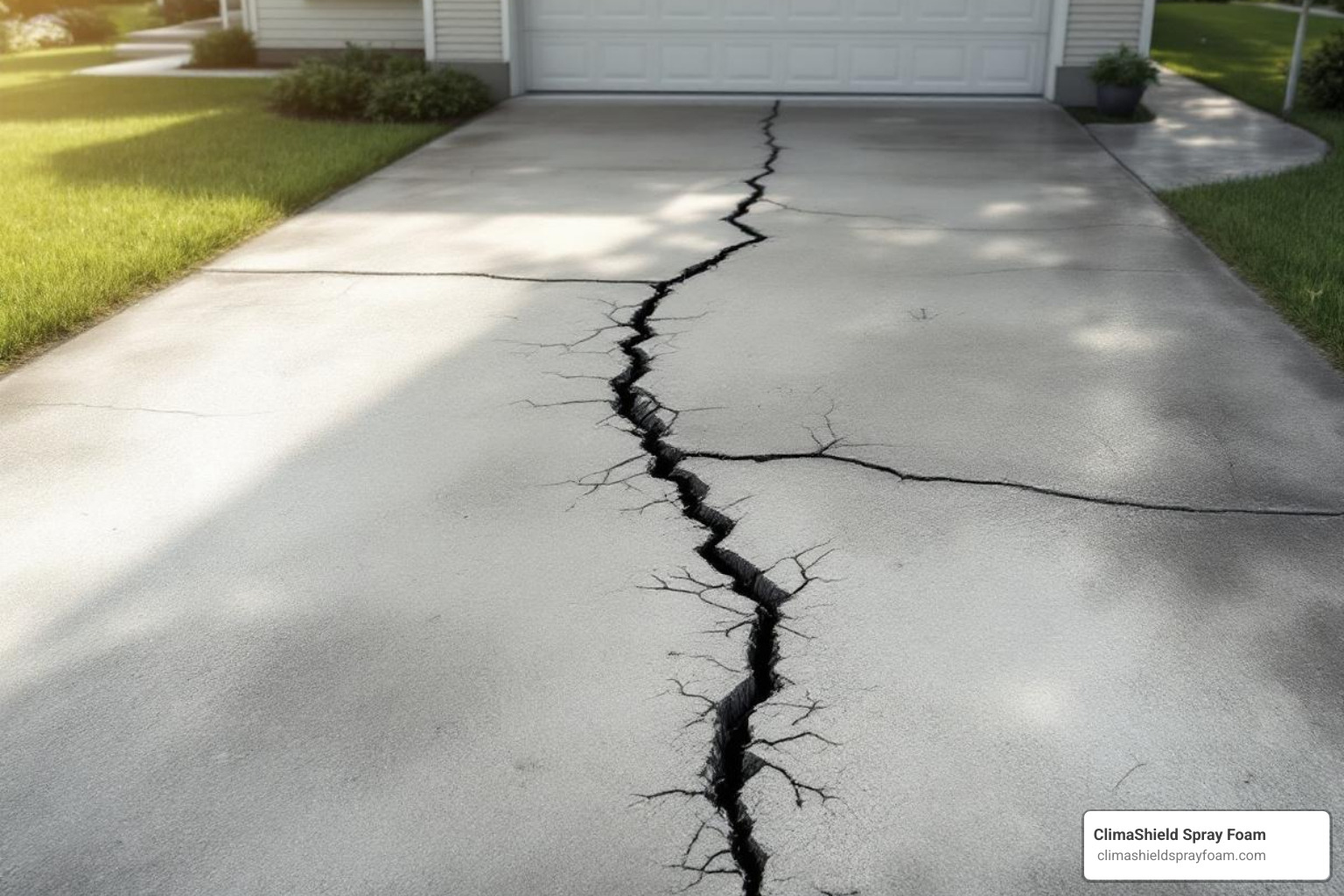
- Cracked Driveways: Cracks are often the first visible sign of underlying settlement. While minor surface cracks can be cosmetic, larger, deeper, or spiderwebbing cracks indicate significant stress on the slab, often due to void formation or unstable soil beneath.
- Uneven Sidewalks: Uneven sidewalk sections are not just an eyesore; they are dangerous trip hazards. Even a quarter-inch difference in height can cause someone to stumble, leading to potential injuries and liability concerns.
- Sinking Patios or Porches: A sinking patio or porch can detract from your home’s curb appeal and even lead to water draining towards your foundation, which can cause more severe structural issues.
- Water Pooling on Concrete: If you notice puddles forming on your driveway, patio, or around your pool deck after rain, it’s a clear sign that the concrete has settled, creating depressions where water can collect. This can lead to accelerated erosion beneath the slab and, if near your home, can direct water towards your basement or crawl space.
- Gaps Between Concrete and Foundation: A gap between your concrete slab (like a garage floor or patio) and your home’s foundation indicates that the slab is pulling away or sinking. This can allow water, pests, and cold air to enter your home.
- Sloping Garage Floors: A garage floor that slopes noticeably can make it difficult to park vehicles, cause storage items to roll, and again, direct water towards the foundation or interior of your home.
- Sticking Doors or Windows Near Affected Slabs: While often associated with foundation issues, if doors or windows near a concrete slab (like a patio door or a garage door) begin to stick, it could be an indirect sign that the surrounding concrete is settling and putting pressure on the home’s structure.
The Root Causes of Concrete Problems
Understanding why your concrete is sinking is just as important as identifying that it is sinking. Most concrete problems stem from issues with the soil beneath the slab.
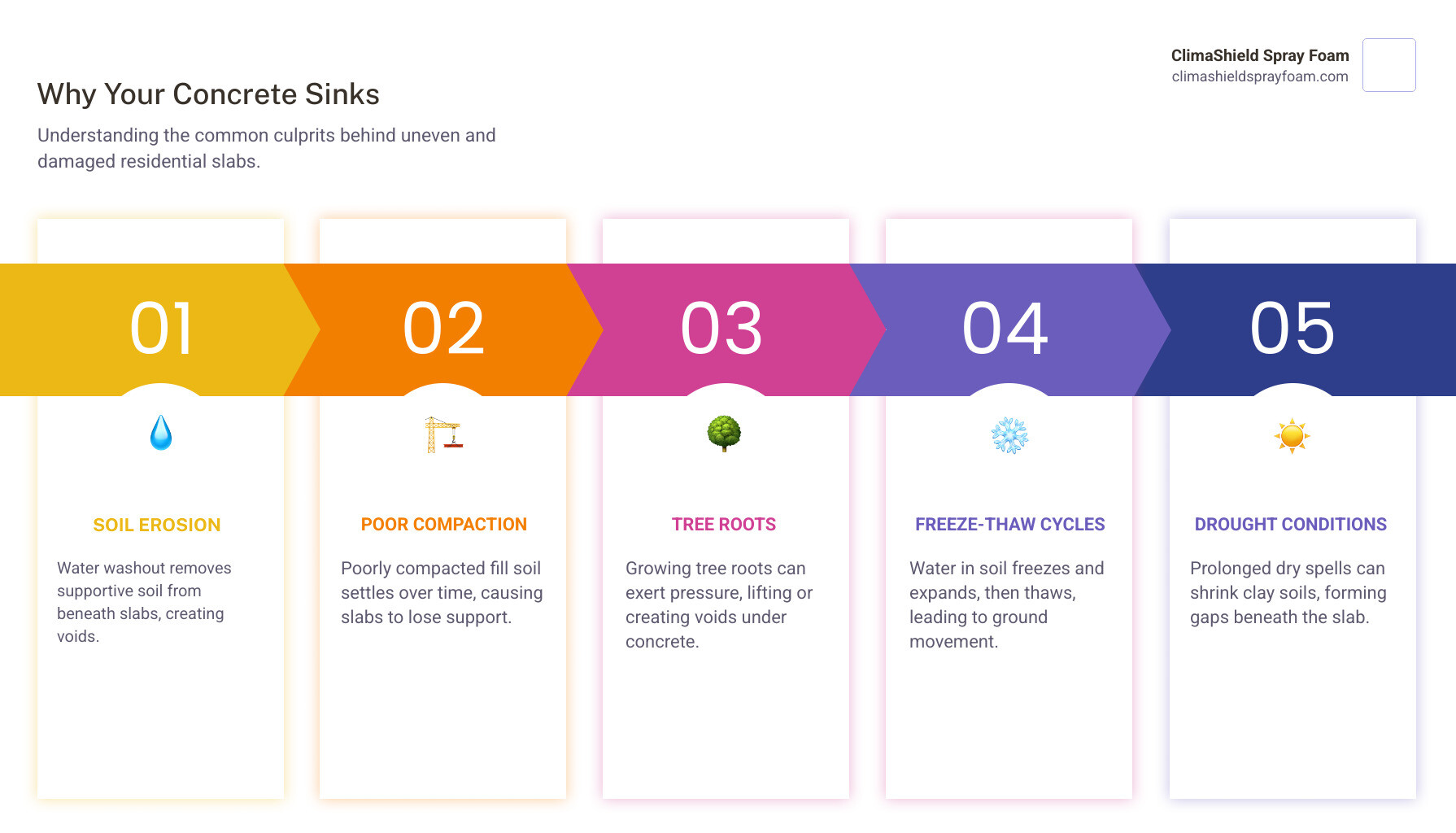
- Soil Washout: This is a primary culprit. Heavy rains or improper drainage can erode the soil beneath your concrete, creating voids. Without the support of the soil, the concrete slab eventually cracks and sinks into these empty spaces.
- Poorly Compacted Soil: During construction, if the soil beneath a new concrete slab isn’t properly compacted, it will naturally settle over time. This settlement leads to voids and, consequently, sinking concrete.
- Tree Roots: While beautiful, large tree roots can be problematic. They can grow under concrete slabs, lifting them unevenly. Conversely, if a tree near a slab is removed, the decaying roots can leave behind voids that lead to settlement.
- Soil Erosion: Similar to washout, general soil erosion over time, especially on slopes or in areas with poor landscaping, can undermine concrete slabs.
- Freeze-Thaw Cycles: In regions like Pennsylvania, the freeze-thaw cycle is a significant factor. When water in the soil freezes, it expands, pushing concrete upwards (heaving). When it thaws, the soil contracts, leaving voids. Repeated cycles weaken the soil and lead to uneven settlement.
- Drought Conditions: Extended periods of drought can cause clay soils to shrink significantly, creating large voids beneath concrete slabs. When moisture returns, the soil expands, but the damage from the previous void can lead to cracking and unevenness.
- Excessive Weight: While concrete is strong, consistently placing excessive weight on a slab not designed for it (e.g., heavy machinery on a residential driveway) can contribute to its settlement over time.
At ClimaShield Spray Foam, we understand the intricate relationship between soil, concrete, and your home’s stability. Just as we focus on protecting your home with superior insulation, we recognize that a stable foundation starts from the ground up. You can learn more about how our insulation protects your home’s foundation and overall integrity at our page on Residential Insulation.
A Deep Dive into Residential Concrete Lifting Methods
When it comes to addressing sunken concrete, homeowners have several options. While traditional methods have been around for a while, modern technology has introduced more efficient and less invasive solutions.
Polyurethane Foam Injection (Polyjacking)
Polyurethane foam injection, often called polyjacking, is a state-of-the-art method we specialize in for residential concrete lifting. It’s a clean, fast, and highly effective solution that has revolutionized concrete repair.
How it works:
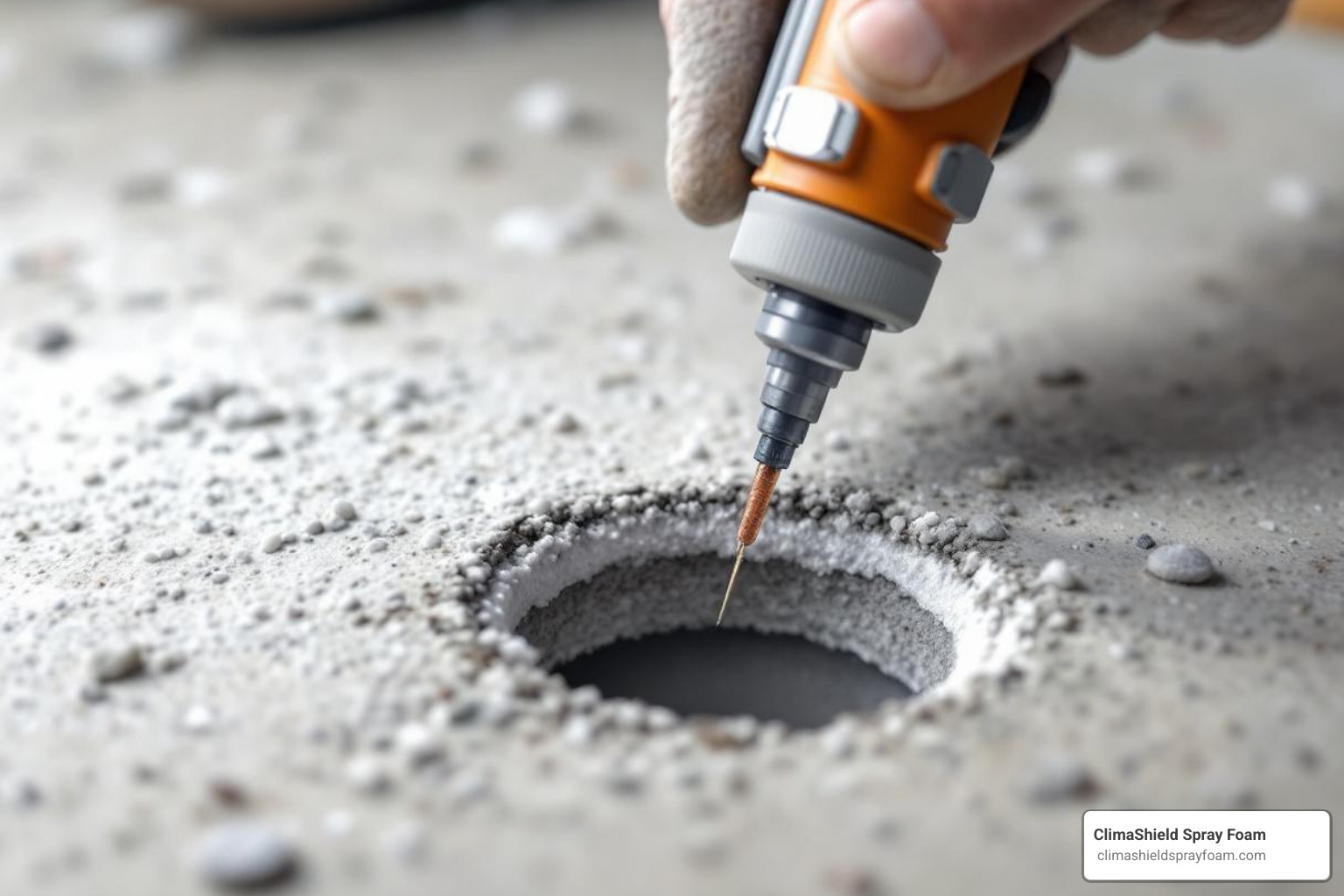
The process begins with drilling small, penny-sized holes (typically 5/8″ in diameter) through the sunken concrete slab. Then, a specialized two-part polymer is injected as a liquid beneath the slab. Upon injection, a rapid chemical reaction occurs, causing the foam to expand. This expansion fills any voids, compacts the loose soil, and gently lifts the concrete slab back to its desired level. Our technicians carefully monitor the lift using pressure gauges and precision tools to ensure the slab returns to its original height and aligns seamlessly with adjacent concrete. Once the desired level is achieved, the injection holes are sealed, leaving a virtually undetectable repair.
The polyurethane foam we use is a high-density, structural-grade material that cures quickly. This means that the slab is often ready for use within 15 to 30 minutes after the process is complete, minimizing disruption to your daily life. The material itself is incredibly lightweight (2-4 lbs/cu. ft.), yet extremely strong and durable, providing long-lasting stability.
You can dive deeper into how this innovative process works on our dedicated page: How Polyurethane Foam Lifting Works. For a broader understanding of the versatility of spray foam technology, explore our page on the Uses of Spray Foam.
Why Polyurethane Foam Injection is the Preferred Solution
Compared to older methods, polyurethane foam injection offers distinct advantages, making it our preferred choice for most residential concrete lifting projects in Pennsylvania:
- Precision Lifting: The controlled expansion of the foam allows for incredibly precise lifting, ensuring the slab is raised to the exact required height. This minimizes stress on the concrete and prevents over-lifting.
- Minimal Disruption: The small injection holes and lightweight equipment mean less mess and minimal impact on your landscaping. There’s no need for heavy machinery or extensive excavation.
- Fast Results: Most residential projects can be completed in just a few hours. Because the foam cures so quickly, you can typically walk or even drive on the repaired surface within minutes to an hour, significantly reducing downtime.
- Long-Lasting: The high-density polyurethane foam is resistant to water, chemicals, and erosion, providing a stable and durable foundation that can last for decades. It also acts as a waterproof barrier, preventing future soil washout.
- Eco-Friendly: Polyurethane foam is considered eco-friendly because it uses fewer materials compared to concrete replacement, reduces waste, and avoids contributing to landfills. It also extends the life of your existing concrete, which is a sustainable choice.
- Suitable for Most Residential Applications: From driveways and sidewalks to patios, pool decks, and even garage floors, polyjacking is versatile enough to address a wide range of sunken concrete issues around your home.
Key Features of Polyurethane Foam Injection
To help you visualize the benefits, here’s a quick overview of the key features of polyurethane foam injection:
| Feature | Polyurethane Foam Injection |
|---|---|
| Material | High-density polymer foam |
| Hole Size | Penny-sized (⅝”) |
| Cure Time | 15-30 minutes |
| Weight | 2-4 lbs/cu. ft. |
| Invasiveness | Minimal |
| Best For | Precision, speed, durability |
Budgeting for Your Fix: Costs and What to Expect
Understanding the financial aspect of residential concrete lifting is often a homeowner’s top concern. We believe in transparency when it comes to pricing, and while costs can vary, we can provide a clear picture of what to expect.
How Much Does Concrete Lifting Cost?
Generally, concrete leveling services can range anywhere from $750 to upwards of $6,000, depending on the scope and complexity of your project. However, the good news is that residential concrete lifting is almost always a more economical choice than full concrete replacement. Homeowners typically save 50-70% compared to the cost of tearing out and pouring new concrete.
When considering cost per square foot, foam leveling generally runs between $5 and $25 per square foot. Even for smaller repairs, contractors often have minimum service charges, which can range from $300 to $2,000, depending on the contractor and region, such as our service area in Indiana, PA.
Factors Influencing Cost:
Several elements play a role in determining the final cost of your concrete lifting project:
- Slab Size: Larger areas naturally require more material and labor, increasing the overall cost.
- Void Depth: The deeper the void beneath the concrete, the more material is needed to fill it and achieve a stable lift. Sometimes, a small slab with a deep void can cost more than a larger slab with only minor settlement.
- Accessibility: If the area needing repair is difficult to access (e.g., a backyard patio with no direct vehicle access), it may require more labor and specialized equipment, which can influence the price.
- Location: While we operate in Indiana, PA, and surrounding areas in Pennsylvania, regional differences in labor costs and material availability can also impact pricing.
- Material Choice: As discussed, polyurethane foam injection is a premium solution due to its advanced material properties, which may reflect in its cost compared to older, more traditional methods.
The Process of Residential Concrete Lifting
When you choose us for your residential concrete lifting needs, here’s what you can expect from start to finish:
- Initial Inspection: Our expert team will visit your property to assess the sunken concrete. We’ll identify the extent of the damage, measure void depths, and determine the underlying causes of settlement. We’ll then provide a detailed explanation of our recommended solution and a transparent estimate.
- Drilling Injection Holes: Small, strategically placed holes, typically about the size of a penny (⅝”), are drilled through the concrete slab. These holes are designed to be as inconspicuous as possible.
- Pumping the Material: Our specialized equipment is used to inject the two-part polyurethane foam as a liquid beneath the slab. The foam quickly expands, filling voids and compacting the soil.
- Lifting the Slab: As the foam expands, it gently lifts the concrete slab back to its original, level position. Our technicians carefully monitor the process to ensure a precise and controlled lift, aligning the slab with surrounding surfaces.
- Patching the Holes: Once the lifting is complete, the injection holes are filled and patched with a sanded concrete mixture, ensuring a smooth and blended finish. We do our best to make them barely noticeable.
- Final Cleanup: We pride ourselves on a clean and minimally invasive process. Our team will clean up the work area, leaving your property tidy and your concrete restored.
Most of our residential concrete lifting jobs are completed within a few hours, with larger projects taking 1 to 3 days. The quick curing time of polyurethane foam means you can typically resume normal use of the area very soon after we’re finished.
Making the Smart Choice: Lifting vs. Replacement
Deciding whether to lift your existing concrete or replace it entirely is a common dilemma for homeowners. Both options have their merits, but understanding the nuances can help you make the best, most cost-effective decision for your Pennsylvania home.
When to Lift and When to Replace
Residential concrete lifting is a fantastic solution for many situations, but it’s not a magic bullet for all concrete problems.
When to Lift:
- Sunken but Intact: If your concrete slab is generally in good condition but has settled unevenly, lifting is the ideal solution. It preserves the existing slab, which is both economical and environmentally friendly.
- Minor Cracks: Lifting can often close small gaps in minor cracks and significantly diminish their visibility. It stabilizes the slab, preventing these cracks from worsening.
- Trip Hazards: Uneven concrete that creates tripping hazards is a prime candidate for lifting. It quickly restores safety without the lengthy disruption of replacement.
- Drainage Issues: If water is pooling on your concrete due to settlement, lifting can correct the slope, improving drainage and protecting your foundation from water intrusion.
- Voids from Erosion: If soil washout has created empty spaces beneath your slab, lifting effectively fills these voids, providing crucial support.
- Settling Steps: Concrete steps that have settled can be a safety concern and detract from curb appeal. Lifting them back into place is often a straightforward fix.
When to Replace:
- Severely Cracked (Spiderwebbing): If your concrete is severely cracked, crumbling, or exhibits extensive spiderwebbing, it may have lost too much structural integrity to be effectively lifted. The slab itself is compromised.
- Crumbling Surface: Concrete with a deteriorating or crumbling surface indicates that the material itself is failing. Lifting won’t fix the surface damage.
- Slab Raised by Tree Roots: While minor lifting due to tree roots can sometimes be addressed, if a slab is significantly heaved by roots that cannot be removed, replacement might be necessary.
- Desire for New Finish: If you’re looking to completely change the color, texture, or pattern of your concrete, replacement gives you a fresh canvas. Lifting preserves the existing finish.
If your concrete is in good structural condition but simply uneven, lifting is the smarter, more cost-effective choice. Replacement is typically reserved for slabs with irreparable damage.
Why Choose Professional Residential Concrete Lifting?
While the idea of a DIY project can be tempting, residential concrete lifting is a complex process best left to professionals.
- DIY Risks: Attempting concrete lifting yourself without the proper knowledge or equipment can lead to further damage, uneven lifts, or even injury. DIY solutions for concrete lifting are almost always a huge problem.
- Specialized Equipment: Professionals use advanced equipment and materials, like our polyurethane foam injection system, which are not readily available to the average homeowner.
- Contractor Experience: An experienced contractor understands soil mechanics, material properties, and precise lifting techniques. We’ve completed numerous projects in Indiana, PA, ensuring we know the specific challenges of our local environment.
- Warranties: Reputable concrete lifting companies stand by their work. We offer a 10-year warranty on our concrete lifting services, giving you peace of mind that your investment is protected.
- Safety: Concrete lifting involves heavy slabs and specialized tools. Professionals adhere to strict safety protocols to protect both the workers and your property.
When choosing a contractor, always look for companies with a strong local reputation, proper licensing, and insurance. Ask for references and read reviews from trusted sources like the Better Business Bureau to ensure you’re working with a trusted expert.
How Long Does Concrete Leveling Last?
One of the most common questions we hear is, “How long will this last?” With proper maintenance, residential concrete lifting can provide a solution that lasts for 20 to 50+ years, often for the lifespan of the slab itself. The key to longevity lies in addressing the root causes of the original settlement and performing ongoing maintenance.
- Importance of Addressing Root Cause: Our polyurethane foam not only lifts the concrete but also compacts the soil beneath and provides a waterproof barrier, preventing future soil washout and erosion—the primary culprits of settlement.
- Required Maintenance: To maximize the lifespan of your lifted concrete:
- Seal Cracks Promptly: Even after lifting, existing cracks should be sealed. This prevents water from penetrating beneath the slab and undermining the soil.
- Manage Water Runoff: Ensure your gutters and downspouts are directing water away from your concrete slabs and foundation. Proper drainage is crucial for preventing future soil erosion.
- Regular Inspection: Periodically inspect your concrete for any new cracks or signs of settlement, especially after heavy rains or significant weather changes.
- Avoid Heavy Loads: While our lifted concrete is durable, avoid placing excessively heavy loads on areas not designed for them.
By following these simple maintenance steps, you can help ensure your newly leveled concrete remains stable and safe for decades to come.
Restore Your Home’s Safety and Value
Sunken concrete isn’t just an eyesore; it’s a risk to your family’s safety and your home’s structural health. By understanding the signs, causes, and modern solutions like polyurethane foam injection, you can make an informed decision. Choosing professional residential concrete lifting is a fast, durable, and cost-effective way to restore your property’s stability and curb appeal for decades to come. ClimaShield Spray Foam specializes in advanced solutions that stabilize and lift your concrete, ensuring a lasting repair. Ready to fix your sinking slabs for good? Learn more about our Geotech Slab Lifting services.
