
Why Your Home Needs Protection Against Moisture and Heat Loss
Waterproof insulation is a specialized type of insulation material designed to resist moisture penetration while providing thermal protection. Here’s what you need to know:
Key Features of Waterproof Insulation:
- Repels water rather than absorbing it like traditional fiberglass
- Prevents mold growth by blocking moisture and air infiltration
- Maintains R-value even in damp environments
- Creates an air barrier to stop drafts and reduce energy loss
- Best materials: Closed-cell spray foam (most effective), rigid foam boards, and specialized basement products
Most Common Applications:
- Basement walls and foundation interiors
- Crawl space encapsulation
- Exterior foundation waterproofing
- High-humidity areas prone to condensation
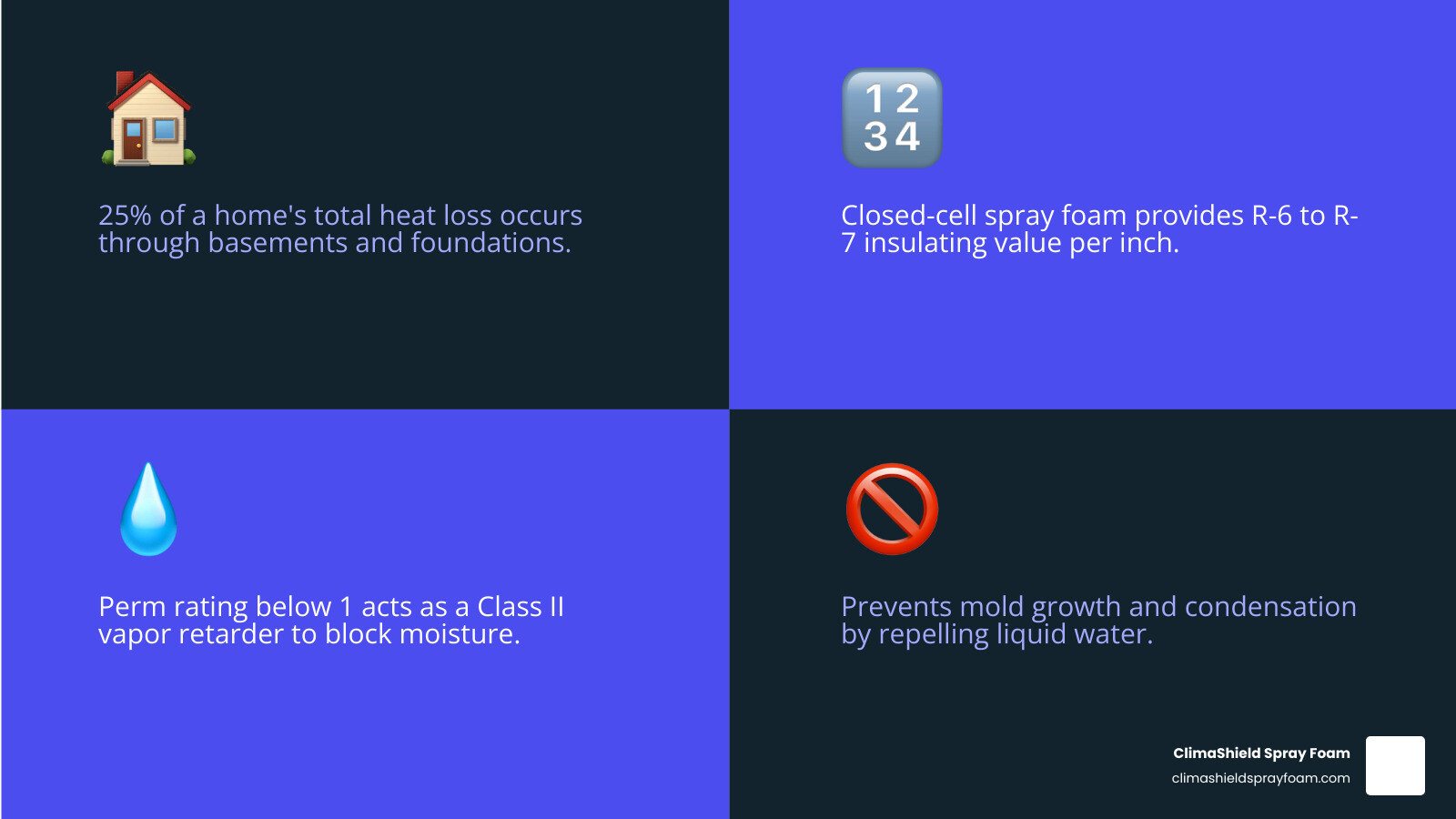
Water damage poses a serious threat to homes, and your insulation is often the first line of defense. According to research, basements can account for about 25 percent of a home’s total heat loss—and that’s in addition to moisture problems that lead to mold, structural damage, and frozen pipes.
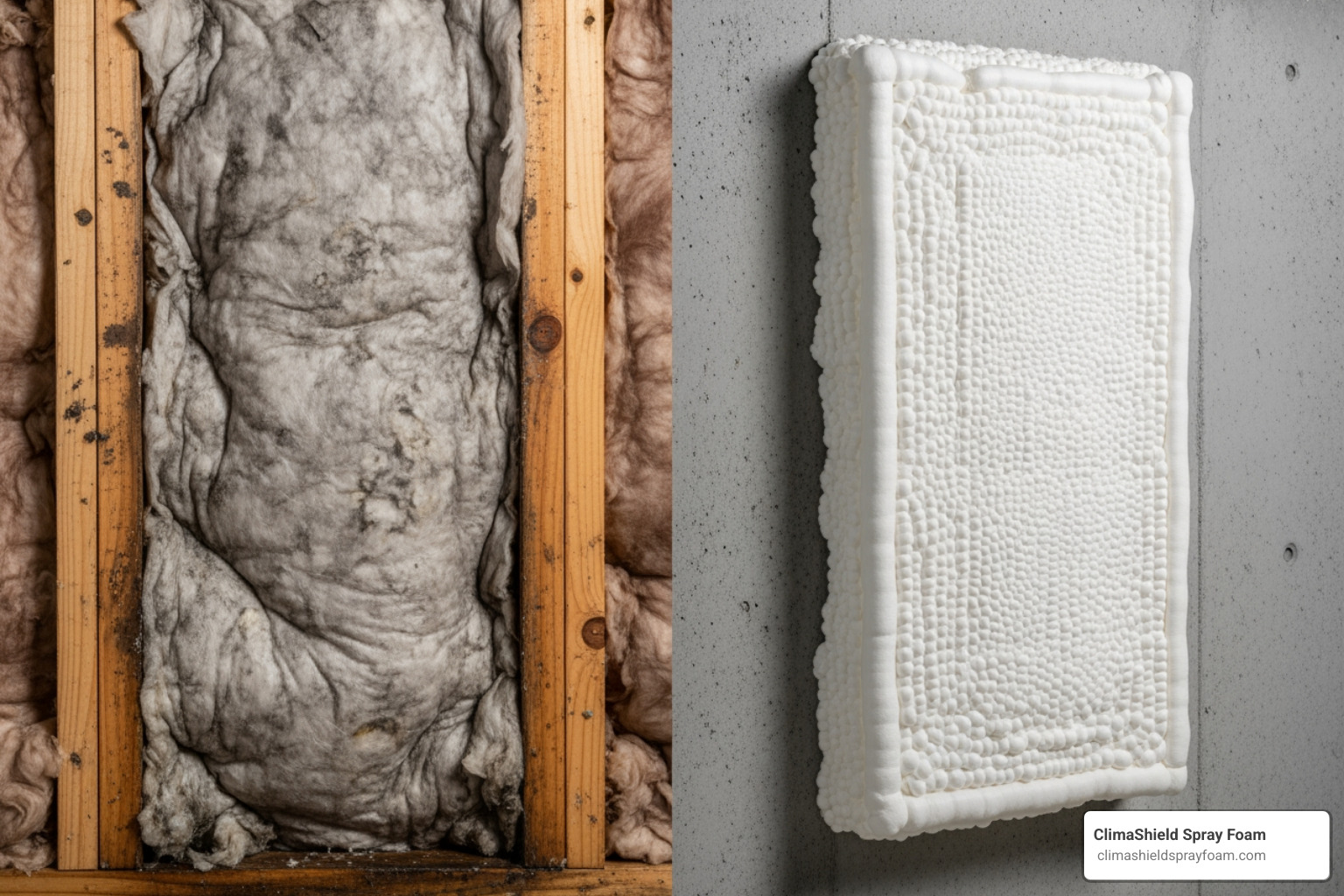
Traditional fiberglass insulation fails spectacularly in damp environments. It absorbs moisture like a sponge, loses its insulating value, promotes mold growth, and sags away from surfaces it’s supposed to protect. That’s why understanding waterproof insulation options is critical for basement, foundation, and crawl space applications.
The difference between water-resistant and truly waterproof insulation matters. Closed-cell spray foam stands out as the most effective waterproof solution—it has a perm rating below 1 (making it a Class II vapor retarder), maintains R-values of 6.0-7.0 per inch, and physically repels water rather than absorbing it.
I’m Dave Brocious, and I’ve spent over 20 years in the coatings and insulation industry, including founding ClimaShield Industries where we specialize in waterproof insulation solutions like closed-cell spray foam for residential and commercial applications. Throughout my career, I’ve seen how the right insulation prevents moisture damage while dramatically reducing energy costs.
Waterproof insulation terms made easy:
Why Waterproof Insulation is Essential for Basements and Foundations
When we think about our homes in Indiana, PA, we often focus on the roof or the windows when it comes to energy efficiency. But the real battle for comfort often starts underground. Basements and foundation walls are in constant contact with the earth, which is a surprisingly poor insulator. Even worse, the soil around your home is a reservoir for moisture.
Foundation walls are subject to hydrostatic pressure—the force exerted by water in the soil against your basement walls. Without proper waterproof insulation, this moisture can be pushed through the porous concrete of your foundation via capillary action. Think of your foundation like a giant wick; it literally “sucks” water from the ground and brings it into your living space.
This is why a basement vapor barrier wall is so vital. By using materials that block both liquid water and water vapor, we stop the moisture before it ever touches your drywall or framing. According to Scientific research on moisture transfer, air leakage can transport up to 90 times more moisture than simple vapor diffusion. This means that an airtight, waterproof insulation doesn’t just block a little dampness—it prevents a flood of humidity from entering your home’s thermal envelope.
The Dangers of Traditional Insulation in Damp Environments
For decades, the “standard” way to insulate a basement was to build a stud wall and stuff it with fiberglass batts. If you’ve ever seen a basement being renovated, you’ve likely seen the result: soggy, gray, sagging clumps of pink insulation that smell like a wet dog.
Fiberglass batts are terrible for basements for several reasons:
- Moisture Absorption: Fiberglass is made of fine glass fibers that trap pockets of air. Unfortunately, those pockets also trap water. Once wet, fiberglass loses almost all its R-value.
- Mold Growth: While the glass itself doesn’t rot, the dust, skin cells, and paper facing on the batts provide a feast for mold. If you’re wondering, is spray foam mold resistant?, the answer is a resounding yes, because it provides no food source for organic growth.
- Sagging and Gaps: When fiberglass gets damp, it becomes heavy and sags. This leaves huge uninsulated gaps at the top of your walls, creating “thermal bridges” where heat escapes freely.
Preventing Mold, Condensation, and Frozen Pipes
One of the biggest problems in Pennsylvania basements is the dew point. In the winter, your basement walls are cold. When warm, humid air from your laundry room or shower hits that cold wall, it condenses into liquid water. This is the exact same process that makes a cold soda can “sweat” on a hot summer day.
Waterproof insulation like closed-cell spray foam solves this by moving the dew point. Because the insulation is applied directly to the wall, there is no gap for air to get behind. The “cold” stays in the concrete, and the “warm” stays in the insulation. No cold surface meets warm air, which means no condensation.
Furthermore, properly air sealing your basement prevents one of the most stressful winter emergencies: frozen pipes. In Western PA, we get those bitter cold snaps where the wind howls through the rim joists of your foundation. If your pipes are located near an uninsulated foundation wall, they are sitting ducks. By creating a continuous, airtight, and waterproof thermal barrier, we keep those pipes in a conditioned environment, safely above freezing.
Top Materials for Waterproofing and Thermal Performance
At ClimaShield Spray Foam, we believe in using the right tool for the job. When it comes to waterproof insulation, we focus on spray-applied polyurethane foam. It is the only material that provides a custom-fit, airtight, and moisture-proof seal in a single application.
Below is a comparison of the two main types of spray foam we use in the Pennsylvania climate:
| Feature | Closed-Cell Spray Foam | Open-Cell Spray Foam |
|---|---|---|
| R-Value per Inch | R-6.0 to R-7.0 | R-3.5 to R-4.0 |
| Water Resistance | Waterproof (Repels Water) | Water-Resistant (Can Absorb) |
| Perm Rating | < 1.0 (Class II Vapor Retarder) | 10 – 16 (Vapor Permeable) |
| Air Barrier | Yes | Yes |
| Structural Strength | Increases wall strength | Flexible |
| Best For | Basements, Crawl Spaces, Exteriors | Attics, Interior Walls |
Best Types of Waterproof Insulation
When we talk about true waterproof insulation, closed-cell spray foam is the undisputed champion. Its cells are packed so tightly together that they are completely closed off. This density is what gives it a perm rating of less than 1.0. In building science, anything under 1.0 is considered a vapor retarder. This means it doesn’t just stop liquid water; it stops water vapor from migrating through your walls.
For our neighbors in Indiana, PA, we typically recommend residential spray foam solutions that use closed-cell foam for any area below grade. If your basement ever experiences a minor leak or high humidity, closed-cell foam won’t be ruined. It stays in place, keeps its R-value, and continues to protect your home.
Open-cell spray foam has its place, particularly in attic spray foam applications where you might want to be alerted to a roof leak (as water will eventually drain through it). However, for basements and foundations, it is not the primary choice for waterproofing because its “open” structure can act like a sponge if submerged.
Fire Safety and Building Codes
Safety is our top priority. Because spray foam is a plastic-based product, it must be installed according to strict building codes. In Pennsylvania, this usually means that any foam insulation installed in a living space must be covered by a thermal barrier.
The most common thermal barrier is 1/2-inch gypsum board (drywall). If you are finishing your basement, the drywall you install over the foam satisfies this requirement. In areas like crawl spaces or attics where you might not want to hang drywall, we can apply specialized fire-rated coatings (intumescent paint) that provide the necessary protection.
For more technical details on how foam products are tested and rated, you can review this Technical bulletin on Polyiso safety. While it focuses on rigid boards, the fire safety principles—such as the use of ignition barriers in uninhabited spaces—apply across the foam insulation industry.
Installation Strategies: Interior vs. Exterior Approaches
Should you insulate your basement from the inside or the outside? This is a question we get all the time.
Exterior Insulation Pros:
- Keeps the foundation “mass” inside the warm part of the house.
- Protects the foundation from freeze-thaw cycles that can cause cracking.
- Does not take up any square footage inside your basement.
Exterior Insulation Cons:
- Very expensive (requires excavating the entire perimeter of your home).
- Difficult to do on existing homes with established landscaping or decks.
Interior Insulation Pros:
- Much more cost-effective.
- Can be done at any time, regardless of the weather outside.
- Allows for easy air sealing basement and moisture control.
For most homeowners in Western PA, interior waterproof insulation is the practical choice. By applying closed-cell spray foam to the interior foundation walls, we create a continuous thermal envelope that stops heat loss and moisture in one go.
Preparing Your Foundation for Insulation
You wouldn’t paint a dirty car, and you shouldn’t insulate a failing foundation. Before we spray, we perform a thorough assessment. We recommend homeowners do a simple “plastic sheet test” if they suspect dampness: tape a 1-meter square piece of clear plastic to the basement wall and floor for 48 hours. If condensation appears under the plastic, moisture is wicking through the concrete.
Key preparation steps include:
- Crack Repair: Any structural cracks should be addressed before insulation.
- Radon Mitigation: Pennsylvania has high radon levels. It’s best to test and mitigate before sealing the basement.
- Grading and Gutters: Ensure your yard slopes away from the house and that downspouts carry water at least 6 feet away.
- Surface Cleaning: The concrete must be free of dust, loose paint, or efflorescence (that white, powdery salt buildup) so the foam can bond permanently.
For larger projects, we also provide commercial insulation preparation services to ensure the building envelope is ready for high-performance coatings.
Special Considerations for Crawl Spaces and Slabs
Crawl spaces are notoriously gross—they’re often damp, dark, and full of spiders. But they are also a major source of energy loss. We use waterproof insulation to “encapsulate” crawl spaces. This involves:
- Covering the dirt floor with a heavy-duty vapor barrier.
- Spraying the foundation walls and rim joists with closed-cell foam.
- Turning the crawl space into a clean, dry, conditioned part of your home.
This prevents the “stack effect,” where cold, damp air from the crawl space is sucked up into your living room. We also see great results using this method on irregular or “rubble” foundations common in older Indiana, PA homes. Spray foam conforms to every nook and cranny of uneven stone walls, something no other insulation can do.
In attic spray foam applications, the focus is more on heat rising, but in crawl spaces and slabs, the focus is on blocking the cold, wet ground.
Cost and ROI of Waterproof Insulation
We’ll be honest: waterproof insulation like closed-cell spray foam costs more upfront than fiberglass. However, the Return on Investment (ROI) is where the magic happens.
- Energy Savings: Our customers often see a 60% reduction in energy bills. Because spray foam air seals and insulates, your furnace doesn’t have to work nearly as hard.
- Property Value: A dry, mold-free basement is a huge selling point. Buyers are often wary of basements; showing them a professionally sealed, waterproofed space provides peace of mind.
- Maintenance-Free: Unlike fiberglass that needs replacing if it gets wet, or rigid boards that can shift, spray foam is a “one and done” solution. It doesn’t sag, settle, or degrade over time.
Frequently Asked Questions about Waterproof Insulation
What R-value is required for basement walls?
In Pennsylvania (Climate Zone 5), the International Residential Code (IRC) generally recommends an R-value of at least R-10 for continuous insulation or R-13 for cavity insulation on basement walls. Because closed-cell spray foam has such a high R-value per inch, we can achieve these requirements with just 2 inches of foam, while also providing a complete vapor barrier.
Can I install waterproof insulation over existing leaks?
No. You should never use insulation to “hide” an active water leak. While closed-cell foam is waterproof, the water will simply find a way around it or build up behind it, potentially causing structural damage or finding another way into your home. Always fix active leaks, grading issues, or sump pump problems before insulating.
Is spray foam insulation truly watertight?
Closed-cell spray foam is considered watertight in the sense that it does not let liquid water pass through its structure and it repels water. It is used in “flood-resistant” construction for this very reason. However, it is not a substitute for a dedicated drainage system (like a French drain) if your basement has significant water intrusion issues.
Conclusion
At ClimaShield Spray Foam, we know that a comfortable home starts with a dry foundation. By choosing waterproof insulation, you aren’t just saving money on your heating bill—you’re protecting your home’s structural integrity and your family’s health. No more musty smells, no more damp walls, and no more shivering in your own living room because the basement is a block of ice.
We are proud to serve Indiana, PA, and the surrounding Western Pennsylvania areas. Our team is dedicated to providing durable, airtight, and moisture-proof solutions that stand the test of time. Whether you have a new construction project or a century-old stone foundation, we have the expertise to seal it right.
Ready to take control of your home’s comfort and save up to 60% on your energy bills? Get a quote for waterproof spray foam today and let us help you build a more efficient, waterproof home.
