
Why Foam Roofing Insulation Is the Smartest Investment for Your Commercial Roof
Foam roofing insulation is a seamless, spray-applied system that insulates and waterproofs your roof in a single step — making it one of the most effective roofing solutions available today.
Here are the key facts at a glance:
| Feature | Detail |
|---|---|
| Best R-value | ~6.5 per inch (highest of any commercial roofing material) |
| Typical lifespan | 30–40 years with proper maintenance |
| Installed cost | $5.00–$8.00 per square foot |
| Recoating schedule | Every 10–15 years |
| Key benefit | Seamless, no thermal bridging, waterproof |
| Best for | Flat and low-slope commercial roofs |
High energy bills. Drafts. Rooms that are too hot in summer and too cold in winter. These are signs your roof is working against you — not for you.
Most traditional roofing materials only do one job. They either insulate or waterproof. Foam roofing does both — and it does it without seams, fasteners, or joints where leaks and heat loss typically start.
The performance numbers back this up. At R-6.5 per inch, spray polyurethane foam (SPF) delivers the highest thermal resistance of any conventional roofing material. And because the foam bonds directly to the substrate with no gaps or voids, it eliminates the convection loops and thermal bridging that quietly drain your heating and cooling budget every single day.
This guide rounds up the best foam roofing insulation systems available, so you can choose the right solution for your building with confidence.
I’m Dave Brocious, founder of ClimaShield Industries and a specialty coatings contractor with over 20 years of experience in the coatings industry, including direct hands-on work with foam roofing insulation systems, commercial roof coatings, and spray foam membranes. In the sections ahead, I’ll walk you through exactly what separates a high-performing foam roof from a mediocre one — so you can make a decision that protects your building for decades.
Understanding Spray Polyurethane Foam (SPF) Roofing Systems
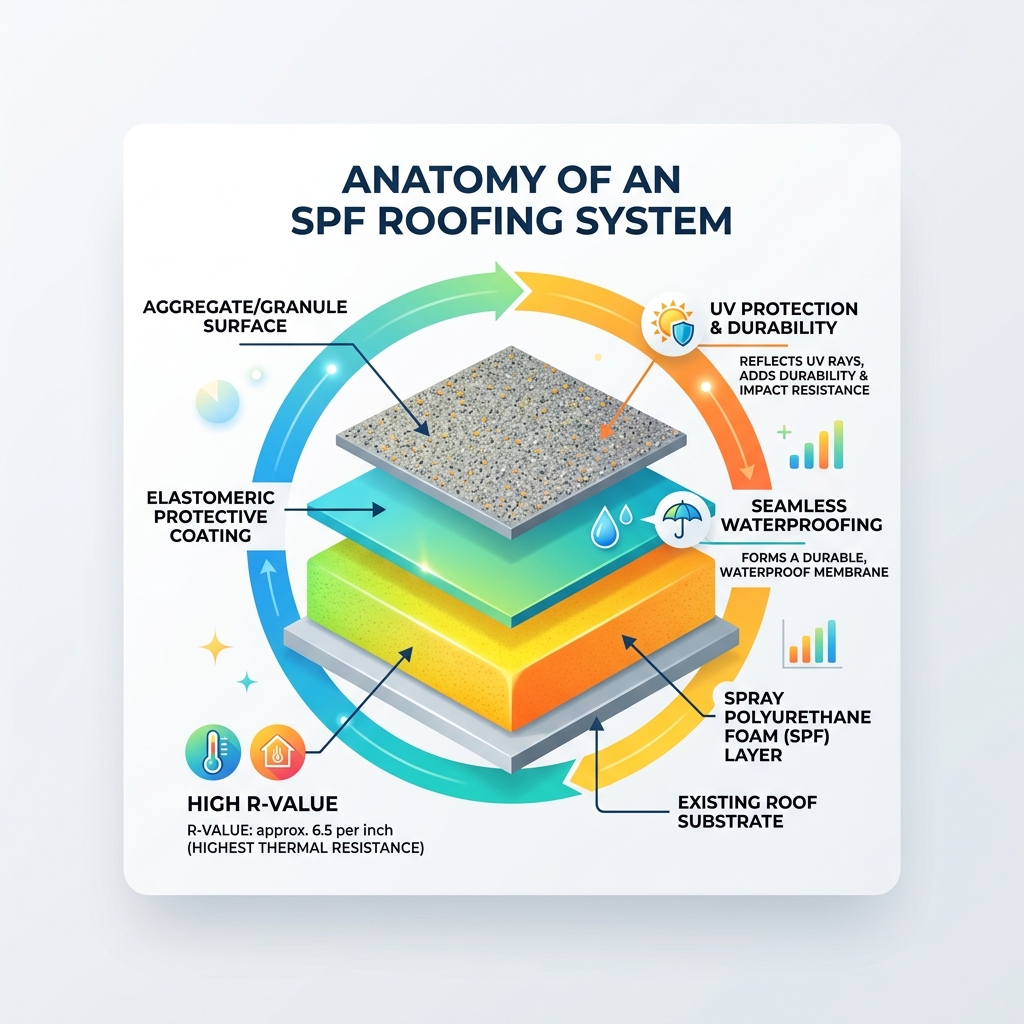
When we talk about foam roofing insulation, we are usually referring to Spray Polyurethane Foam (SPF). Unlike rigid foam boards that are manufactured in a factory and shipped to a job site in sheets, SPF is created right on your roof.
It is a “plural-component” material. This means two separate liquids—typically referred to as Side A (isocyanate) and Side B (polyol)—are pumped through a heated hose and mixed at the tip of a spray gun. The moment they hit your roof deck, they react, expanding up to 30 times their liquid volume to form a solid, seamless, and fully adhered membrane.
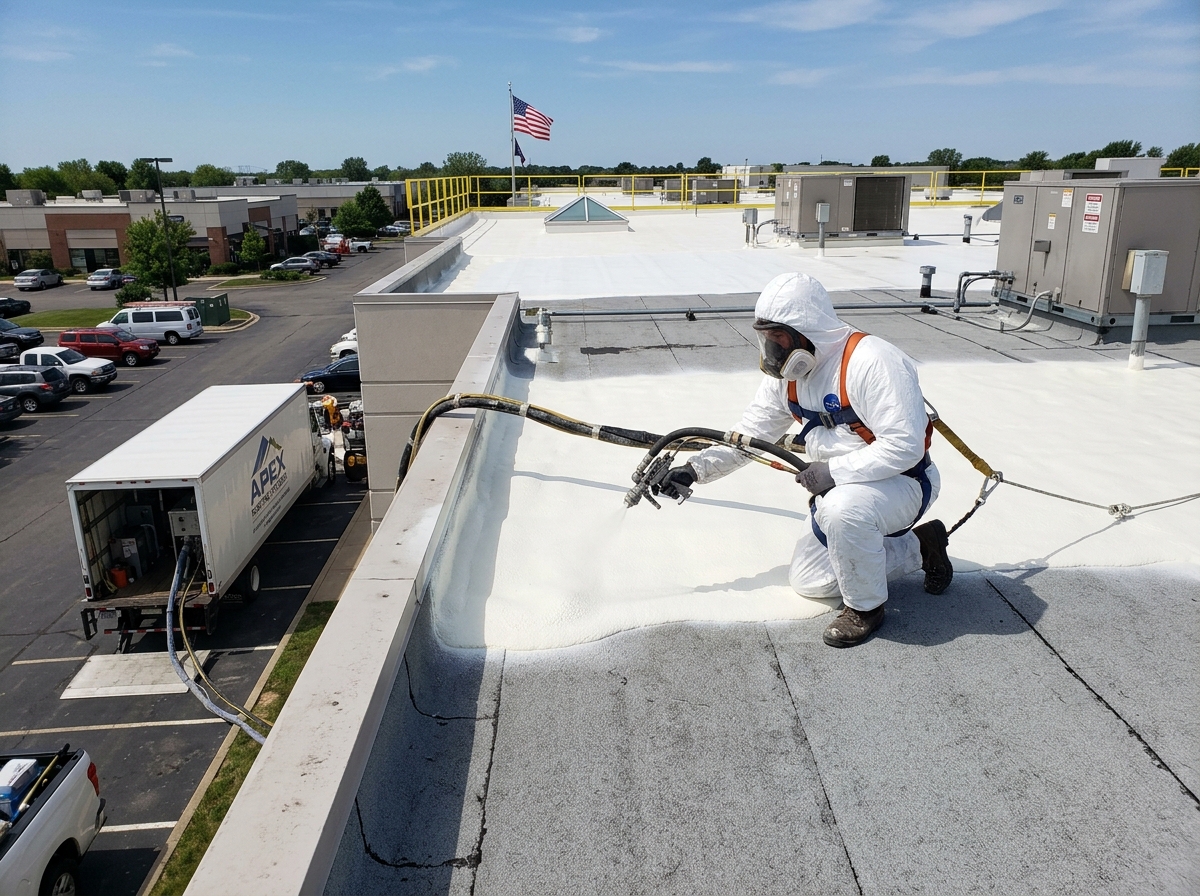
What makes this system a “roundup” winner is its versatility. Because it is a liquid during application, it fills every crack, crevice, and gap. It conforms to irregular shapes and seals around penetrations like pipes, vents, and HVAC units without the need for complicated flashing or cutting.
Key characteristics of a high-quality SPF system include:
- High R-value: SPF offers an industry-leading R-value of approximately 6.5 per inch.
- Superior Density: For roofing, we use high-density closed-cell foam (typically 2.5 to 3.0 lbs per cubic foot). This provides the compressive strength needed to handle foot traffic and equipment.
- Seamless Nature: No seams means no place for water to seep in. It is a single, monolithic piece of insulation covering your entire building.
Key Benefits of Spray Polyurethane Foam (SPF) Systems
In Pennsylvania, our roofs have to deal with everything from humid summers to freezing, snowy winters. Standard roofing materials expand and contract at different rates, which eventually causes seams to pop and fasteners to back out. Foam roofing insulation solves these “thermal shock” issues by being flexible and fully bonded.
The benefits go far beyond just staying dry:
- Unmatched Thermal Resistance: With an R-value of 6.5 per inch, you can achieve incredible insulation levels in a very thin profile. For example, a 2-inch layer provides R-13, significantly outperforming fiberglass or even rigid boards like EPS or XPS.
- Massive Energy Savings: We’ve seen commercial clients save up to 60% on their energy bills. By eliminating air infiltration and thermal bridging (where heat escapes through metal fasteners or rafters), the building stays at a consistent temperature with less work from the HVAC system.
- Self-Flashing: Traditional roofing requires metal flashing around every chimney or vent. SPF creates its own waterproof seal as it is applied, making it “self-flashing” and reducing the most common points of roof failure.
Sustainability and Environmental Impact
At ClimaShield Spray Foam, we care about the footprint we leave behind. SPF is one of the most sustainable roofing options on the market.
- Landfill Reduction: In many cases, SPF can be applied directly over an existing roof (after an infrared survey confirms the substrate is dry). This means thousands of pounds of old roofing material don’t end up in a Pennsylvania landfill.
- Eco-Friendly Chemistry: Modern systems use low Global Warming Potential (GWP) blowing agents and have zero Ozone Depletion Potential (ODP).
- Renewability: Unlike a rubber roof that must be torn off when it fails, an SPF roof is “renewable.” You simply clean it and apply a fresh top coating every 10–15 years to reset the clock.
Durability and Longevity
Don’t let the word “foam” fool you. Once cured, this material is incredibly tough.
- 30-40 Year Lifespan: With proper maintenance and recoating, these systems can last half a century.
- Weather Resistance: High-density foam is designed to withstand the high winds and heavy snow loads common in Indiana, PA.
- Walkability: Professional-grade SPF, such as the PolyPUF system, is designed for a density of 2.7 to 3.0 lbs, allowing maintenance crews to walk on the roof to service HVAC units without damaging the insulation.
Installation and Maintenance of Foam Roofing Systems
The secret to a long-lasting foam roof isn’t just the foam itself—it’s the preparation and the protective “armor” we put on top of it. Because SPF is susceptible to UV degradation from the sun, it must be shielded by an elastomeric coating.
The Application Process
Installing foam roofing insulation is a precision job that requires specialized equipment and training.
- Substrate Preparation: We start by pressure washing the roof to remove dirt and debris. We then perform an infrared survey to ensure there is no trapped moisture.
- Priming: Depending on the surface (metal, concrete, or old EPDM), a primer may be applied to ensure maximum adhesion.
- Foam Application: The foam is sprayed in layers (usually 1/4 inch to 1/2 inch at a time). It expands and becomes tack-free in about 30–60 seconds.
- Coating: Once the foam is at the desired thickness, we apply a protective layer, usually a silicone or acrylic elastomeric coating. For maximum durability, we often broadcast granules into the wet topcoat.
For those looking to improve the energy efficiency of their entire structure beyond just the roof, you can explore our residential insulation services to see how we seal the building envelope from top to bottom.
Recoating and Repair Schedules
Maintenance is simple but vital.
- The 10-15 Year Cycle: The protective coating will eventually wear down due to weather and UV exposure. Before the foam becomes exposed, we apply a new layer of coating. This “re-top” makes the roof as good as new.
- Infrared Surveys: Every few years, it’s a good idea to have a professional check for moisture.
- Minor Repairs: If a heavy tool is dropped and punctures the foam, it can be easily repaired with a small amount of caulk or a specialized SPF repair kit.
Performance and Substrate Compatibility
One of the biggest advantages of foam roofing insulation is that it doesn’t care what your roof is made of. It creates a seamless bond to almost any common building material.
Key Performance Advantages of SPF
- Elimination of Convection Loops: Traditional batt insulation allows air to move through it. SPF is an air barrier, meaning the air you pay to heat or cool stays inside.
- No Thermal Bridging: In a standard roof, every metal screw is a “highway” for heat to escape. SPF is a continuous blanket with no fasteners, stopping that heat transfer cold.
- Fast Installation: A skilled crew can often install a foam system faster than a traditional “tear-off and replace” job, meaning less disruption for your business.
Suitable Substrates for SPF Application
SPF is an excellent choice for:
- Metal: It seals the seams and stops rust.
- Concrete: Provides excellent adhesion and adds significant R-value to an otherwise cold material.
- EPDM/TPO/PVC: Can often be applied directly over existing single-ply membranes.
- Built-up Roofing (BUR): Transforms an old gravel or asphalt roof into a modern, energy-efficient system.
Frequently Asked Questions about Foam Roofing
How much does foam roofing insulation cost?
The typical cost for a professionally installed SPF roofing system ranges from $5.00 to $8.00 per square foot. Factors that affect this price include the size of the roof, the thickness of the foam required to meet your R-value goals, and the condition of the existing substrate. While the upfront cost may be higher than some “budget” options, the Return on Investment (ROI) is often realized in just a few years through energy savings and the avoidance of a costly roof tear-off.
What are the fire ratings for foam roofs?
Safety is our top priority. Most high-quality foam roofing insulation systems, like those from Atlas or HandiFoam, carry an ASTM E-84 Class A fire rating. This means they have low flame spread and smoke development indices. When installed with the proper thermal barriers and coatings, they meet or exceed strict Pennsylvania building codes.
Can you walk on a foam roof?
Yes! High-density spray foam is designed for “maintenance traffic.” This means it can easily support the weight of a person walking to an HVAC unit or performing an inspection. With a compressive strength of 40–60 psi, it is much more durable than the “Styrofoam” you might find in packaging. However, like any roof, you should avoid dropping sharp tools or heavy equipment directly onto the surface.
Conclusion
Choosing the right foam roofing insulation system is about more than just picking a product; it’s about choosing a long-term partner for your building’s health. At ClimaShield Spray Foam, we specialize in providing Indiana, PA and the surrounding regions with roofing solutions that save money, resist mold, and keep pests out.
Whether you are looking for the high R-value of a PolyPUF system or the specialized protection of an ACFoam-II – Atlas Roof Insulation board for a specific commercial application, we have the expertise to guide you.
Don’t let your energy budget leak out through your roof. Get a quote for professional foam roofing insulation today and start saving up to 60% on your energy bills with a roof that is built to last.
