Why the Air Inside Your Home May Be More Dangerous Than You Think
Improve indoor air quality and you protect your family from one of the most overlooked health risks in modern life — the air inside your own home.
Here’s a quick answer to get you started:
How to improve indoor air quality:
- Control the source — remove or reduce pollutants like tobacco smoke, VOCs, and radon
- Ventilate — bring in fresh outdoor air using fans, open windows, or mechanical systems
- Filter — use HEPA air purifiers and MERV-13 HVAC filters to capture airborne particles
- Clean regularly — vacuum with a HEPA filter, dust with microfiber, and wash bedding weekly in hot water
- Control humidity — keep indoor humidity between 30–50% to prevent mold and dust mites
- Test for hidden threats — check for radon and install certified carbon monoxide detectors
Most people assume outdoor air is the bigger concern. But Americans spend roughly 90% of their time indoors, and indoor pollutant levels are often 2 to 5 times higher than what’s outside. Dust, mold spores, VOCs from furniture and cleaning products, and invisible gases like radon can all build up in enclosed spaces — silently affecting your breathing, sleep, and long-term health.
And if your home has drafts, moisture problems, or poor insulation? Those issues make it worse.
I’m Dave Brocious, founder of ClimaShield Industries, with 20+ years in specialty coatings and building envelope solutions — and I’ve seen how air sealing and insulation directly impact your ability to improve indoor air quality. In this guide, I’ll walk you through exactly what’s polluting your indoor air and what you can do about it, starting today.
The Three Pillars to Improve Indoor Air Quality
When we talk about making your home a healthier place to breathe, we follow a specific hierarchy. You can’t just buy a fancy air purifier and call it a day if you have a pile of moldy boxes in the basement. According to the EPA, there are three basic strategies to Improving Indoor Air Quality | US EPA.
Think of these pillars like a tripod: if one leg is missing, the whole thing falls over. We need to stop the bad stuff from getting in, move the stale air out, and scrub whatever is left.
Source Control: The Most Effective Strategy
The single most efficient way to improve indoor air quality is to simply get rid of the source of the pollution. It’s often cheaper and more effective than trying to ventilate a problem away.
For example, if you have old asbestos insulation that is damaged, sealing it or having it professionally removed stops the fibers from entering your lungs in the first place. Similarly, adjusting a gas stove to ensure it burns cleanly reduces nitrogen dioxide emissions.
Even your furniture choices matter. Many modern “pressed wood” or composite pieces use glues that release formaldehyde. This chemical can cause respiratory issues like bronchitis. Opting for solid wood or high-quality used furniture (which has already finished “off-gassing”) is a classic source control move.
Ventilation: Balancing Fresh Air and Energy Efficiency
If source control is about stopping the “leak,” ventilation is about letting the house breathe. In older Pennsylvania homes, “natural ventilation” happened through drafty windows and doors. While that brought in fresh air, it also sent your heating bill through the roof!
Today, we look for a balance. You can use local exhaust fans in bathrooms and kitchens to kick out moisture and cooking fumes. For a more comprehensive approach, Energy Saver: Whole-House Ventilation systems like Heat Recovery Ventilators (HRVs) can exchange stale indoor air for fresh outdoor air without losing all your expensive heat in the winter.
Air Filtration: Using Technology to Improve Indoor Air Quality
The final pillar is filtration. This is where we catch the microscopic “hitchhikers” like pollen, pet dander, and dust mite debris.
To be effective, you need appropriate and effective air cleaning and air filtration devices. This usually means using HEPA (High-Efficiency Particulate Air) filters, which can trap 99.97% of particles as small as 0.3 microns. If you are using your home’s HVAC system for this, we recommend a filter with a MERV-13 rating or higher to ensure it’s actually catching those tiny triggers.
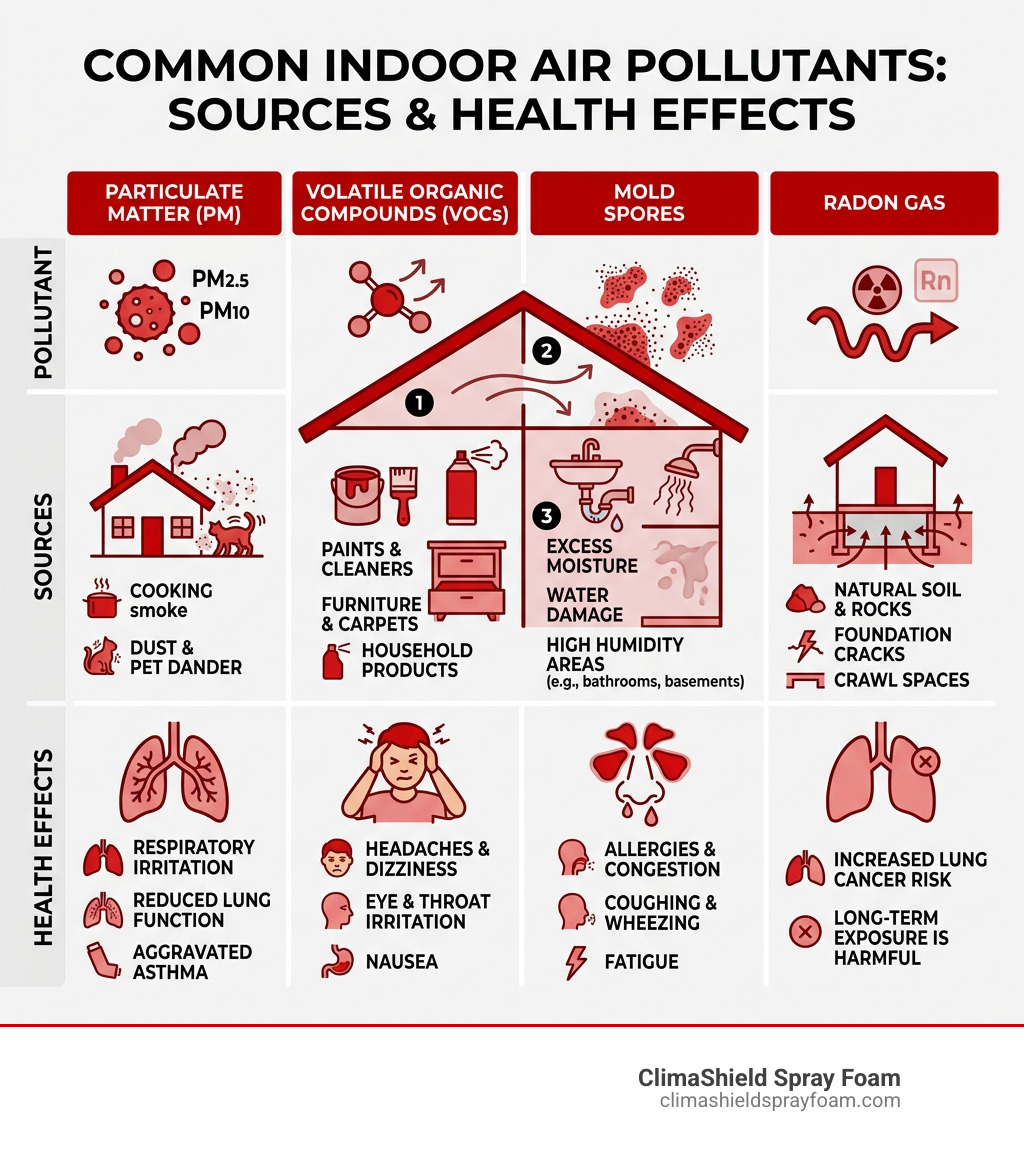
Common Pollutants and Their Health Impacts
Why do we care so much about these invisible particles? Because your lungs are basically high-performance filters, and when they get “clogged” with pollutants, your body reacts.
For neighbors in Indiana, PA dealing with chronic obstructive pulmonary disease (COPD) or asthma, poor air quality isn’t just an annoyance—it’s a medical emergency. Pollutants can cause “flares,” making it incredibly difficult to breathe.
| Pollutant Type | Short-Term Effects | Long-Term Effects |
|---|---|---|
| Particulates (Dust/Smoke) | Eye irritation, coughing, sneezing | Heart disease, decreased lung function |
| VOCs (Chemicals) | Headaches, dizziness, nausea | Liver/kidney damage, cancer risk |
| Biologicals (Mold/Pests) | Allergic reactions, asthma attacks | Chronic sinusitis, hypersensitivity |
| Carbon Monoxide | Fatigue, chest pain, “flu-like” symptoms | Death (at high levels) |
Radon and Carbon Monoxide: Testing for Invisible Threats
In Pennsylvania, we have a specific “hidden boss” to worry about: Radon. This naturally occurring radioactive gas seeps up from the soil. You can’t see it, smell it, or taste it, but it is the second leading cause of lung cancer in the U.S.
The only way to know if you’re safe is to use a radon test kit. If your levels are high, you may need a mitigation system or foundation sealing.
Then there’s Carbon Monoxide (CO). Any home with a gas furnace, fireplace, or attached garage needs certified CO detectors. Since CO is a byproduct of incomplete combustion, it can build up quickly if a vent is blocked or a heat exchanger is cracked.
VOCs and Formaldehyde: Reducing Chemical Off-gassing
Volatile Organic Compounds (VOCs) are gases emitted from certain solids or liquids. They are 2 to 5 times more concentrated indoors. Think of that “new car smell” or the scent of a fresh coat of paint—that’s VOCs.
Common culprits include:
- Glues in composite wood furniture
- Air fresheners and scented candles
- Harsh cleaning supplies
- Dry-cleaned clothes
To mitigate this, we recommend Air Sealing Basement areas and crawlspaces to prevent soil gases from entering, and choosing “Low-VOC” or “Zero-VOC” products whenever you renovate.
12 Practical Steps to Improve Indoor Air Quality Today
Ready to take action? You don’t need a massive renovation to start breathing better. Here are 12 steps you can take right now:
- Change your filters: Swap out your furnace filter for a MERV-13 rated one every 90 days.
- Vacuum with HEPA: Use a vacuum that seals in the dust rather than blowing it back out the exhaust.
- Dust with damp cloths: Microfiber or damp rags trap dust instead of just moving it into the air.
- Take off your shoes: Stop tracking in pesticides, lead dust, and pollen from the Pennsylvania outdoors.
- Wash bedding weekly: Use 130°F water to kill dust mites.
- Groom your pets: Frequent brushing (ideally outdoors) reduces dander.
- Run the exhaust fan: Always use the fan when cooking or showering.
- Avoid “scents”: Skip the plug-in air fresheners and incense.
- Keep it smoke-free: Never smoke or vape indoors.
- Test for Radon: Especially if you haven’t tested in the last two years.
- Check your CO detectors: Test the batteries monthly.
- Open windows: When the outdoor air quality is good, 10 minutes of cross-ventilation does wonders.
Managing Allergens and Dust Mites
If you suffer from allergies, your bedroom is the most important room in the house. Dust mites love soft surfaces. By switching to hard flooring and using dust-mite-proof covers on your mattress and pillows, you remove their “luxury hotels.” Washing your sheets in hot water (at least 130°F) is the magic number for neutralizing those microscopic pests.
Creating a Smoke-Free Environment
We all know secondhand smoke is bad, but “thirdhand smoke” is the sneaky villain. This is the residue that sticks to walls, carpets, and furniture long after the cigarette is out. For children crawling on the floor, there is a higher risk from secondhand smoke and thirdhand residue.
Even if you smoke on the porch, the chemicals on your clothes may still affect your living space and air quality. The same goes for e-cigarettes; the vapors contain heavy metals and VOCs that settle into your home’s “lungs.”
Maintaining Your Home’s “Lungs”: HVAC and Humidity
Your HVAC system is essentially the respiratory system of your home. If the ducts are full of dust or the coils are covered in mold, every time the heat kicks on, you’re getting a face full of pollutants.
Regular maintenance is key. But does it actually help your health? Scientific studies, such as the webinar Do Residential Ventilation Rates Affect Respiratory Health?, show a direct link between how well a home “breathes” and the respiratory health of its occupants.
The Role of Humidity in Preventing Mold
In Pennsylvania, our summers are humid and our winters are dry. Both can cause IAQ problems.
- Too High (>50%): You get mold, mildew, and a “dust mite party.”
- Too Low (<30%): Your nasal passages dry out, making you more susceptible to viruses.
We aim for the “Goldilocks zone” of 30-50% humidity. In damp basements, a dehumidifier is a must. But the best way to control moisture is at the source. Many people ask, Is Spray Foam Insulation Mold Resistant? The answer is yes—because it creates an airtight seal that prevents the warm, moist air from hitting cold surfaces where it would normally condense and grow mold.
Structural Integrity and Air Sealing
The “envelope” of your home is what separates your clean indoor air from the pollen, pollutants, and pests outside. If your home has “leaks,” you aren’t in control of your air quality.
Using a Basement Vapor Barrier Wall or high-quality spray foam insulation creates a permanent barrier. This doesn’t just save you money on your energy bills; it stops the “stack effect” where dirty air from your crawlspace or basement is sucked up into your living areas.
Frequently Asked Questions about IAQ
Are indoor plants effective for air purification?
This is one of the most common myths we hear. While plants are beautiful and do release oxygen, the “houseplant myth” suggests they scrub the air of toxins. Unfortunately, you would need a literal jungle—hundreds of plants—to make a measurable difference in a standard home.
In fact, On balance, indoor plants create more problems than they help for allergy sufferers. The damp soil can foster mold growth and collect dust, which can actually worsen your symptoms.
How often should I test for radon and carbon monoxide?
- Carbon Monoxide: Test the alarm every month and replace the batteries once a year. Most CO detectors have a lifespan of 5–7 years; check the “replace by” date on the back.
- Radon: The EPA recommends testing every two years, or after any major renovation (like finishing a basement or adding new insulation).
When should I consider professional air quality testing?
If you have persistent headaches, itchy eyes, or respiratory issues that only happen when you’re at home, it’s time to look deeper. You should also consider professional testing if you see visible mold, smell a persistent “musty” odor, or have recently completed a major renovation that involved lead or asbestos.
Investing in Mold Resistant Insulation is a proactive way to ensure that once you clean your air, it stays clean.
Conclusion
Improving your indoor air quality isn’t about one single “magic” product. It’s about a combination of source control, smart ventilation, and consistent maintenance. By reducing the chemicals we bring inside, keeping our humidity in check, and ensuring our home’s envelope is sealed tight, we can create a sanctuary where our families can breathe easy.
At ClimaShield Spray Foam, we specialize in creating that airtight, durable barrier that keeps the bad stuff out and the good air in. Not only can our solutions save you up to 60% on your energy bills, but they also provide a waterproof, pest-resistant shield that prevents mold from ever getting a foothold.
If you’re ready to stop wondering if your house is making you sick and start taking control of your environment, we’re here to help our Pennsylvania neighbors. Check out More info about airtight insulation services to see how we can help you breathe better today.
