
Why Your Roof is Key to a Comfortable, Energy-Efficient Home
Best rafter insulation transforms your home’s comfort and slashes energy costs by creating an effective thermal barrier right where your roof meets the living space. Here are the top picks:
| Insulation Type | Best For | R-Value/Inch | Key Advantage |
|---|---|---|---|
| Closed-Cell Spray Foam | Maximum performance & air sealing | R-6 to R-7 | Creates complete air and moisture barrier |
| Open-Cell Spray Foam | Sound dampening & budget-conscious | R-3.5 to R-4 | Superior acoustic control with air sealing |
| Mineral Wool Batts | DIY projects & fire resistance | R-3.5 to R-4.5 | Most affordable, naturally fire-resistant |
| Fiberglass Batts | Tight budgets | R-2.2 to R-4.3 | Lowest upfront cost, widely available |
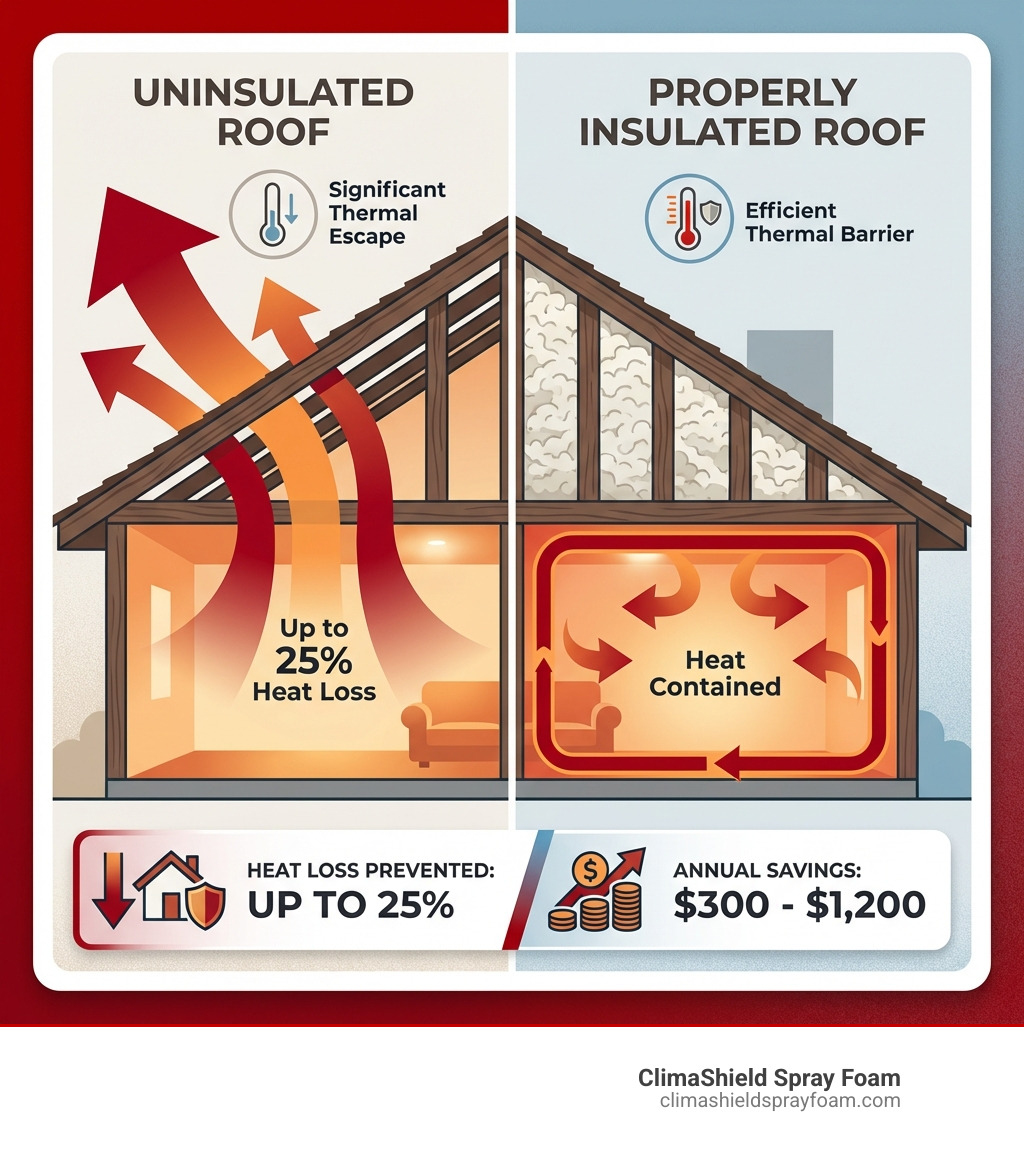
Up to 25% of your home’s heat escapes through an uninsulated roof. That’s like leaving a window open all winter long—and watching your money fly out with the warm air.
The difference between rafters and joists matters here. Rafters are the sloped beams that support your roof deck, while joists are the horizontal beams at your attic floor. When you insulate rafters, you’re creating what’s called a conditioned attic—bringing that space inside your home’s thermal envelope. This approach is ideal if you have HVAC equipment in your attic or want to convert the space into living area.
Why this matters for your wallet: Research shows upgrading from minimal insulation (R-11) to proper rafter insulation (R-38) can cut your heating and cooling costs by 25-35%. Add quality air sealing, and you gain another 10-20% in savings. For most homeowners, that translates to $300-$1,200 annually.
Your roof isn’t just keeping rain out—it’s your first line of defense against energy waste. Understanding your home’s thermal envelope is the foundation for making smart insulation decisions that pay dividends for decades.
I’m Dave Brocious, founder of ClimaShield Industries. With over two decades in the insulation industry, I’ve learned that selecting the best rafter insulation isn’t just about R-values; it’s about matching the right material to your specific roof assembly, climate zone, and performance goals. Let me walk you through exactly how to make that choice.
A Breakdown of the Best Rafter Insulation Materials
When it comes to insulating your rafters, you’re looking for materials that provide thermal resistance and manage air and moisture. The “best” choice depends on your needs, budget, and home’s characteristics in Pennsylvania. Let’s explore the top contenders for best rafter insulation that align with ClimaShield’s solutions:
| Insulation Type | R-Value/Inch | Typical Cost (Material Only) | Lifespan | Air Sealing | Moisture Resistance |
|---|---|---|---|---|---|
| Closed-Cell Spray Foam | R-6 to R-7 | $1.00-$4.50 per sq ft (installed) | 50+ years | Excellent (Air Barrier) | Excellent (Vapor Barrier) |
| Open-Cell Spray Foam | R-3.5 to R-4 | $0.60-$1.30 per board ft (installed) | 50+ years | Excellent (Air Barrier) | Good (Vapor Permeable) |
| Fiberglass Batts | R-2.2 to R-4.3 | $0.30-$1.50 per sq ft | 25-30 years | Poor (Requires Air Sealing) | Poor (Absorbs Water) |
| Mineral Wool Batts | R-3.5 to R-4.5 | $1.40-$4.00 per sq ft | 25-30 years | Moderate (Requires Air Sealing) | Good (Hydrophobic) |
Closed-Cell Spray Foam: The High-Performance Champion
For an unparalleled thermal envelope, closed-cell spray foam is the champion. With an impressive R-value of R-6 to R-7 per inch, it offers the highest thermal resistance, allowing you to achieve significant insulation values even in shallow rafter bays.
Closed-cell spray foam also creates an excellent air and moisture barrier, sealing your attic from drafts and preventing moisture infiltration that can lead to mold and rot. This is crucial for Pennsylvania’s varied climate. Its density also adds structural rigidity to your roof, a bonus for older homes. Once installed, it boasts a long lifespan of 50+ years and is inherently Pest Resistant Spray Foam, deterring rodents and insects.
The main drawback is its higher initial cost and the need for professional installation. DIY attempts can lead to poor performance. However, the long-term energy savings and comfort often justify the investment, leading to a faster payback than many homeowners expect.
Open-Cell Spray Foam: The Acoustic & Air-Sealing Specialist
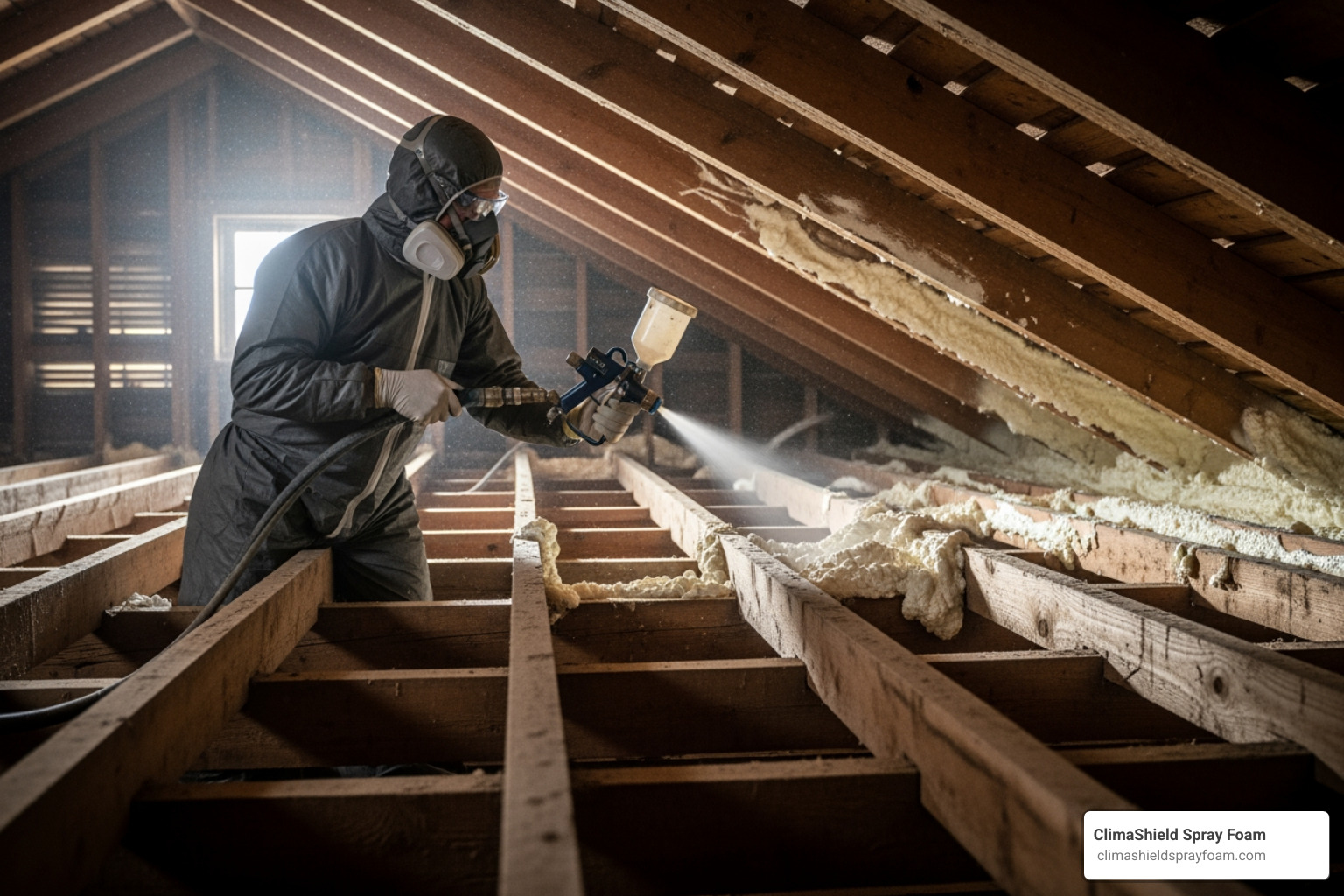
Open-cell spray foam offers a different set of advantages. While its R-value is slightly lower at R-3.5 to R-4 per inch, it still provides an excellent air barrier, effectively stopping drafts.
Where open-cell excels is in its superior sound dampening capabilities. Its softer texture is fantastic at absorbing sound, making it ideal for converting an attic into a quiet living space. It’s also more budget-friendly than closed-cell, offering spray foam benefits at a lower price point.
Open-cell foam is vapor permeable, allowing moisture vapor to pass through. This lets the roof deck “breathe” and dry out, which can be an advantage in certain climate and roof assemblies. However, this means it is not a moisture barrier like closed-cell foam, so careful consideration of your roof’s moisture strategy is essential. Like closed-cell, it requires professional installation.
Batt Insulation (Fiberglass & Mineral Wool)
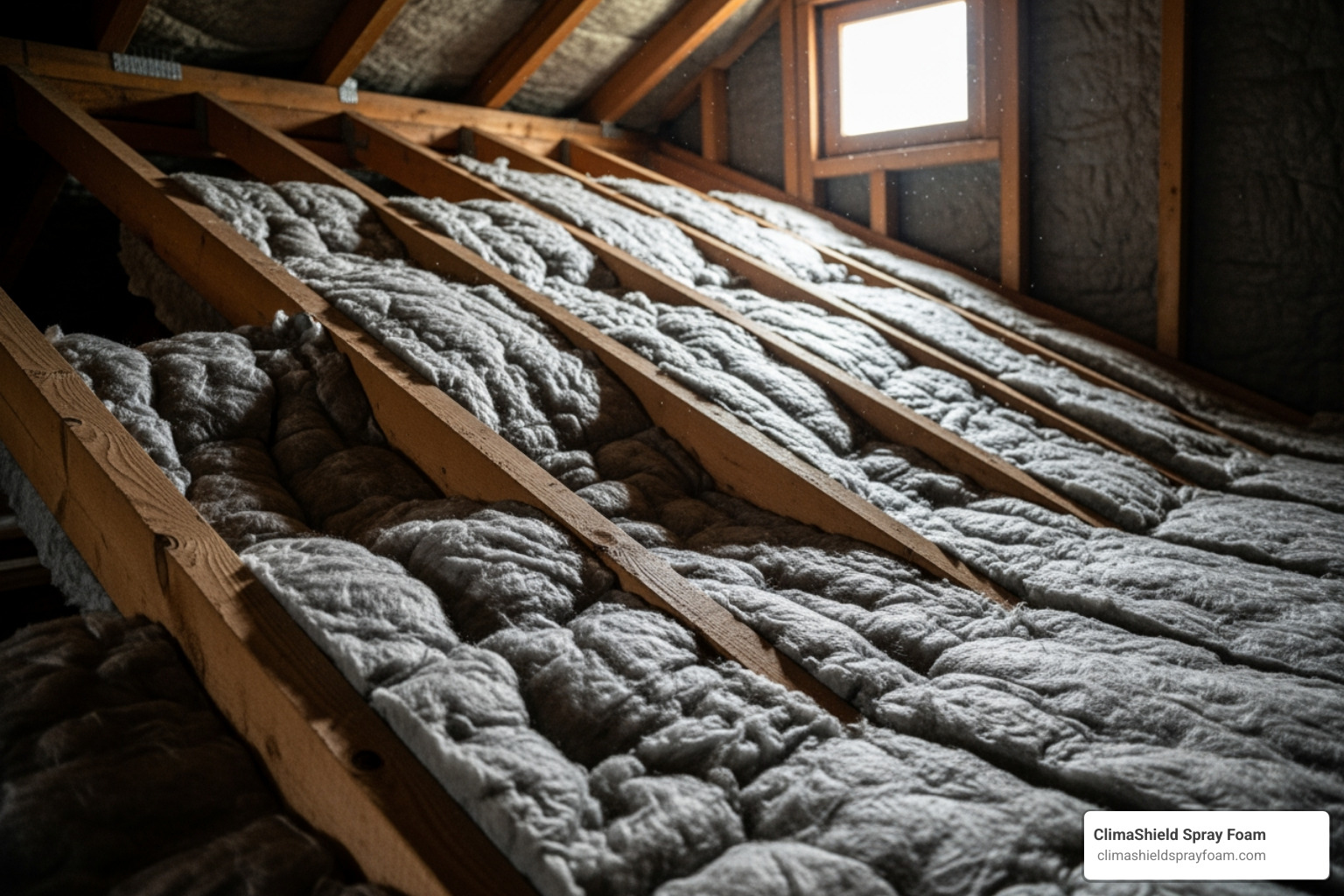
Batt insulation (fiberglass and mineral wool) is popular due to its low cost and accessibility. Fiberglass is the most budget-friendly batt ($0.30-$1.50/sq ft) with an R-value of R-2.2 to R-4.3 per inch. Mineral wool is pricier ($1.40-$4.00/sq ft) but offers a higher R-value of R-3.5 to R-4.5 per inch.
One appeal of batts is their DIY potential. However, they are prone to air gaps if not installed perfectly, and any compression or voids will severely reduce their effective R-value.
Mineral wool’s key advantages are being naturally fire retardant insulation and hydrophobic (water-repellent). This improves fire safety and moisture management. Fiberglass lacks these specific properties. Both types of batts typically last 25-30 years, but their performance can degrade if they get wet or are damaged by pests. Proper air sealing around batts is critical, as they do not provide an air barrier.
Eco-Friendly & Natural Insulation Considerations
For homeowners prioritizing sustainability, it is important to understand that spray foam systems can be integrated into high-performance, energy-efficient building strategies that reduce overall resource use over the life of the home.
By dramatically cutting heating and cooling demand, properly designed spray foam roof assemblies lower your home’s carbon footprint and reduce strain on HVAC systems. Choosing durable, long-lasting insulation that does not need frequent replacement is another key part of a sustainable approach.
If you are interested in the most eco-effective solution for your specific roof and climate, a custom spray foam design can help you balance performance, comfort, and environmental impact over the long term.
How to Choose the Right Insulation: R-Value, Climate, and Cost
Choosing the best rafter insulation is a strategic process of balancing performance, climate, and budget.
What R-Value Do You Need? A Climate Zone Guide
R-value measures thermal resistance; a higher number means better insulation. The goal is to match the R-value to your climate for optimal efficiency and comfort.
The U.S. Department of Energy and ENERGY STAR provide guidelines based on climate zones. Pennsylvania falls into Climate Zones 4, 5, and 6, with significant heating and cooling needs.
- Hot Climates (Zones 1-3): R-30 is recommended, focusing on keeping heat out.
- Mixed Climates (Zones 4-5): Much of Pennsylvania, including Indiana, PA, falls here. An R-value of R-49 is recommended for roofs.
- Cold Climates (Zones 6-8): Colder parts of Pennsylvania are in Zone 6. An R-value of R-60 is recommended to combat heat loss.
These are general guidelines. Always check local building codes, as they may be stricter. The ENERGY STAR Recommendations For Insulating Roofs And Attics website is an excellent resource.
Finding the best rafter insulation for your budget
When choosing the best rafter insulation, consider both material and installation costs. Fiberglass batts have low material costs but may require more labor for air sealing and detailing. Spray foam has a higher upfront cost but combines insulation and air sealing, simplifying the project and often reducing other prep work.
The Department of Energy estimates that upgrading insulation can lead to energy savings projections of 25-35% on heating and cooling, with air sealing adding another 10-20%. These savings directly impact Your Energy Bill every month.
The payback period for rafter insulation varies:
- Fiberglass batts: 3-7 years
- Hybrid systems (e.g., spray foam combined with other insulation types): 4-9 years
- Full spray foam systems: 5-12 years
While spray foam’s payback period may seem longer, its superior air sealing and high R-value provide greater long-term value vs. upfront cost. This includes consistent comfort, reduced HVAC strain, and increased home value. Our customers have saved up to 60% on energy bills, making spray foam a smart long-term investment.
Why air sealing is crucial for the best rafter insulation performance
Even the highest R-value insulation is ineffective without proper air sealing. Thermal bridging occurs when heat bypasses insulation through gaps or uninsulated framing.
How gaps reduce effectiveness by 30-50%: Air leaks can reduce insulation’s effective R-value by 30-50%. That’s like paying for R-60 and only getting R-30 performance. Warm, moist air can bypass insulation, condense on cold surfaces, and cause mold and rot.
The dual benefit of insulation and air sealing is critical. Spray foam provides both in one step. With other materials like batts, you must carefully air seal all penetrations before insulating. It’s like zipping up your coat after putting it on to stay warm. The principles of air sealing are important throughout your home, as detailed in our guide on Air Sealing Basement spaces.
Installation Essentials: From Ventilation to Safety
Proper installation is paramount for your rafter insulation to perform as intended. Even the best rafter insulation material can fail if installed incorrectly.
Vented vs. Unvented Roofs: A Critical Choice
A fundamental choice is between a vented or unvented roof assembly, which impacts materials, methods, and moisture management.
-
Vented Assembly (Cold Roof): A vented (or cold) roof requires a continuous airflow channel from soffit to ridge, created with baffles and airflow channels. Insulation is placed below this channel, allowing outside air to circulate under the roof deck. This ventilation removes moisture, helps keep the roof cool in summer, and prevents ice dams in winter. It’s crucial that insulation does not block these vents.
-
Unvented Assembly (Hot Roof): An unvented (or hot) roof makes the attic a conditioned space. Insulation is applied directly to the underside of the roof deck, eliminating ventilation. This method requires air-impermeable insulation like closed-cell spray foam, which seals the rafter bays from air and moisture. This is ideal for finished attics or when HVAC equipment is in the attic.
The implications for moisture management are significant: a vented system removes moisture with air, while an unvented system blocks moisture from entering.
Common Installation Mistakes to Avoid
Even the best rafter insulation will fail if installed poorly. Avoid these common mistakes:
- Blocking Ventilation: In vented roofs, never block soffit vents with insulation. This traps moisture, leading to mold and rot. Always use baffles to maintain airflow.
- Compressing Batts: Compressing batt insulation into tight spaces crushes its air pockets, significantly reducing its R-value. Aim for a snug, not squished, fit.
- Leaving Gaps and Voids: Gaps around insulation create air leaks that can cut effectiveness by 30-50%. Meticulous air sealing around all edges and penetrations is essential.
- Improper Vapor Barrier Placement: The vapor barrier’s location depends on your climate. In cold climates like Pennsylvania, it goes on the warm (interior) side. Incorrect placement can trap moisture and cause rot.
- Not Sealing Penetrations: Every wire, pipe, or vent passing through the insulation must be thoroughly air sealed to prevent major air leakage.
DIY vs. Hiring a Professional
The DIY vs. pro decision depends on the insulation type, your skill level, and roof complexity.
- DIY Suitability (Batts): Installing fiberglass or mineral wool batts can be a DIY project for those with construction experience. However, perfect air sealing and avoiding compression are critical. Always use proper safety gear (PPE).
- When to Call a Pro: Hiring a professional is essential for spray foam application, which requires special equipment and training. It’s also wise for complex roofs, addressing safety concerns in hazardous attics, fixing existing moisture or structural issues, and ensuring code compliance.
The importance of quality installation for performance cannot be overstated. A professional, like our team at ClimaShield Spray Foam, ensures correct installation, maximizing R-value, air sealing, and lifespan. This investment leads to greater long-term savings and peace of mind. For more insights, visit our page on the Best Insulation for Home.
Frequently Asked Questions about Rafter Insulation
Here are some of the most common questions we hear from Pennsylvania homeowners about the best rafter insulation solutions.
Can I insulate both the rafters and the attic floor?
The general answer is no. Insulating both the rafters and the attic floor can create a moisture trap.
Your home’s thermal boundary should be in one location. Insulating both creates a cold, unvented space between the two layers. This traps moisture from condensation, leading to mold and rot in your structural timbers.
Therefore, you must choose one location for the thermal boundary:
- Insulate at the rafters to create a conditioned attic, ideal for living space or protecting HVAC equipment.
- Insulate at the attic floor (joists) for a traditional, unconditioned (vented) attic.
Making this choice correctly is fundamental. For more on our approach, see our Residential Insulation services.
How does rafter insulation prevent moisture and mold?
Rafter insulation prevents moisture and mold primarily through air sealing and material properties.
-
Air Sealing is Key: Rafter insulation creates an airtight barrier, stopping warm, moist air from inside your home from reaching the cold roof deck, where it would otherwise condense. This condensation is a primary cause of mold and rot. Air-sealing insulation like closed-cell spray foam is especially effective at this.
-
Material Properties: Some materials offer extra protection. Mineral wool is naturally hydrophobic (water-repellent), while closed-cell spray foam acts as a full vapor barrier, providing a robust defense against moisture intrusion.
By combining effective air sealing with the right material for your roof assembly, rafter insulation helps maintain a dry, mold-free attic.
What is the long-term value of upgrading my rafter insulation?
Upgrading your rafter insulation is a high-impact home improvement with significant long-term value.
- Energy Savings: Achieve up to 60% in energy savings with optimal insulation and air sealing, providing a consistent financial return.
- Improved Comfort: Eliminate drafts and uneven temperatures, creating a stable, comfortable home year-round.
- Increased Home Value: Energy-efficient homes are more attractive to buyers, boosting resale value.
- Protection of the Roof Structure: Proper insulation protects the roof from moisture damage, mold, and rot, extending its lifespan and reducing future repair costs.
- Lifespan of Different Materials: Your investment is long-lasting.
- Spray foam (both open and closed-cell): 50+ years
- Rigid foam: 25-50 years
- Fiberglass and mineral wool: 25-30 years
- Cellulose: 20-30 years
This investment pays dividends in comfort, savings, and home longevity for decades.
Conclusion: Make the Best Choice for Your Home’s Comfort and Efficiency
Choosing the best rafter insulation for your Pennsylvania home is a critical decision for your budget, comfort, and your home’s longevity. The goal is to create a robust thermal envelope that controls temperature and moisture year-round. This requires choosing the right material for your climate, ensuring meticulous air sealing, and selecting the correct roof assembly (vented or unvented) based on your attic’s function.
The long-term benefits of a properly insulated roof far outweigh the initial investment. From significant energy savings and improved indoor comfort to increased home value and protection against moisture damage, the dividends are substantial and lasting.
For a guaranteed airtight seal and maximum Energy Efficiency, professional spray foam application by experts like ClimaShield Spray Foam offers unparalleled performance. Our solutions are designed to save customers up to 60% on energy bills, providing durable, waterproof, and airtight insulation that resists mold and pests.
Ready to transform your home’s comfort and energy performance? Learn more about the many Uses of Spray Foam and let us help you find the perfect rafter insulation solution for your home in Indiana, PA, or elsewhere in Pennsylvania.
