Understanding Why Concrete Slabs Fail
To perform a lasting concrete slab repair, we first have to play detective. Concrete doesn’t just crack or sink for no reason; it is usually reacting to the world beneath it. In Pennsylvania, our soil and climate are particularly tough on masonry.
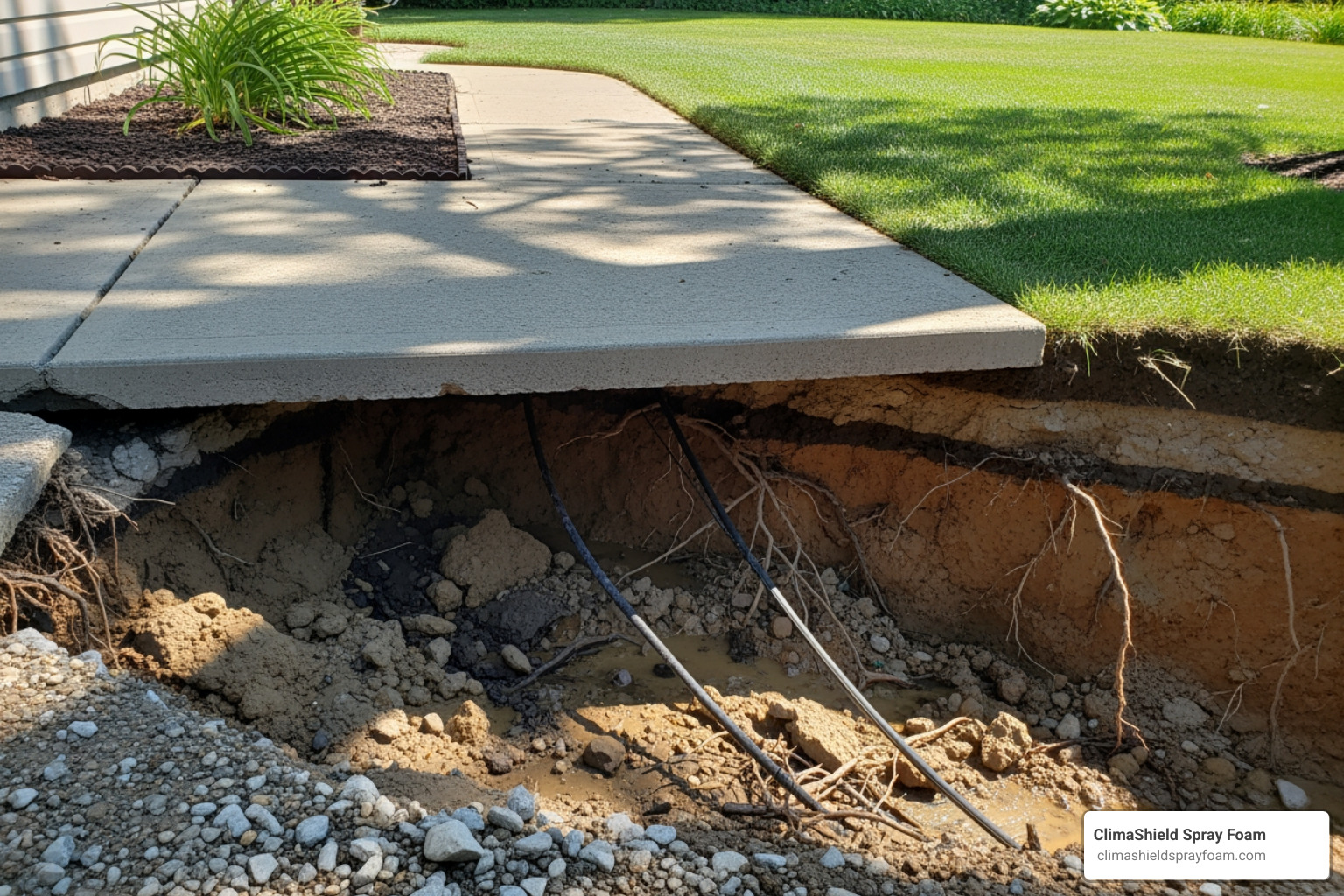
One of the most common culprits is soil settlement. When the ground beneath your slab isn’t stable, the concrete loses its “tabletop” support. This often happens due to:
- Drying and Shrinking: During dry spells, certain soils (especially those with high clay content) shrink, creating a void between the soil and the slab.
- Washout: Plumbing leaks or poor drainage can literally wash soil away from under the concrete, leaving it hanging in mid-air.
- Poor Compaction: If the “fill soil” wasn’t packed down tightly during original construction, it will naturally compress over time under the weight of the slab.
- Hydrostatic Pressure: Conversely, too much water in the soil can push upward against the slab, causing it to heave or crack.
- Tree Roots: As beautiful as our PA maples are, their roots are incredibly strong and can easily lift and crack a heavy concrete path.
- Freeze-Thaw Cycles: This is a big one for us in Indiana, PA. Water gets into tiny hairline cracks, freezes, expands, and pushes the concrete apart from the inside out.
When a floor slab settles, the damage manifests in several ways. You might see cracks in the concrete, but you might also notice floors separating from the walls or interior walls pulling away from the ceiling. To dive deeper into the mechanics of this, check out our homeowner’s guide to understanding slab foundation settling.
When to Choose Repair Over Total Replacement
We often get asked, “Dave, should I just rip the whole thing out and start over?” The answer depends on the severity of the damage. Replacing a slab is disruptive, expensive, and often unnecessary.
| Feature | Choose Repair (DIY or Professional) | Choose Total Replacement |
|---|---|---|
| Crack Width | Under 1/2 inch | Over 1/2 inch with wide gaps |
| Unevenness | Less than 1/4″ to 1/2″ difference | Exceeds 1/2″ between high/low points |
| Surface Condition | Minor spalling or scaling | Deep crumbling or “potholes” |
| Structural State | Slab is mostly intact but settled | Slab is shattered into many small pieces |
The 1/4-inch Rule: Generally, if the unevenness between two sections of a slab is less than 1/4 inch, a surface repair or “patch” is a great cost-effective option. If it’s between 1/4 and 1/2 inch, you’re in the “gray zone” where a professional lift is usually better than a patch. If the vertical shift is more than 1/2 inch, the slab is often considered a candidate for removal—unless you use advanced lifting techniques.
For surface issues like spalling (where the top layer flakes off) or scaling, you can often perform a horizontal spall repair to restore the look and safety of the surface without a full pour.
The Step-by-Step Guide to Concrete Slab Repair
If your damage is within the repairable range, doing it the “right way” involves more than just dumping a bag of mix into a hole. Proper concrete slab repair requires a systematic approach to ensure the new material actually bonds to the old.
Assessing Damage Before Your Concrete Slab Repair
Before you head to the hardware store, take a moment to evaluate.
- Measure the Width: Use a ruler. Is it a hairline crack (cosmetic) or a wide gap (structural)?
- Check for Movement: Is the crack “active”? If you fill it and it opens back up in a week, you have a settlement issue, not just a crack issue.
- Sound the Concrete: Take a hammer and lightly tap the area around the crack. A “hollow” thud indicates delamination, meaning the surface layer has separated from the base and needs to be chipped away.
For more on how these repairs fit into the bigger picture of your home’s health, see our page on residential concrete lifting.
Essential Tools for a Successful Concrete Slab Repair
Don’t skimp on safety or the right gear. Working with cement-based products can be hard on the skin and lungs.
- Personal Protective Equipment (PPE): N95 mask (to avoid inhaling silica dust), waterproof gloves, and safety glasses.
- Cleaning Tools: A stiff wire brush, a broom, and ideally a pressure washer (3000 PSI) to get out deep-seated dirt.
- Preparation Tools: A hammer and a masonry chisel (to “undercut” the crack).
- Application Tools: A margin trowel for mixing and a finishing trowel or broom for the final texture.
- Materials: Crack filler (for narrow gaps), vinyl patching compound (for wider gaps), and a bonding agent.
Surface Preparation and Application Techniques
We like to follow the “Three C’s”: Clean, Check, and Condition.
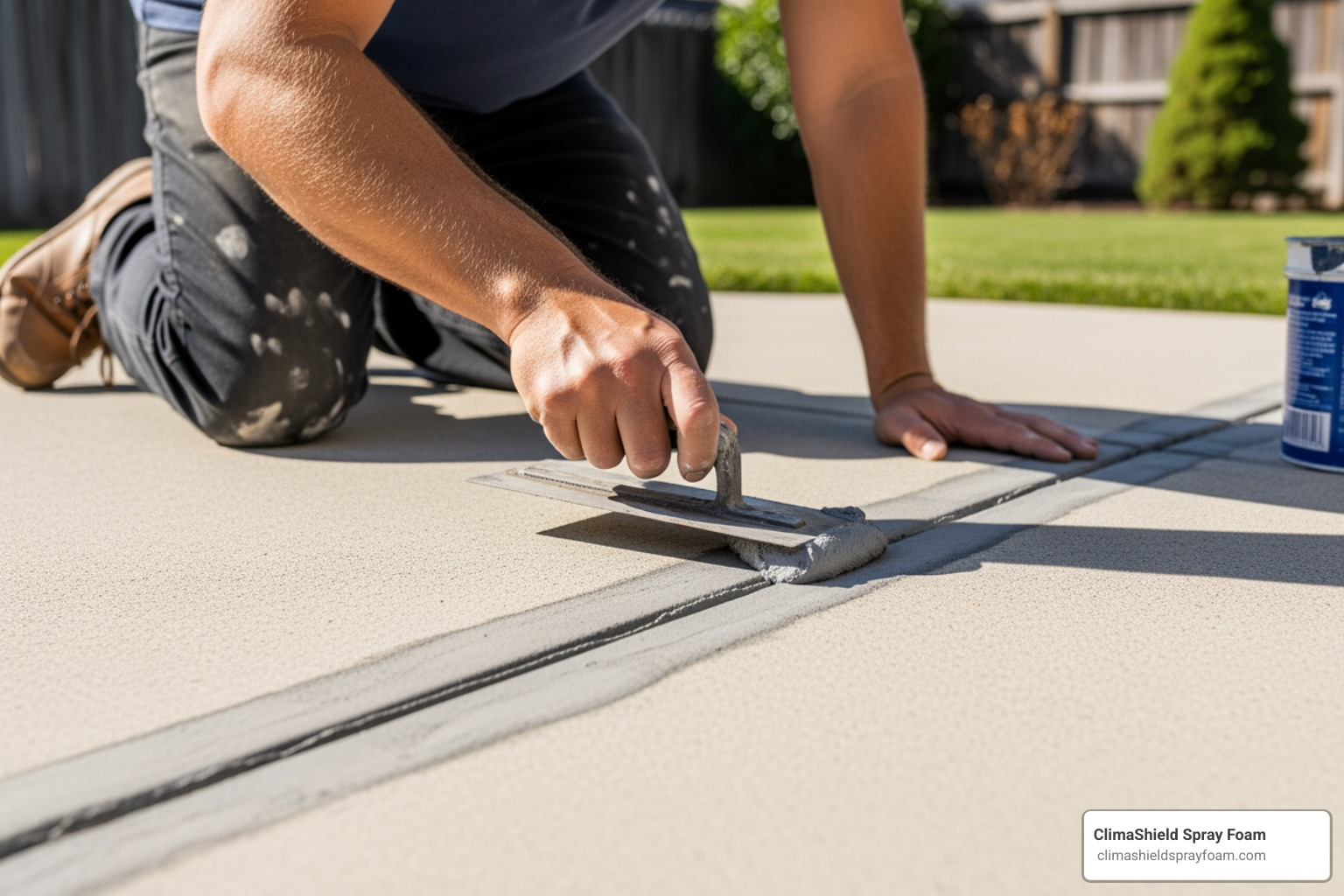
- Clean: Remove all loose debris, weeds, and old, failing patch material. Use a shop vac to get the dust out of the bottom of the crack.
- Check (Undercutting): This is the secret pro tip. Use your chisel to turn the crack into an “inverted V” shape. By making the bottom of the crack wider than the top, you create a mechanical “key” that locks the patch in place so it can’t pop out.
- Condition (SSD): Most repair mortars require the old concrete to be Saturated Surface-Dry (SSD). This means the concrete is damp, but there is no standing water. If the old concrete is bone-dry, it will suck the moisture out of your new patch too quickly, causing it to shrink and crack.
- Application: Press the material firmly into the crack to eliminate air pockets. For wide cracks over 1/2 inch deep, insert a foam backer rod first. This saves on material and allows the patch to flex slightly.
- Finish: Once the material is firm (usually 15-30 minutes), use a damp broom to pull a texture across the surface so it matches the surrounding concrete.
- Cure: Don’t let it dry too fast! Mist it with water or use a curing sealer to keep the moisture in for at least 24 hours.
Advanced Solutions for Sinking and Structural Issues
Sometimes, a DIY patch is just a “band-aid.” If your slab is sinking because the soil underneath has failed, adding more weight (concrete) on top can actually make the problem worse. This is where we move from “patching” to “stabilizing.”
Polyurethane Injection (Slabjacking)
Modern concrete slab repair has been revolutionized by high-density spray foam. Instead of “mudjacking” (which uses heavy grout), we inject a lightweight, structural slab jacking foam through tiny holes (about the size of a penny).
- How it works: The foam expands with incredible force, filling voids and lifting the slab back to level.
- Benefits: It’s waterproof, it won’t wash away, and it cures in minutes. You can drive a car on it almost immediately.
- Technical Standards: We follow strict slabjacking procedures to ensure the lift is controlled—usually in 1/4-inch intervals to prevent the slab from cracking during the process.
Slab Pier Systems
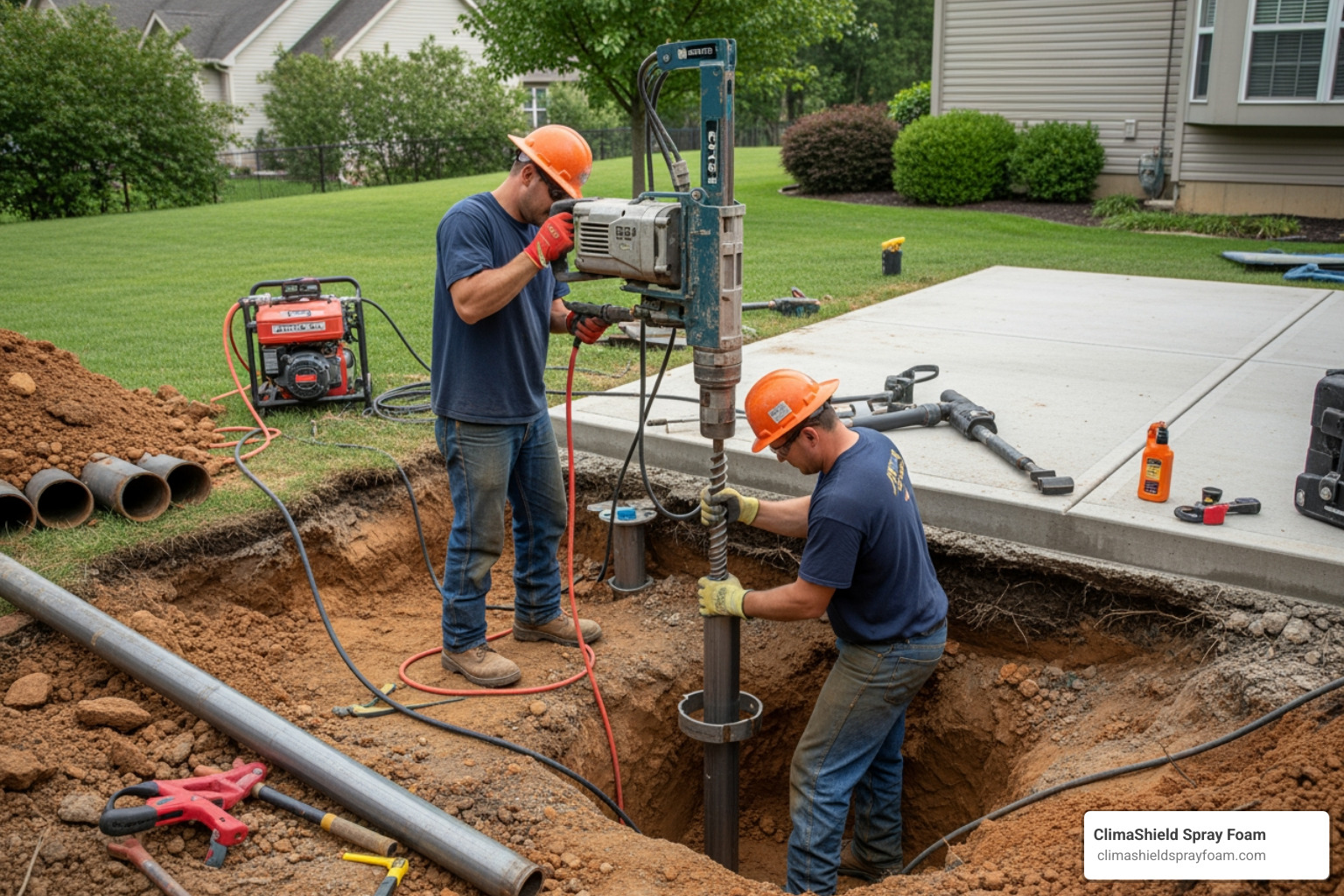
For heavy structural slabs or foundations that have settled deep into the earth, we use slab piers. These are galvanized steel tubes driven deep into the ground until they hit “competent” soil or bedrock. A bracket then transfers the weight of the slab to the pier, providing a permanent, non-shifting support system.
Carbon Fiber Reinforcement
If a slab is cracking due to tension (pulling apart), we often use carbon fiber “staples” or straps. These are incredibly thin but have a higher tensile strength than steel. They “lock” the crack together so it can never widen again, providing a perfect surface for decorative coatings.
Frequently Asked Questions about Slab Maintenance
How can I prevent future concrete cracking?
An ounce of prevention is worth a pound of cure!
- Drainage: Ensure your gutters and downspouts discharge at least 5 feet away from your slabs.
- Sealing: Apply a high-quality concrete sealer every 2-3 years to keep moisture and salt out of the pores.
- Root Barriers: If planting trees near a driveway, use root barriers to direct growth downward.
- Avoid Salt: In Indiana, PA winters, try to use sand or gravel for traction instead of de-icing salts, which eat away at the concrete surface.
What is the difference between traditional slab repair and foam lifting?
Traditional mudjacking uses a heavy slurry of sand and cement. It works, but it adds a lot of weight to already failing soil. Spray foam lifting is much lighter, requires fewer and smaller holes, and won’t be affected by future moisture or “washout.”
When is a crack too large for a DIY fix?
If a crack is wider than 1/2 inch, or if one side of the crack is significantly higher than the other, it’s time to call in the pros. This usually indicates that the subgrade has failed, and a surface patch will likely fail within a single season.
Conclusion
At ClimaShield Spray Foam, we believe that your home’s foundation and slabs are the “bones” of your property’s value. A properly executed concrete slab repair doesn’t just fix a trip hazard; it protects your home from moisture, pests, and energy loss. By stabilizing the soil and sealing the surface, we help you maintain a safe, efficient, and beautiful home in the Indiana, PA area.
Don’t let a small crack turn into a major structural failure. Whether you need a simple consultation or a permanent geotech slab lifting solution, we’re here to help you do it the right way. Reach out to us today to secure your home’s future!
