Why Residential Insulation Is the Smartest Home Upgrade You Can Make
Residential insulation is the material installed in your walls, attic, floors, and basement to slow the transfer of heat — keeping your home warmer in winter and cooler in summer.
Here’s a quick overview of what you need to know:
| Topic | Quick Answer |
|---|---|
| What it does | Slows heat transfer to maintain indoor temperature |
| Most common types | Fiberglass batts, cellulose, spray foam, rigid foam board |
| Where it goes | Attic, walls, basement, floors, crawl spaces |
| Key measure | R-value — higher means better thermal resistance |
| Energy impact | Heating and cooling make up 50–70% of home energy use |
| Top benefit | Lower energy bills, fewer drafts, better comfort year-round |
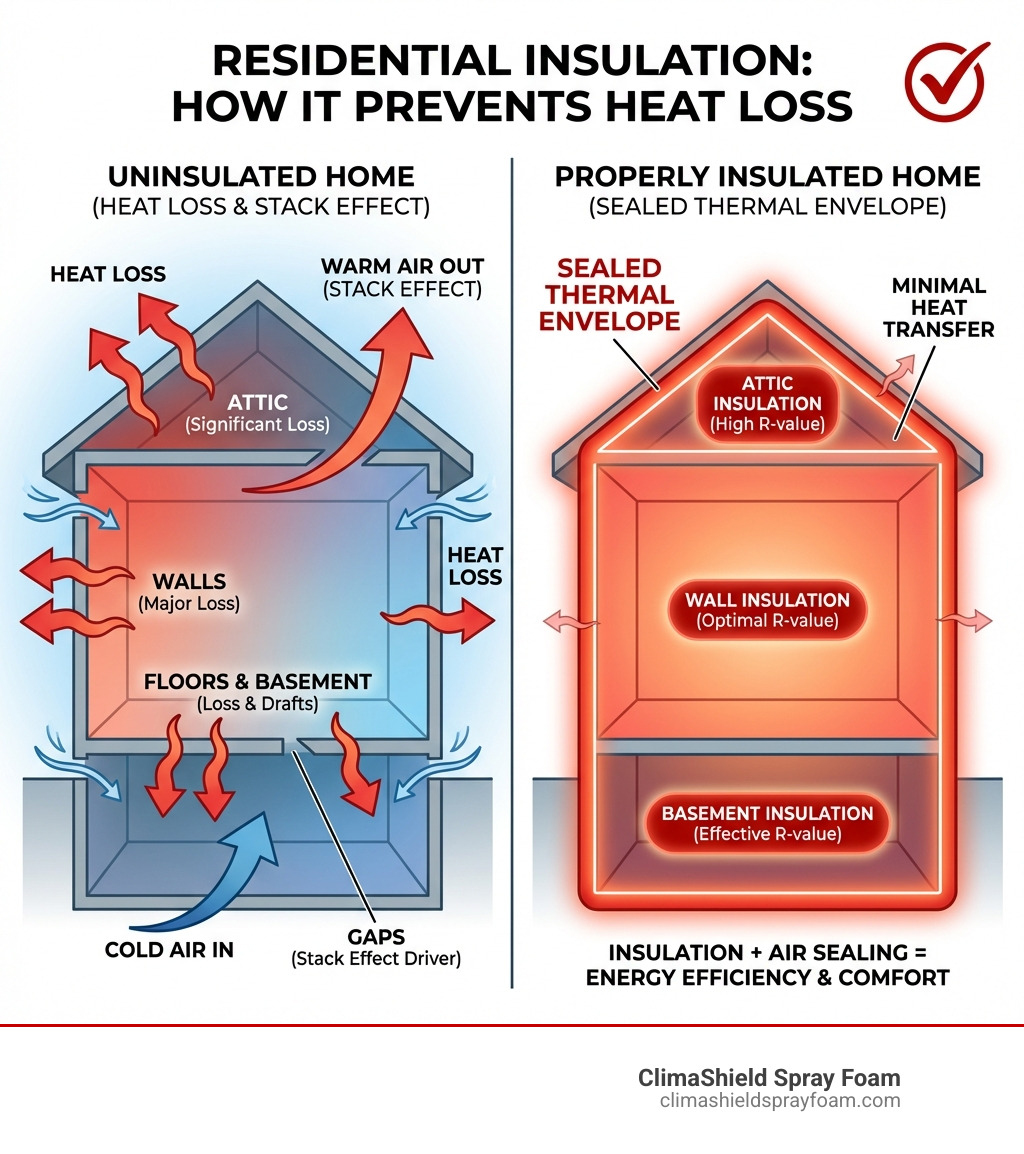
If your home feels drafty, your energy bills keep climbing, or some rooms never seem to reach a comfortable temperature — poor insulation is likely the cause. Inadequate insulation and air leakage are among the leading reasons homes waste energy. And the problem compounds: heat escapes in winter, pours in during summer, and your HVAC system works overtime just to keep up.
Walls alone can account for roughly 20% of a home’s total heat loss. Add in the attic, floors, and basement, and an under-insulated home is essentially hemorrhaging the energy you’re paying for every month.
The good news? Insulation is one of the most cost-effective upgrades a homeowner can make — and this guide covers everything you need to make the right choices for your home.
I’m Dave Brocious, founder of ClimaShield Spray Foam and a specialist in residential insulation solutions including spray foam, air barrier coatings, and protective coatings for homes and commercial buildings. With decades of experience in the coatings and building performance industry, I’ve seen how the right insulation strategy transforms comfort, cuts energy waste, and protects a home for the long term. Let’s dig into what works — and why.
The Science of Residential Insulation: R-Value and Climate Zones
To understand how residential insulation works, we have to talk about heat flow. Heat naturally moves from warmer areas to cooler areas. In the winter, the heat you pay for tries to escape to the cold outdoors. In the summer, the outdoor heat tries to force its way into your air-conditioned living room. Insulation acts as a barrier, providing thermal resistance to this conductive heat flow.
The effectiveness of this barrier is measured by its R-value. The “R” stands for resistance. Simply put, the higher the R-value, the better the material is at resisting heat transfer. However, R-value isn’t just about the material itself; it’s affected by the thickness, density, and even how well it was installed. For example, if you compress a fiberglass batt to fit it into a tight spot, you actually lower its R-value because you’ve squeezed out the tiny air pockets that do the heavy lifting.
In Pennsylvania, specifically around Indiana PA, we deal with significant temperature swings. We are primarily located in Climate Zone 5. This means our homes require higher R-values than a home in Florida to stay energy-efficient. According to the Guide to Home Insulation, achieving the right Energy Saving Insulation levels involves looking at the whole house as a system.
One concept we often explain to homeowners is thermal bridging. This happens when heat bypasses your insulation through highly conductive materials, like the wooden studs in your walls. Even if you have great insulation between the studs, heat can still “bridge” through the wood itself. This is why advanced techniques, like adding rigid foam board to the exterior or using spray foam that covers the studs, are so effective at maintaining temperature moderation.
| Climate Zone | Attic R-Value Recommendation | Wall R-Value Recommendation | Floor R-Value Recommendation |
|---|---|---|---|
| Zone 5 (PA) | R-49 to R-60 | R-13 to R-21 | R-25 to R-30 |
| Zone 4 | R-38 to R-60 | R-13 to R-15 | R-25 to R-30 |
| Zone 3 | R-30 to R-60 | R-13 to R-15 | R-19 to R-25 |
Comparing Materials: From Fiberglass to Spray Foam
Choosing the right material for residential insulation can feel like standing in the cereal aisle—there are way too many options. But each has a specific “best use” case.
Fiberglass Batts and Rolls
This is the “classic” pink insulation most people recognize. It’s made of fine glass fibers and is relatively inexpensive. It’s great for standard stud and joist spacing that is free of obstructions. However, it doesn’t stop air leaks. If you have gaps around your windows or wires, the air will blow right through the fiberglass. You also need to be aware of Fiberglass Health and Safety, as the fibers can irritate your skin and lungs.
Cellulose
Cellulose is an eco-friendly favorite. It’s primarily made from 85% recycled newsprint treated with fire retardants. It’s often used as loose-fill for attics or “dense-pack” for existing walls. It’s better at stopping air than fiberglass and has a higher R-value per inch. You can read more about it in our guide From Fiberglass to Foam: Exploring Residential Insulation Types.
Mineral Wool
Also known as rock wool, this material is made from volcanic rock or steel slag. It’s incredibly dense, which makes it excellent for soundproofing. It’s also fire-resistant and doesn’t lose its R-value if it gets wet, unlike fiberglass or cellulose.
Spray Foam Insulation
At ClimaShield, we specialize in spray foam because it provides a two-in-one solution: it insulates and air-seals simultaneously. Open-cell foam is flexible and great for sound dampening, while closed-cell foam is rigid, waterproof, and offers the highest R-value per inch (around R-6.5 to R-7). It’s the ultimate way to create an airtight thermal envelope.
Rigid Foam Board and Advanced Materials
For new construction or exterior retrofits, rigid foam boards (like polyisocyanurate or polystyrene) provide high insulating value with very little thickness. In some modern builds, we even see Structural Insulated Panels (SIPs) or Insulating Concrete Forms (ICFs), where the insulation is literally built into the structure of the house. Fun fact: autoclaved aerated concrete masonry units actually have 10 times the insulating value of conventional concrete!
Choosing the Right Residential Insulation for Your Attic
The attic is usually the biggest culprit for heat loss. Because heat rises, a poorly insulated attic acts like a giant chimney, sucking warm air out of your living space.
For unfinished attics, loose-fill or blown-in insulation is often the most cost-effective choice. It can be blown into every nook and cranny, covering floor joists and sealing off the living spaces below. If you use your attic for storage, we recommend Attic Spray Foam applied directly to the underside of the roof deck. This brings the attic into the “conditioned space” of your home, meaning your Christmas decorations won’t melt in July.
Don’t forget the attic hatch! An uninsulated attic door is like leaving a window open all year. We also look at Radiant Barrier Effectiveness. These are thin layers of reflective material that reflect radiant heat away from your home, which is particularly helpful during those humid Pennsylvania summers.
High-Performance Wall and Floor Solutions
Walls are tricky because you can’t always see what’s inside them. In existing homes, we often use dense-pack cellulose or injection foam to fill the cavities without tearing down the drywall. For new builds, we can apply Indiana’s Best Kept Secret: Smart Insulation for New Builds, ensuring the home is efficient from day one.
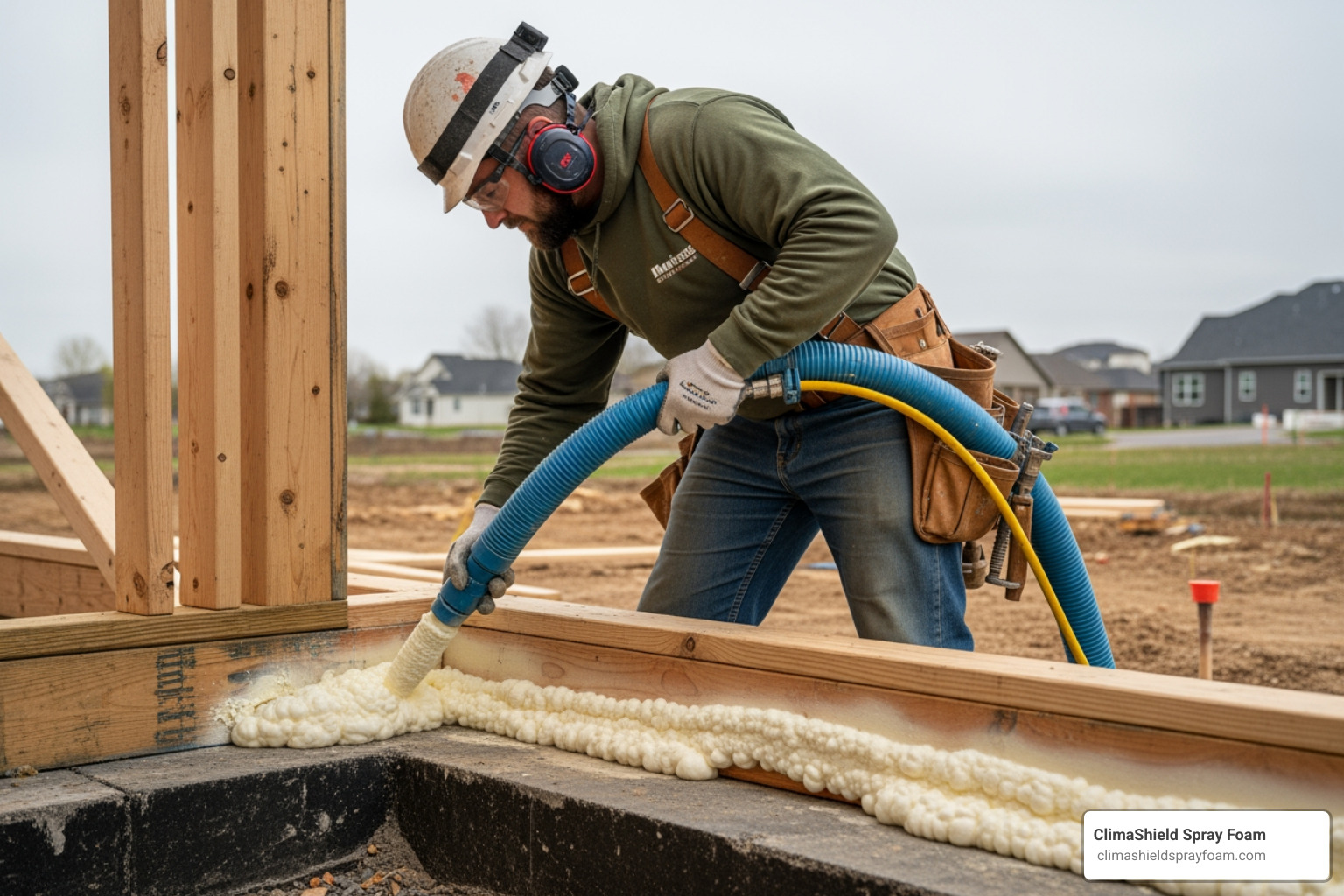
One area that is frequently overlooked is the rim joist (or band joist). This is where your house’s frame meets the foundation. It’s a major source of air leakage. We often tell clients: Don’t Get Foamed Over: The Pros and Cons of Rim Joist Spray Foam, but the “pro” list for spray foam in this area is long—it stops the drafts that make your floors feel like ice.
For floors over unconditioned spaces like crawl spaces or garages, insulation is vital for comfort. If you have a slab-on-grade foundation, insulating the edges of the slab can prevent heat from bleeding into the cold ground.
Strategic Placement: Where to Insulate for Maximum Impact
If you have a limited budget, you want to put your money where the heat loss is greatest. We follow a “top-down” approach.
- The Attic: As mentioned, this is priority number one.
- Exterior Walls: Since walls account for 20% of heat loss, they are next on the list.
- Basements and Crawl Spaces: If your basement is heated, you should treat the foundation walls just like your exterior walls.
- Knee Walls: In finished attics, these short walls often have empty space behind them that needs to be sealed and insulated.
- Cathedral Ceilings: These require special care to ensure there is enough space for insulation and proper ventilation (unless you use closed-cell spray foam). Check out our guide on Above the Rafters: The Smart Way to Insulate Your Pitched Roof.
Retrofitting vs. New Construction Methods
Insulating a home while it’s being built is the “easy mode” of residential insulation. You have access to every stud bay and can use systems like SIPs to create a nearly perfect thermal envelope.
Retrofitting an existing home is more like surgery. We have to work around existing wiring, plumbing, and finished walls. The first step in any retrofit should be air sealing. Adding insulation without sealing air leaks is like putting on a wool sweater on a windy day—the wind still blows right through. By using a whole-house systems approach, we ensure that Adding Insulation to an Existing Home actually results in the savings you expect.
Energy Efficiency, Moisture Control, and Home Comfort
Proper residential insulation does more than just lower your bills; it changes the way your home feels. When a home is well-insulated, the interior wall surfaces stay closer to the room temperature. This means you don’t feel that “chill” when you sit near an exterior wall.
The 50-70% Rule
Heating and cooling account for 50% to 70% of the energy used in the average American home. By sealing air leaks and choosing high-performance materials, we’ve seen customers save up to 60% on their monthly energy costs.
Moisture and Mold
Insulation and moisture control go hand-in-hand. In Pennsylvania’s humid climate, warm, moist air can condense on cold surfaces inside your walls, leading to mold. Many people ask, Is Spray Foam Insulation Mold Resistant? The answer is yes—because closed-cell spray foam is airtight and waterproof, it prevents the condensation that mold needs to grow. It also helps with Pest Resistant Spray Foam applications, as it doesn’t provide nesting material for rodents like fiberglass does.
Noise and Air Quality
A well-insulated home is a quiet home. Materials like spray foam and mineral wool are excellent at dampening outside noise, from traffic to barking dogs. Furthermore, by sealing the “thermal envelope,” you reduce the amount of dust, pollen, and outdoor pollutants that enter your home. We cover this extensively in our guide, Unwrapping the Thermal Envelope: A Guide to Energy Efficient Buildings.
In some parts of Pennsylvania, radon mitigation is also a concern. While insulation itself doesn’t stop radon, the air sealing techniques we use—like sealing crawl space floors and foundation gaps—are a critical part of a radon-resistant construction strategy.
Costs, Rebates, and Professional Installation Standards
We know what you’re thinking: “This sounds great, but what’s it going to cost?”
The cost of residential insulation varies based on the size of your home, the material chosen, and the complexity of the job. For example, blowing cellulose into an open attic is much cheaper than injecting spray foam into finished walls. However, the ROI (Return on Investment) for insulation is one of the highest of any home improvement. Most homeowners see the project pay for itself in energy savings within a few years.
While some programs like the Canada Greener Homes Grant or the Home Efficiency Rebate Plus offer up to $10,000 in rebates for our neighbors to the north, Pennsylvania homeowners should look for federal tax credits. Under the Inflation Reduction Act (Section 25C), U.S. homeowners can often claim a tax credit of 30% of the cost of insulation and air sealing materials, up to $1,200 annually.
DIY vs. Professional
Can you do it yourself? For some jobs, yes. You can buy fiberglass batts and lay them in your attic. But there are Your Energy Bill risks. Common DIY mistakes include:
- Compression: Squeezing insulation too tight, which kills the R-value.
- Blocking Vents: Covering soffit vents in the attic, which can lead to ice dams and roof rot.
- Ignoring Air Leaks: Installing insulation over gaps without sealing them first.
A professional installer ensures that the material is applied at the correct density and that the “stack effect” (warm air escaping out the top of the house) is neutralized.
Safety Precautions for Handling Residential Insulation
Safety isn’t just a suggestion; it’s a requirement. If you are handling insulation, you need the right Personal Protective Equipment (PPE).
- Long sleeves and long pants: To prevent “fiberglass itch.”
- N95 Mask or Respirator: To avoid inhaling fibers or dust.
- Safety glasses and gloves.
- Ventilation: Use fans and open windows when working with blown-in or spray materials.
You must also be aware of Asbestos in the Home. If your home was built before 1975 and has “vermiculite” insulation (which looks like small gray-brown pebbles), do not touch it. It may contain asbestos. Call a professional for testing.
Finally, ensure your insulation meets fire safety standards. Most materials require a thermal barrier (like half-inch gypsum board) if they are installed in living spaces. We use Fire Retardant Insulation to ensure your home isn’t just warm, but safe.
Frequently Asked Questions about Home Insulation
What is the best insulation for a cold climate?
For a climate like Pennsylvania’s, a combination approach is often best. Closed-cell spray foam is the gold standard because it provides the highest R-value and a complete air seal. However, if budget is a concern, “flash and batt”—a layer of spray foam followed by fiberglass batts—is a highly effective hybrid method.
How do I know if my home needs more insulation?
There are a few tell-tale signs:
- Fluctuating temperatures: Some rooms are freezing while others are boiling.
- High energy bills: Your bills are significantly higher than your neighbors’ with similar-sized homes.
- Ice dams: In the winter, if you see large icicles hanging from your gutters, it means heat is escaping through your roof and melting the snow.
- Drafts: You can feel air moving around electrical outlets or baseboards.
Can I install spray foam insulation myself?
While there are small “froth kits” available at big-box stores for small patches, we do not recommend DIY spray foam for large areas. The chemicals must be heated to a specific temperature and mixed at a precise 1:1 ratio. If the mix is off, the foam may not cure properly, leading to odors or reduced effectiveness. Professional equipment ensures a safe, durable, and airtight result.
Conclusion
Investing in residential insulation is more than just a home maintenance task; it’s a commitment to your family’s comfort and your financial future. By sealing your home’s thermal envelope, you can enjoy an airtight, mold-resistant environment while saving up to 60% on your energy bills.
At ClimaShield Spray Foam, we take pride in helping our neighbors in Indiana PA and throughout Pennsylvania achieve the most efficient homes possible. Whether you are building a new dream home or retrofitting a historic Pennsylvania farmhouse, our team is here to provide a professional assessment and top-tier installation.
Ready to stop wasting energy and start living comfortably? More info about residential insulation services is just a click away. Let us help you protect your home for the long haul.
