Why Adding a Radiant Barrier to Your Attic Could Cut Your Cooling Bills by 15%
Adding radiant barrier to attic spaces is one of the most effective ways to reduce heat gain in your home — here’s a quick overview of how it works:
How to add a radiant barrier to your attic (quick overview):
- Choose your method — staple foil to the underside of roof rafters (most effective) or lay it over existing attic insulation (easiest)
- Measure your attic — calculate square footage, adjust for roof pitch, and add 10% for overlaps
- Cut the radiant barrier — pre-cut panels to fit between rafters or across the attic floor
- Install with an air gap — maintain at least 1 inch of air space on the reflective side at all times
- Secure and seal — staple every 12 inches, overlap seams by 2 inches, and seal with foil tape
- Keep vents clear — never block soffit, ridge, or gable vents during installation
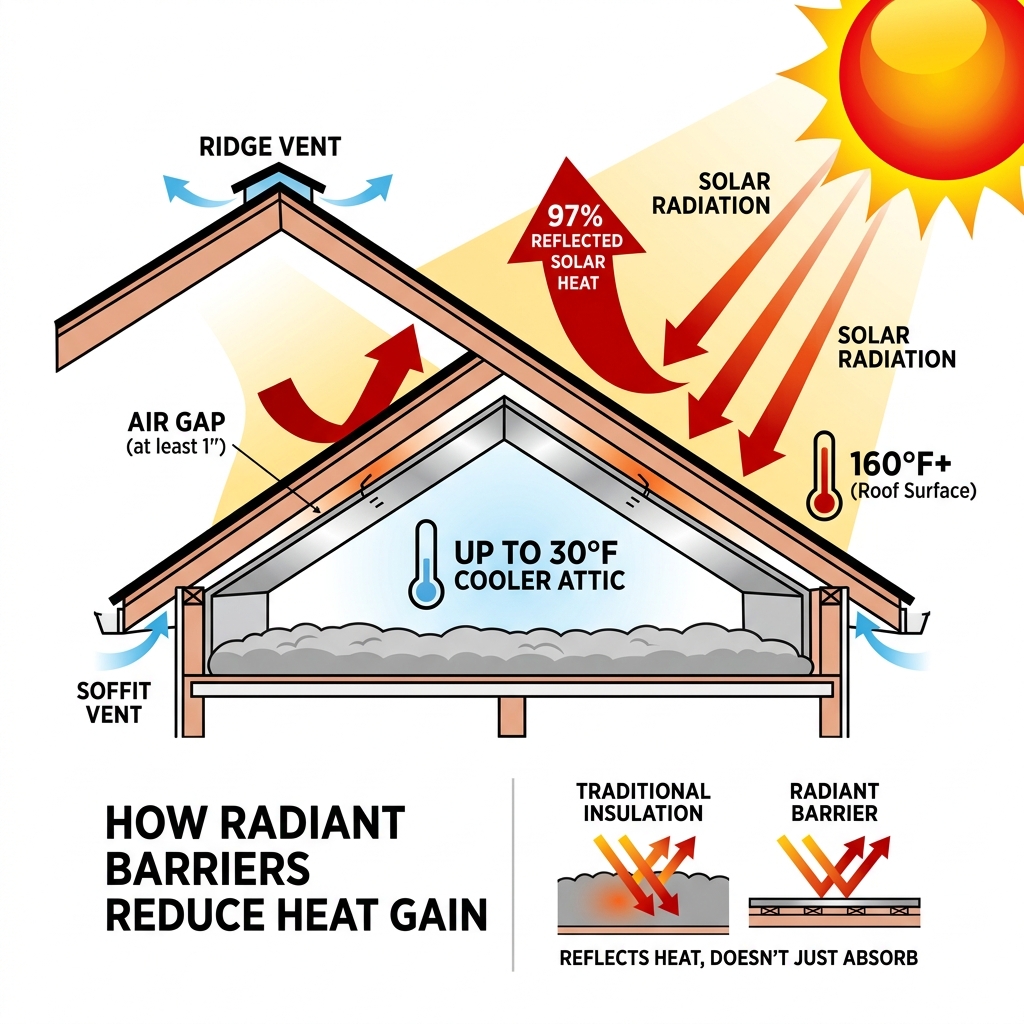
On a hot summer day, your roof surface can reach over 160°F. That heat radiates straight down into your attic — and then into your living space, forcing your AC to work overtime. A radiant barrier is a thin, reflective foil material that bounces up to 97% of that radiant heat back toward the roof before it ever reaches your living space. The result? Attic temperatures can drop by as much as 30°F, and cooling costs can fall by 10–15%.
Unlike traditional insulation, which slows heat by absorbing it, a radiant barrier reflects it. That’s a fundamentally different approach — and in hot, sunny climates, it’s a surprisingly powerful one.
I’m Dave Brocious, founder of ClimaShield Industries, with over 20 years of experience in coatings and insulation systems, including spray foam and specialty thermal solutions — expertise that directly informs best practices for adding radiant barrier to attic spaces. In the sections below, I’ll walk you through everything you need to know to do this right, from choosing your installation method to avoiding the most common mistakes.
Adding radiant barrier to attic glossary:
Understanding the Benefits of Adding Radiant Barrier to Attic Spaces
When we talk about home comfort in Pennsylvania, we often focus on keeping the heat in during those brisk Indiana, PA winters. However, the summer sun can be just as brutal. Adding radiant barrier to attic structures provides a unique line of defense that traditional “mass” insulation (like fiberglass or cellulose) simply can’t match.
Traditional insulation works like a sponge; it soaks up heat and slows down its travel. Eventually, that sponge gets saturated, and the heat bleeds into your bedrooms. A radiant barrier, however, works like a mirror. It has extremely low emissivity, meaning it barely emits any heat at all. Instead, it reflects the thermal radiation coming off your hot roof shingles.
The Impact on Your Home
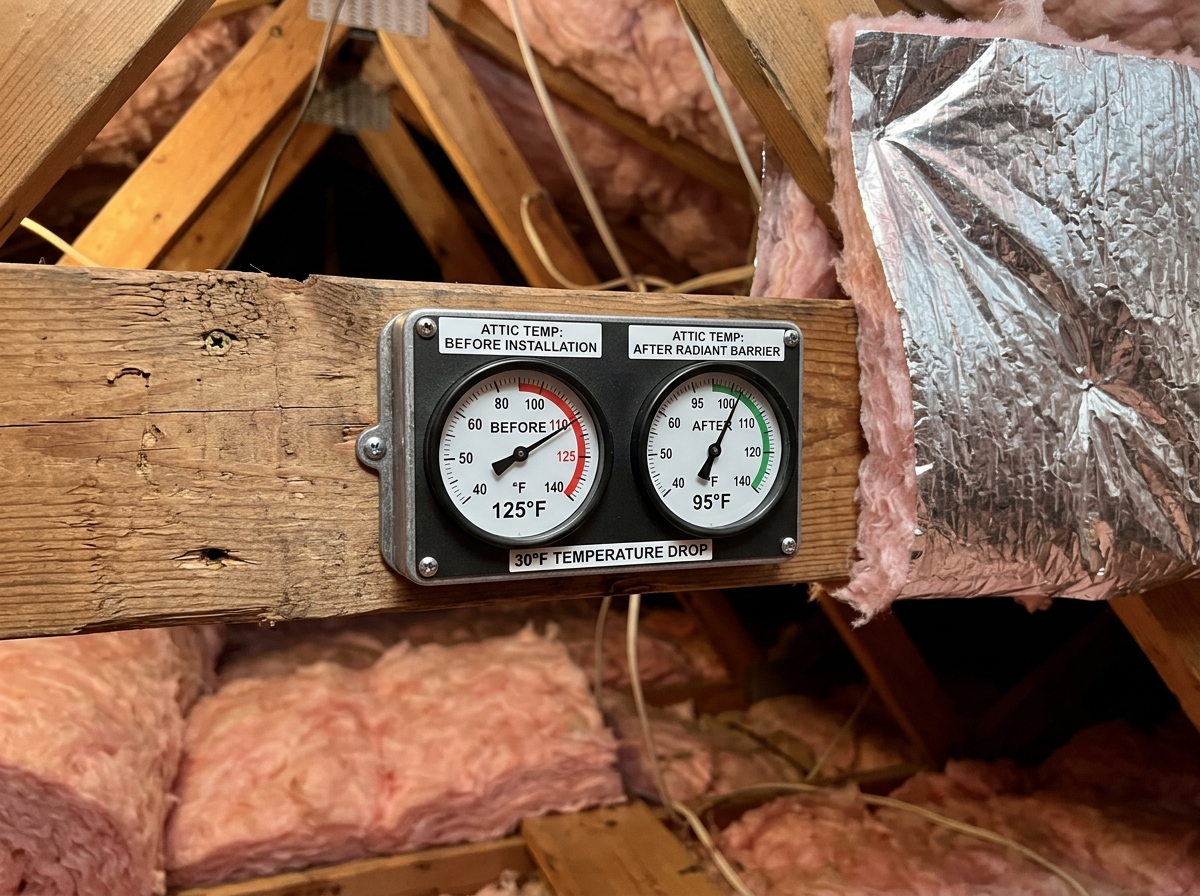
The most immediate benefit we see is a massive drop in attic temperature—often as much as 30 degrees Fahrenheit. This temperature drop does more than just make the attic bearable; it significantly reduces the workload on your HVAC system. If your AC ducts are located in the attic, they are no longer sitting in a 140°F oven. This leads to cooler air coming out of your vents and a longer lifespan for your expensive cooling equipment.
According to reflective insulation trade association guidelines, the effectiveness of these barriers is highest when there is a significant temperature difference between the outside air and the attic. In our experience at ClimaShield Spray Foam, combining a radiant barrier with high-quality mass insulation creates a “total envelope” effect.
| Feature | Radiant Barrier | Mass Insulation (Fiberglass/Spray Foam) |
|---|---|---|
| Primary Function | Reflects radiant heat | Slows conductive heat flow |
| Best Performance | Hot, sunny days | Year-round temperature regulation |
| Material | Aluminum foil/Reflective film | Fibrous or foam material |
| Installation Requirement | Requires an air space | Requires contact with surfaces |
For a deeper dive into how different materials protect your home, check out our an-essential-guide-to-roof-insulation/.
Understanding Radiant Barrier Installation Methods
To make a radiant barrier work, you have to understand the “Golden Rule” of reflective insulation: It must face an air space. If you sandwich foil between two solid objects, it becomes a conductor rather than a reflector, and you lose all the benefits.
There are two primary ways we recommend adding radiant barrier to attic spaces: the rafter method and the floor method. Each has its pros and cons depending on how you use your attic. For more technical details on choosing the right spot, see our guide on whats-the-best-rafter-insulation-your-roof-deserves-the-top-picks/.
Rafter Installation: Maximizing Effectiveness
This is the “gold standard” for most homeowners. In this method, we staple the radiant barrier to the underside of the roof rafters.
- Airflow: This method leaves the entire attic volume cooler. By reflecting heat at the roofline, the air inside the attic stays much closer to the outside temperature.
- Dust Accumulation: Because the foil is vertical or sloped, dust (which can reduce reflectivity over time) doesn’t settle on the surface easily.
- Storage: If you use your attic for storage, this is the only way to go. You keep the floor clear and the items you store won’t bake in the summer heat.
- HVAC Protection: If your furnace or AC air handler is in the attic, stapling to the rafters protects the equipment and the ducts from radiant gain.
Manufacturers like Reflectix provide specific Attic Installation Instructions that emphasize maintaining a 1-2 inch gap between the roof deck and the foil to allow for proper ventilation.
Floor Installation: Considerations for Existing Insulation
If you have a massive attic that is difficult to navigate, or if you don’t use the space for storage, laying the barrier over the floor insulation is an option. However, there are significant caveats.
- Moisture Trapping: In Pennsylvania, we have to be very careful about condensation. If you lay a non-perforated foil over your floor insulation, moisture from the living space can get trapped underneath it, leading to mold or rot in your ceiling joists. Always use a perforated (breathable) radiant barrier for floor applications.
- Dust: Over time, dust will settle on the foil. Research suggests that a heavy layer of dust can reduce the effectiveness of the barrier by 50% or more.
- Installation Ease: This is certainly the faster DIY route. You simply roll the material out over the existing batts or blown-in insulation.
If you choose this route, follow a dedicated Over the Insulation Install guide to ensure you aren’t creating a moisture trap. Also, refer to the Air Space Requirements to ensure the foil isn’t “sandwiched” too tightly.
Key Steps in Radiant Barrier Installation
Ready to get to work? Adding radiant barrier to attic spaces is a manageable DIY project, but it requires patience and the right tools. Because attics are cramped and hot, we recommend working in the early morning before the sun hits the roof.
Tools You’ll Need:
- Heavy-duty staple gun (and thousands of staples)
- Utility knife with extra blades
- Foil tape (specifically designed for radiant barriers—don’t use standard duct tape)
- Straightedge or T-square
- Tape measure
- Headlamp or portable work lights
- Plywood scraps (to create a safe walking platform)
Preparation and Measurement
Before buying material, you need to calculate your square footage. Don’t just measure the floor! Because the roof is sloped, it has more surface area than the floor.
- Measure the flat square footage of your attic floor (Length x Width).
- Apply a pitch multiplier. For a standard roof in Indiana, PA, multiply your floor square footage by 1.2 or 1.3. If you have a very steep roof, use 1.5.
- Add 10% for overlaps. You’ll want to overlap each sheet by at least 2 inches to ensure no heat “leaks” through the gaps.
For professional-grade layouts, consult F2 – Solutions for the Pro for tips on minimizing waste.
Securement and Sealing Techniques
When stapling to rafters, start at the top near the ridge vent but leave a 2-3 inch gap at the very peak. This allows hot air to escape through the ridge vent. Work your way down, stapling every 6 to 12 inches.
- Gable Walls: Don’t forget the vertical end walls of your attic! These can hold a lot of heat. Cover them just like the rafters.
- Obstacles: When you hit a vent pipe or electrical wiring, cut a “Double-T” slit in the foil. Pass the obstacle through and then seal the slit with foil tape.
- Recessed Lights: Never cover “can” lights directly unless they are specifically rated for contact with insulation (IC-rated). Even then, it’s best to maintain a 3-inch clearance to prevent overheating the fixture.
For a look at how this fits into a broader roofing strategy, see our article on above-the-rafters-the-smart-way-to-insulate-your-pitched-roof/.
Common Mistakes and Safety Precautions
We’ve seen many DIY attempts at adding radiant barrier to attic spaces go wrong. The most common error is blocking ventilation. Your attic needs to breathe. If you staple the foil all the way to the edges and block the soffit vents (where air comes in) or the ridge vent (where air goes out), you will trap moisture. This leads to wood rot and mold, which can be a nightmare to remediate.
Safety First:
- Electrical Hazard: Aluminum foil is a fantastic conductor of electricity. If you staple through a wire, you could electrify the entire sheet of foil or cause a fire. Inspect every rafter for “hidden” wires before you fire that staple gun.
- Heat Exhaustion: Attics can reach 140°F+ in the summer. Drink plenty of water and work in 15-minute shifts.
- Protective Gear: Wear a dust mask, safety glasses, and gloves. Even if the foil is clean, the old insulation in your attic likely isn’t.
At ClimaShield Spray Foam, we often recommend attic-spray-foam/ as a more comprehensive solution because it provides an airtight seal and insulation in one step. However, if you are sticking with a radiant barrier, ensure you follow the F1 – Solutions for the Homeowner guide for safe handling.
Frequently Asked Questions about Adding Radiant Barrier to Attic
Do radiant barriers work in cold climates?
Yes, but their primary job is keeping heat out. In a Pennsylvania winter, a radiant barrier can help reflect a small amount of heat back down into the house, but it’s not a substitute for proper R-value insulation. The biggest risk in cold climates is condensation. As warm air rises from your house, it hits the cold foil. If the foil isn’t perforated, that water will sit there. Always look for a product with a high moisture vapor transmission rate, as noted in the N39 – Reflectix Fact Sheet.
How much can I save on my energy bills?
Most homeowners in sunny climates see a 5% to 10% reduction in cooling costs. In particularly hot summers, that can jump to 15%. Because the materials are relatively inexpensive (often $0.20 to $0.70 per square foot), the payback period is usually quite short—often between 3 and 5 years.
Does dust affect the performance of the foil?
It does. A radiant barrier works because its surface is highly reflective. If a thick layer of dust covers that surface, it can no longer reflect radiant energy effectively. This is why we almost always recommend the rafter installation method over the floor method—dust simply doesn’t settle on the underside of rafters like it does on the floor.
Conclusion
Adding radiant barrier to attic spaces is a smart, cost-effective way to take control of your home’s climate. By reflecting the sun’s energy before it ever enters your living space, you can enjoy a cooler home, lower energy bills, and a longer-lasting HVAC system.
While a radiant barrier is a fantastic “secret weapon,” it works best as part of a complete insulation strategy. At ClimaShield Spray Foam, we specialize in creating airtight, energy-efficient environments for homes and businesses throughout Indiana, PA and the surrounding areas. Whether you’re looking for a DIY upgrade or a professional spray foam overhaul that can save you up to 60% on energy bills, we’re here to help.
Ready to make your home the most comfortable place on the block? More info about spray foam services can show you how we take energy efficiency to the next level. Give us a call, and let’s get your attic protected!
