Why Roof Insulation Matters for Your Home’s Efficiency and Comfort
Roof insulation is one of the most effective upgrades you can make to reduce energy costs and improve comfort in your home. Here’s what you need to know:
Quick Answer: What is Roof Insulation?
- Purpose: Prevents heat loss in winter (up to 25% of heat escapes through uninsulated roofs) and heat gain in summer
- Energy Savings: Can reduce heating and cooling requirements by up to 70%
- Cost-Effectiveness: Pays for itself over its 40-year lifetime through lower energy bills
- Types: Options include spray foam, mineral wool, fiberglass, and rigid boards
- Application Areas: Attic floors, rafters, flat roofs, and cathedral ceilings
- Key Benefit: Creates an airtight thermal envelope that stabilizes indoor temperatures year-round
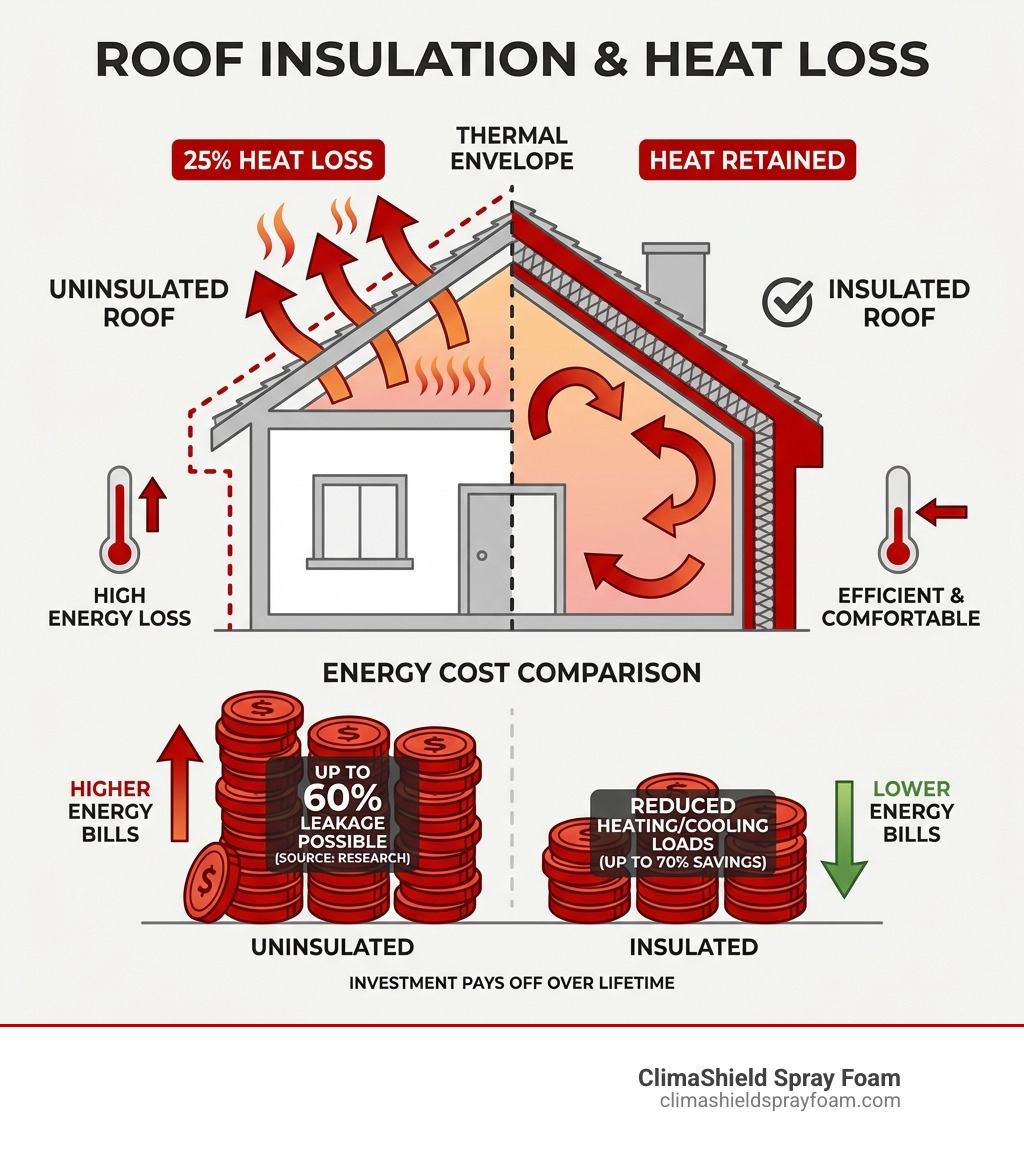
If you’ve noticed high energy bills, drafty rooms, or uncomfortable temperature swings, your roof is likely the culprit. An uninsulated roof allows approximately 25% of your home’s heat to escape in winter, while in summer it lets excessive heat radiate into your living spaces.
The science is straightforward: proper insulation slows heat transfer through conduction, convection, and radiation. Modern solutions like spray foam create an airtight barrier that not only insulates but also prevents moisture infiltration, mold growth, and pest entry—problems that cost homeowners thousands in repairs.
Beyond comfort, roof insulation delivers measurable financial returns. Research shows that effective insulation can slash heating and cooling loads by more than 50%, with some homeowners achieving up to 70% energy savings. The investment typically pays for itself many times over during the insulation’s four-decade lifespan.
I’m Dave Brocious, and I’ve spent 20 years in the coatings industry, including founding ClimaShield Industries, where we specialize in spray foam insulation solutions for residential and commercial properties. My experience has shown me that proper roof insulation is the foundation of an energy-efficient, comfortable home, and I’m here to guide you through everything you need to know to make the right choice for your property.
Why Roof Insulation is Critical for Your Home
When we talk about the “thermal envelope” of your home, we are referring to the physical barrier that separates the conditioned air inside from the unconditioned air outside. In Pennsylvania, where we experience biting winters and humid, sweltering summers, this envelope is under constant pressure. Because heat naturally rises, your roof is the primary site of energy exchange.
Research indicates that an uninsulated property can lose around 25% of its heat through the roof. Some studies even suggest that up to 60% of thermal energy leakage in a building occurs through the roof. By installing high-performance roof insulation, we can effectively “cap” the home, keeping the warmth you pay for inside during the winter.
This isn’t just about warmth, though. It’s about your wallet and the planet. By reducing the load on your HVAC system, you can slash your carbon footprint and significantly lower your monthly energy bills. For many of our customers in Indiana, PA, this translates to a massive improvement in daily comfort—no more wearing three sweaters just to sit in the living room!
Roof and loft insulation advice More info about residential spray foam insulation
Preventing Summer Overheating
We often focus on the cold, but Pennsylvania summers can be brutal. Overheating is a serious health risk. Globally, we’ve seen that uninsulated homes are becoming increasingly dangerous during heatwaves. In fact, statistics show that 50% of existing homes are at risk of overheating under current weather conditions, a figure that could rise to 90% if global temperatures continue to climb.
Effective roof insulation works as a shield. Materials with high thermal mass and low conductivity prevent the sun’s radiant energy from baking your attic and seeping into your bedrooms. This reduces the need for constant air conditioning, saving you money and preventing the “oven effect” upstairs.
Research on UK home overheating risks
Long-term Financial Benefits
Think of roof insulation as a 40-year investment. Unlike a new car that depreciates the moment you drive it off the lot, insulation pays for itself many times over. Because it reduces heating and cooling requirements by up to 70%, the payback period is remarkably short.
Furthermore, a well-insulated home has a higher property value. Savvy buyers in the Pennsylvania real estate market look for energy-efficient features that promise lower future utility costs. When we install spray foam, we aren’t just adding a fluffy layer; we are adding a durable, long-term asset to your home’s infrastructure.
Best spray foam insulation for home
How Spray Foam Insulation Regulates Thermal Transfer
To understand why we believe spray foam is the gold standard for roof insulation, we need to look at the three ways heat moves:
- Conduction: Heat traveling through solid materials (like your roof rafters).
- Convection: Heat traveling through air currents (drafts).
- Radiation: Heat traveling in waves from the sun.
Standard insulation materials, like fiberglass batts, primarily handle conduction. However, they are “leaky” when it comes to convection. Air can pass right through them. Spray foam is unique because it expands to fill every nook and cranny, creating a total air seal. This stops convection in its tracks.
| Insulation Type | Typical Lambda Value (W/mK) | Density (kg/m3) | Air Sealing Capability |
|---|---|---|---|
| Spray Foam (Closed-Cell) | 0.020 – 0.025 | 30 – 45 | Excellent (Total Seal) |
| Mineral Wool | 0.035 – 0.040 | 30 – 100 | Poor (Air Permeable) |
| Fiberglass Batts | 0.032 – 0.044 | 10 – 20 | Poor (Air Permeable) |
| Wood Fiber | 0.036 – 0.042 | 40 – 160 | Moderate |
A lower lambda value means the material is a better insulator. As you can see, spray foam outperforms traditional materials by a wide margin.
Where to Insulate in a Home | Department of Energy
The Role of Reflective Surfaces in Roof Insulation
In some specialized roof insulation setups, we use reflective surfaces or “radiant barriers.” These are highly reflective materials (like aluminum foil) that re-emit radiant heat rather than absorbing it. They are particularly effective for downward heat flow in the summer.
While radiant barriers have no inherent R-value on their own, they work beautifully when combined with a low-emissivity (low-e) air gap. By reflecting infrared radiation, they keep your attic significantly cooler, which is a great secondary defense against the Pennsylvania sun.
Moisture Management and Vapour Permeability
One of the biggest fears homeowners have is trapped moisture. We use two main approaches:
- Vapour Open: Materials that allow moisture to move through them (breathable).
- Vapour Closed: Materials that act as a barrier to moisture.
In our region, managing the “dew point”—the temperature at which air can no longer hold its water vapor—is critical. If the dew point occurs inside your wooden rafters, you get rot. Closed-cell spray foam acts as its own vapour barrier, preventing moist indoor air from ever reaching the cold roof deck. This effectively eliminates the risk of condensation and the subsequent mold growth that plagues many unconditioned attics.
From Fiberglass to Foam: Exploring Residential Insulation Types
Comparing Different Types of Spray Foam Roof Insulation
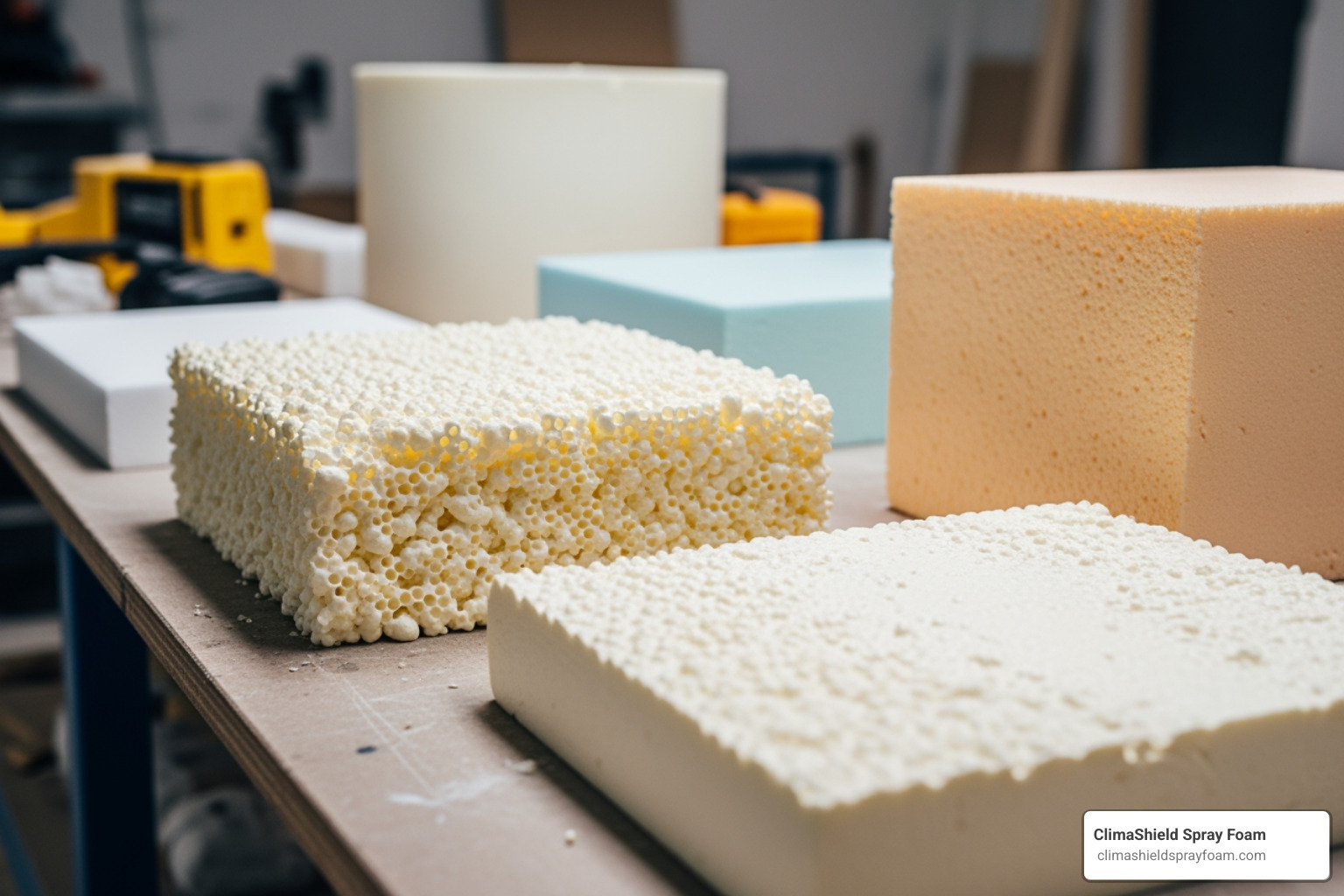
When we help you choose your roof insulation, we look at two primary types of spray foam: Open-Cell and Closed-Cell.
- Open-Cell Spray Foam: This is a lighter, more flexible foam. It is excellent for soundproofing and is generally more cost-effective. Because it stays flexible, it can move with your home as it settles.
- Closed-Cell Spray Foam: This is much denser. It provides the highest R-value per inch (about R-6.5 to R-7) and actually adds structural strength to your roof. It is also waterproof, making it an incredible choice for the rainy, snowy climate of Western Pennsylvania.
Which Foam is for You: Exploring Insulation Types, Perks, and Prices
High-Performance Spray Foam for Roof Insulation
For those looking to convert an attic into a living space, spray foam is a game-changer. Traditional insulation requires bulky layers that eat up your headroom. Because spray foam has such a high R-value, we can achieve the required thermal performance with a much thinner layer.
By applying foam directly between the rafters, we move the thermal envelope to the roofline. This creates a “conditioned attic,” meaning your attic stays within a few degrees of your living room temperature. This is perfect for “room-in-roof” conversions or simply protecting your stored holiday decorations from extreme heat.
Sustainable and Advanced Spray Foam Options
Sustainability isn’t just about saving energy; it’s about the materials we use. We prioritize products that have low embodied carbon. Furthermore, because our spray foam lasts for the life of the building (40+ years), you aren’t replacing it every decade like you might with settling cellulose or sagging fiberglass.
Acoustic performance is another major win. If you live near a busy road in Indiana, PA, or hate the sound of heavy rain on the shingles, spray foam’s density provides a significant reduction in noise transfer, making your home a quiet sanctuary.
Spray foam insulation solutions
Choosing the Right Strategy: Pitched vs. Flat Roofs
The shape of your roof dictates our strategy. Most Pennsylvania homes have pitched roofs, but many commercial buildings and modern additions feature flat roofs.
Pitched Roof Solutions for Spray Foam Insulation
With a pitched roof, we have two main choices:
- Cold Roof (Joist Level): We insulate the “floor” of the attic. This keeps the house warm but the attic stays cold. This is the cheapest method but makes the attic unusable for living space.
- Warm Roof (Rafter Level): We apply spray foam directly to the underside of the roof deck. This is our preferred method because it protects your HVAC ducts (if they are in the attic) and prevents the “thermal bridging” that happens when heat escapes through the wooden rafters themselves.
Above the Rafters: The Smart Way to Insulate Your Pitched Roof
Flat Roof Spray Foam Insulation Approaches
Flat roofs are notoriously difficult to insulate because they are prone to water pooling.
- Warm Deck: Insulation is placed above the roof deck, under the waterproof membrane. This is highly recommended for our climate.
- Inverted Roof: The insulation sits on top of the waterproof membrane, protecting it from UV rays and temperature swings.
Our spray foam solutions provide a seamless, airtight layer that is perfect for flat roofs, ensuring there are no joints or seams where water can eventually find its way in.
Residential Spray Foam Insulation Western PA
Installation Best Practices and Avoiding Pitfalls
Even the best roof insulation will fail if installed poorly. We’ve seen many DIY disasters where homeowners blocked their “eaves ventilation.” In a traditional vented attic, you must have airflow. If you block those vents with insulation, you’ll end up with a damp, moldy mess.
Another common pitfall is “thermal bridging.” This occurs when insulation is placed between rafters but not over them. The wood itself acts as a bridge, allowing heat to bypass the insulation. Our spray foam helps mitigate this by providing a more continuous barrier.
Find an NIA approved installer
Ensuring Proper Ventilation
If you choose a “cold roof” strategy, ventilation is your best friend. Air needs to flow from the soffits (the underside of your roof overhang) up to the ridge (the peak). This airflow carries away moisture. If we are installing a “warm roof” with spray foam, we often seal the attic entirely, turning it into a “unvented conditioned attic.” This is a sophisticated engineering approach that requires professional expertise to ensure the moisture balance is perfect.
Professional vs. DIY Installation
We know the “Do It Yourself” spirit is strong in Pennsylvania, but roof insulation—especially spray foam—is not a weekend project.
- Safety: Spraying foam requires specialized respirators and protective gear.
- Equipment: Professional rigs ensure the two chemical components are mixed at the exact temperature and pressure required for a stable, safe product.
- Regulations: We ensure your project meets local Pennsylvania building codes and R-value requirements.
Frequently Asked Questions about Roof Insulation
How much money can I save with roof insulation?
Most of our customers see a reduction in their energy bills of up to 60%. Given that heating and cooling account for 50-70% of energy use in the average American home, the savings are substantial.
What is the difference between a warm roof and a cold roof?
A cold roof has insulation on the attic floor, keeping the heat in the rooms below but leaving the attic at the mercy of the outside temperature. A warm roof has insulation at the rafter level, making the attic part of the conditioned space of the home.
Does roof insulation help with soundproofing?
Absolutely. While all insulation helps, the density of spray foam—especially open-cell—is fantastic at absorbing sound waves, reducing noise from planes, traffic, and weather.
Conclusion
Upgrading your roof insulation is the single most effective way to take control of your home’s environment. By creating an airtight, high-R-value seal, you aren’t just saving money; you’re protecting your home’s structure from moisture, mold, and pests.
At ClimaShield Spray Foam, we take pride in helping our neighbors in Indiana, PA, and across Pennsylvania achieve energy independence. Our durable, waterproof, and airtight solutions can save you up to 60% on your energy bills while providing a lifetime of comfort. Don’t let your hard-earned money vanish through your roof.
Discover the benefits of spray foam for your project
