
Why Truck Van Insulation is Essential for Comfort and Efficiency
Investing in truck van insulation is one of the most critical decisions you’ll make for any mobile space. Whether you’re building a cozy camper, optimizing a work truck, or maintaining temperature-sensitive cargo, proper insulation delivers huge benefits.
Here’s why effective insulation matters:
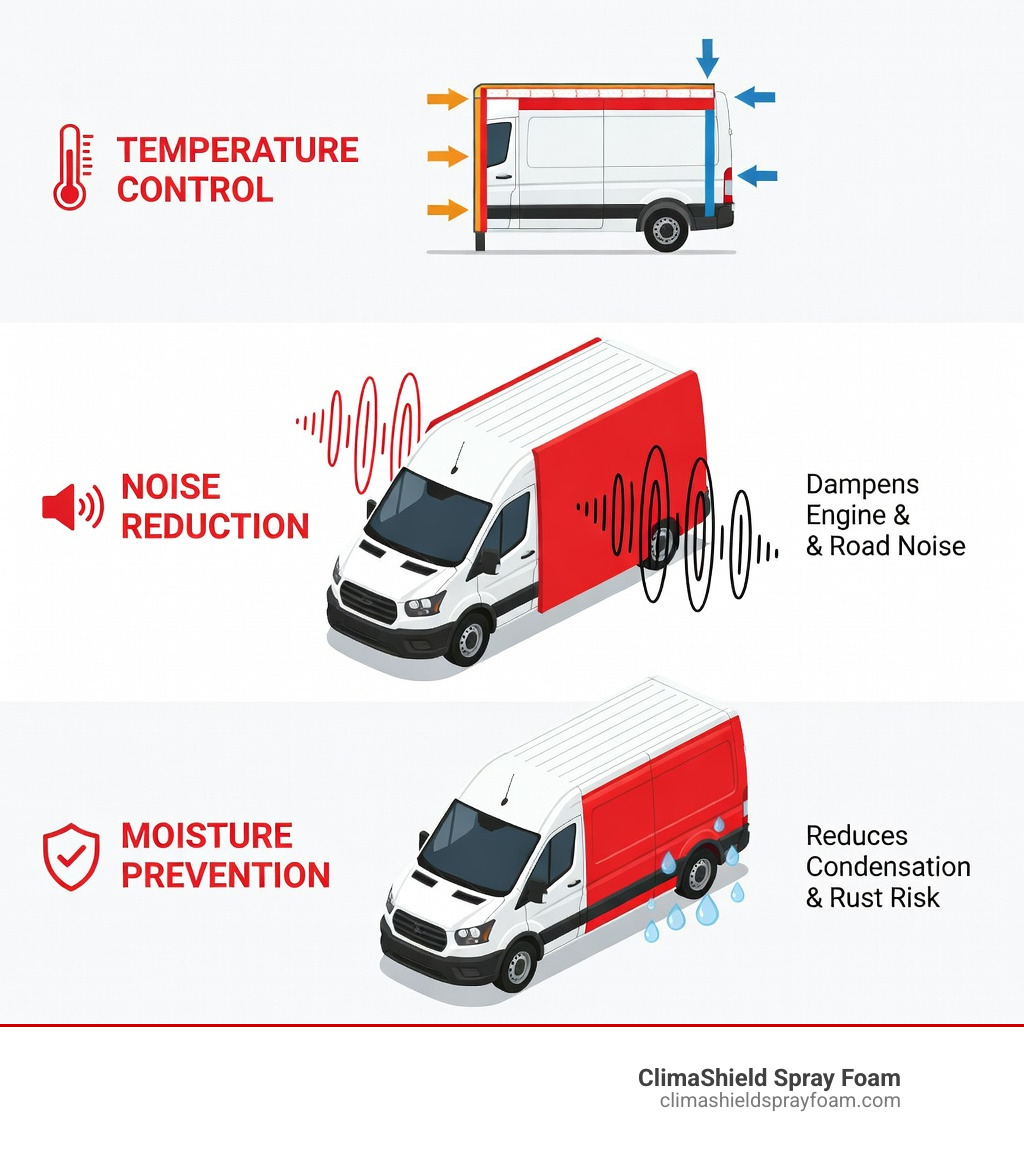
- Comfort: Maintains stable interior temperatures, keeping you warm in winter and cool in summer.
- Condensation Control: Prevents moisture buildup, which can lead to mold, rust, and unpleasant odors.
- Noise Reduction: Significantly cuts down on road noise, engine sounds, and external disturbances.
- Energy Efficiency: Reduces the need for constant heating or cooling, saving fuel and energy costs.
- Cargo Protection: Crucial for refrigerated vehicles, ensuring products like food and pharmaceuticals stay at precise temperatures.
A van is a steel box. Without insulation, its interior temperature quickly matches the outside world. This means scorching heat in summer, freezing cold in winter, and rapid heat loss once your heater or AC turns off. Plus, the constant temperature swings cause condensation on cold metal surfaces, creating a damp, unhealthy environment.
Effective insulation solves these problems. It creates a thermal barrier that slows heat transfer, manages moisture, and dampens sound. This transforms your vehicle into a comfortable, quiet, and efficient space, no matter the weather.
As Dave Brocious, with 20 years in the coatings industry and founder of ClimaShield Industries, I bring deep expertise in specialty coatings, including spray foam insulation. This background has given me experience with the critical role of effective truck van insulation for both comfort and efficiency.
The Science of Heat Transfer in Truck Van Insulation
To choose the right truck van insulation, we first need to understand how heat actually moves through a vehicle. Heat is like a persistent guest; it always finds a way in (or out) unless you block every path. In a van, heat transfer occurs through three primary mechanisms: conduction, convection, and radiation.
Conduction: The Direct Contact Path
Conduction is heat moving through solid materials. Since vans are made of steel—a fantastic conductor—this is your biggest enemy. When the sun beats down on your roof, the metal vibrates with energy and passes that heat directly to the interior air. Insulation acts as a “speed bump” for this energy. We measure a material’s resistance to this flow using the R-value. According to ASTM C518 R-valuedenotes the capacity of an insulating material to resist heat flow. The higher the R-value, the greater the insulating power. It is normally noted (for example) “6.5per inch“, which means applying one inch thickness of the material will provide 6.5 R-value; applying two inches will provide 13…, the higher the number, the better the material resists heat flux.
Convection and Air Loops
Convection is heat moving through liquids or gases (like air). In a van, this often happens via “air loops.” Most vans have hollow pillars and ribs. If these aren’t filled, warm air inside the van rises, hits the cold metal roof, cools down, and sinks back down the pillars. This creates a constant cycle of cooling that drains your heater’s efforts. Filling these cavities is essential to stop these convective loops.
Radiation and Emissivity
Radiation is heat transferred via infrared waves. Think of the heat you feel from a campfire or the sun. In a van, the metal shell radiates heat inward. Materials with low emissivity, like aluminum foil, reflect this radiant energy. However, for a radiant barrier like Reflectix to work, it must have an air gap. Without that gap, the heat simply conducts through the foil, rendering it useless.
The Problem of Thermal Bridging
Thermal bridging occurs when a highly conductive material (metal) bypasses your insulation. Even if your walls are perfectly insulated, if you screw a wooden or 80/20 aluminum frame directly to the metal ribs, heat will “bridge” through those screws and frames. This is why the 80/20 aluminum extrusions inside your van can feel ice-cold in the winter—they are directly connected to the outside shell.
Top Materials for High-Performance Van Conversions
Choosing the right material depends on your budget, climate, and whether you’re doing it yourself or hiring professionals. Here is a comparison of the most popular options for truck van insulation.
| Material | R-Value per Inch | Moisture Resistance | Best For |
|---|---|---|---|
| Closed-Cell Spray Foam | 6.5 – 7.0 | Excellent (Airtight) | Max performance, irregular spaces |
| Polyiso (Rigid Board) | 5.6 – 6.0* | Good | Floors and flat ceilings |
| XPS (Rigid Board) | 5.0 | High | Sub-floors (compression resistant) |
| 3M Thinsulate | 3.3 – 5.2 | High (Hydrophobic) | Ease of install, acoustics |
| Havelock Wool | 3.6 | Excellent | Natural moisture management |
| Reflectix | ~1.0 (Conductive) | High | Radiant barrier (needs air gap) |
*Note: Polyiso performance can drop in temperatures below 15°F.
Before you decide, it’s worth asking: Which Foam is for You? Exploring Insulation Types, Perks, and Prices to ensure the material matches your specific Pennsylvania climate needs.
Maximizing R-Value with Spray Foam Truck Van Insulation
For those seeking the absolute best performance, closed-cell spray foam is the gold standard. At ClimaShield Spray Foam, we specialize in providing Cargo Van Insulation that creates a seamless, airtight seal.
The benefits of spray foam for truck van insulation are unmatched:
- Airtight Seal: It expands into every nook and cranny, eliminating air loops and convective heat loss.
- Structural Reinforcement: Once cured, closed-cell foam is rigid, which helps dampen panel vibration and adds a layer of structural integrity to the van walls.
- Moisture Barrier: It acts as its own vapor barrier. Since it adheres directly to the metal, there is no gap where condensation can form.
- Longevity: It won’t settle over time due to road vibrations, unlike some batt or loose-fill materials.
However, professional application is key. Applying spray foam too thick (over 1/2″ at a time) can lead to “super-heating” during the chemical reaction, which can actually cause bulging/warping of the metal of your van. Our team in Indiana, PA, ensures a precise application that protects your vehicle’s exterior while maximizing interior comfort.
Rigid Board and Batt Options for Truck Van Insulation
If you are looking for DIY-friendly options, rigid boards and batts are popular choices.
- XPS (Extruded Polystyrene): Known for its blue or green color, XPS is great for floors because it has high compression resistance. It provides a solid foundation for your subfloor while maintaining an R-value of 5.0 per inch.
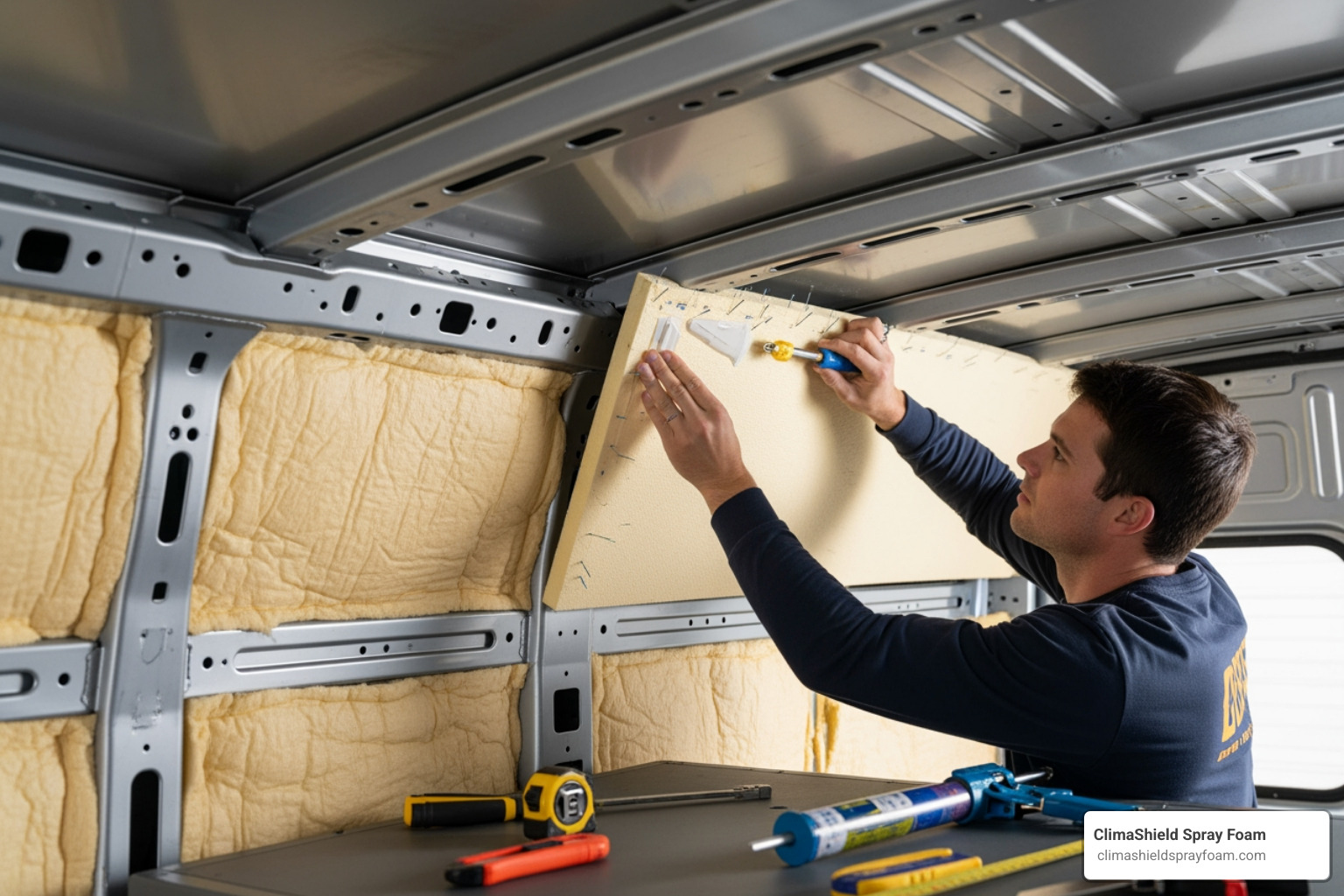
- Polyiso (Polyisocyanurate): This is often the go-to for Home Depot shoppers. It has a higher R-value than XPS at moderate temperatures but can struggle in extreme Pennsylvania winters. We recommend using Polyiso board (PIR) for ceilings and walls where it can be fixed with insulation stick pins.
- 3M Thinsulate: This is a favorite in the vanlife community. It’s incredibly easy to install—just cut it with scissors and use 3M 90 spray adhesive. It’s hydrophobic (doesn’t absorb water) and provides excellent acoustic dampening. You can Buy SM600L Thinsulate for a high-quality, non-toxic solution.
Managing Moisture, Condensation, and Thermal Bridges
Moisture is the silent killer of vans. When warm, moist air from your breath or cooking hits the cold metal shell, it reaches its “dew point” and turns into liquid water. This leads to rust and mold.
The Vapor Barrier Debate
In truck van insulation, the vapor barrier is a hot topic. A vapor barrier is a material (like plastic sheeting or Reflectix) intended to stop moisture from reaching the cold metal. However, many experts argue that vapour barriers can be super effective only if they are 100% airtight. In a van that flexes and vibrates, a perfect seal is nearly impossible. If moisture gets behind the barrier, it becomes trapped, leading to water gets trapped in the insulation and can’t escape.
A better approach for many is using “breathable” or hydrophobic insulation like Thinsulate or Havelock Wool, which allows moisture to move and dry out. Alternatively, closed-cell spray foam is the only way to truly eliminate the gap where condensation occurs.
Thermal Breaks
To stop thermal bridging, you must interrupt the metal-to-metal path. We suggest using a “thermal break” over the metal ribs before installing your wall panels. A thin layer of Low-E foam or even strips of cork can work. This prevents the cold from the ribs from transferring directly to your living space.
Avoid Insulating Paint
You might see products like “insulating paint” claiming to replace traditional insulation. However, according to this Scientific American article, the EPA does not recommend these for their insulating qualities. While they might help slightly with solar heat gain on a roof, they offer virtually zero R-value for cold-weather protection.
Strategic Installation: From Floor to Ceiling
A successful truck van insulation project requires a systematic approach. Here is how we recommend tackling each area:
1. The Floor
The floor is often overlooked, but it’s a massive source of cold.
- Fill the corrugations (the “valleys” in the metal) with strips of XPS foam board.
- Lay a full sheet of 1/2″ or 1″ rigid foam over the top.
- Install your plywood subfloor. This creates a solid, warm foundation.
2. Walls and Ceiling
These areas have the largest surface exposure. Use a high R-value material here. If you’re going the DIY route, 3M Thinsulate is excellent for the walls because it handles the curves of the van easily. For the ceiling, Polyiso board offers great heat resistance against the sun.
3. Doors and Wheel Arches
Don’t forget the rear and sliding doors! These are often hollow and act like chimneys for cold air. Stuff them with Thinsulate or Hempitecture HempWool. For wheel arches, which are a major source of road noise, we recommend using Sound deadening mats first, followed by a boxed-in insulation layer.
4. Windows and Cab Area
Glass is a terrible insulator. VanMadeGear Insulated Window Covers are essential for keeping heat in at night. In the cab area, a heavy curtain or tapestries hung with screw hooks can block the massive heat loss through the windshield.
For a deeper dive into the transition from traditional materials to modern solutions, check out From Fiberglass to Foam: Exploring Residential Insulation Types.
Frequently Asked Questions about Van Insulation
Is a vapor barrier necessary in a camper van?
As discussed, it’s highly debated. In most DIY scenarios, a vapor barrier is more likely to trap moisture than stop it. We recommend focusing on air sealing and ventilation. Using a dehumidifier and a high-quality roof fan is often more effective at managing moisture than trying to create a perfect plastic seal in a moving vehicle.
How does insulation affect refrigerated vehicle regulations?
For commercial vehicles, insulation isn’t just about comfort—it’s about compliance. The ATP (Agreement on the International Carriage of Perishable Foodstuffs) sets standards for the “K-coefficient,” which measures the overall thermal efficiency of the refrigerated body. Professional Refrigerated van insulation must be thick enough (usually 2-4 inches of high-density foam) to maintain temperatures even in summer heat, ensuring food safety and HACCP compliance.
What is the best insulation for extreme cold climates?
If you’re spending winters in the Pennsylvania mountains, you need a layered strategy. Combining a reflective layer (like Low-E) for thermal breaks with a thick bulk insulation like spray foam or Thinsulate is best. Polyiso performance starts to deteriorate badly below 15°C (59°F), so if you use it, ensure your van’s interior stays heated to keep the board within its optimal range.
Conclusion
At ClimaShield Spray Foam, we know that the right truck van insulation is an investment in your vehicle’s future. Whether you’re in Indiana, PA, or traveling across the country, a well-insulated van provides a level of comfort and acoustic peace that you just can’t get with a bare metal shell.
While DIY options like Thinsulate and rigid boards are great for many, professional spray foam offers the ultimate airtight, mold-resistant, and high-R-value solution for those who want the best performance possible. The long-term ROI in fuel savings, equipment longevity, and sheer comfort makes it a clear winner for serious builders.
Ready to stop guessing and start building a van that stays comfortable in real weather? Start your energy-efficient vehicle conversion today by consulting with our experts. Let us help you turn that “steel box” into a high-performance mobile environment. For more information on our services, explore our Residential Insulation or Commercial Insulation pages to see how our expertise translates to every project we touch.
