Your Basement Is Losing Money — Here’s What to Do About It
Basement spray foam insulation is one of the most effective ways to stop moisture, seal air leaks, and cut energy bills in your home. Here’s a quick answer to what most homeowners want to know:
How to insulate basement walls with spray foam:
- Fix any active water leaks and drainage problems first
- Remove old insulation and prep the surface
- Apply closed-cell spray foam to walls, rim joists, and sill plates
- Cover foam with a code-required thermal barrier (typically drywall)
- Check local codes for required R-value (usually R-10 to R-15 minimum)
Basements are notoriously hard to get right. They run cooler than the rest of the house, collect moisture from the surrounding soil, and leak air through rim joists, framing gaps, and cracks in the foundation. That combination means higher energy bills, cold floors, musty smells, and — over time — mold.
The good news is that most of those problems share one solution.
Spray foam addresses moisture, air leakage, and thermal performance all at once — something traditional insulation materials like fiberglass batts simply can’t do. According to industry data, properly installed spray foam can reduce basement moisture issues by up to 90% and cut energy costs by as much as 50%.
I’m Dave Brocious, founder of ClimaShield Industries, with 20 years of experience in specialty coatings and spray foam insulation — including hundreds of basement spray foam projects for homeowners across the region. I’ll walk you through exactly what you need to know to get this done right.
Basement spray foam word roundup:
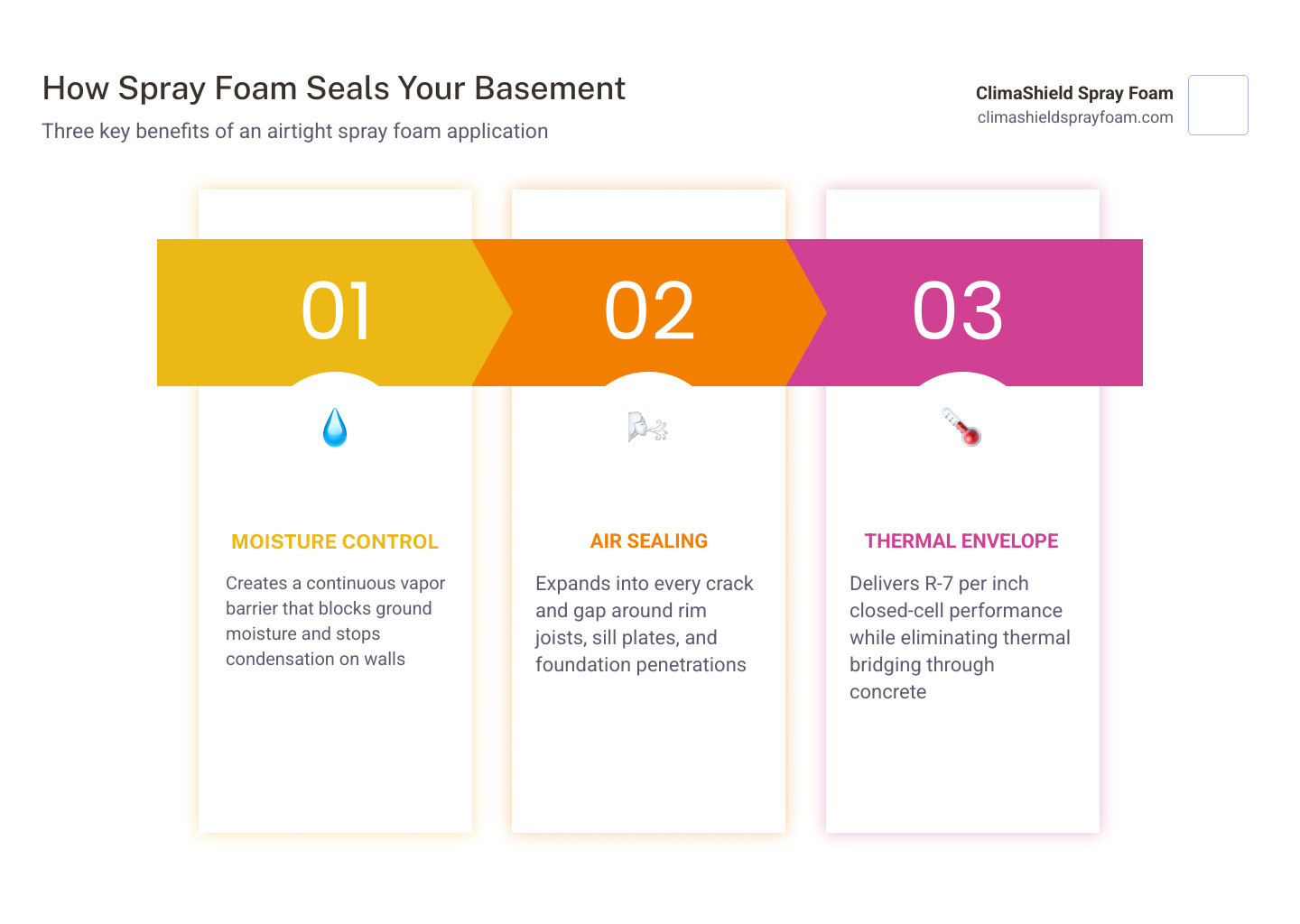
Why Basement Spray Foam is the Ultimate Moisture Solution
If you’ve ever walked into your basement and felt that “damp blanket” of air hitting your face, you know exactly why moisture control is our top priority. In Indiana, PA, and throughout Western Pennsylvania, our soil holds a lot of water, and that water is constantly trying to find a way into your home.
Traditional insulation like fiberglass acts like a giant sponge. It sits against the cold concrete, traps condensation, and eventually sags under the weight of the water it absorbs. This creates the perfect breeding ground for mold. Basement spray foam, specifically the closed-cell variety, changes the game because it doesn’t just insulate; it creates a continuous air and vapor barrier.
By Air Sealing Basement areas, we stop the “stack effect.” This is when warm air escapes through your attic, pulling cold, damp air in through the basement rim joists and cracks. When we seal those gaps, we stabilize the pressure in your home.
Here is how spray foam stacks up against the old-school methods:
| Feature | Closed-Cell Spray Foam | Fiberglass Batts | Rigid Foam Board |
|---|---|---|---|
| R-Value per Inch | 6.5 – 7.0 | 2.5 – 3.2 | 3.6 – 5.0 |
| Air Sealing | Excellent (Built-in) | None | Moderate (if taped) |
| Moisture Resistance | Waterproof/Vapor Barrier | Absorbs water | High |
| Pest Resistance | High (No nesting) | Low (Mice love it) | Moderate |
| Lifespan | 50+ Years | 10-15 Years | 20-30 Years |
Beyond just keeping things dry, spray foam adds structural strength to your walls. Because it bonds directly to the substrate, it acts like a structural glue, reinforcing the rim joists and foundation walls. This is a key reason why Wall, Ceiling, Basement Insulation – Why Spray Foam Insulation is becoming the standard for modern energy-efficient homes.
Choosing the Right Type: Open-Cell vs. Closed-Cell
One of the most common questions we get at ClimaShield is: “Which foam should I use?” In a basement environment, the choice usually comes down to how you plan to use the space and what your moisture levels look like.
The concept of “vapor drive” is crucial here. Moisture naturally wants to move from wet areas to dry areas. In a basement, that usually means from the damp earth outside, through your concrete walls, and into your living space. Choosing the wrong foam can lead to hidden condensation issues.
We often discuss the Basement Vapor Barrier Wall strategy with our clients to ensure the home’s “envelope” is protected from this pressure.
Closed-Cell Basement Spray Foam
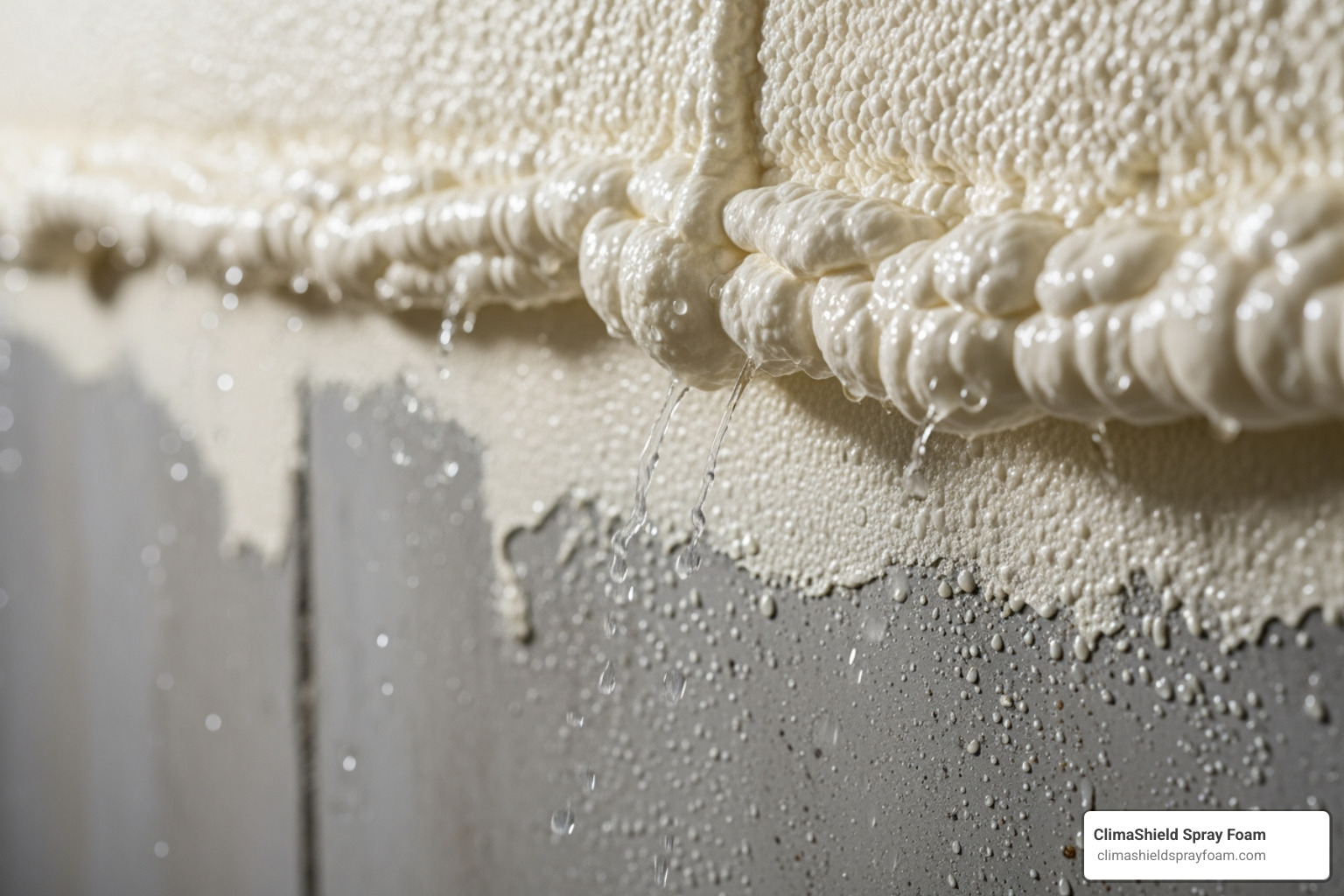
For most Pennsylvania basements, closed-cell is our “gold standard.” It is incredibly dense and contains cells that are completely closed off from one another. This makes it a Class II vapor retarder at just 1.5 inches of thickness.
- High R-Value: At R-7 per inch, you get maximum insulation in a very thin profile. This is perfect if you don’t want to lose precious square footage by building out thick 2×6 walls.
- Flood Resistance: If your basement ever takes on water due to a pump failure, closed-cell foam won’t be ruined. You can simply wash it off and dry the area out.
- Radon Barrier: When applied to the floor or the base of the walls, it can even help mitigate radon gas by sealing off the pathways the gas uses to enter.
If you are ready to stop the drafts and start saving, you can Start your basement transformation today with a professional closed-cell application.
Open-Cell Basement Spray Foam
Open-cell foam is lighter, more flexible, and significantly less expensive than closed-cell. However, it is vapor-permeable, meaning it allows moisture to pass through it.
- Sound Dampening: If you’re building a home theater or a gym in your basement, open-cell is fantastic at absorbing sound.
- Leak Visibility: Some homeowners prefer open-cell because if a foundation crack starts leaking, you’ll see the wet spot on the foam immediately. Closed-cell might hide a small leak for years.
- Cost-Effective: It expands much more than closed-cell, so it takes less material to fill a large cavity.
However, we generally advise against open-cell on exterior foundation walls below grade unless a separate vapor barrier is meticulously installed.
Step-by-Step: How to Insulate Basement Walls Properly
Insulating a basement isn’t as simple as just “pointing and spraying.” It requires a systematic approach to ensure the foam adheres properly and stays effective for the life of the home.
Preparation and Moisture Management
Before we even bring the hoses into your home, we have to look at the “bulk water” situation. Spray foam is an amazing insulator, but it is not a fix for a foundation that is actively flooding.
- Exterior Grading: Ensure the ground outside slopes away from your foundation at a 5% grade for at least the first 10 feet.
- Gutter Check: Your downspouts should discharge water at least 6 to 10 feet away from the house.
- Substrate Testing: We check the moisture content of the concrete. It must be below 19% for the foam to bond. If you have a brand-new foundation, it must cure for at least 28 days before we apply foam.
- Surface Cleaning: We remove old fiberglass, dust, and any peeling paint. Foam needs a clean surface to “bite” onto.
For homeowners in our neck of the woods, we emphasize that you should Stop the Dampness with Indiana Moisture Control Insulation before finishing your walls. Following the Spray Foam Interior Insulation for Existing Foundation Walls | Building America Solution Center guidelines ensures that we manage capillary suction — the way water can “wick” up through concrete — before we seal everything up.
Our team specialized in Residential Spray Foam Insulation Western PA L3 can help identify these potential trouble spots during your initial consultation.
The Application Process
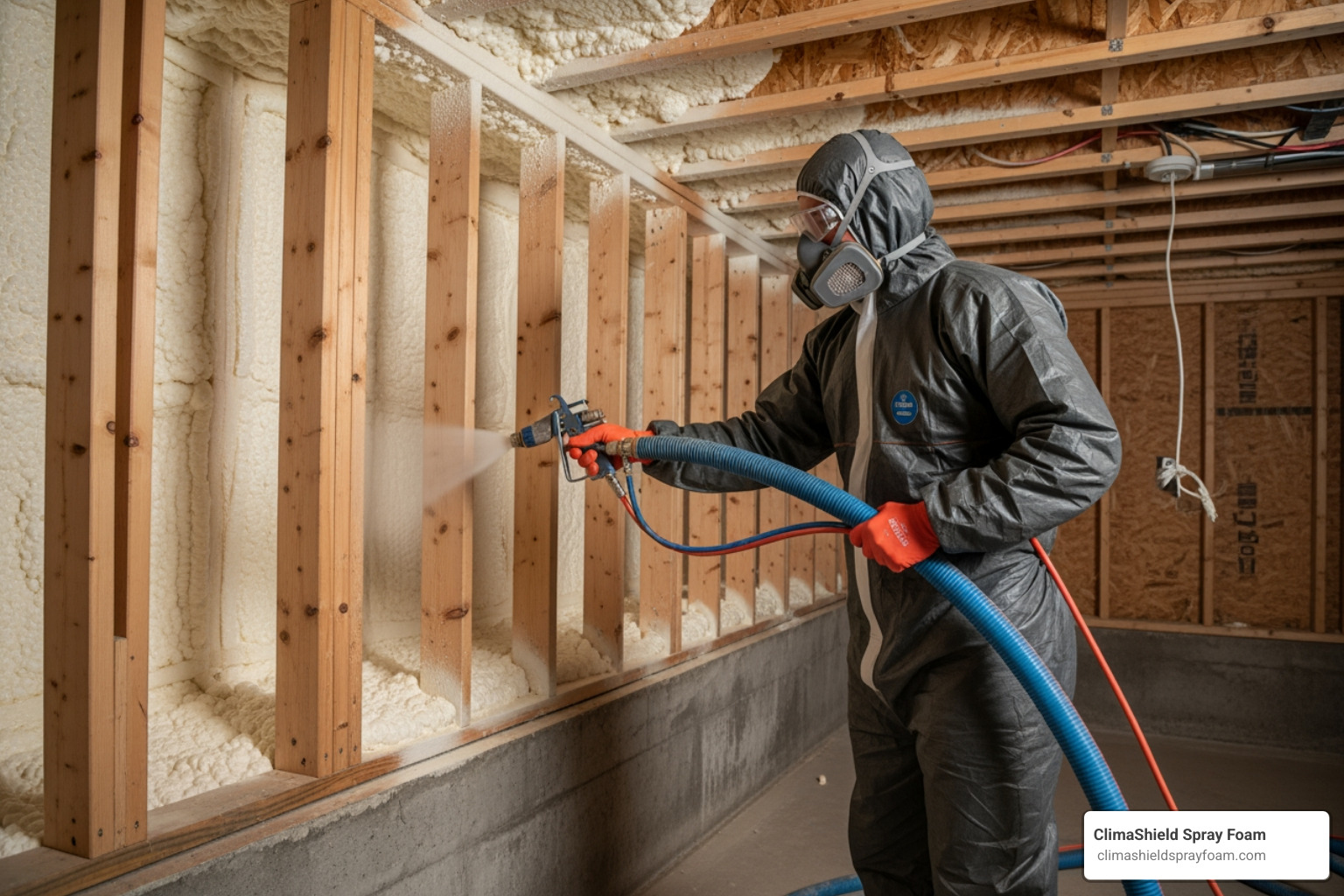
Once the prep is done, the magic happens. A standard basement project usually takes us between 4 to 6 hours.
- The Rim Joists: We start here. The rim joist (where your floor joists meet the foundation) is one of the top three air leakage points in any home. We seal these tight to stop the “cold floor” syndrome in the rooms above.
- The Sill Plate: This is where the wood framing sits on the concrete. We encapsulate this area to prevent air from whistling through the gap.
- Wall Coverage: We spray the foam in “lifts” or layers. For closed-cell, we typically aim for 2 to 3 inches to meet local R-value requirements.
- Concrete Blocks: If you have hollow-core blocks, we can sometimes use injection foam to fill the voids, stopping air movement inside the walls themselves.
- Curing: The foam is liquid for only a few seconds before it expands and solidifies. It’s usually fully cured and safe to be around within 24 hours.
Cost, Codes, and Contractor Selection in 2026
As we move through 2026, the technology behind spray foam has become more efficient, but material costs are still a significant factor. It’s important to view this as an investment in your home’s infrastructure rather than just another “renovation cost.”
Budgeting for Basement Spray Foam
Most homeowners want to know: “What’s the damage?” For a full basement in the Pennsylvania area, costs typically range from $4,700 to $9,700.
Several factors influence this price:
- Square Footage: The larger the basement, the more material we use.
- Foam Type: Closed-cell costs more than open-cell due to the density of the chemicals.
- Thickness: Going from 2 inches (R-14) to 3 inches (R-21) will increase the material cost by about 30-40%.
- Obstructions: A basement full of pipes, wires, and HVAC ducts takes longer to spray and requires more masking.
The good news? You can often recoup these costs through energy savings. A home with a properly insulated basement can see annual energy savings of $200 to $400. Plus, many local utility companies in Western PA offer rebates ranging from $50 to $1,100 for air sealing and insulation upgrades.
Check out this guide on How Much Does Basement Spray Foam Insulation Cost In … for a deeper dive into the numbers. And remember, Hiring Basement Spray Foam Contractors Without the Headache means choosing a team that provides transparent, all-in pricing from the start.
Building Codes and Safety Requirements
You can’t just leave spray foam exposed and call it a day. Building codes are very specific about how foam must be handled.
- Thermal Barriers: Because spray foam is a plastic-based product, it is combustible. The International Residential Code (IRC) requires it to be covered by a 15-minute thermal barrier — usually 1/2-inch drywall.
- Ignition Barriers: In crawlspaces or attics where there is no living space, you might only need an ignition barrier (a special fire-rated paint) instead of drywall.
- Permits: Most municipalities in Pennsylvania require a permit for basement finishing. We ensure our work meets or exceeds the 2026 local energy codes.
- VOCs: During application, the foam releases fumes. We use high-powered ventilation fans to clear the air, and we ask that homeowners and pets stay out of the house for 24 hours to ensure all off-gassing is complete.
Frequently Asked Questions about Basement Spray Foam
Is basement spray foam safe for indoor air quality?
Yes, once it’s cured! While the chemicals are being mixed and sprayed, you definitely don’t want to breathe them in. However, after the 24-hour curing period, the foam is inert and non-toxic. In fact, because it acts as an air seal, it often improves indoor air quality by preventing outdoor pollutants, allergens, and mold spores from entering through the basement.
How long does spray foam insulation last in a basement?
Essentially, it lasts for the life of the house. Unlike fiberglass, which can settle, or cellulose, which can rot, spray foam is a durable plastic. It doesn’t sag, it isn’t affected by humidity, and pests don’t like to eat it. Unless you physically pull it off the wall, it will keep working just as well in 2076 as it does in 2026.
Will spray foam stop active foundation leaks?
This is a big “No.” Spray foam is an insulator and an air sealer, not a structural repair for a cracked foundation. If you have “bulk water” (puddles) coming through your walls, that water will eventually build up behind the foam and cause problems. We always insist on fixing drainage, installing French drains, or sealing exterior cracks before we spray. Think of it this way: spray foam is the warm coat, but you still need a good umbrella if it’s raining.
Conclusion
Your basement doesn’t have to be a dark, damp place that you only visit to do laundry. By choosing basement spray foam, you are transforming that space into a comfortable, dry, and energy-efficient part of your home.
At ClimaShield Spray Foam, we take pride in helping our neighbors in Indiana, PA, and the surrounding areas save up to 60% on their energy bills. Our solutions are built to resist mold, deter pests, and create a permanent seal that makes your whole house feel better.
Ready to stop the dampness for good? Start your basement transformation today and see why spray foam is the smartest investment you can make for your home’s foundation. Give us a call, and let’s get that basement dry!
