Why Shop Insulation Spray Foam Is the Smartest Upgrade for Your Workspace
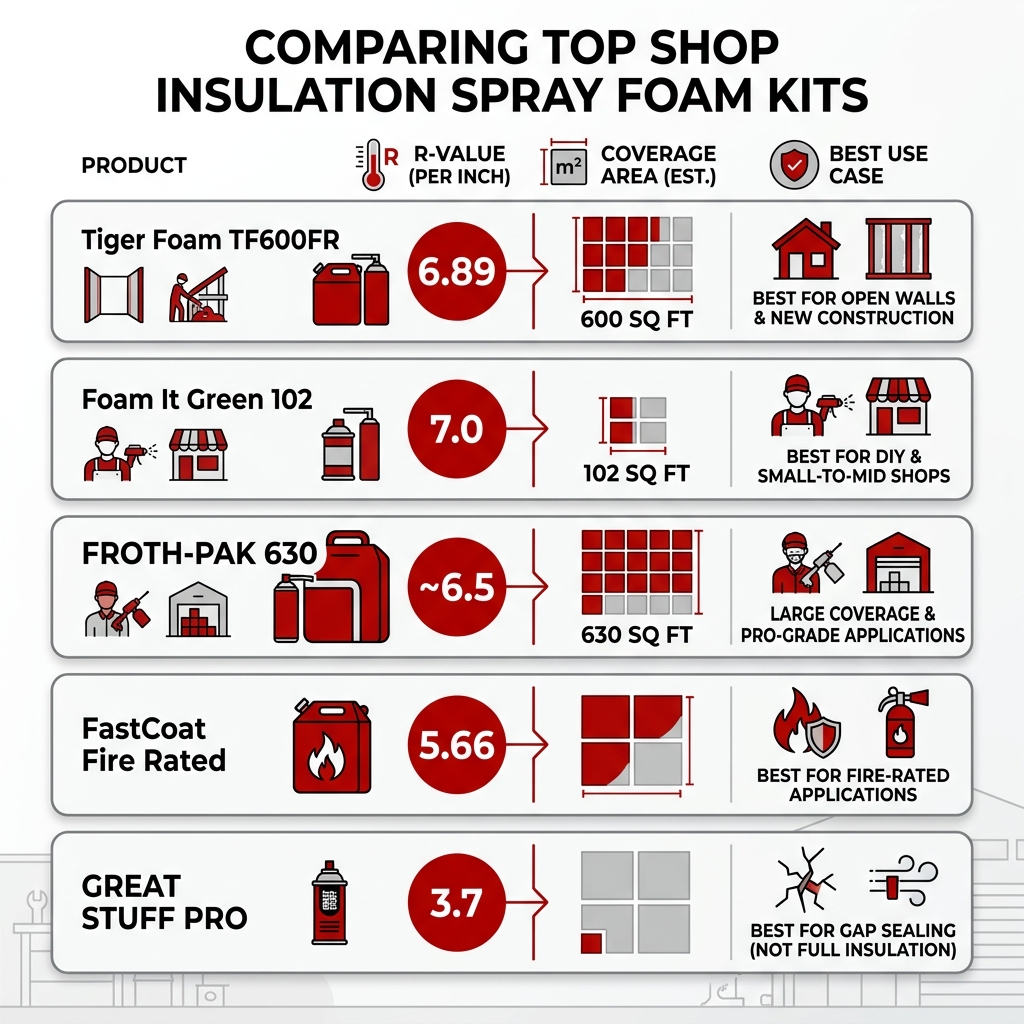
The best shop insulation spray foam kits for most garages and workshops are closed-cell formulas — here’s a quick look at top options to consider:
| Product | Type | R-Value per Inch | Best For |
|---|---|---|---|
| Tiger Foam TF600FR | Closed-cell | 6.89 | New construction, open walls |
| Foam It Green 102 | Closed-cell | 7.0 | DIY, small-to-mid shops |
| FROTH-PAK 630 | Closed-cell | ~6.5 | Large coverage, pro-grade |
| FastCoat Fire Rated | Closed-cell | 5.66 | Fire-rated applications |
| GREAT STUFF PRO | 80% closed-cell | 3.7 | Gap sealing, not full insulation |
If your shop feels like a freezer in winter and an oven in summer, you’re not alone. Uninsulated or under-insulated workshops bleed conditioned air through every crack, seam, and cavity — driving up energy bills and making the space miserable to work in.
Drafts, condensation, and temperature swings aren’t just uncomfortable. They can cause rust on tools, mold on walls, and pests finding easy entry points.
Spray foam insulation solves all of this at once. It expands to fill gaps, seals air leaks, resists moisture, and delivers a higher R-value per inch than traditional fiberglass — sometimes double the performance.
This guide rounds up the best shop insulation spray foam kits available, so you can pick the right one and get your workspace under control.
I’m Dave Brocious, founder of ClimaShield Industries, with over 20 years in the coatings and specialty insulation industry — including hands-on experience specifying and installing shop insulation spray foam across commercial and residential projects throughout Western PA. I’ll cut through the marketing noise and give you straightforward guidance on what actually works in real shop environments.
Understanding Shop Insulation Spray Foam and How It Works
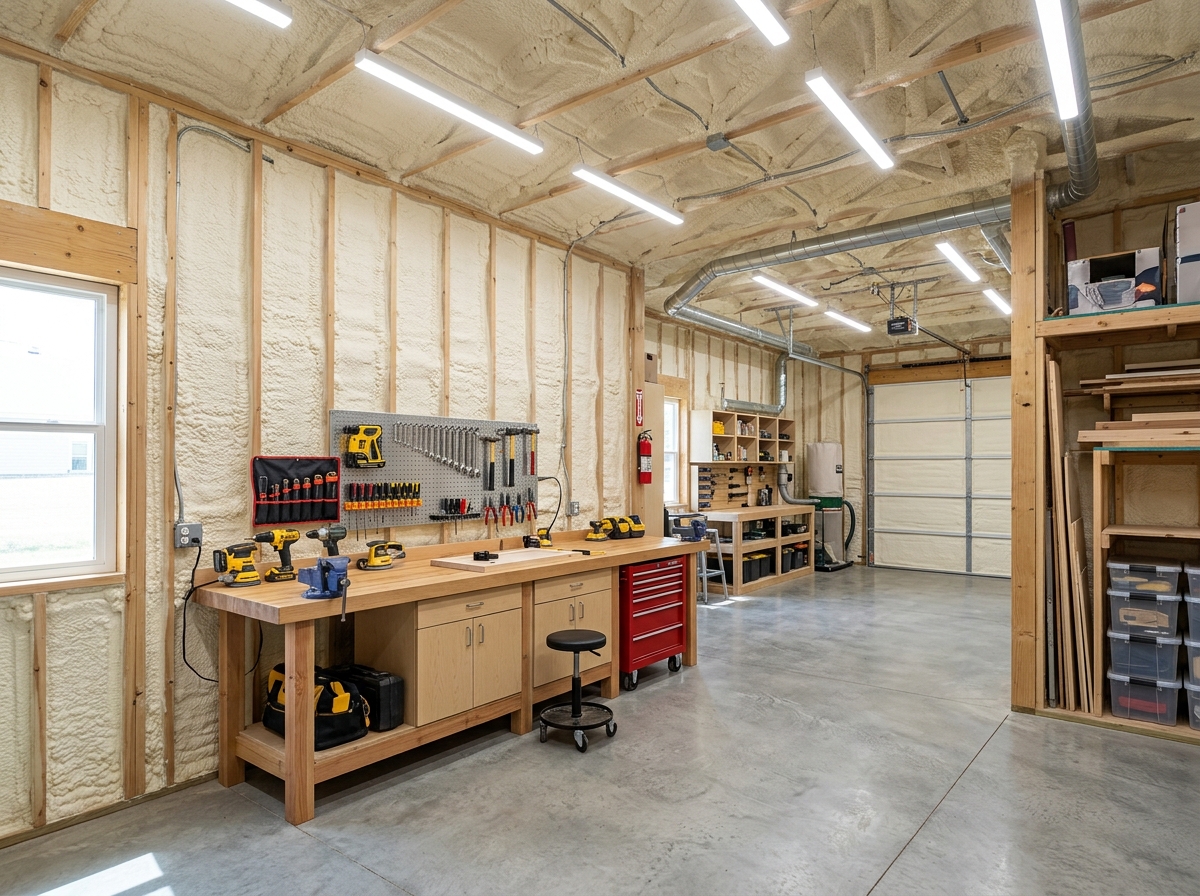
When we talk about shop insulation spray foam, we are referring to a two-part polyurethane system. It typically consists of two pressurized tanks (often called “A” and “B” sides) that mix at the tip of a spray gun. The moment this mixture hits your shop wall, a chemical reaction occurs, causing the liquid to expand rapidly into a solid foam.
This expansion is the “secret sauce” of spray foam. Unlike fiberglass batts that you have to cut and stuff into corners, spray foam flows into every tiny crevice, electrical box, and gap around your shop’s framing. It creates what we call an “airtight thermal envelope.”
In a typical Indiana, PA workshop, heat transfer happens in three ways: conduction, convection, and radiation. Traditional insulation only handles conduction. Spray foam, however, stops convection (air movement) in its tracks. By sealing off the air leaks that plague metal buildings and garages, you aren’t just adding R-value; you are fundamentally changing how the building breathes.
The Main Benefits for Garages and Workshops
Why choose spray foam over cheaper alternatives? For us at ClimaShield Spray Foam, it comes down to the specialized environment of a workshop.
- Draft Reduction: If you’ve ever tried to weld or paint in a drafty shop, you know the frustration. Spray foam creates a monolithic seal that stops the wind from whistling through your siding.
- Noise Deadening: Shops are loud places. Whether it’s an air compressor or a table saw, spray foam helps dampen the sound, keeping the neighbors happy and your ears a bit safer.
- Energy Efficiency: Using Energy Saving Insulation can save you up to 60% on your heating and cooling costs. In the fluctuating Pennsylvania climate, that’s a lot of money back in your pocket.
- Pest Resistance: Mice and insects love fiberglass nesting material. They hate spray foam. Using Pest Resistant Spray Foam ensures your shop doesn’t become a sanctuary for local rodents.
- Structural Reinforcement: Closed-cell foam is incredibly dense. When applied to the walls of a pole barn or metal shop, it actually increases the “racking strength” of the building, making it more resistant to high winds.
Comparing Open-Cell and Closed-Cell for Shop Use
Choosing the right foam is the most critical decision you’ll make. Here is how they stack up:
| Feature | Open-Cell Foam | Closed-Cell Foam |
|---|---|---|
| R-Value per Inch | 3.6 – 4.5 | 6.0 – 7.5 |
| Density | ~0.5 lbs/cu. ft. | ~2.0 lbs/cu. ft. |
| Moisture Resistance | Permeable (absorbs water) | Impermeable (vapor barrier) |
| Expansion Rate | High (expands 100x) | Lower (expands 30x-40x) |
| Best Use | Interior walls, soundproofing | Exterior walls, shops, metal sheds |
When you are Exploring Insulation Types Perks and Prices, you’ll find that while open-cell is cheaper, it’s often the wrong choice for a shop. Open-cell stays soft and flexible, which is great for Residential Insulation in a quiet attic, but not ideal for a rugged workshop environment.
Why Closed-Cell is Best for Shop Insulation Spray Foam
For a workspace, we almost always recommend closed-cell foam. Here’s why:
- Superior R-Value: With R-values reaching up to 7.5 per inch, you get more “insulation power” in a thinner layer. This is vital if you have shallow 2×4 wall cavities.
- Built-in Vapor Barrier: Closed-cell foam does not let moisture through. In a metal shop, this is the difference between a dry workspace and a “sweating” building that rusts your expensive tools.
- Durability: Once it cures, it is hard as a rock. You can bump a ladder against it without leaving a massive dent.
- Adhesion: It bonds incredibly well to metal, wood, and concrete. When Choosing the Right Spray Foam for Your Home or shop, the ability to stick to the substrate is paramount.
Spray Foam vs. Traditional Fiberglass
If you’re considering fiberglass because it’s the “standard,” think again. Fiberglass batts are notorious for sagging over time, leaving uninsulated gaps at the top of your walls. Furthermore, fiberglass has zero air-sealing capabilities. If air can move through it, the effective R-value drops significantly.
According to The Ultimate Guide to Best Energy Saving Insulation, spray foam provides a long-term ROI that fiberglass simply can’t match. While the upfront cost is higher, the annual savings on utility bills and the protection of your building’s structure make spray foam the clear winner for any serious shop owner in Indiana, PA.
Professional Spray Foam Application for Shops
While DIY kits exist, large-scale shop insulation spray foam projects often benefit from professional intervention. A professional rig uses high-pressure, heated hoses to ensure the chemical reaction is perfect every time. This results in a more consistent yield and better adhesion.
When calculating the cost, professionals talk in “board feet.” One board foot is a 12″ x 12″ square that is 1″ thick. Knowing your total square footage and your desired thickness is the first step to getting an accurate quote.
Insulating Common Shop Surfaces
One of the best things about spray foam is its versatility across different Uses of Spray Foam.
- Metal Walls: Metal buildings are notorious for condensation. Closed-cell foam prevents warm, moist shop air from hitting the cold metal siding, stopping “indoor rain” immediately.
- Wood Ceilings: Spraying the underside of the roof deck is the most effective way to keep heat from escaping in the winter.
- Concrete Floors: While less common, high-density spray foam can be used under concrete slabs or around the perimeter of a foundation to prevent thermal bridging.
- Gaps and Cracks: For smaller areas, a 24 oz. Gaps and Cracks Insulating Spray Foam Sealant can be used to seal around plumbing or electrical penetrations that professional rigs might miss.
What to Expect During Professional Application
When we arrive at a shop in Pennsylvania, our process is precise. First, we ensure the surface is “broom clean” and dry. Adhesion is everything; foam won’t stick to oily or dusty metal.
Temperature is the next big factor. Both the chemicals and the surface being sprayed should ideally be between 65°F and 85°F. If it’s a freezing January morning in Indiana, PA, we have to pre-heat the shop to ensure the foam cures correctly.
We apply the foam in “passes” or layers. For example, if you want 3 inches of foam, we might do two 1.5-inch passes. This prevents the foam from overheating during the exothermic (heat-releasing) curing process. This is particularly important for Attic Spray Foam and enclosed shop ceilings where heat can build up quickly.
Performance Standards: R-Values, Fire Safety, and Moisture
When selecting a shop insulation spray foam, you aren’t just buying “fluff.” You’re buying performance. In Pennsylvania, building codes often require specific R-values depending on whether the shop is considered a commercial or residential space.
Closed-cell foam like Tiger Foam or FastCoat provides an R-value of 6.0 to 7.0 per inch. To put that in perspective, just 3 inches of Tiger Foam provides an insulation value of over R18, which is nearly double the value per inch of traditional fiberglass (R-3.32).
Moisture Resistance and Condensation Control
Moisture is the enemy of any workshop. If you have metal lathes, saws, or classic cars, humidity leads to rust. Because closed-cell spray foam acts as a vapor retarder, it keeps the humidity levels in your shop stable.
Furthermore, Is Spray Foam Insulation Mold Resistant? Yes. Unlike organic materials like paper-faced fiberglass or cellulose, spray foam provides no food source for mold or mildew. This makes it the ultimate Mold Resistant Insulation for damp environments like basements or shops with concrete floors.
Safety Equipment and Precautions
Safety is non-negotiable. Whether you are using a DIY kit or watching us work, PPE is required.
- Respirators: You must use a fit-tested respirator with organic vapor filters. The fumes during the “off-gassing” phase can be harmful if inhaled.
- Skin Protection: Spray foam sticks to everything—including you. We wear full Tyvek suits, gloves, and goggles.
- Ventilation: We use high-powered fans to exhaust air out of the shop during and immediately after application.
For larger projects, such as Commercial Spray Foam Insulation Western PA L4, we follow strict protocols to ensure the building is safe for re-entry as quickly as possible.
Cost Analysis and Long-Term Maintenance
How much does it cost to insulate a shop? For professional installation, prices typically range from $1.50 to $3.50 per board foot, depending on the complexity and the type of foam used.
While a DIY kit like the 630 Insulation and Sealant Spray Foam System might seem cheaper upfront (around $900-$1,000 for 630 board feet), you have to factor in your time, the risk of waste, and the lack of a warranty.
For Commercial Insulation projects, the ROI is usually seen within 3 to 5 years through lower utility bills. It is truly the Best Insulation for Home and shop owners who plan on staying in their property long-term.
Curing Times and Shop Readiness
Most spray foams are “tack-free” within minutes, but they aren’t fully cured immediately. We generally recommend staying out of the shop for 24 hours to allow for full off-gassing.
Once cured, the foam is inert and safe. However, if your foam is exposed to direct sunlight (like near a window or an open bay door), you must protect it. UV rays will degrade the foam over time, turning it yellow and brittle. A simple coat of water-based latex paint or a specialized thermal barrier coating will protect it for decades.
Maintenance and Durability in Workshop Environments
Spray foam is largely “set it and forget it.” It doesn’t settle like cellulose or sag like fiberglass. In a shop environment, the main maintenance is simply ensuring you don’t mechanically damage it with heavy machinery. If you do happen to gouge a hole in it, a small II-16 Insulating Spray Foam can can be used for a quick 5-minute patch job.
Frequently Asked Questions about Shop Insulation
How much R-value do I need for a shop?
For most shops in Pennsylvania, we recommend at least R-13 to R-19 in the walls and R-30 to R-38 in the ceiling. With closed-cell shop insulation spray foam, you can achieve this with roughly 2-3 inches on the walls and 5-6 inches on the roof deck.
Is spray foam safe for shops with welding or flammable materials?
Yes, provided you choose a fire-rated product. Most professional-grade foams are ASTM E84 Class A fire-rated. However, it is a “fire retardant,” not “fireproof.” In many jurisdictions, if the shop is a living space or attached to a home, you may be required to cover the foam with a 15-minute thermal barrier like half-inch drywall or specialized fire-rated paint. Check out our guide on Fire Retardant Insulation for more details.
Can I use spray foam on existing metal shop walls?
Absolutely. In fact, it’s the best way to retrofit a metal building. It bonds directly to the metal, eliminating the air gap where condensation usually forms.
Conclusion
Insulating your workshop isn’t just about comfort—it’s about protecting your tools, your building, and your wallet. Whether you choose a high-end DIY kit like the 656 oz. 200 ft. Insulation Kit Spray Foam Sealant or opt for a professional installation, the results will transform your workspace.
At ClimaShield Spray Foam, we specialize in providing Western PA with the highest quality Residential Spray Foam Insulation Western PA L3 and commercial shop solutions. If you’re ready to stop the drafts and start saving, we’re here to help you get the job done right.
