Is Your Concrete Sinking? What to Know About Polyjacking vs Mudjacking
When it comes to polyjacking vs mudjacking, here’s the short answer:
| Factor | Mudjacking | Polyjacking |
|---|---|---|
| Material | Cement, sand, and water slurry | Expanding polyurethane foam |
| Hole size | ~2 inches | ~5/8 inch |
| Material weight | ~100 lbs per cubic foot | ~2-4 lbs per cubic foot |
| Cure time | 24-72 hours | 15-60 minutes |
| Cost | $3-$6 per sq ft | $5-$25 per sq ft |
| Lifespan | 2-5 years | 5-10+ years |
| Best for | Budget repairs, heavy loads | Aesthetics, wet areas, quick turnaround |
A cracked, sunken slab isn’t just an eyesore. It’s a trip hazard, a liability, and a sign that something is shifting beneath your property. The good news? You usually don’t need to replace the concrete. You just need to lift it back into place.
That’s where concrete leveling comes in — and two methods dominate the industry in May 2026: mudjacking and polyjacking. Both can save you significant money compared to full slab replacement. But they work very differently, and choosing the wrong one for your situation can mean paying for the same repair twice.
I’m Dave Brocious, founder of ClimaShield Industries and a specialist in polyurethane coatings and spray foam applications with over 20 years in the industry — and understanding the real-world performance differences between polyjacking vs mudjacking is exactly what this guide is built on. Keep reading and I’ll walk you through everything you need to make the right call for your property.
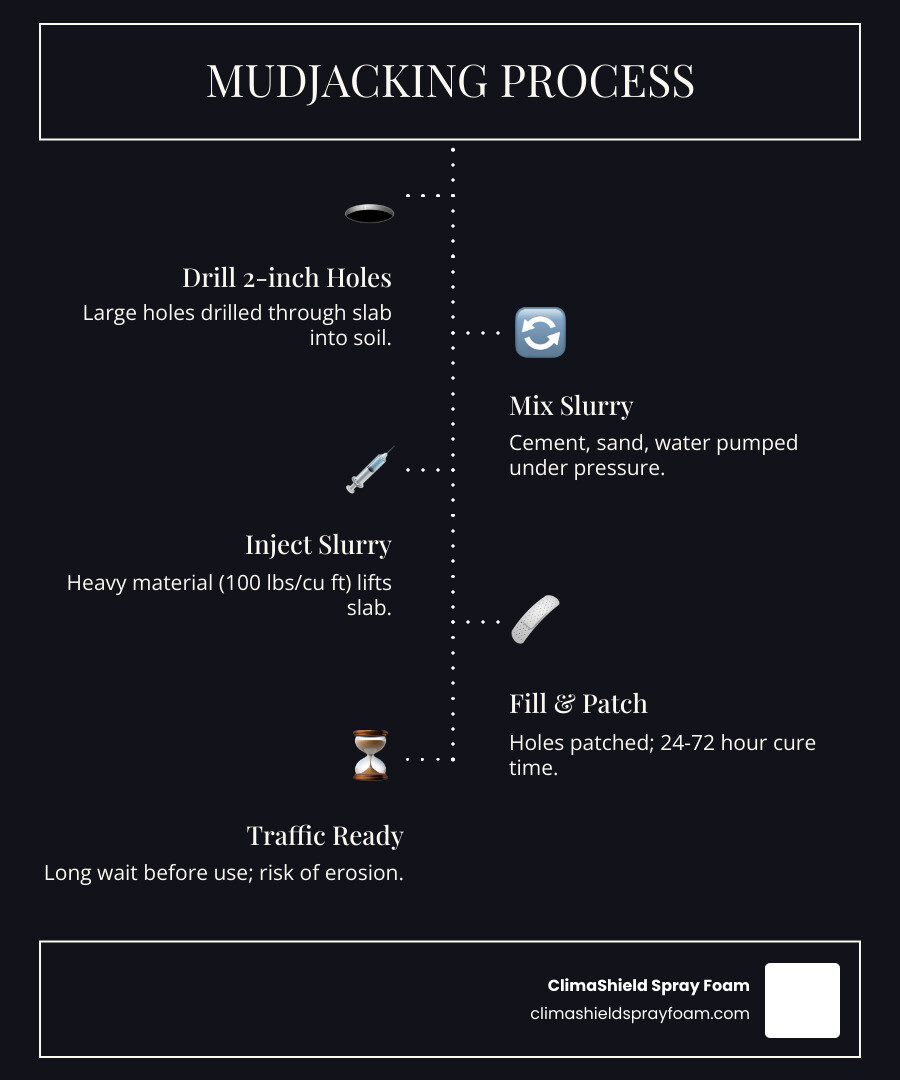
Simple polyjacking vs mudjacking glossary:
Understanding the Basics: Polyjacking vs Mudjacking
To understand the debate of polyjacking vs mudjacking, we first have to look at what’s happening under your feet. Most concrete settles because the soil beneath it has either compacted, washed away, or was never properly stabilized during construction.
Mudjacking (also known as slabjacking or pressure grouting) is the “traditional” method. It has been around since the 1930s. The process involves drilling relatively large holes into your concrete and pumping in a heavy “slurry” made of water, dirt, sand, and a little bit of cement. This mixture fills the voids and uses hydraulic pressure to force the slab upward. It’s a bit like using a heavy liquid jack to lift a car.
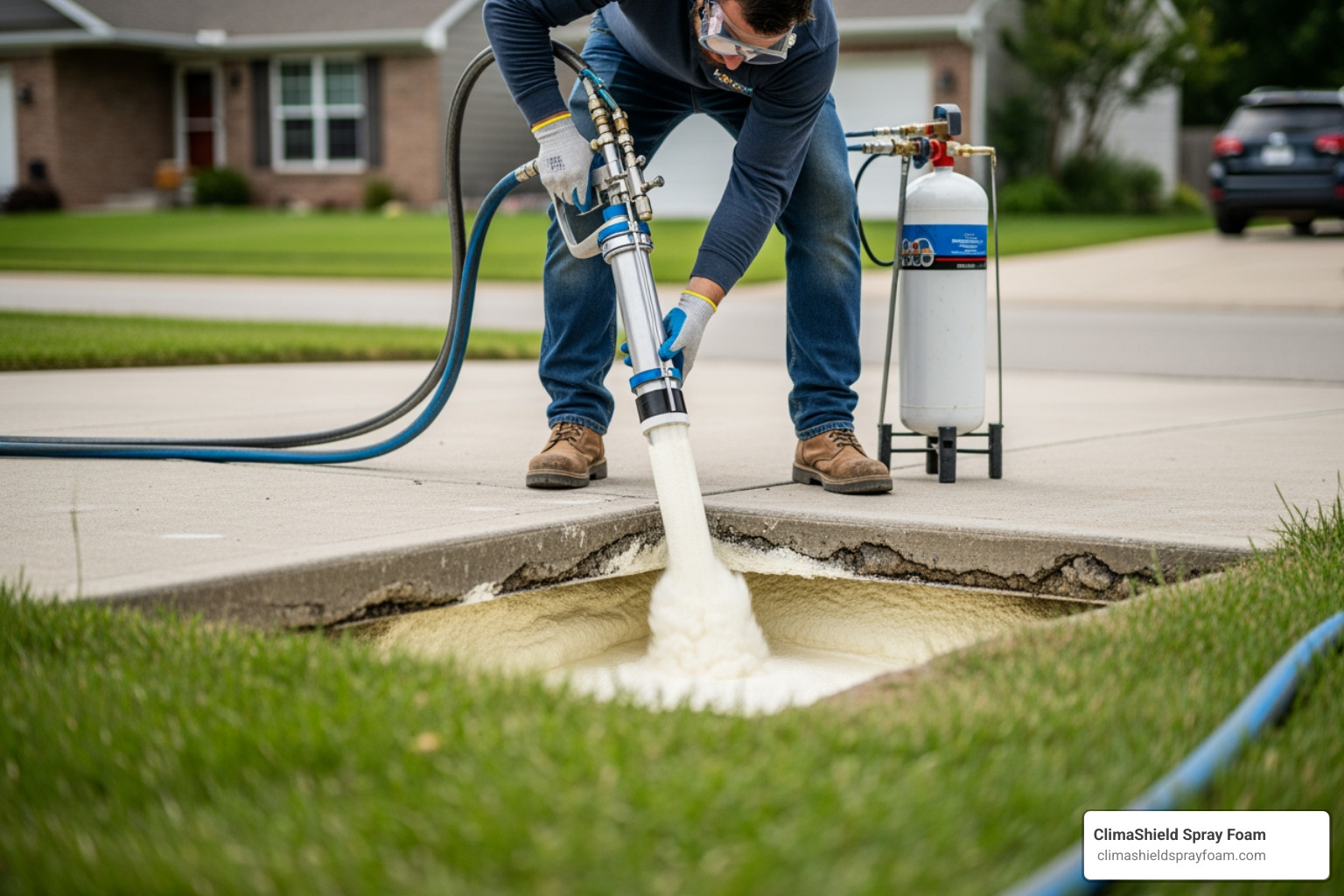
Polyjacking, on the other hand, is often called the “Jetsons” approach to concrete repair. Instead of a heavy mud mix, we use a high-density, structural-grade polyurethane foam. When this liquid is injected through tiny holes, a chemical reaction occurs, causing the foam to expand with incredible force. This expansion fills every tiny crevice and lifts the concrete with surgical precision.
If you want to dive deeper into the mechanics, check out Slab Lifting 101 for a breakdown of the physics involved. While both methods aim to solve the same problem, the materials they use lead to very different results in terms of longevity and impact on your soil. For a broader look at which is better for specific scenarios, 9to5civil offers some great comparative insights.
Technical Comparison: Weight, Holes, and Cure Times
When comparing polyjacking vs mudjacking, the technical specs tell a compelling story. In our experience working across Indiana, PA, and the surrounding areas, these three factors — weight, hole size, and cure time — are usually what sway a homeowner’s decision.
The Weight Factor
This is perhaps the most critical difference. Mudjacking slurry is heavy—really heavy. It weighs roughly 100 to 120 pounds per cubic foot. If your concrete sank because the soil was weak or poorly compacted, adding thousands of pounds of “mud” on top of that same weak soil can actually accelerate future sinking.
Polyjacking foam, by comparison, weighs only 2 to 4 pounds per cubic foot. It provides the same lifting power without the “subgrade reloading risk.” It essentially allows your concrete to “float” on a lightweight, rigid cushion.
Drill Hole Size
- Mudjacking: Requires holes about 2 inches in diameter (roughly the size of a soda can). These are typically spaced every 16 to 24 inches.
- Polyjacking: Uses holes only 5/8 of an inch in diameter (about the size of a dime or your thumbnail). These are spaced further apart, usually 3 to 5 feet.
Cure Times and Downtime
If you’re leveling a driveway in a busy household, downtime matters.
- Mudjacking: The slurry needs time to “set up” and dry. You typically have to wait 24 to 72 hours before you can drive a vehicle on it.
- Polyjacking: The foam reaches 90% of its full strength in about 15 minutes. You can often drive your car over the repaired area before the technician has even finished packing up their tools.
For a step-by-step look at how this works, read How to Understand Concrete Lifting Foam in 5 Easy Steps.
Durability and Cost: Which Method Offers Better Value?
Let’s talk about the elephant in the room: the price tag. In the battle of polyjacking vs mudjacking, mudjacking almost always wins on the upfront cost.
- Mudjacking Cost: Usually ranges from $3 to $6 per square foot.
- Polyjacking Cost: Typically ranges from $5 to $25 per square foot, depending on the volume of foam needed.
However, “cheap” isn’t always “thrifty.” Mudjacking is often considered a temporary fix. Because the slurry is made of natural materials, it is susceptible to the same erosion and settling that caused the original problem. On average, mudjacking repairs last 2 to 5 years.
Polyjacking is a long-term investment. The polyurethane foam is hydrophobic, meaning it repels water and won’t wash out. It’s also inert, so it won’t rot or degrade over time. Most polyjacking repairs are expected to last 10 to 20 years, or even the lifetime of the slab. When you factor in the cost of having to re-do a mudjacking job every few years, polyjacking often ends up being the cheaper option over a decade.
For more on the value proposition, Angi provides a great breakdown of regional cost averages, and our Homeowner’s Guide to PolyLevel explains why the material choice impacts your ROI.
Long-Term Performance of Polyjacking vs Mudjacking
One of the biggest advantages of polyjacking is how it handles the Pennsylvania climate. Our freeze-thaw cycles can be brutal on concrete. Mudjacking slurry contains water; as it dries, it can shrink, potentially leaving small voids. Furthermore, if water gets under a mudjacked slab, it can turn that slurry back into… well, mud.
Polyjacking foam creates a waterproof barrier. It seals the underside of the concrete, preventing water from flowing through and eroding the soil further. This “washout prevention” is a game-changer for properties with drainage issues. You can learn more about this in our article on Geotech Slab Lifting.
When to Choose Each Method for Your Property
While we often recommend polyjacking for its durability, there are times when mudjacking might actually be the appropriate choice.
Choose Mudjacking if:
- You are on a very tight budget and just need a “band-aid” fix for a few years.
- You are dealing with a massive void (like under a porch) where the sheer volume of material needed makes foam cost-prohibitive.
- The concrete is in a remote area where aesthetics don’t matter at all.
Choose Polyjacking if:
- You are repairing decorative, stamped, or colored concrete.
- The area is near a pool or has high water exposure.
- You need to use the area immediately (driveways, commercial floors).
- The soil is already weak or “soft,” and you can’t afford to add more weight.
- You want a permanent fix and don’t want to deal with this problem again in three years.
For residential properties, the choice usually comes down to protecting your foundation and property value. We go into more detail on this in Residential Concrete Lifting.
Deciding Between Polyjacking vs Mudjacking for Aesthetics
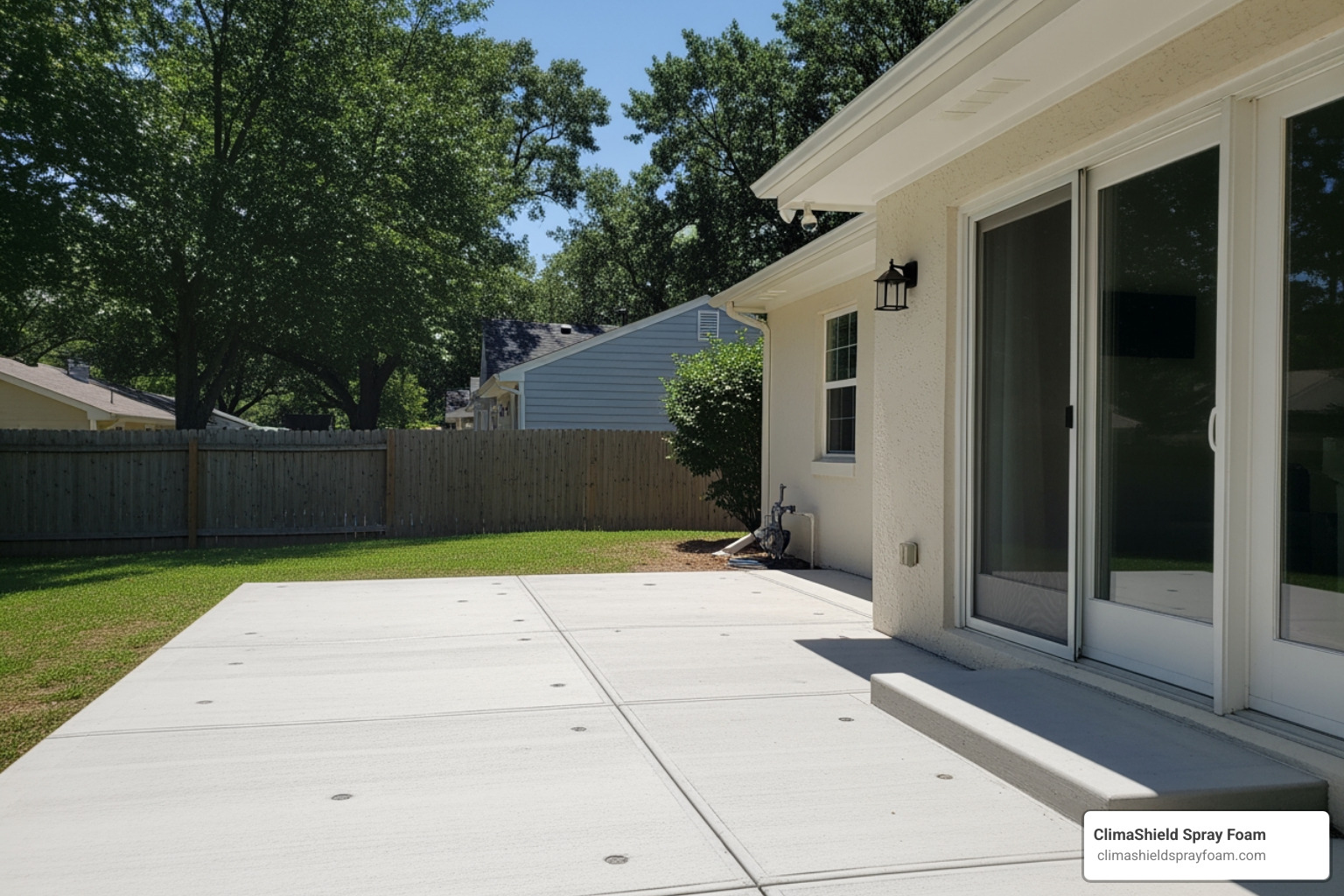
If you’ve spent thousands of dollars on a beautiful stamped concrete patio or a pristine driveway, the last thing you want is a series of 2-inch “polka dots” across the surface. Even when patched, mudjacking holes are very obvious because the patch material often has a different texture and color than the original slab.
Polyjacking holes are so small that once they are patched with a bit of color-matched cement, they are nearly invisible to the naked eye. This is why we always suggest polyjacking for any highly visible area. Check out our guide on How to Repair Concrete Slab the Right Way for tips on maintaining surface beauty.
Frequently Asked Questions about Concrete Leveling
Can I DIY concrete leveling?
We get this question a lot. While you can buy “DIY foam kits,” we strongly advise against it for structural leveling. Polyjacking requires specialized hydraulic equipment and, more importantly, the experience to know how the foam will react.
The foam expands incredibly fast. If you inject too much, you can “blow apart” a slab or lift it too high, creating a new trip hazard that is even harder to fix. Professional installation ensures the pressure is controlled and the lift is even. For a deeper dive into the risks, read Raising Concrete with Spray Foam: What Experts Say About Going Solo.
Does the weight of mudjacking cause more sinking?
In many cases, yes. It’s called “subgrade reloading.” If your soil failed under a 4-inch concrete slab (which weighs about 50 lbs per square foot), it is very likely to fail again when you add a 100-lb-per-cubic-foot slurry underneath it. Polyjacking avoids this by being 95% lighter than the slurry. We discuss how to Stop the Sinking by choosing the right material weight for your specific soil conditions.
Is polyurethane foam environmentally friendly?
Modern polyurethane used in concrete leveling is remarkably eco-friendly. Once the two-part liquid reacts and turns into foam (which takes seconds), it becomes an “inert” solid. This means it won’t leach chemicals into the groundwater or the surrounding soil. Many of the foams we use are even made from up to 40% recycled materials. You can find more details on the environmental impact in our section on Slab Jacking Foam.
Conclusion
When you’re staring at a sunken sidewalk or a lopsided garage floor, the choice between polyjacking vs mudjacking usually comes down to your long-term goals. If you’re looking for a quick, budget-friendly fix for a property you plan to sell next month, mudjacking might suffice. But if you want to protect your home’s structural integrity and ensure you won’t be tripping over that same crack in 2028, polyjacking is the undisputed winner.
At ClimaShield Spray Foam, we specialize in high-performance polyurethane solutions that don’t just fix the symptom—they address the root cause of the problem. Whether we’re helping you save 60% on your energy bills with insulation or stabilizing your sinking driveway, our goal is always durability, efficiency, and waterproof protection.
Don’t let your property sink into the abyss. If you’re in the Indiana, PA area and need a professional assessment of your concrete, reach out to us. We’ll help you determine the best path forward to keep your home stable and safe for years to come.
Get a Free Estimate for Geotech Slab Lifting
