
Why You Should Repair Concrete Basement Floor Damage Before It Gets Worse
Repair concrete basement floor damage the right way by following these key steps:
- Identify the damage type – hairline crack, structural crack, spalling, or uneven slab
- Clean and prep the area – remove loose concrete, vacuum debris, and wet the surface
- Choose the right filler – polymer-modified patch for cracks, self-leveling compound for uneven areas
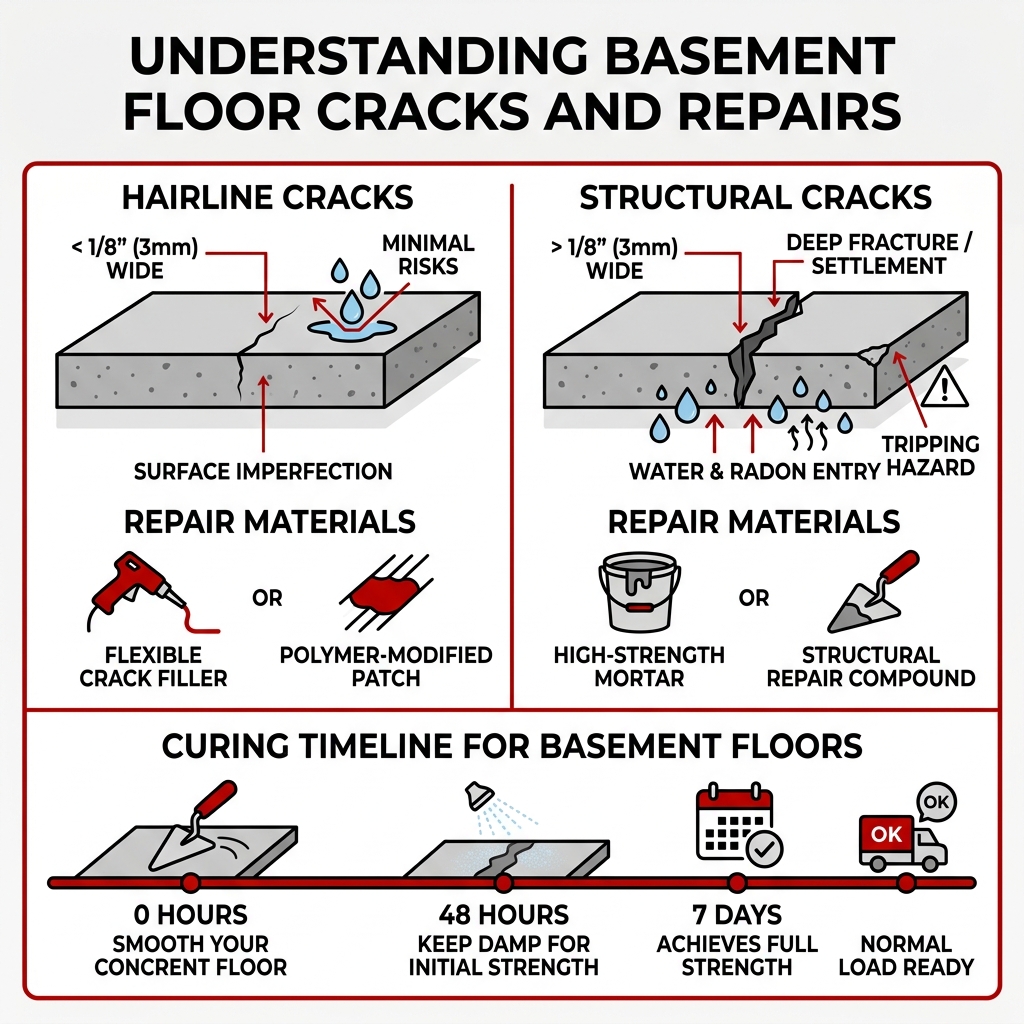
- Apply and cure – smooth the patch, keep it damp for 48 hours, allow 7 days for full strength
- Seal and protect – apply a waterproof sealant and address any moisture issues
That cracked, crumbling, or uneven floor in your basement is easy to ignore. It’s underground, out of sight, and easy to cover with a rug or a storage shelf.
But here’s the problem: small cracks let in big trouble. Cracks wider than 1/8 inch can allow water, soil odors, and even radon gas to seep up into your living space. And a floor that shifts or heaves underfoot is a tripping hazard waiting to happen.
The good news? Most basement floor damage is fixable without a full demolition. Whether you’re dealing with surface spalling, hairline cracks, or larger settlement fractures, there’s a repair approach that fits your situation and your budget.
I’m Dave Brocious, founder of ClimaShield Industries, with 20 years in the coatings industry covering everything from floor coatings and epoxy systems to concrete overlays and protective coatings — so I know exactly what it takes to repair concrete basement floor damage that actually holds up long-term. In the sections ahead, I’ll walk you through everything you need to know to get it done right.
Simple repair concrete basement floor glossary:
Understanding Why You Need to Repair Concrete Basement Floor Damage
Before we grab a trowel, we need to understand what is happening beneath our feet. Concrete looks indestructible, but it is actually a rigid material that reacts to the environment around it. In Pennsylvania, our soil and climate play a massive role in how our basements behave.
Hydrostatic Pressure: The Invisible Force
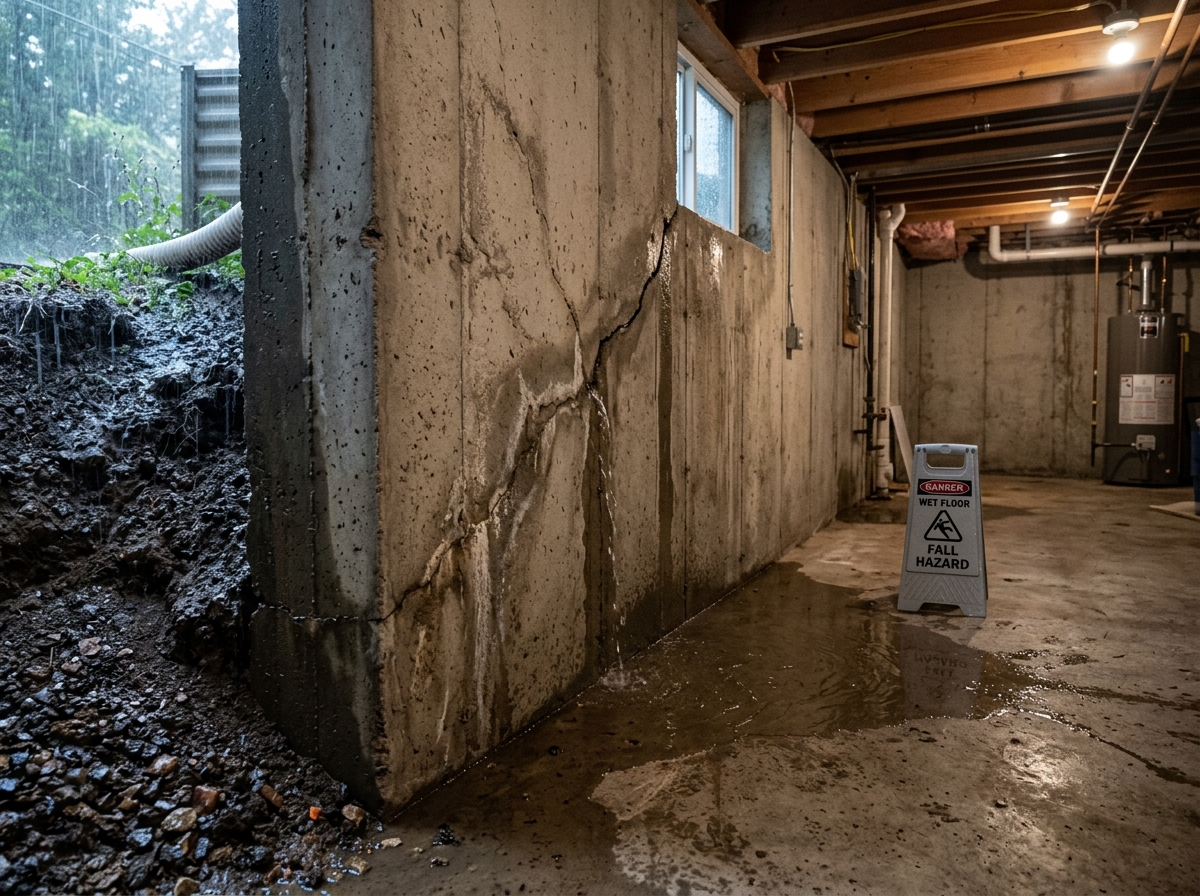
Imagine your basement is a boat sitting in a sea of soil. When it rains heavily in Indiana, PA, the soil becomes saturated. This creates hydrostatic pressure—water pushing against your foundation walls and floor. If your drainage is poor, this pressure forces water through the “cove joint” (where the wall meets the floor) or through existing cracks. Over time, this pressure can actually lift sections of the floor or cause it to buckle.
Soil Settlement and Shrinkage
Concrete naturally shrinks as it cures. Most cracks you see in a home built in the last 50 years are likely shrinkage cracks that appeared within the first year of the house being built. However, slab foundation settling is a different beast. If the soil beneath the slab wasn’t compacted correctly or if water has washed away the sub-base, the concrete loses its support and drops, leading to uneven surfaces.
Freeze-Thaw Cycles
Even though your basement is underground, the perimeter is still susceptible to temperature swings. If moisture gets into a small crack and freezes, it expands. This cycle of freezing and thawing acts like a slow-motion jackhammer, eventually turning a tiny fissure into a crumbling mess.
| Feature | Cosmetic Hairline Cracks | Structural Settlement Cracks |
|---|---|---|
| Width | Less than 1/16 inch | Wider than 1/4 inch |
| Level | Both sides are flush | One side is higher than the other |
| Direction | Random, spider-web patterns | Often diagonal or parallel to walls |
| Risk | Low (mostly aesthetic) | High (indicates movement) |
Is that floor slab crack a big deal? Usually, if it’s level and thin, it’s a DIY fix. If it’s gaping or offset, it’s time to look deeper.
DIY vs. Professional: When to Call the Experts
We love a good weekend project, but we also know that some things are better left to the pros. In Pennsylvania, building codes generally require a concrete basement floor to be at least 3.5 inches thick. Unfortunately, some older homes or poor waterproofing “repairs” have been found with slabs only 1 to 2 inches thick. These thin slabs are prone to cracking and cannot support much weight.
The 1/4-Inch Rule
A good rule of thumb is the 1/4-inch rule. If a crack is wider than 1/4 inch, or if one side of the crack is significantly higher than the other (known as “heaving”), you are likely dealing with a soil issue. Filling the crack won’t stop the floor from moving; it will just crack again.
In these cases, residential concrete lifting for a stable home is the best solution. Instead of ripping out the whole floor, professionals can use slab jacking foam to lift the concrete back to its original position.
Signs Your Repair Concrete Basement Floor Project Needs a Pro
- Water Seepage: If water is actively bubbling up through the floor, a patch is just a band-aid. You likely need a drainage system.
- Widespread Crumbling: If the entire floor feels “hollow” when you tap it or if large sections are turning to dust, the concrete mix itself may have been poor quality.
- Radon Gas: If you live in a high-radon area like parts of Pennsylvania, cracks are entry points for this odorless gas. Professional sealing and mitigation are vital.
- Foundation Shifts: If you see cracks in the floor that continue up the basement walls, your whole house might be settling.
For these major issues, slab lifting 101 and geotech slab lifting are specialized techniques that use high-density polyurethane to stabilize the ground beneath your home.
Essential Tools and Materials for a Successful Fix
If you’ve determined that your floor is structurally sound and just needs a surface-level repair concrete basement floor treatment, it’s time to gear up.
Safety First: The Silica Hazard
When you grind or chisel concrete, you create fine dust. This dust contains crystalline silica, which is hazardous to your lungs. According to CDC/NIOSH Silica Dust Safety Guidelines, you should always use a respirator (N-95 at minimum) and a shop vacuum equipped with a HEPA filter. Never dry-sweep concrete dust; use a wet mist to keep the dust down.
Your Shopping List
- Chisel and Maul: For removing loose, “drummy” concrete.
- Diamond Blade Saw: To “groove” cracks for better adhesion.
- Wire Brush: To scrub out dirt and old paint.
- HEPA Vacuum: To ensure the surface is bone-dry and dust-free.
- Bonding Agent: Such as a concrete bonding adhesive to help new concrete stick to the old.
- Patching Compound: A ready-mix concrete patch for small holes or quick setting cement for deeper repairs.
Knowing how to repair concrete slab the right way starts with having the right materials. Don’t try to use standard mortar from a bag for thin patches; it doesn’t have the polymers needed to stick to a smooth floor.
Choosing the Best Material to Repair Concrete Basement Floor Cracks
- Self-Leveling Compound (SLC): Great for floors that are “wavy” but stable. It flows like water and creates a perfectly flat surface. Warning: If your floor is still moving, SLC will crack instantly.
- Polyurethane Foam/Sealant: Best for cracks that might see slight movement. It remains flexible.
- Epoxy Injection: The “gold standard” for structural cracks. It can restore the concrete to 95% of its original strength.
- Polymer-Modified Patch: This is what we usually recommend for DIYers. It’s easy to mix and has “glue” built right in.
Step-by-Step Guide to Patching and Resurfacing
Ready to get to work? Here is how we repair concrete basement floor surfaces to ensure they last for decades.
1. Assessment and “The Tap Test”
Walk around your basement with a hammer or a heavy screwdriver. Gently tap the floor. If you hear a “hollow” or “drummy” sound, that section of concrete has detached from the base. You must chisel this out. If you patch over hollow concrete, your new patch will fail within months.
2. Preparation: The “Dovetail” Secret
When you find a crack, don’t just smear mud over it. Use your chisel or a diamond-blade saw to widen the crack slightly. Aim for an “undercut” or “dovetail” shape—meaning the crack is wider at the bottom than at the top. This “locks” the new patch in place so it can’t pop out.
3. Cleaning to SSD State
Vacuum every bit of dust. Then, clean the area with water. Professional masons aim for a “Saturated Surface Dry” (SSD) state. This means the concrete is damp, but there is no standing water. If the old concrete is bone-dry, it will suck the moisture out of your new patch too quickly, causing it to shrink and crack.
4. Applying the Bonding Agent
Apply your concrete bonding adhesive with a brush. It will usually look like white glue. Let it get “tacky” (sticky to the touch) before adding your patch.
5. Mixing and Applying
Mix your ready-mix concrete patch to a peanut butter consistency. Use a trowel to force it into the crack or hole. For larger areas, use a straight-edge tool to “screed” the patch level with the rest of the floor.
6. Feathering and Curing
Use a damp sponge or a trowel to “feather” the edges of the patch so they blend seamlessly with the old floor. This is the hallmark of a professional-looking repair concrete basement floor project.
Crucial Step: Don’t let the patch dry out too fast! Cover it with a piece of plastic or mist it with water for the first 48 hours. This is the secret to how to fix a crumbling concrete basement floor so it stays fixed.
Preventing Future Damage and Moisture Intrusion
Once the floor is beautiful again, we need to keep it that way. In Indiana, PA, moisture is the number one enemy of concrete.
Control the Humidity
A damp basement is a decaying basement. We recommend keeping your basement humidity below 50-60%. A high-quality dehumidifier is worth its weight in gold. It prevents the condensation that leads to spalling and mold.
Air Sealing and Insulation
At ClimaShield Spray Foam, we see how temperature fluctuations affect basements. Air sealing basement rim joists and walls prevents the “stack effect” from pulling moist air through your floor cracks. If you’re planning to finish the basement, installing a basement vapor barrier wall is essential to keep the space dry.
Exterior Maintenance
The best way to fix a basement floor is to keep water away from the foundation in the first place.
- Gutters: Clean them twice a year.
- Downspouts: Extend them at least 5 to 10 feet away from the house.
- Grading: Ensure the soil slopes away from your foundation.
If the floor continues to sink despite your best efforts, raising concrete with spray foam is a permanent, waterproof solution that addresses the root cause: the soil.
Frequently Asked Questions about Basement Floor Repair
Can I just paint over a crumbling concrete floor?
We strongly advise against this. Painting over a crumbling floor is like painting over a rusted car—it might look better for a week, but the moisture trapped underneath will cause the paint to peel and the concrete to continue disintegrating. You must repair concrete basement floor damage, remove the dust, and seal it properly first. For more on how foam can help stabilize these surfaces, check out how to understand concrete lifting foam.
How long does the repair take to cure?
Most patches are “dry” to the touch in a few hours. However, you should wait at least 24 hours before walking on them. If you plan to paint or lay flooring over the patch, you must wait at least 7 to 28 days for a full cure, depending on the product. Concrete releases moisture as it cures, and if you trap that moisture under a coating too soon, the coating will fail.
Is self-leveling concrete always the best choice?
Not always. SLC is expensive and unforgiving. If your floor has a structural “hinge” crack (where the two sides are moving independently), the SLC will just crack right down the middle. SLC is best for smoothing out rough textures or slight dips in an otherwise stable floor. Understanding the difference is key to beyond the cracks: understanding slab settling.
Conclusion
Taking the time to repair concrete basement floor issues today can save you thousands of dollars in foundation repairs tomorrow. Whether it’s a simple DIY patch or a professional lift, addressing those cracks improves your home’s value, air quality, and structural integrity.
At ClimaShield Spray Foam, we specialize in making Pennsylvania homes more energy-efficient and durable. From airtight insulation that resists mold to providing your essential guide to concrete lifting, we are here to help you protect your biggest investment.
Don’t let a “sweaty” or cracked basement floor bring your home down. Grab your gear, follow the steps, and turn that basement into the solid, dry space it was meant to be!
