Why Expanding Foam Is One of the Best Ways to Fix Concrete Cracks
Expanding foam for concrete cracks is one of the fastest and most effective repair solutions available to homeowners today — and if you’re looking for a quick answer, here’s what you need to know:
Best expanding foam products for concrete crack repair (April 2026):
| Product | Best For | Expansion Rate | Cure Time |
|---|---|---|---|
| DRICORE Pro Crack Injection Foam | Vertical, wet or dry cracks | 15x | ~1 hour |
| Nextstar 103 Polyurethane Foam | Wider cracks (>1/8 in) | 20x | <1 hour |
| Rhino Carbon Fiber (RCF™) Kit | Slabs, walls, masonry | 15x | ~1 hour |
| Sika® Injection-101 US | High water intrusion, joints | Up to 40x | ~70 seconds |
| Loctite Tite Foam Gaps & Cracks | DIY surface-level cracks | Varies | Standard |
Concrete driveways take a beating — from freeze-thaw cycles to heavy vehicle loads to simple age. When cracks appear, they don’t stay small for long. Water gets in, ice forms, the crack widens, and before you know it, you’ve got a serious problem that’s expensive to ignore.
The good news? Polyurethane expanding foam has become the go-to fix for most concrete crack types. It’s fast-curing, waterproof, and bonds to both wet and dry surfaces — making it practical for real-world conditions where you can’t always wait for perfect weather.
This roundup covers the best products on the market so you can pick the right one for your specific crack, surface, and budget.
I’m Dave Brocious, and with 20 years in the coatings industry — including hands-on work with polyurethane spray foam systems and concrete floor coatings through ClimaShield Industries — I’ve seen how the right expanding foam for concrete cracks can save homeowners thousands in long-term repair costs. Let’s get into the products that actually deliver.
Understanding Expanding Foam for Concrete Cracks
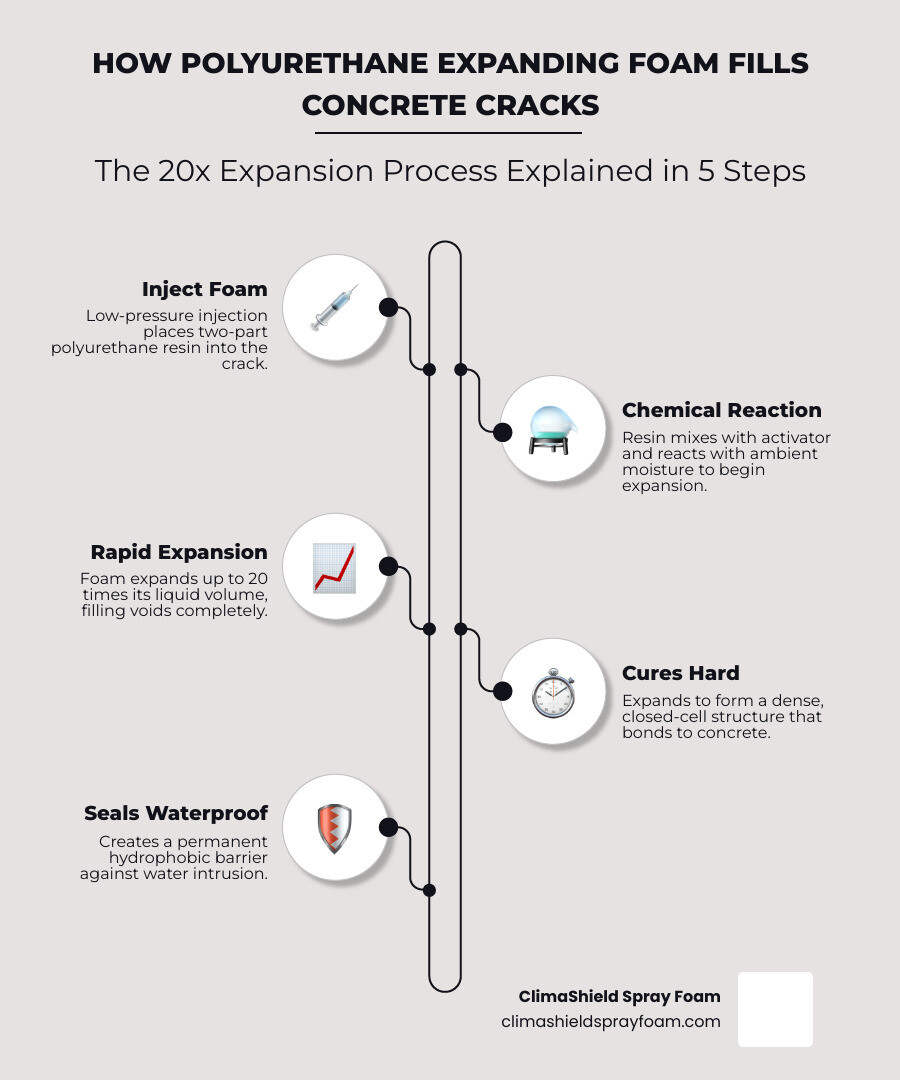
When we talk about expanding foam for concrete cracks, we aren’t talking about the squishy yellow stuff you use to seal around a drafty window. We are talking about high-density, closed-cell polyurethane resins. These products are specifically engineered to react with the environment — and sometimes even moisture itself — to create a rock-hard, waterproof barrier that stabilizes the ground and seals the gap.
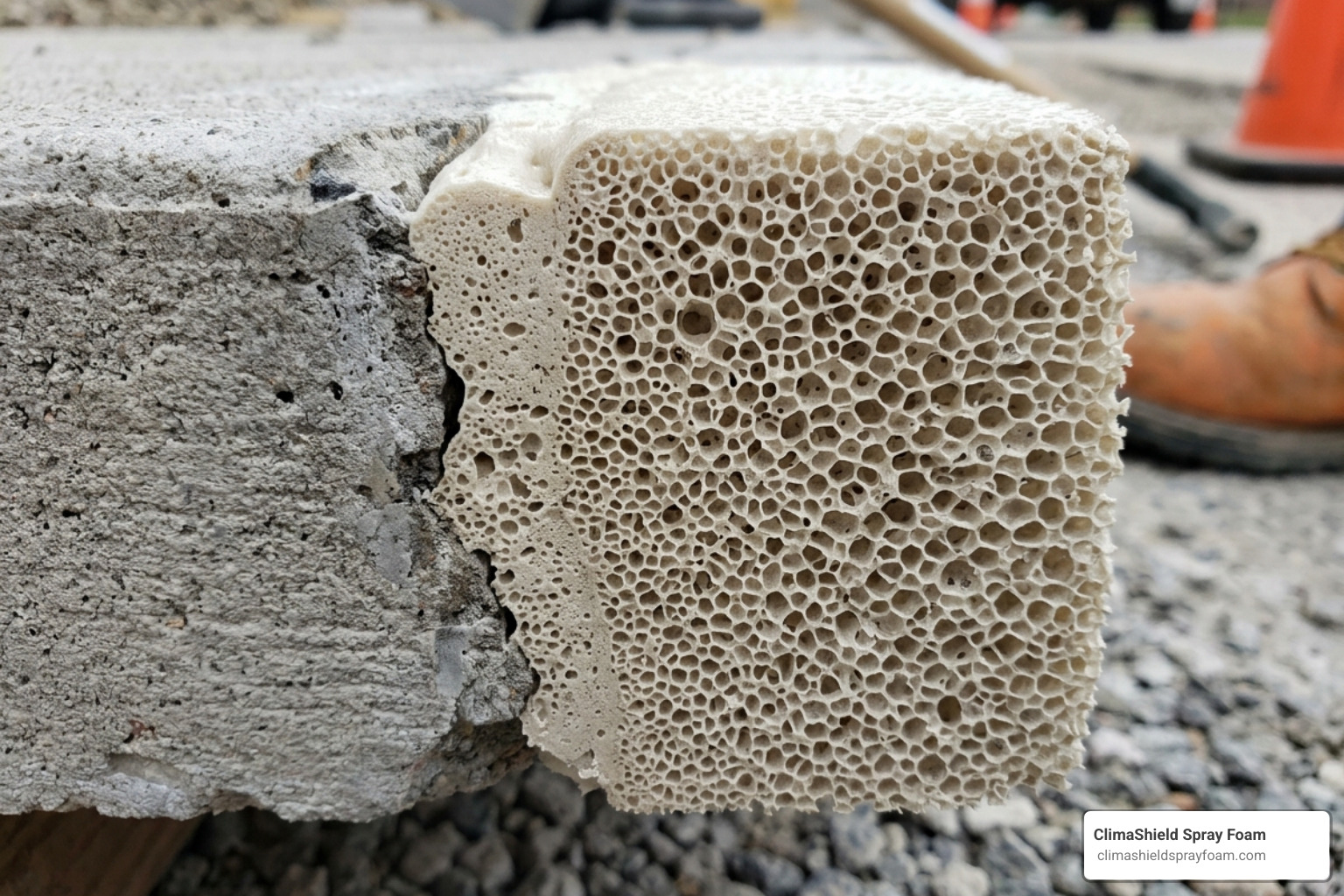
Polyurethane foam works through a chemical reaction between two parts (often called Resin and Hardener). When these components meet, they begin to foam, expanding rapidly to fill every nook, cranny, and void within the concrete. This is particularly useful for slab lifting, where the foam doesn’t just fill a crack but actually exerts enough pressure to lift a sunken driveway or sidewalk back to its original height.
Many of these foams are hydrophobic, meaning they repel water. In fact, some formulas require water to trigger the reaction, making them the perfect choice for leaking basement walls or driveways in damp climates like ours in Pennsylvania. If you want to dive deeper into the science, check out our guide on how to understand concrete lifting foam.
Benefits of Polyurethane Injection
Why has polyurethane become the industry standard for non-structural repairs? It comes down to four major wins:
- Waterproofing: Unlike traditional cement patches, polyurethane forms a closed-cell barrier that water cannot penetrate. This is vital for stopping leaks in foundations.
- Adhesion: It bonds tenaciously to the concrete walls of the crack, ensuring the seal doesn’t pull away when the temperature changes.
- Expansion: Products like Sika® Injection-101 US | Concrete Crack Repair can expand up to 40 times their liquid volume. This ensures that even hidden voids behind the crack are completely filled.
- Fast Cure: In most cases, the foam is fully cured in less than an hour. You can drive your car over a repaired driveway crack much sooner than you could with a traditional concrete patch.
Suitable Crack Types for Foam
Not every crack is a candidate for foam, but most common residential issues are. Expanding foam is the “Goldilocks” solution for:
- Vertical Cracks: Perfect for basement walls because the foam expands upward and outward, filling the entire depth of the wall.
- Driveway Fissures: It fills the void underneath the slab, which is often the reason the crack formed in the first place.
- Non-Structural Settling: If your concrete is settling due to soil erosion, foam is your best friend.
But how do you know if a crack is just a cosmetic eyesore or a structural disaster? We’ve put together a resource to help you decide if that floor slab crack is a big deal.
Key Features of High-Expansion Repair Kits
When you’re shopping for a repair kit, the “expansion rate” is the stat to watch. A higher expansion rate means the foam can travel further into voids and use less material to get the job done.
| Feature | Low-Expansion Foam | High-Expansion Foam |
|---|---|---|
| Expansion Rate | 2x – 5x | 15x – 40x |
| Best Use | Surface sealing | Void filling & lifting |
| Typical Product | DIY Spray Cans | Professional Injection Kits |
Kits like the Rhino Carbon Fiber Polyurethane Injection Expanding Foam Kit are popular because they offer a 15x expansion rate and are designed to bond cracks back together while remaining moisture-tolerant.
Handling Wider Cracks and Voids
For wider cracks — those exceeding 1/8 inch or even 1/4 inch — you need a foam that won’t shrink. Standard off-the-shelf foams can sometimes pull away from the edges as they dry if the gap is too large.
Specialized foams, such as Nextstar 103, are custom-designed for these “big gap” scenarios. They maintain their volume and provide a permanent, non-shrink seal. Dealing with these larger gaps is often a sign of foundation movement, so it’s worth reading up on understanding slab foundation settling to make sure you’re treating the cause, not just the symptom.
Wet vs Dry Surface Compatibility
One of the biggest headaches in concrete repair is waiting for the concrete to dry. In Pennsylvania, that can feel like a lifetime. Thankfully, advanced polyurethane formulas are “moisture-reactive.”
Products like the DRICORE Pro Concrete Repair Crack Injection Expanding Foam are engineered to work on both wet and dry surfaces. In fact, if a crack is actively leaking, the water can actually help the foam expand and set faster, creating an immediate “waterstop” plug.
How to Apply Expanding Foam for Concrete Cracks
Ready to get your hands dirty? Applying expanding foam for concrete cracks is a process of precision, not just spraying and praying.
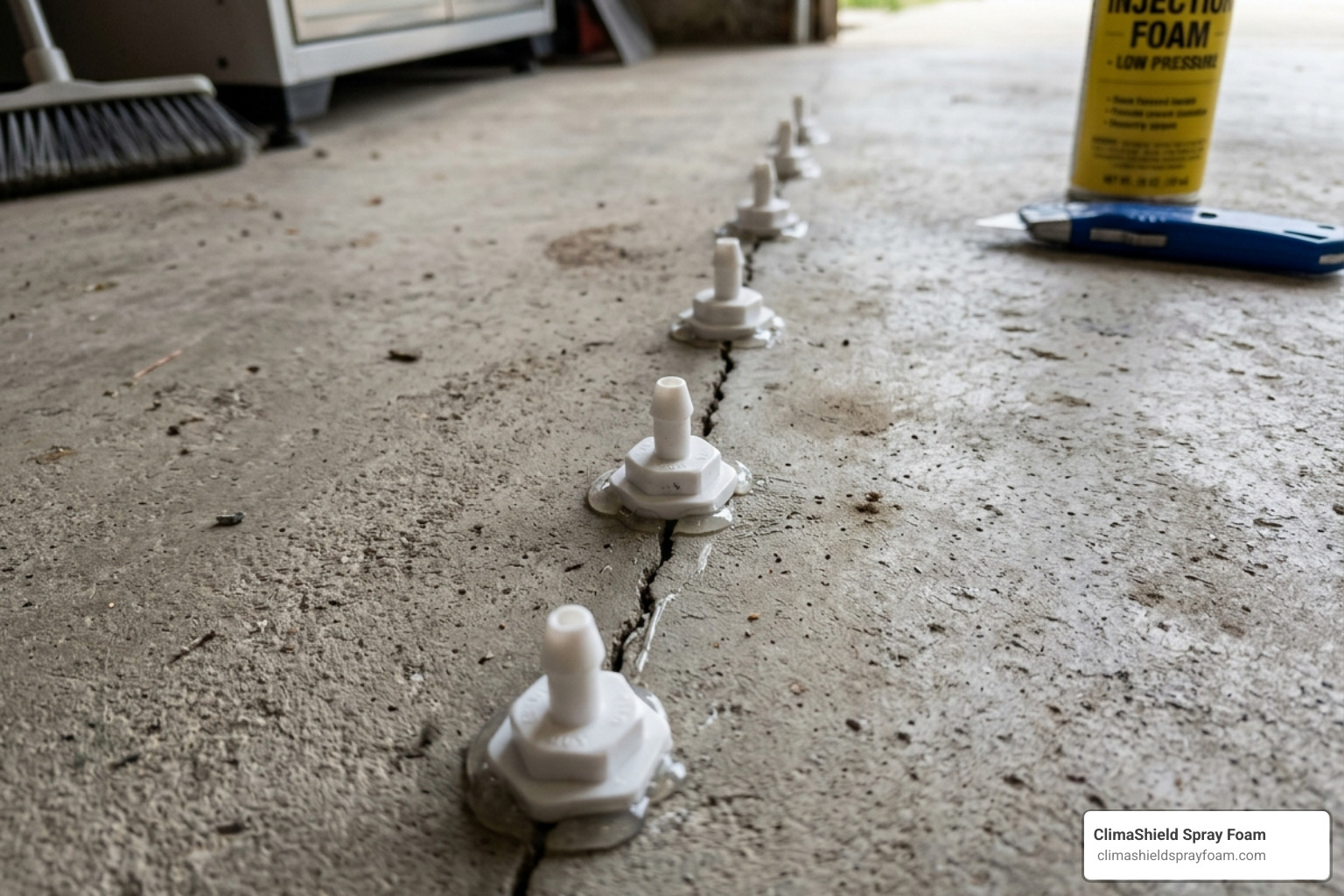
The most effective way to fix a crack is through low-pressure injection. Instead of just smearing foam on the surface, you install “injection ports” every few inches along the crack. This allows you to pump the foam deep into the heart of the concrete. For a high-level overview of the broader process, our essential guide to concrete lifting covers the fundamentals.
Preparing Expanding Foam for Concrete Cracks
Before you start, gather your gear. You’ll need:
- A high-quality caulking gun (usually with a 10:1 or 26:1 thrust ratio for thick resins).
- Static mixers (these are the nozzles that mix the two parts of the foam as they come out).
- Injection ports and surface sealer (to keep the foam from leaking out of the front of the crack).
- Safety gear: Gloves and eye protection are non-negotiable!
Brands like DRICORE® provide comprehensive kits that include most of these items, making it easier for DIYers to get professional results.
Injection Techniques for Expanding Foam for Concrete Cracks
- Seal the Surface: Use a surface paste to seal the crack and stick the injection ports in place. Let this dry.
- Start Low: If it’s a vertical crack, always start at the bottom-most port.
- Inject in Bursts: Pump the foam into the port until you see it begin to come out of the port above it.
- Cap and Move: Cap the current port and move to the next one.
- Monitor: Keep an eye on the slab. If you are using high-expansion foam to level a driveway, watch for the “lift.”
For a deeper dive into the technical steps, see our article on how to repair concrete slab the right way.
Structural vs Non-Structural Concrete Repairs
It is important to distinguish between a crack that is just letting water in and a crack that means your house is moving.
Non-structural repairs are about waterproofing and aesthetics. Expanding foam is king here. It stops the leaks and fills the gaps.
Structural repairs involve holding the concrete together against immense pressure. While some foams “bond” the concrete, they don’t always provide the tensile strength needed to stop a wall from bowing.
When to Use Carbon Fiber Reinforcement
If you have a basement wall that is bowing inward or a crack that is wider at the top than the bottom, foam alone might not be enough. This is where Carbon Fiber Reinforced Polymer (CFRP) systems come in.
You first inject the expanding foam for concrete cracks to seal the leak, then apply carbon fiber straps over the crack to provide structural “muscle.” This 3-step system — prep, inject, reinforce — is often used with products like the Dricore Pro Concrete Repair Expanding Foam to ensure the wall never moves again. Learn more about how we handle this in our guide to residential concrete lifting.
Addressing Sinking Driveways and Slabs
If your driveway has a large crack and one side is lower than the other, you have a void problem. Soil has either washed away or compacted. Using slab jacking foam allows us to fill those massive voids and stabilize the soil.
This process is often called “Polyjacking.” It’s a “green” and cost-effective alternative to ripping out the whole driveway. For those interested in the professional-grade version of this, Polylevel and concrete lifting is the gold standard.
Frequently Asked Questions about Concrete Foam
Can expanding foam be used on wet concrete?
Yes! Most modern polyurethane injection foams are moisture-tolerant. In fact, many are “hydrophilic,” meaning they seek out water to trigger the expansion process. This makes them ideal for fixing active leaks in foundations during the rainy season in Indiana, PA.
How long does it take for concrete repair foam to cure?
Most high-quality foams reach a “tack-free” state in minutes and are fully cured within one hour. However, cure times can be affected by temperature. In the colder Pennsylvania months, it might take a bit longer than in the heat of July.
Is expanding foam suitable for structural foundation cracks?
Foam is primarily a sealer and a void-filler. While it can help stabilize a slab, it is generally considered a non-structural repair for foundation walls. If the crack is caused by structural movement, you should combine foam injection with reinforcement like carbon fiber or steel piers.
Conclusion
Whether you’re dealing with a hairline fracture in your garage or a sinking slab on your patio, expanding foam for concrete cracks is a versatile, durable, and cost-effective solution. By choosing the right expansion rate and ensuring proper surface preparation, you can protect your home from water damage and soil erosion for years to come.
At ClimaShield Spray Foam, we’re obsessed with efficiency — whether that’s through airtight insulation that saves you 60% on your energy bills or through precision concrete repairs. If your driveway is starting to look like a jigsaw puzzle, don’t wait for the next freeze-thaw cycle to make it worse.
Quick Maintenance Tips for Your Concrete:
- Seal cracks as soon as they reach 1/8 inch.
- Ensure your gutters are leaf-free and downspouts are moving water away from your foundation.
- For large-scale settling, consider Geotech Slab Lifting to stabilize the ground.
Ready to stop the sink? We’re here to help you protect your investment with the best polyurethane technology 2026 has to offer.
